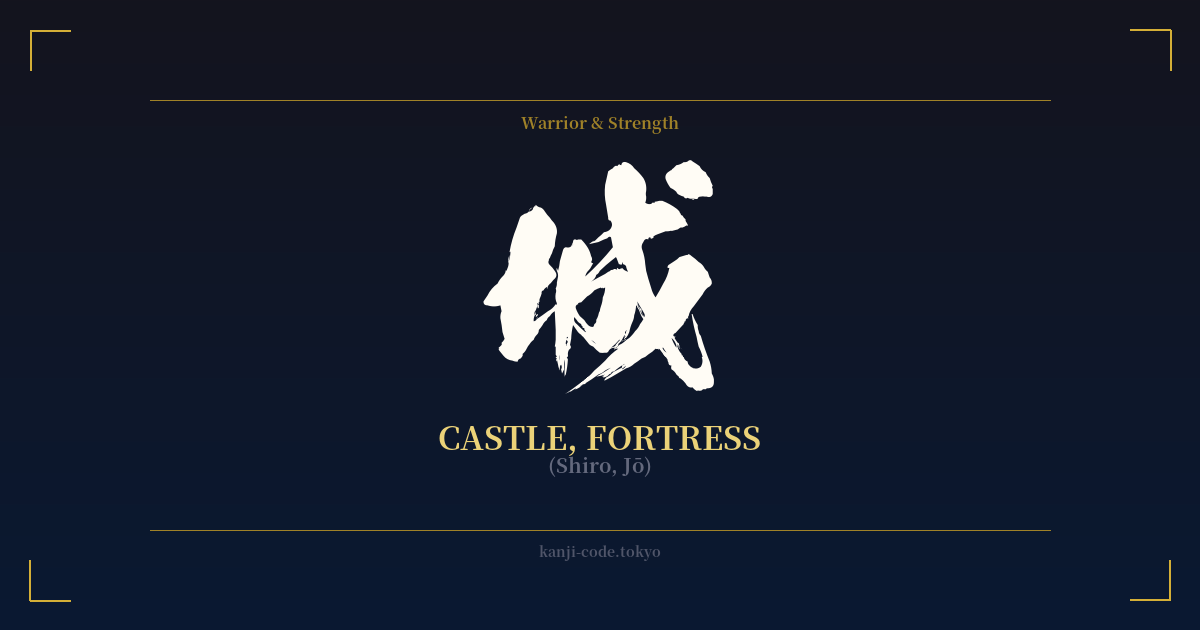
✍️ 城 (Shiro, Jō) — Cultural Context
The kanji 城 (shiro) is far more than a simple word for 'castle' or 'fortress'. It is a powerful symbol deeply embedded in the heart of Japanese history, identity, and culture, evoking images of samurai warriors, powerful feudal lords, and epic battles that shaped the nation.
Historically, Japanese castles were the epicenters of power. During the Sengoku period, the 'Age of Warring States' (1467-1615), these structures were not just defensive fortifications but also the administrative centers and opulent residences of daimyo (feudal lords). Grand castles like Himeji-jō (the 'White Heron Castle'), Matsumoto-jō, and Osaka-jō were unambiguous declarations of a lord's wealth, influence, and military might. Their towering keeps (tenshu), intricate moats (hori), and massive stone walls (ishigaki) were designed to be both impenetrable and awe-inspiring.
The character itself reflects this idea of a constructed stronghold. It is composed of the radical 土 (tsuchi), meaning 'earth' or 'ground', and the phonetic component 成 (sei, naru), meaning 'to become' or 'accomplish'. Together, they paint a picture of something significant accomplished upon the earth—a structure built with purpose and permanence.
Beyond its literal meaning, 城 has a rich metaphorical life in the Japanese language. The phrase 'jibun no shiro' (自分の城) translates to 'one's own castle'. This doesn't refer to a physical building but to one's personal space, sanctuary, or domain where they feel safe, in control, and free to be themselves. It could be one's home, office, or even a cherished hobby. It speaks to the universal human need for a place of refuge and personal authority.
In modern Japan, castles are treasured as national monuments and cultural heritage sites, drawing millions of visitors who come to connect with the nation's dramatic past. The kanji 城, therefore, carries this weight of history, representing not just physical strength but also resilience, heritage, and the enduring spirit of the Japanese people.
🖌️ Font Styles for 城
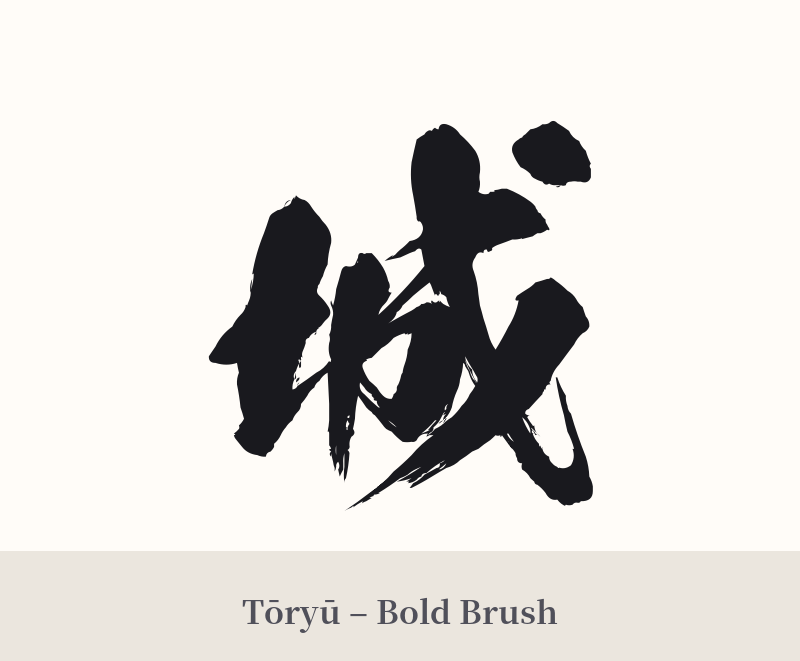
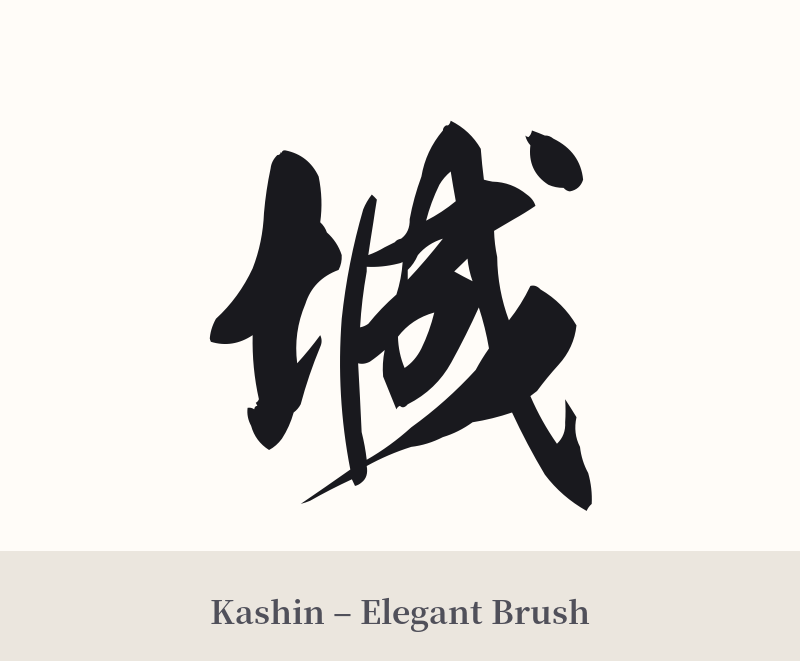
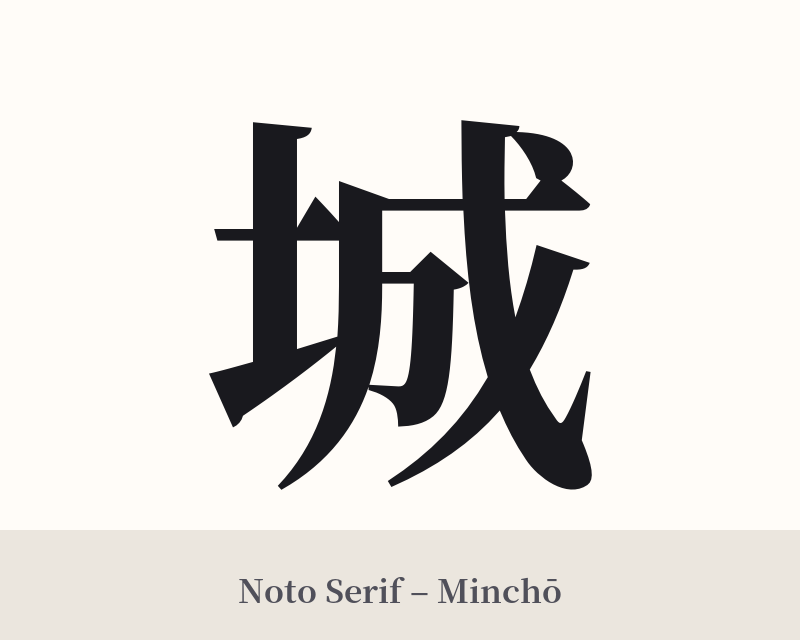
The same kanji can look dramatically different depending on the calligraphy style. Choose a font that matches the mood you want for your tattoo or design.
🎨 Tattoo Suitability
📐 Tattoo Design Guide
For a tattoo of 城, the design should reflect its meaning of strength and stability. Its balanced form works well as a standalone piece.
– Placement: Consider solid, flat areas of the body that provide a good canvas. The forearm, calf, upper back, or chest are excellent choices that complement the kanji's grounded and fortified nature.
– Font Style: A bold, angular Kaisho (block script) style emphasizes the structural integrity and power of a fortress. For a more artistic take, a Gyosho (semi-cursive) script can add a sense of history and dynamism, as if the character itself has a story to tell.
– Visual Tips: While powerful on its own, 城 can be combined with other elements. Pairing it with a dragon (龍) enhances the theme of power and protection. Surrounding it with cherry blossoms (桜) can create a poignant contrast between the permanence of the castle and the transient beauty of life, a classic Japanese aesthetic.
Comments