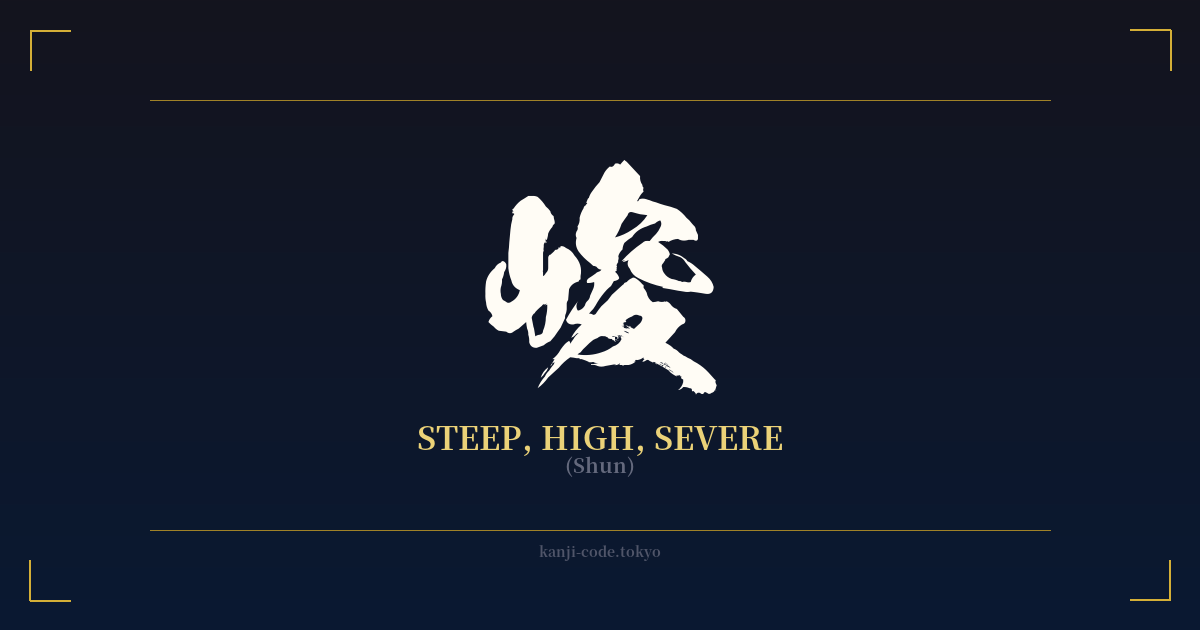
✍️ 峻 (Shun) — Cultural Context
The kanji 峻 (Shun) is a powerful character that paints a vivid picture with its very form. Comprised of the radical for 'mountain' (山) on the left and a phonetic component (夋) on the right that also carries a sense of height, its core meaning is immediately clear: steep, high, and lofty.
This character is fundamentally tied to the natural world, evoking images of Japan's rugged, mountainous terrain. It describes precipitous cliffs (断崖峻壁, dangai shunpeki) and towering peaks (峻嶺, shunrei) that command respect and awe. Unlike a gentle slope, 峻 represents a formidable, almost vertical ascent—a challenge to be overcome, a height to be admired from afar.
From this physical meaning, 峻 extends into the realm of human character and temperament. It describes a person who is severe, strict, or uncompromising. This isn't necessarily negative; it can imply a person with high standards, stern principles, and an unyielding will. A teacher might be described as 峻 for their strict but effective methods. A leader might possess a 峻厳 (shungen) or severe dignity, demanding respect through their formidable presence.
This association with strength and loftiness has made 峻 a popular choice for male names in Japan. The name Shun (峻) is common, bestowed upon a son with the hope that he will grow to be strong, principled, and reach great heights in his life. It carries a weight of seriousness and integrity, a far cry from more gentle or common names.
It's important to distinguish 峻 from a similar character, 険 (ken/kewashii). While both can mean 'steep,' 険 carries a much stronger connotation of danger, peril, and inaccessibility. A mountain described as 険しい is one you might not want to climb. A mountain that is 峻しい (kewashii, using the same reading but a different kanji) is impressively steep and majestic, a monument of nature's power. One is a warning, the other a statement of grandeur.
Ultimately, 峻 embodies an unyielding presence. It is the silent, imposing mountain and the person of stern, unshakable character. It represents a standard that is high, difficult to reach, and worthy of respect.
🖌️ Font Styles for 峻
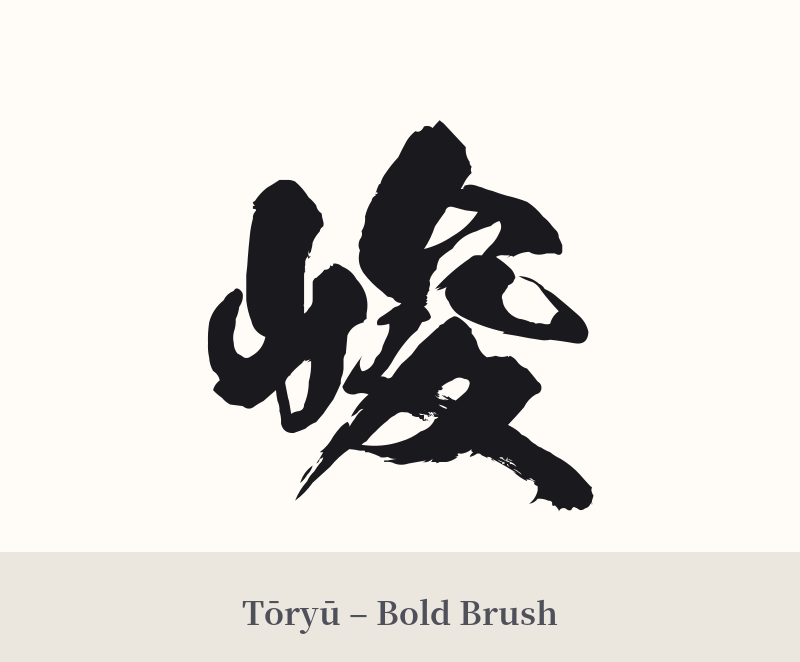
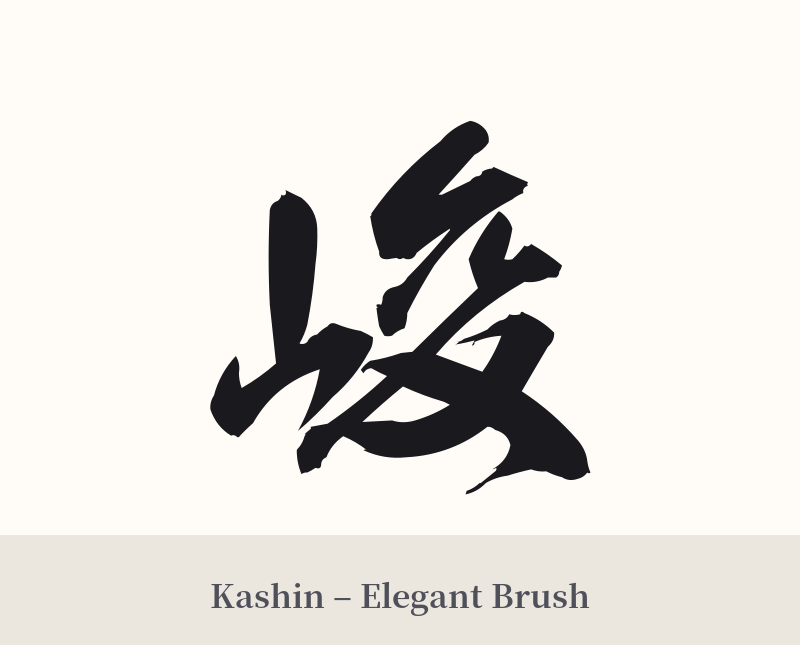
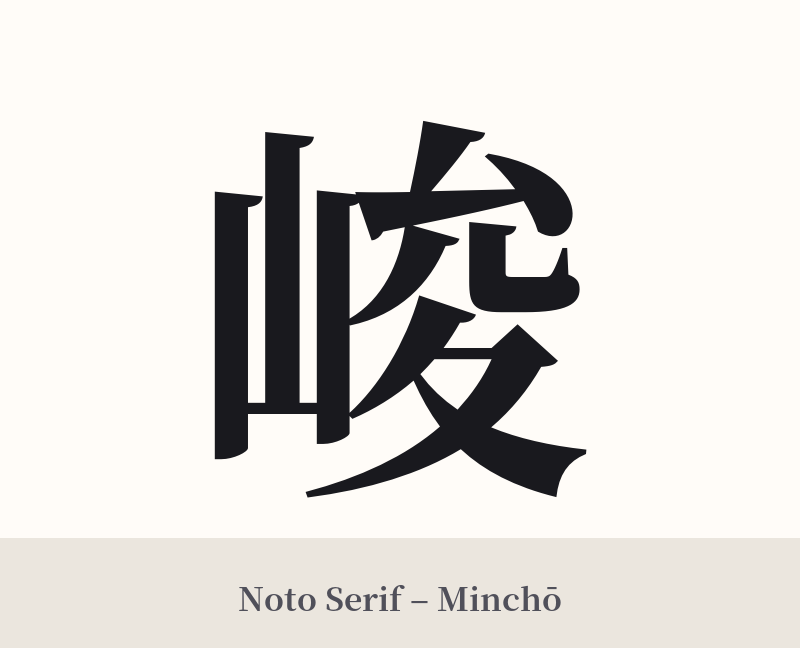
The same kanji can look dramatically different depending on the calligraphy style. Choose a font that matches the mood you want for your tattoo or design.
🎨 Tattoo Suitability
📐 Tattoo Design Guide
For a tattoo of 峻, consider placement that emphasizes its inherent strength and verticality. The forearm, calf, or along the spine are excellent choices as they provide a natural canvas for its upright form.
– Font Style: A strong, angular script is highly recommended. Kaisho (block script) will give it a formal, powerful, and clear appearance. For a slightly more dynamic feel, a bold Gyosho (semi-cursive) can work well, but avoid styles that are too fluid or ornate, as they would clash with the kanji's severe meaning.
– Visual Elements: This kanji stands powerfully on its own, but it can be integrated into a larger piece. Consider placing it within a minimalist landscape of mountains or cliffs. The 'mountain' radical (山) on the left side of the character could even be subtly stylized to merge into a larger background illustration of a peak, creating a clever and cohesive design.
Comments