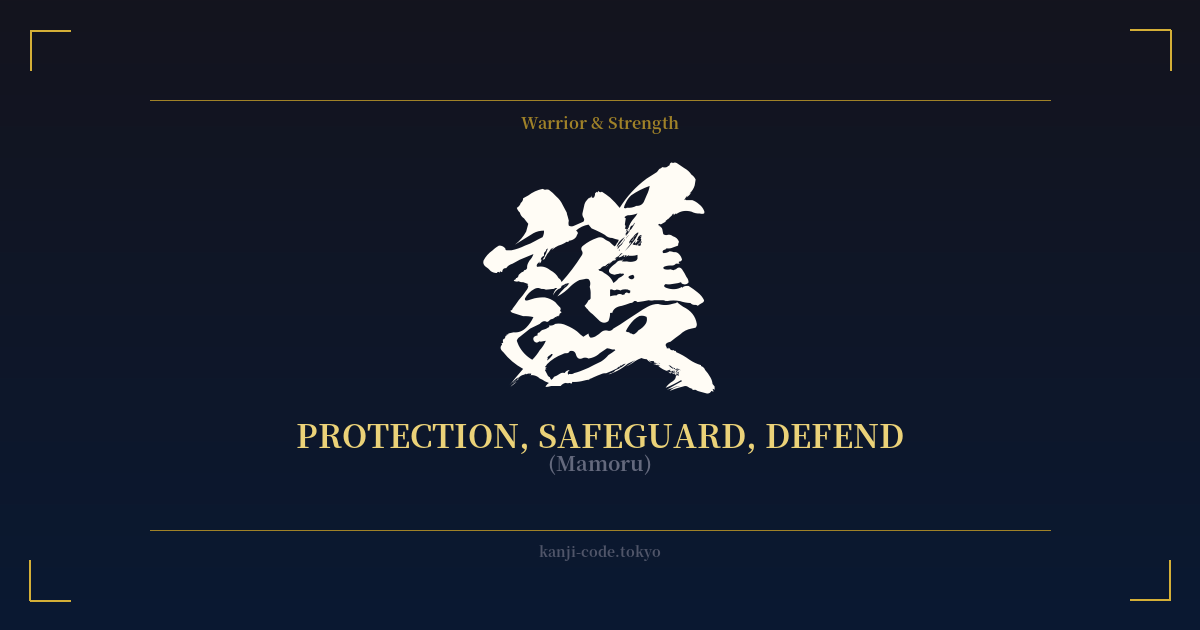
✍️ 護 (Mamoru) — Cultural Context
The Japanese kanji 護, read as 'mamoru,' is a powerful and evocative character that embodies the concept of protection, defense, and safeguarding. Its meaning goes beyond a simple shield; it speaks to an active, vigilant, and dedicated form of guardianship.
To understand its depth, we can look at its components. The character is a combination of radicals: 言 (gon, 'word' or 'speech') on the left, and on the right, 隹 (sui, an old radical for 'bird') over 寸 (sun, 'hand' or 'measure'). The original imagery is thought to depict using words or incantations (言) and one's hands (寸) to protect something small and vulnerable, like a bird (隹). This etymology paints a picture not of brute force, but of careful, deliberate, and even vocal protection.
This idea of active guardianship is deeply woven into Japanese culture. One of the most common encounters with this concept is through 'omamori' (お守り), the protective amulets sold at Shinto shrines and Buddhist temples across Japan. These small, brocaded pouches are believed to contain the power of a deity to provide specific types of protection—for safe travel, health, success in exams, or general well-being. The word 'omamori' itself is the noun form of 'mamoru,' making it a direct, tangible manifestation of this kanji's meaning.
In the context of martial arts, the kanji is central to the term 'goshin-jutsu' (護身術), the art of self-defense. Here, 護 signifies protecting one's own body from harm. It emphasizes a defensive posture, reacting to a threat rather than initiating aggression. This aligns with the broader cultural value placed on harmony and avoiding conflict where possible, while still being prepared to defend oneself when necessary.
Unlike its close relative 守 (also 'mamoru'), which can mean to protect but also to keep a promise or abide by a rule, 護 carries a stronger sense of defending against an external threat. It's the kanji you would associate with a bodyguard (a 'bengo-shi' or lawyer also uses it, 'defending' a client in court), a guardian spirit, or a parent protecting their child. It evokes feelings of loyalty, duty, and unwavering strength in the face of adversity, making it a profound symbol of a protector's vow.
🖌️ Font Styles for 護
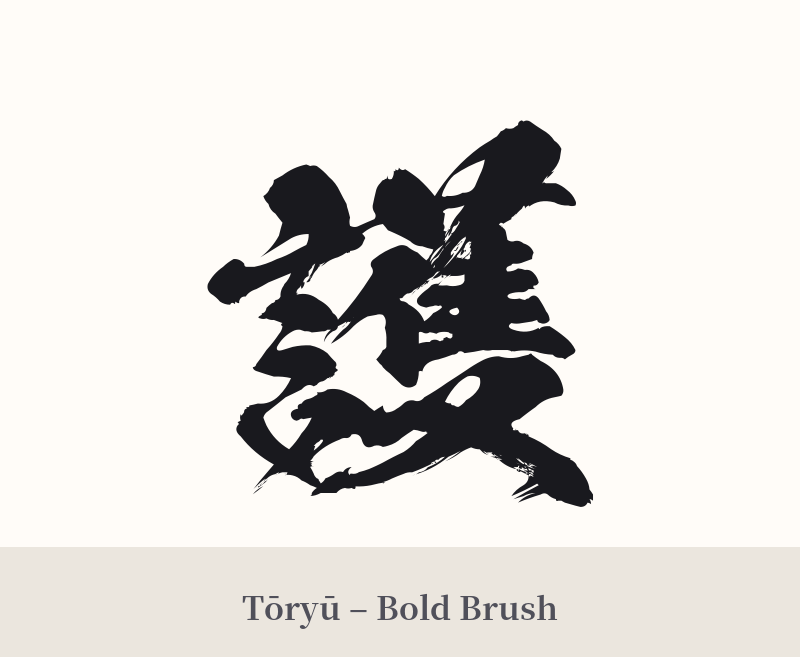
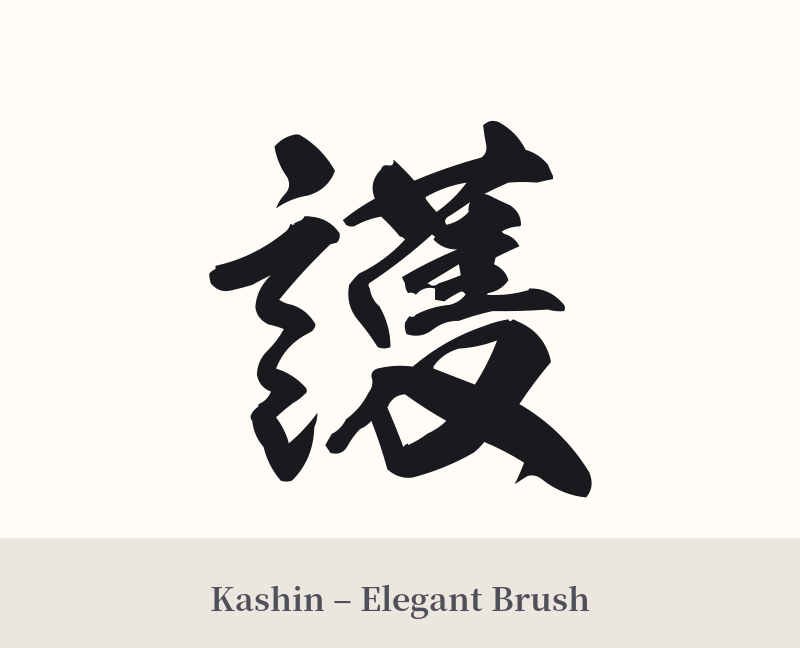
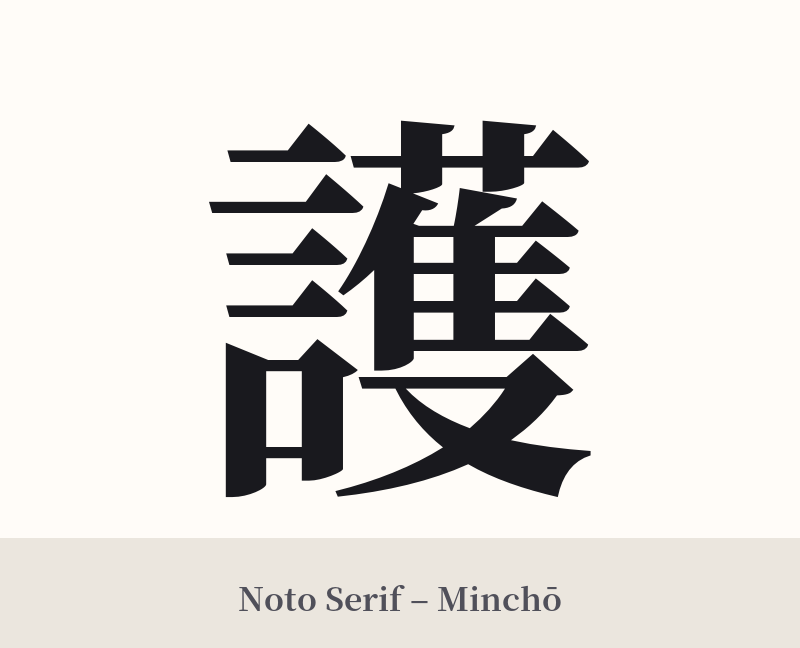
The same kanji can look dramatically different depending on the calligraphy style. Choose a font that matches the mood you want for your tattoo or design.
🎨 Tattoo Suitability
📐 Tattoo Design Guide
The kanji 護 is visually complex and balanced, offering great potential for a striking tattoo design. Its intricacy demands careful consideration of style and placement.
– Placement: Due to its high stroke count, this character works best in larger areas where detail can be preserved. The forearm, calf, upper back, or chest are excellent choices. These locations provide a flat, ample canvas for the artist to execute the 20 strokes cleanly.
– Font Style: A bold, clear script is highly recommended. The 'Kaisho' (block script) style emphasizes the character's structure and strength, making it legible and powerful. For a more dynamic feel, a skilled artist could render it in 'Gyosho' (semi-cursive script), but this requires expertise to ensure it doesn't become an illegible smudge.
– Visual Tips: Consider the negative space within the character. A good artist will use this to create balance and prevent the design from feeling too dense. You could also incorporate this kanji into a larger piece. Imagine it placed on the chest of a dragon, held by a guardian figure like a samurai or Fudōmyōō, or surrounded by elements that represent what you wish to protect, such as lotus flowers for purity or waves for resilience.
Comments