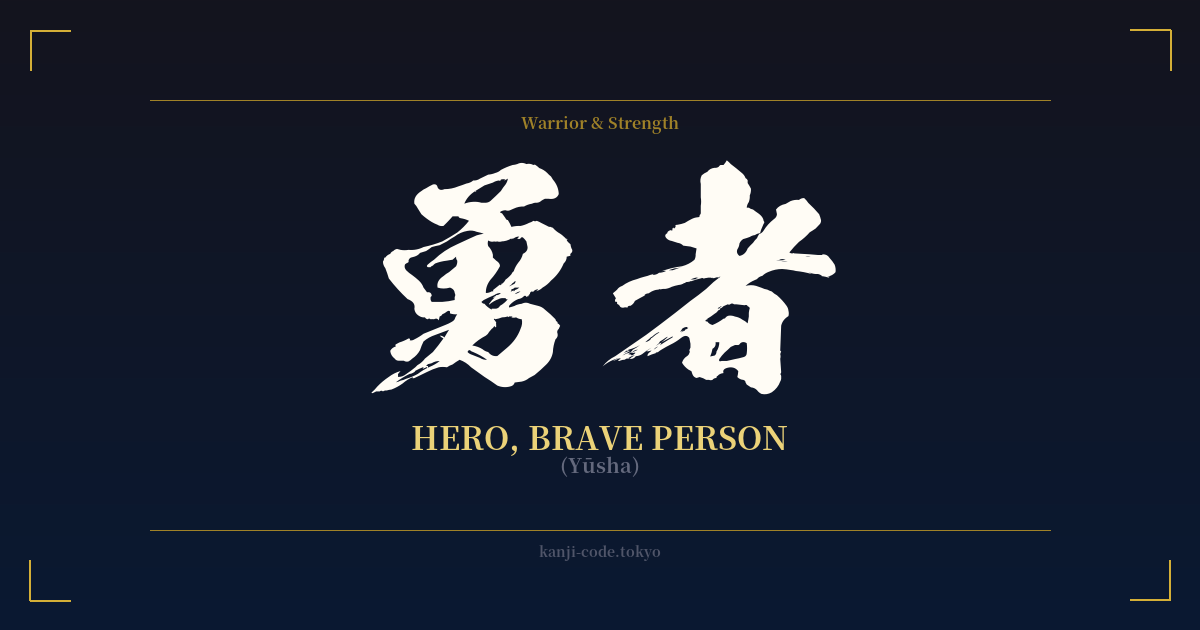
✍️ 勇者 (Yūsha) — Cultural Context
勇者 (Yūsha) is the Japanese word for a hero, but it carries a specific and powerful nuance that sets it apart from other similar terms. At its most literal, it combines the characters for courage (勇) and person (者) to mean "a brave person." This simple construction gives it a direct, unadorned strength, focusing on the quality of courage as the defining trait of the individual.
While the concept of a brave person is ancient, the modern understanding of Yūsha is inextricably linked to the world of Japanese pop culture, particularly fantasy role-playing games (JRPGs). The term was famously codified by the seminal video game series Dragon Quest, where the player's character is officially designated as the Yūsha. This cemented its status as the archetypal hero of a quest narrative—a chosen one who embarks on a grand adventure to defeat a great evil and save the world.
This is where it differs from a similar word, 英雄 (Eiyū). An Eiyū is also a hero, but typically refers to a historical figure of great renown, a national hero, or someone who has accomplished a monumental, real-world feat. A Yūsha, in contrast, is the protagonist of a story. They might start as an ordinary person from a small village, called upon by destiny to face extraordinary challenges. The Yūsha embodies the journey itself—the growth, the struggle, and the ultimate triumph through perseverance and bravery.
This connection to storytelling makes Yūsha a deeply aspirational term. It doesn't just describe a static state of being heroic; it implies a path of action and a commitment to protecting others. The Yūsha is the one who steps forward when others will not, driven by an innate sense of justice and courage rather than a desire for fame or glory.
Therefore, to understand Yūsha is to understand a core archetype in modern Japanese fiction. It evokes images of swords and magic, of confronting dragons and dark lords, but at its heart, it speaks to the potential within anyone to become a "brave person" when the situation demands it. It is a symbol of righteous struggle and the indomitable human spirit.
🖌️ Font Styles for 勇者
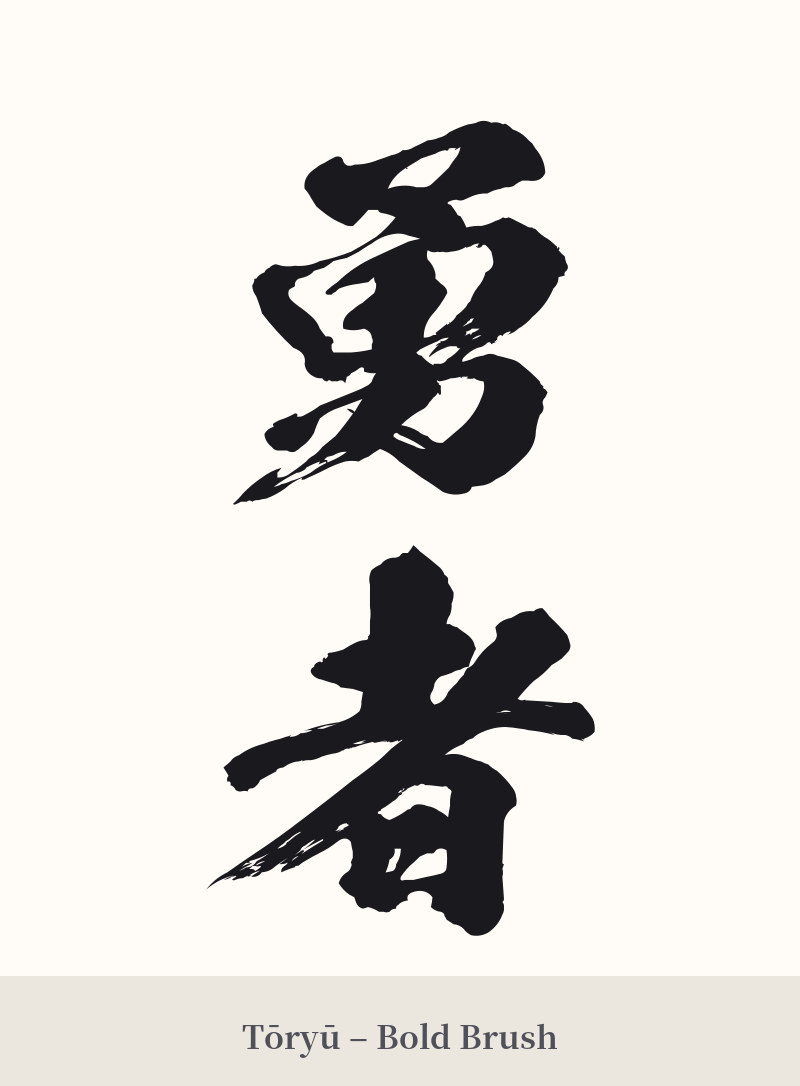
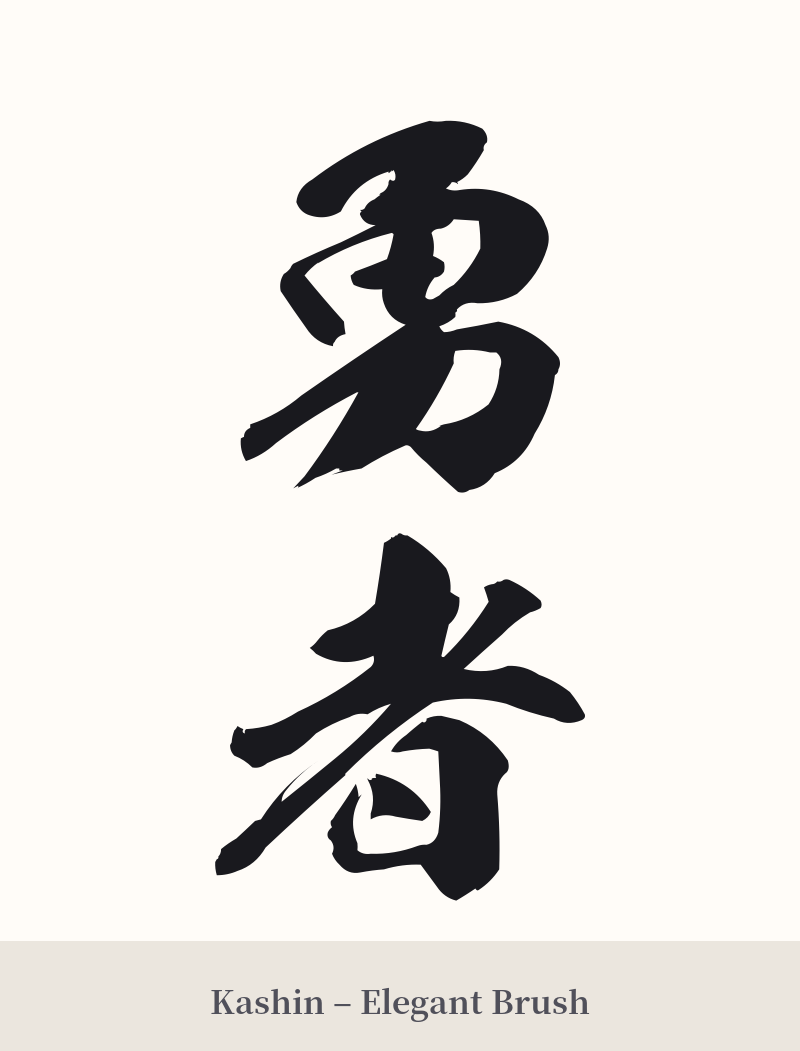
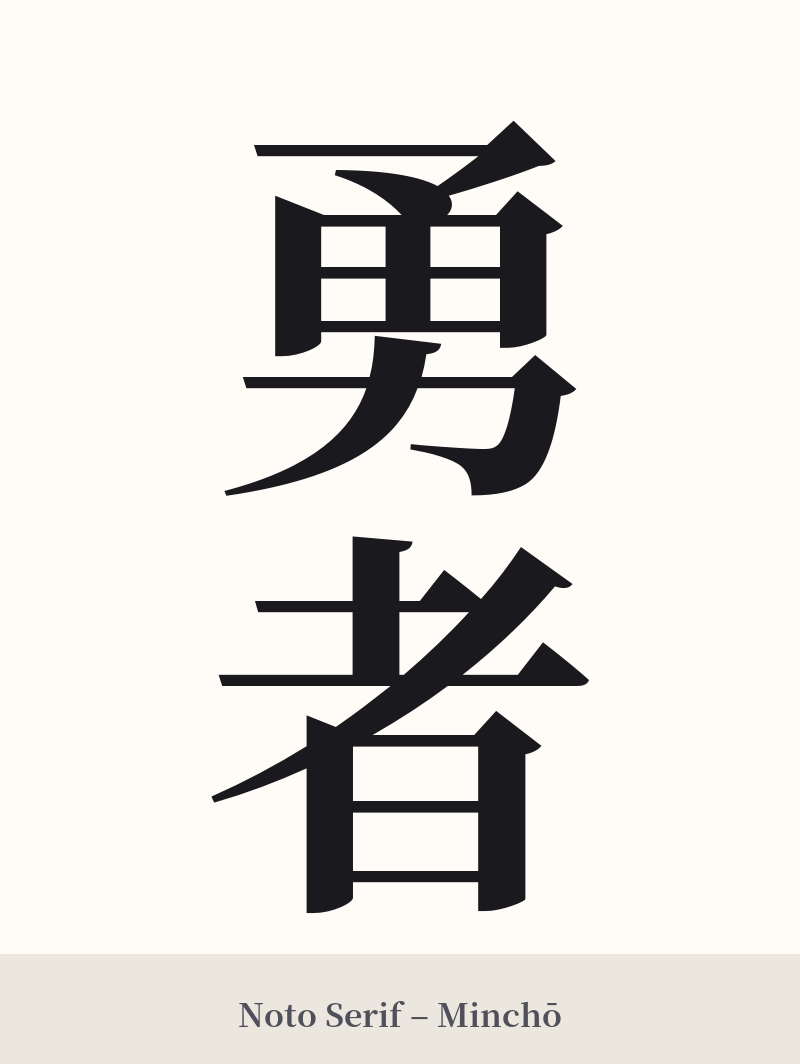
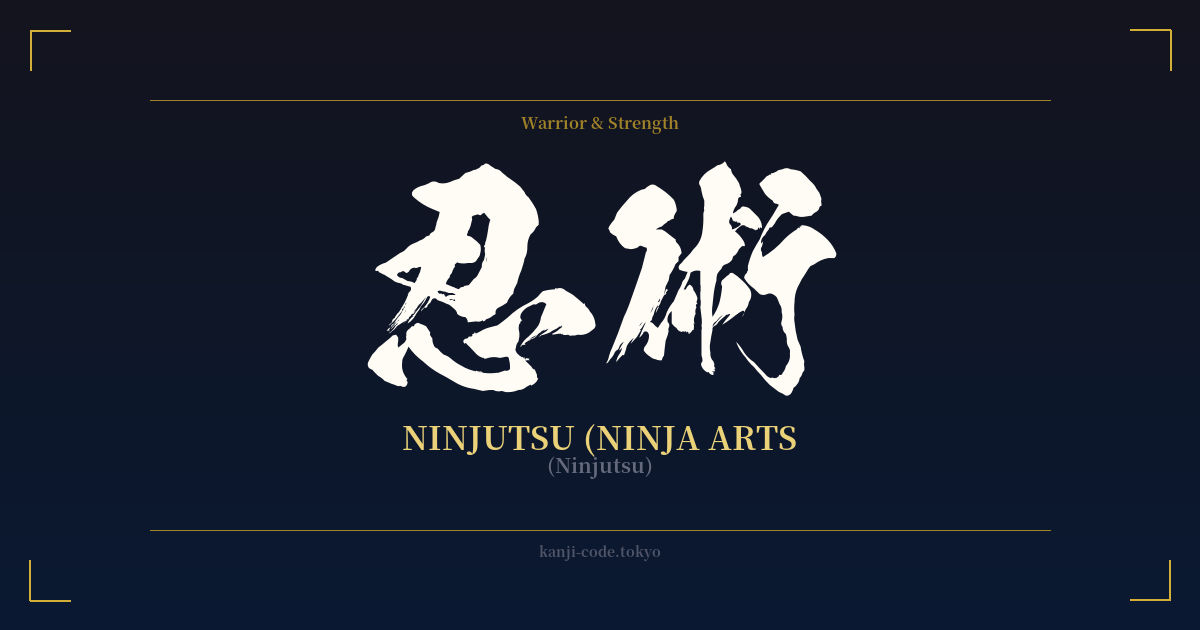
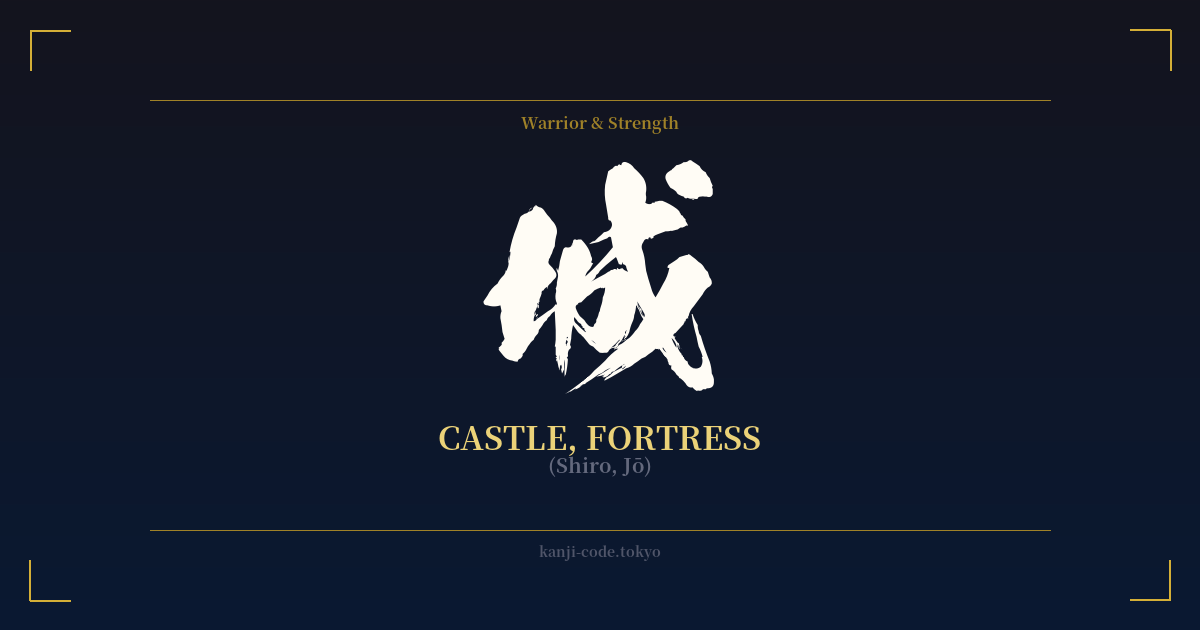
The same kanji can look dramatically different depending on the calligraphy style. Choose a font that matches the mood you want for your tattoo or design.
🎨 Tattoo Suitability
📐 Tattoo Design Guide
A 勇者 (Yūsha) tattoo is a bold statement about courage and perseverance. The design should reflect this strength.
– Placement: This two-character compound works exceptionally well in a vertical orientation. The inner forearm, calf, or along the spine are excellent placements that provide the necessary length. For a horizontal design, the chest or upper back allows the characters to be displayed with prominence.
– Font Style: A strong, clear font is highly recommended. A standard block script (Kaisho) emphasizes the stability and resolve of a hero. For a more dynamic feel, a semi-cursive style (Gyōsho) can capture the sense of a journey and action. Avoid overly thin or ornate fonts that might detract from the kanji's inherent power.
– Visual Tips: While 勇者 stands powerfully on its own, it can be integrated into a larger piece. Consider pairing it with imagery that complements the hero's journey, such as a dragon, a phoenix symbolizing rebirth, a sword, or a compass representing the quest. Using a splash of color, like a red ink stamp effect, can add a focal point without overwhelming the characters.
Comments