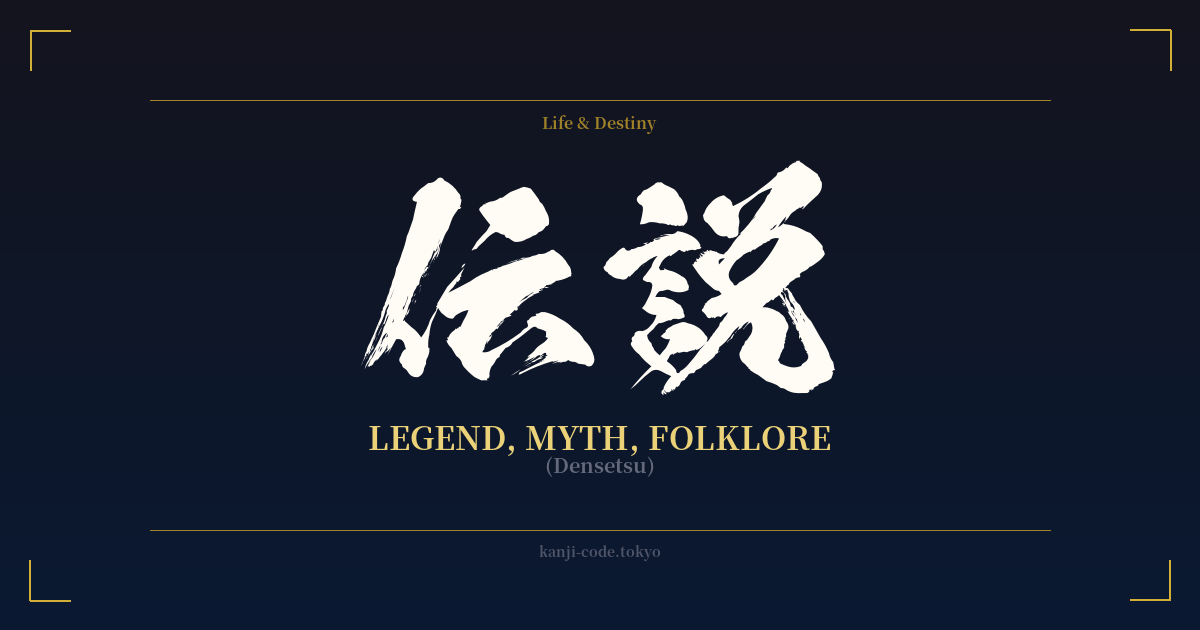
✍️ 伝説 (Densetsu) — Cultural Context
伝説 (Densetsu) is a powerful Japanese word that encapsulates the concepts of legend, myth, and folklore. It refers to stories that are passed down through generations, often blending historical fact with fantastical embellishments. The word itself is a beautiful combination of 'to transmit' (伝) and 'theory' or 'story' (説), literally meaning 'a transmitted story.'
In Japan, the idea of densetsu is deeply woven into the cultural fabric. It's the vessel for countless tales of heroic samurai, mystical creatures (yōkai), and revered historical figures whose lives have been magnified into epic narratives. Famous legends like that of Momotarō (the Peach Boy), Urashima Tarō (the fisherman who visits an undersea palace), and the tragic story of the 47 Rōnin are all forms of densetsu. These stories are more than just entertainment; they convey morals, cultural values, and a shared sense of history.
The term isn't limited to ancient tales. In modern Japan, you'll find it used for 'urban legends' (都市伝説, toshi densetsu), which are contemporary cautionary tales or mysterious rumors that spread through society. This shows the adaptability of the concept, proving that humanity's need for compelling narratives is timeless.
Furthermore, densetsu is a cornerstone of Japanese pop culture. The world-famous video game series 'The Legend of Zelda' is titled 'ゼルダの伝説' (Zeruda no Densetsu) in Japan. Countless anime, manga, and films draw from or create their own densetsu, building worlds rich with history and lore. To be called a 'densetsu' is the ultimate compliment, signifying that one's achievements are so great they will be spoken of for ages to come, transforming a person into a story—a legend.
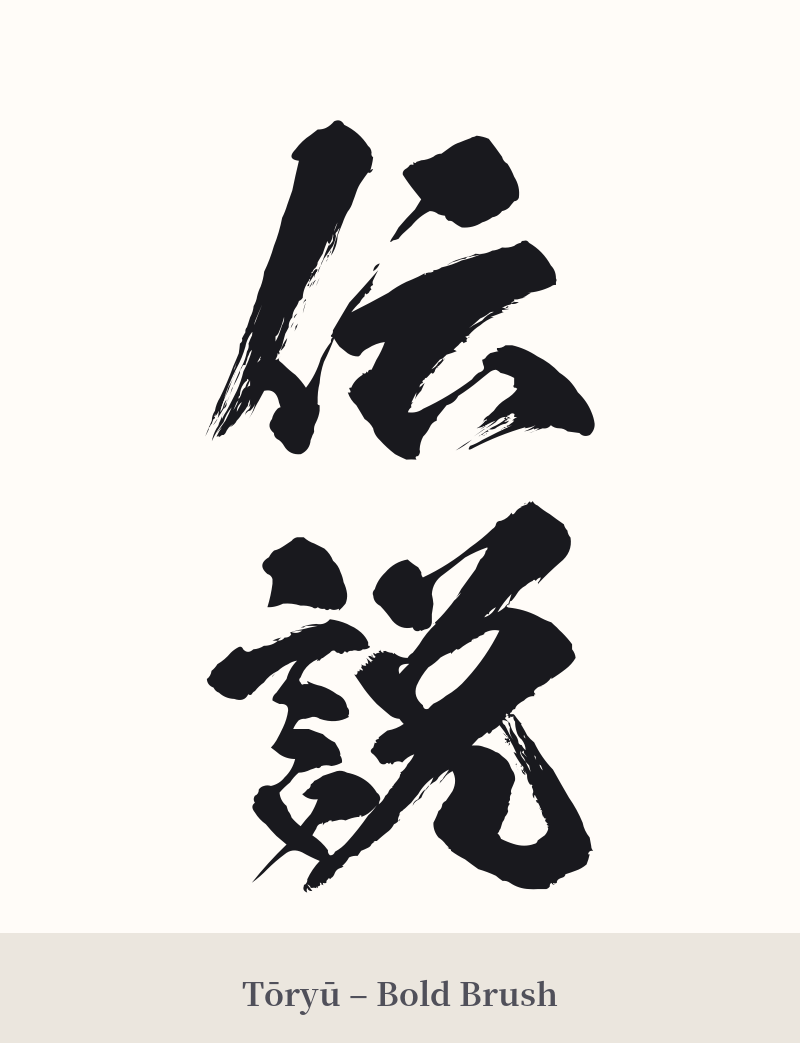
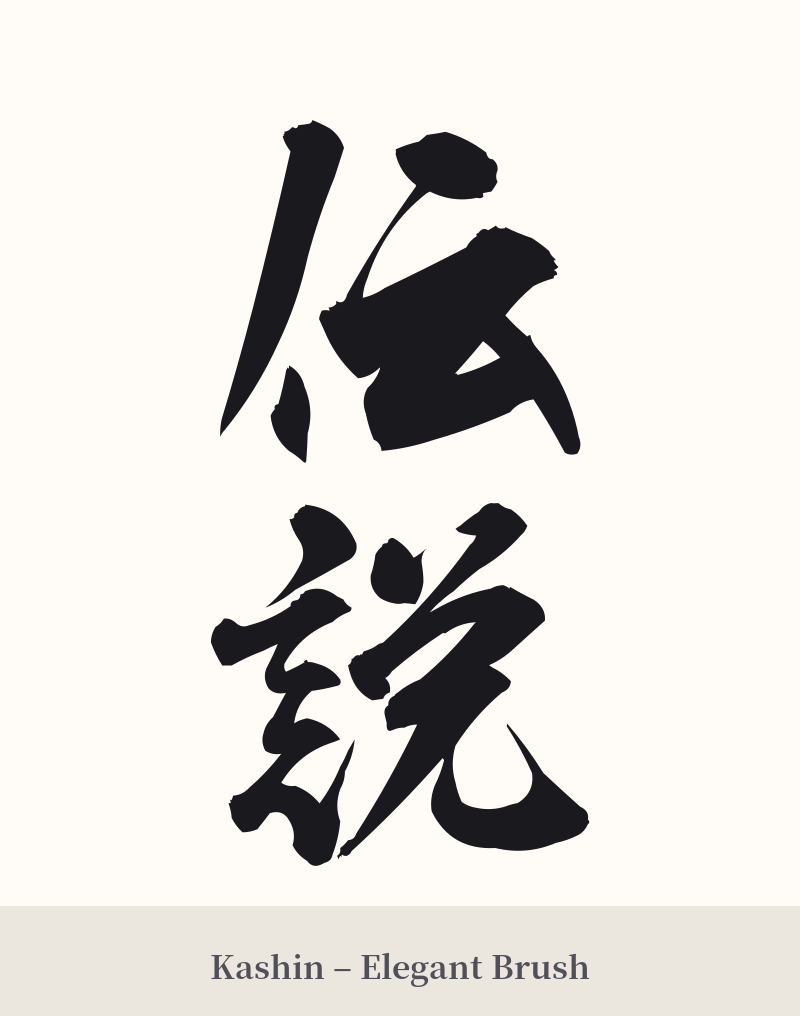
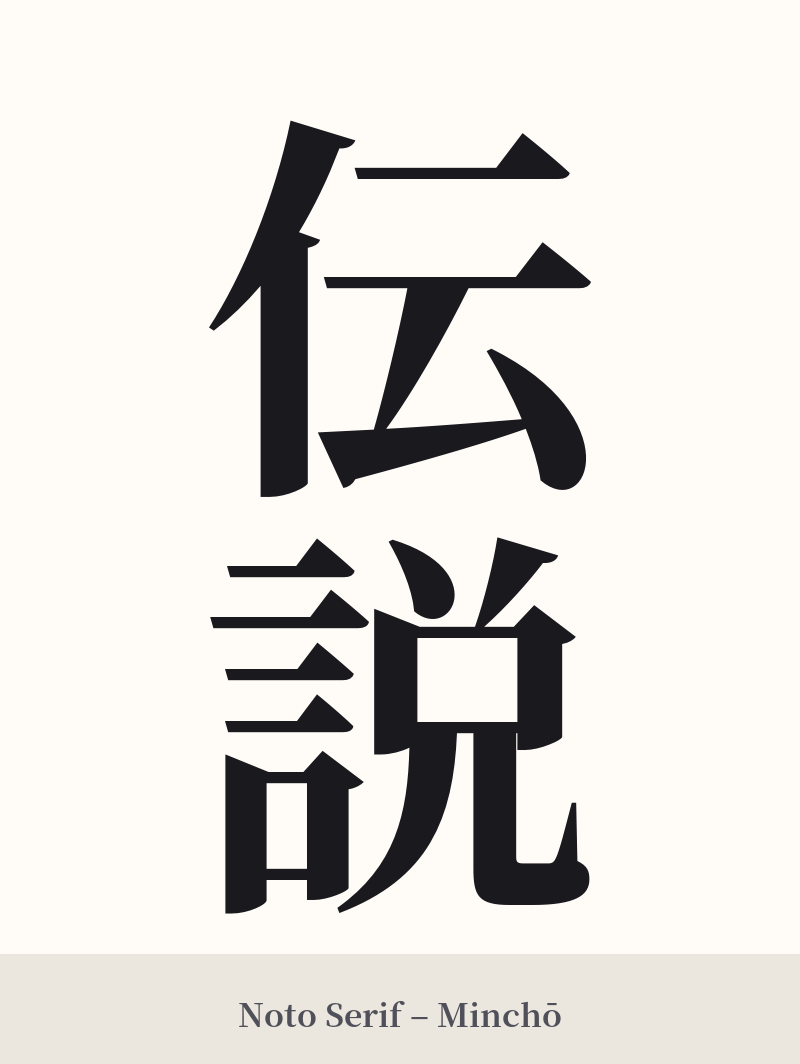
🖌️ Font Styles for 伝説
The same kanji can look dramatically different depending on the calligraphy style. Choose a font that matches the mood you want for your tattoo or design.
🎨 Tattoo Suitability
📐 Tattoo Design Guide
The word 伝説 offers great versatility for a tattoo design, evoking a sense of history and epic scale.
– Placement: A vertical orientation is highly recommended, as it aligns with traditional Japanese calligraphy. This looks powerful along the spine, forearm, or calf. A horizontal design works well across the chest or upper back.
– Style: For a classic and dynamic feel, consider a semi-cursive (gyōsho) or cursive (sōsho) brushstroke style. These fluid styles mirror the act of storytelling and the flow of time. For a more solid, impactful look, a bold kaisho (block) script emphasizes the 'historical record' aspect of a legend.
– Visuals: Consider incorporating elements from a legend that is personally meaningful to you. This could be a dragon, a samurai helmet, a lotus flower, or a specific symbol from folklore. This adds a layer of personal narrative to the design. However, the kanji are strong enough to stand on their own.
Comments