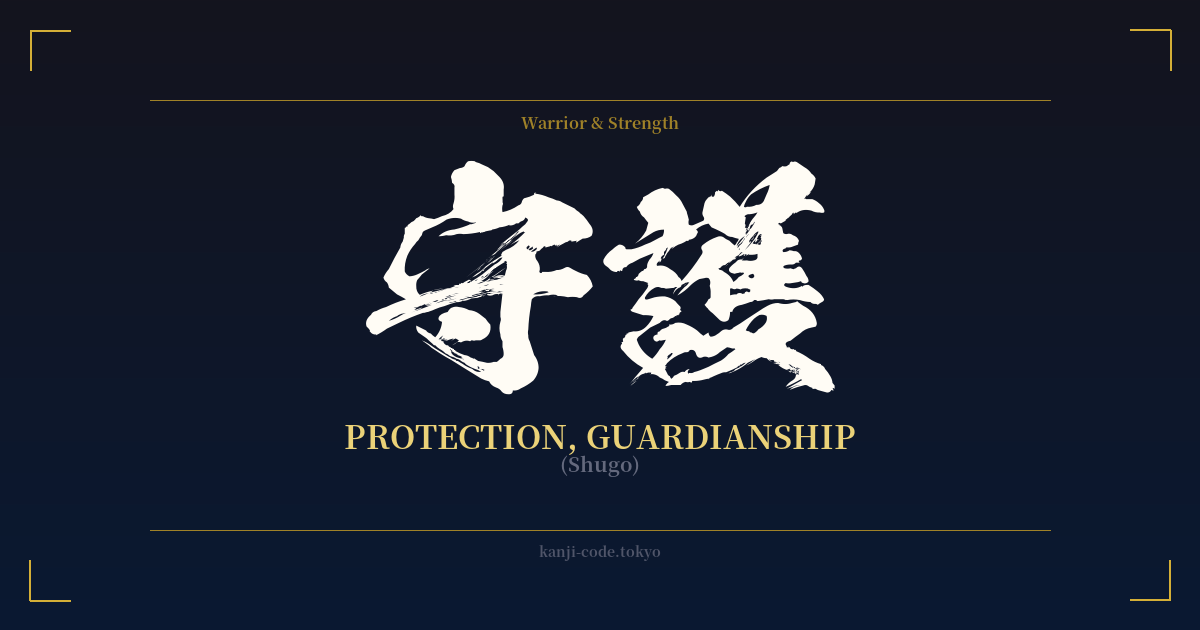
✍️ 守護 (Shugo) — Cultural Context
The Japanese word 守護 (Shugo) translates to 'protection' or 'guardianship,' but its cultural resonance runs far deeper than a simple definition. It evokes a powerful sense of steadfast, active defense, not just of a person, but of a place, a principle, or a spirit. It is a word steeped in honor and duty, carrying the weight of history within its two characters.
Historically, the title of 'Shugo' held immense significance in feudal Japan. From the 12th to the 16th centuries, the Shugo were military governors appointed by the Shogun to oversee provinces. They were the literal 'protectors' of their domains, responsible for maintaining law and order, commanding local samurai, and defending against threats. This role established 'Shugo' as a term tied to the warrior class, embodying the Bushido ideals of loyalty, responsibility, and martial prowess.
Beyond the battlefield and political appointments, the concept of Shugo permeates Japanese spirituality. A 'Shugoshin' (守護神) is a guardian deity, a spirit or god that watches over a specific clan, village, or individual. These can range from the powerful Nio guardian kings who stand at the entrance of Buddhist temples, flexing their muscles to ward off evil, to the local kami of a Shinto shrine protecting the surrounding community. This spiritual layer transforms Shugo from a mere act of guarding into a sacred duty, a divine watchfulness.
In modern Japan, while the feudal title is a relic of the past, the essence of Shugo remains. The term is used in phrases like 'shugo tenshi' (守護天使), the Japanese equivalent of a 'guardian angel.' It also appears frequently in popular culture, from manga and anime like 'Shugo Chara!' to video games, where characters often take on the role of a 'shugo-sha' (守護者), or protector. This speaks to the enduring appeal of the archetype: the selfless and powerful guardian who stands between innocence and harm, a concept that is both timeless and universal.
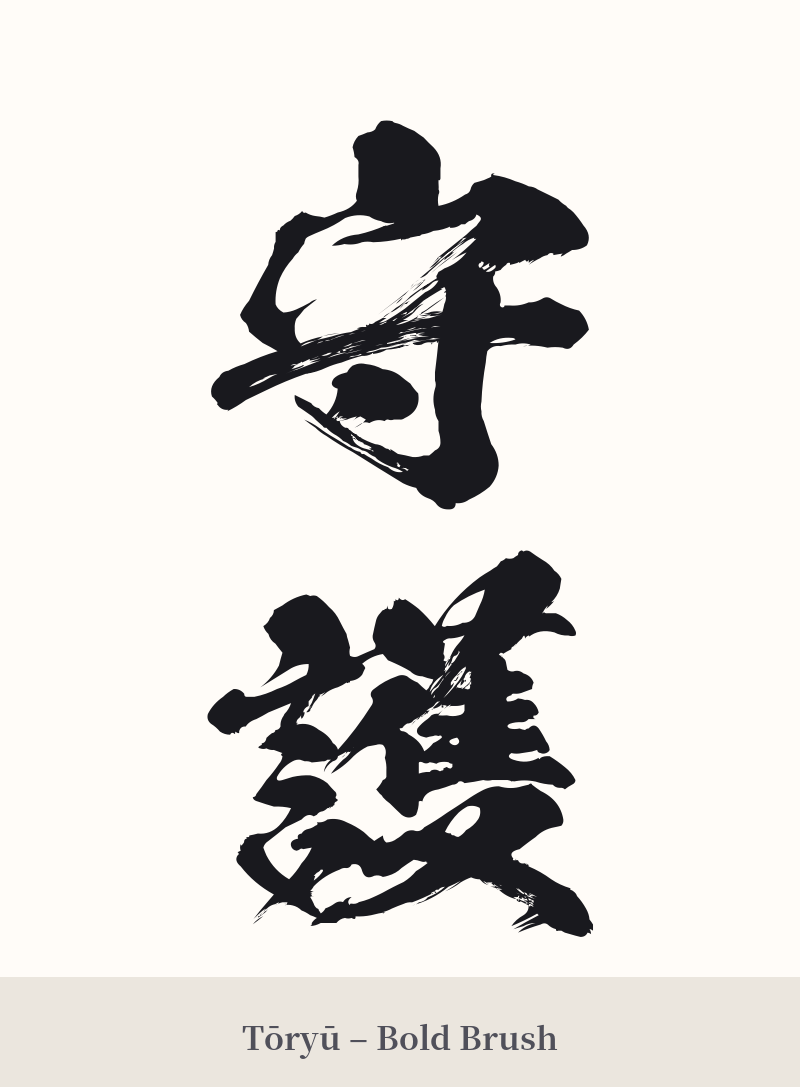
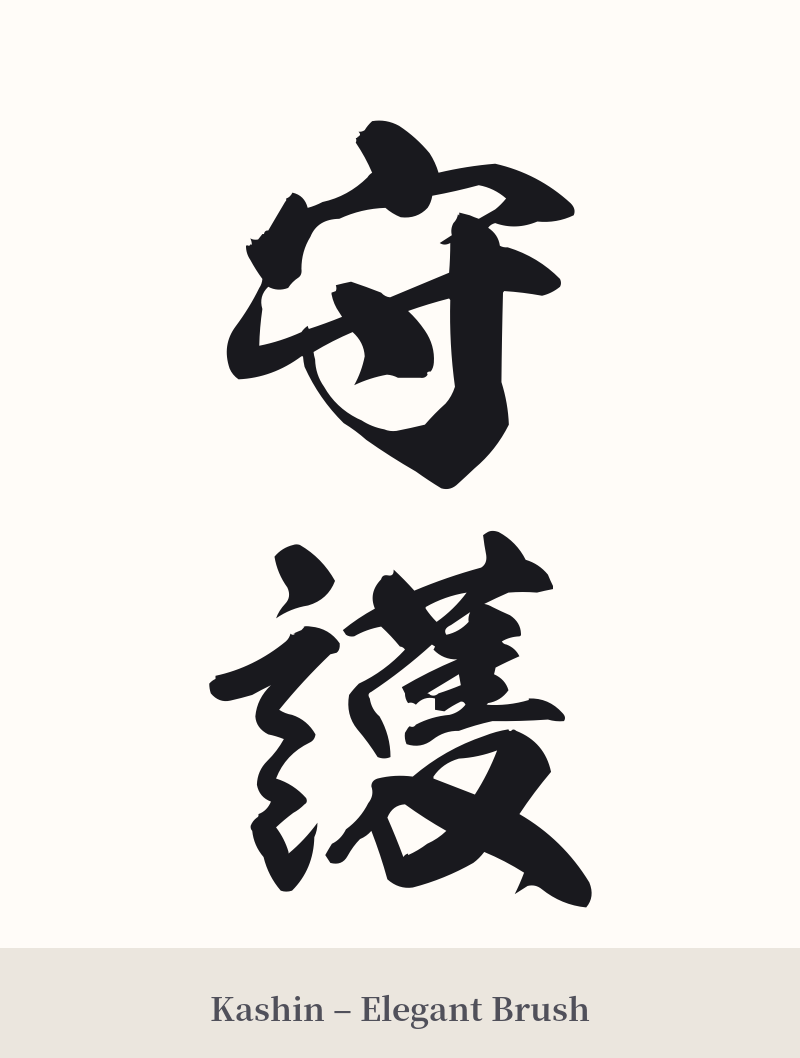
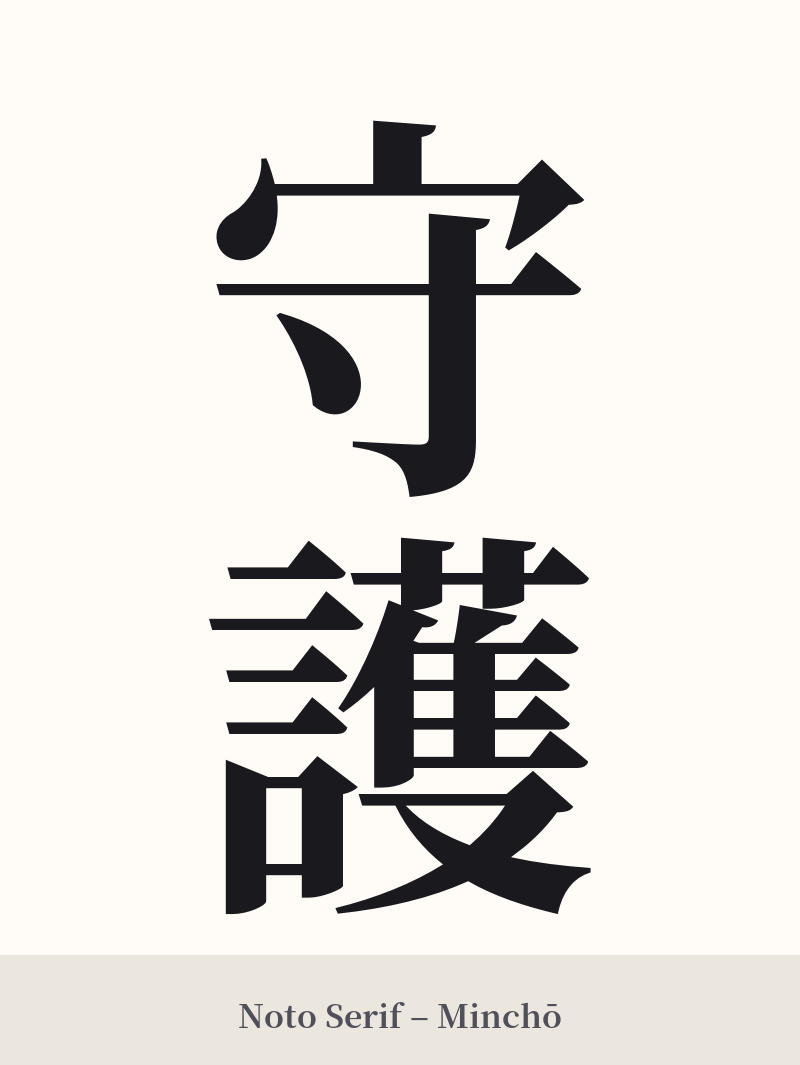
🖌️ Font Styles for 守護
The same kanji can look dramatically different depending on the calligraphy style. Choose a font that matches the mood you want for your tattoo or design.
🎨 Tattoo Suitability
📐 Tattoo Design Guide
For a 守護 (Shugo) tattoo, a vertical alignment is the most traditional and visually appealing orientation, allowing the characters to flow downwards. This makes it an excellent choice for the forearm, the calf, the spine, or along the ribs.
Consider these design elements: – Font Style: A strong, bold script like Kaisho (block style) will emphasize the sense of stability and power. For a more dynamic feel, a Gyosho (semi-cursive) or Sosho (cursive) script can evoke the feeling of swift, protective action, as if drawn by a warrior's brush. – Visual Pairing: Shugo pairs well with symbolic imagery. Consider placing it alongside a dragon (a symbol of power and protection), a lotus flower (representing spiritual purity and protection from worldly corruption), or elements of a samurai's armor like a kabuto (helmet). – Sizing: Due to the complexity of the second character (護), this design should not be too small. Ensure the artist can give it enough space to keep the strokes clear and defined, preserving its legibility and impact for years to come.
Comments