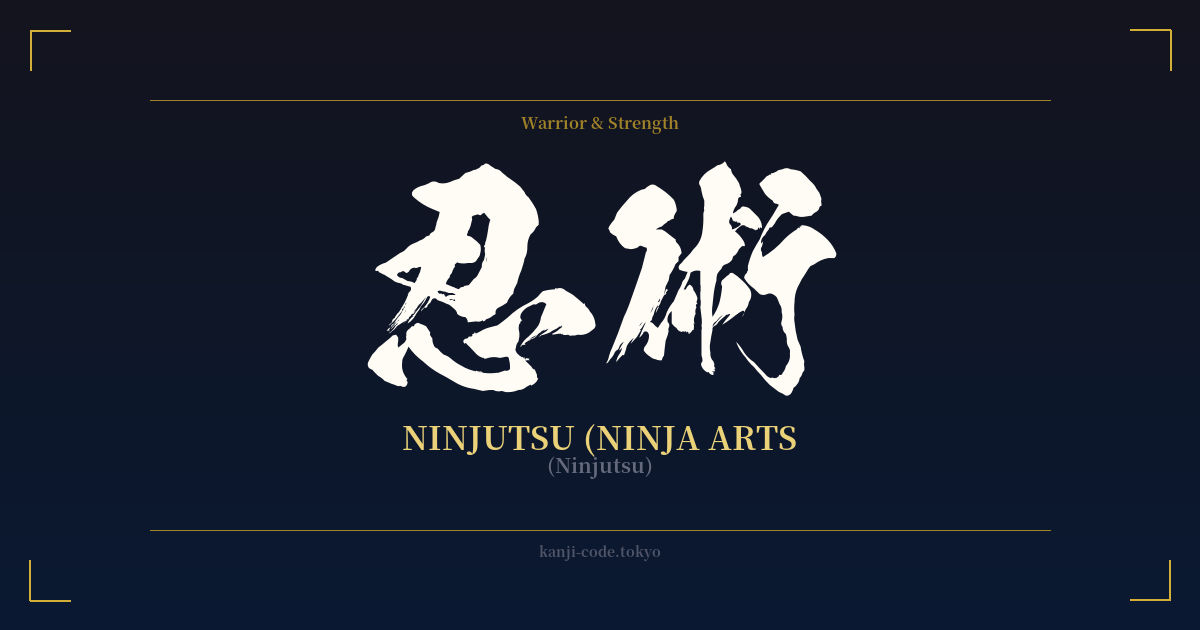
✍️ 忍術 (Ninjutsu) — Cultural Context
The word 忍術 (Ninjutsu) instantly conjures images of shadow warriors, clad in black, moving with supernatural stealth through feudal Japan. While this popular image is fueled by centuries of folklore and modern media, the reality behind the kanji is just as fascinating. Ninjutsu translates to the 'art of stealth' or the 'art of endurance,' a name that reveals a much deeper practice than mere assassination.
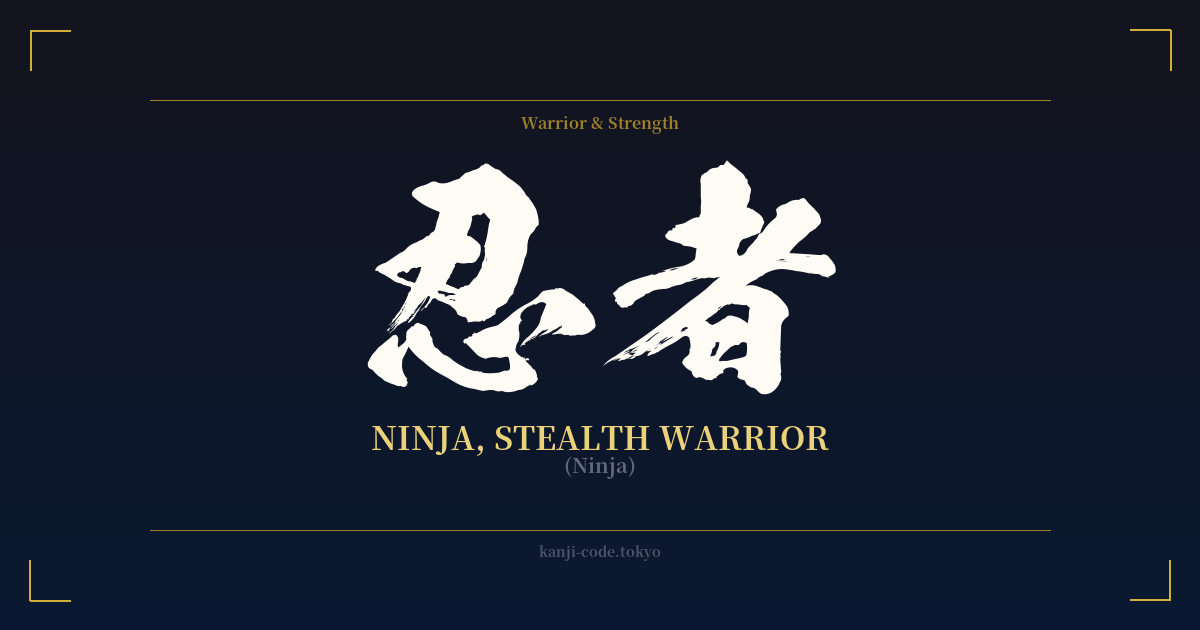
The term is composed of two kanji: 忍 (nin) and 術 (jutsu). The first character, 忍, is a masterpiece of symbolic construction, combining the radicals for 'blade' (刃) and 'heart' (心). This powerfully evokes the idea of enduring pain as if a blade were piercing your heart, highlighting the immense self-control, discipline, and concealment required of its practitioners. The second character, 術, simply means 'art,' 'technique,' or 'skill.' Together, they form a term that describes a comprehensive system of unconventional warfare and espionage.
Historically, the practitioners of Ninjutsu, known as shinobi or ninja, were not magical figures but highly trained specialists in intelligence gathering, sabotage, infiltration, and guerilla tactics. Emerging during the turbulent Sengoku period (15th-17th centuries), they served feudal lords (daimyō) as spies and covert agents. Their skills, known collectively as Ninjutsu, included not just combat but also disguise, survival, medicine, and pyrotechnics. Famous schools, such as the Iga-ryū and Kōga-ryū, developed their own unique sets of techniques passed down through generations.
Over time, especially during the peaceful Edo period, the historical shinobi faded and the mythical ninja was born. Popular literature and woodblock prints exaggerated their abilities, attributing to them superhuman feats like walking on water, turning invisible, and casting spells. This romanticized version is the one that has captured the global imagination, cementing the ninja as a permanent fixture in pop culture, from Hollywood films to manga and anime like Naruto.
Today, Ninjutsu lives on in several forms. It exists as a modern martial art, with organizations like the Bujinkan teaching techniques allegedly passed down from historical schools. It also thrives as a powerful cultural symbol representing mystery, deadly efficiency, resilience, and the quiet strength needed to overcome any obstacle from the shadows.
🖌️ Font Styles for 忍術
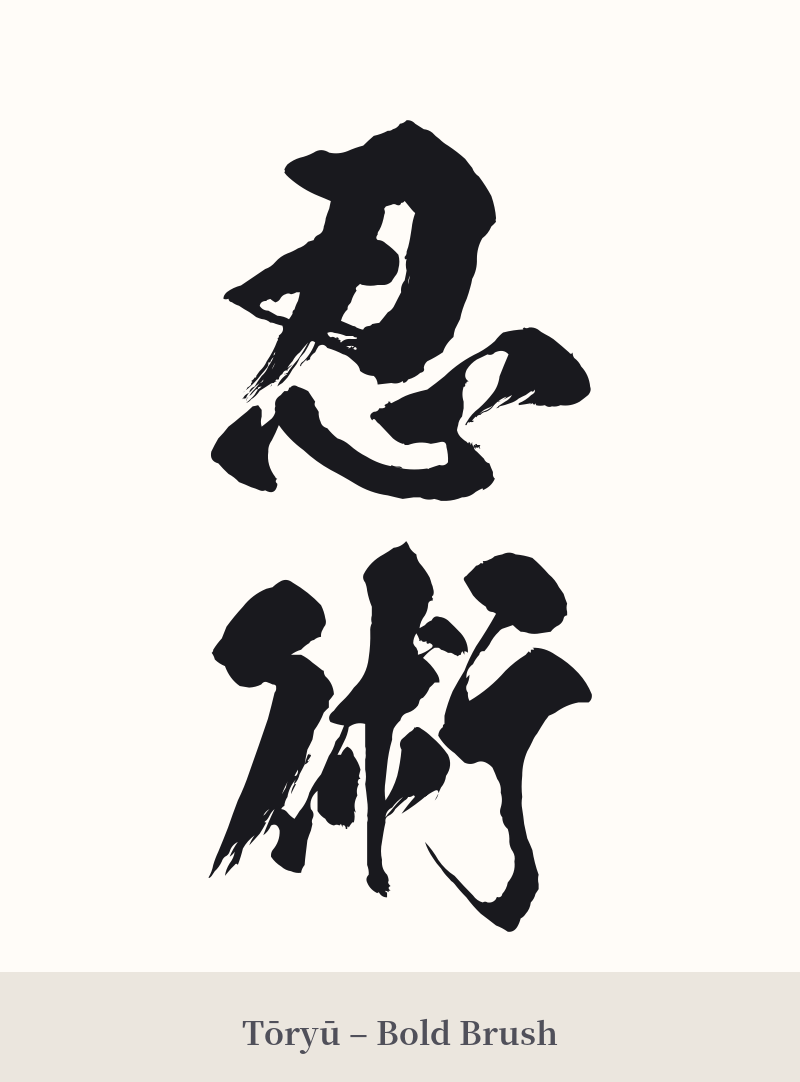
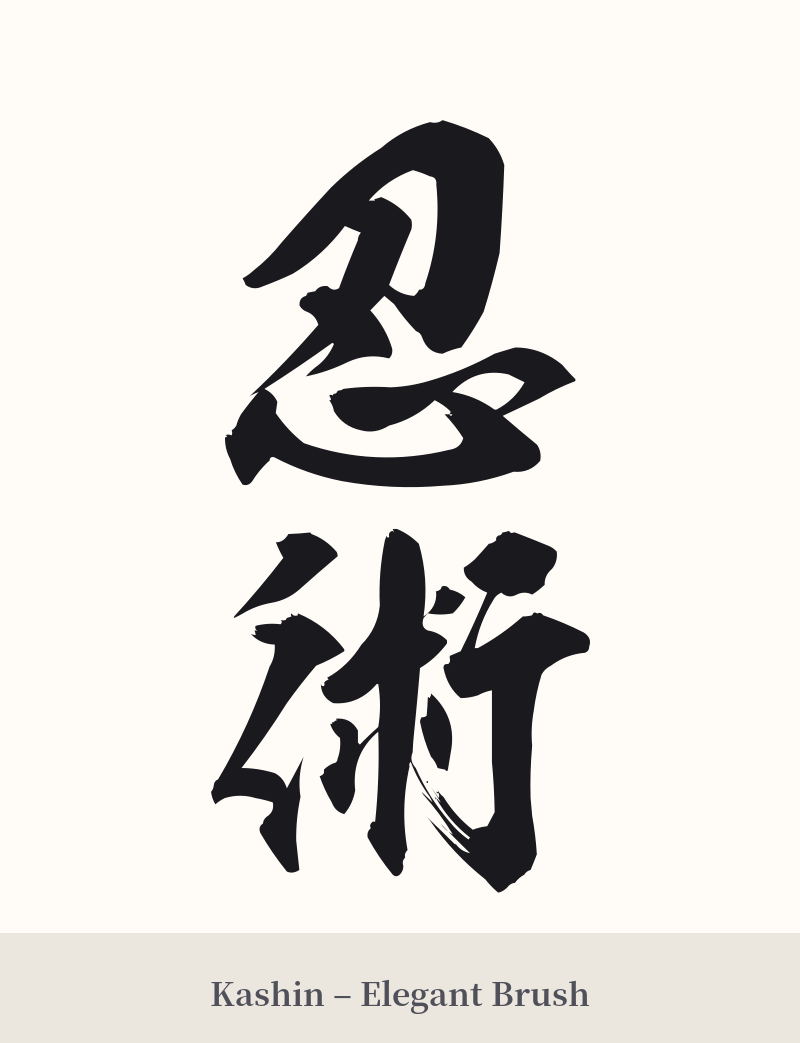
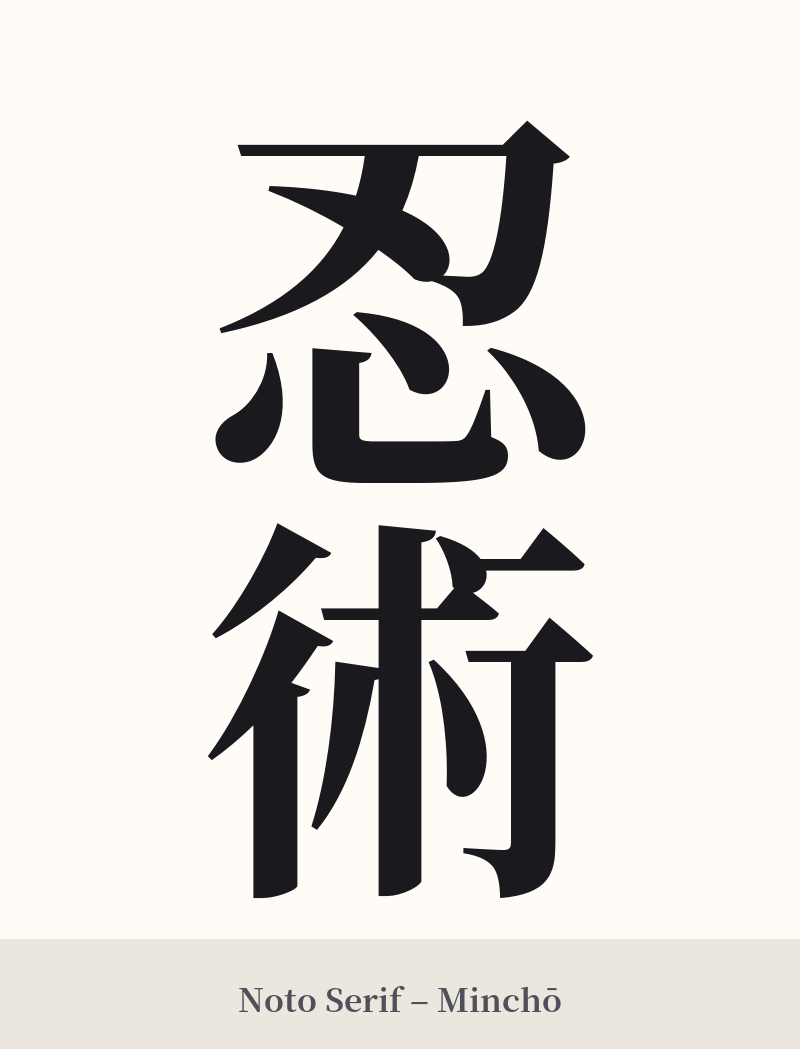
The same kanji can look dramatically different depending on the calligraphy style. Choose a font that matches the mood you want for your tattoo or design.
🎨 Tattoo Suitability
📐 Tattoo Design Guide
A 忍術 (Ninjutsu) tattoo offers a lot of stylistic flexibility. The two-character compound is well-balanced and can be adapted to many placements and styles.
– Placement: A vertical orientation looks fantastic along the forearm, calf, or spine, emphasizing the flow of the characters. For a horizontal design, the upper back, chest, or across the bicep are strong choices.
– Font Style: For a sharp, disciplined look, consider a Kaisho (block) or Gyōsho (semi-cursive) script. These styles evoke precision and control. For a more dynamic and fluid feel, a Sōsho (cursive) style can represent the stealthy, ghost-like movement of a ninja.
– Visual Tips: While the kanji is powerful on its own, it can be integrated with other elements. Consider a background of swirling smoke, a crescent moon, or the silhouette of a traditional Japanese castle. A splash of red ink, perhaps as a single brush stroke, can add a dramatic accent. However, be careful not to overcrowd the design; the elegance of Ninjutsu often lies in its simplicity and efficiency.
Comments