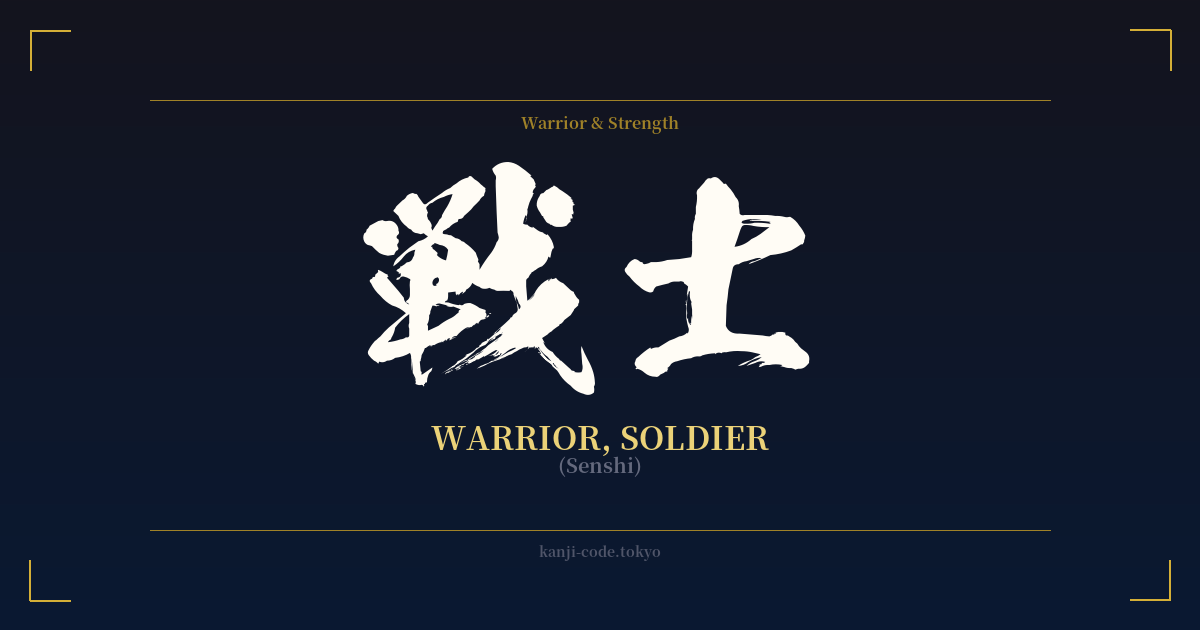
✍️ 戦士 (Senshi) — Cultural Context
戦士 (Senshi) is the Japanese word for 'warrior' or 'soldier.' It is a powerful and evocative term that captures the essence of one who fights, whether on a historical battlefield, in a fantastical realm, or in a metaphorical struggle. The word is composed of two kanji: 戦 (sen), meaning 'war' or 'battle,' and 士 (shi), meaning 'person,' 'gentleman,' or 'scholar.' This combination elevates the concept from a mere fighter to a person defined by their role in combat.
Historically, Japan has a rich warrior tradition, most famously embodied by the samurai. While 戦士 is a more general term than 侍 (Samurai) or 武士 (Bushi), it carries the same spirit of martial prowess and dedication. A samurai was a specific social class bound by a strict code, whereas a senshi is any individual who engages in battle. This makes the term incredibly versatile, applicable to ancient warriors, modern soldiers, and even the heroes of myth and legend.
In contemporary Japan, the word 戦士 has been largely shaped by pop culture. It is a staple in manga, anime, and video games. From the Z-Fighters in 'Dragon Ball' (Z戦士, Zetto Senshi) to the Sailor Guardians in 'Sailor Moon' (セーラー戦士, Sērā Senshi), the term is synonymous with heroism, extraordinary power, and the fight for justice. This has given 'senshi' a modern, often fantastical connotation for audiences worldwide, distancing it from the grim realities of historical warfare and aligning it more with courage and adventure.
This duality is key to understanding 戦士. On one hand, it can be used in a completely literal and serious context, such as referring to the soldiers of a nation's armed forces. On the other, it can describe a 'warrior for a cause'—someone fighting against illness, injustice, or personal demons. This adaptability makes it a deeply resonant word, capable of representing both physical conflict and the unwavering strength of the human spirit.
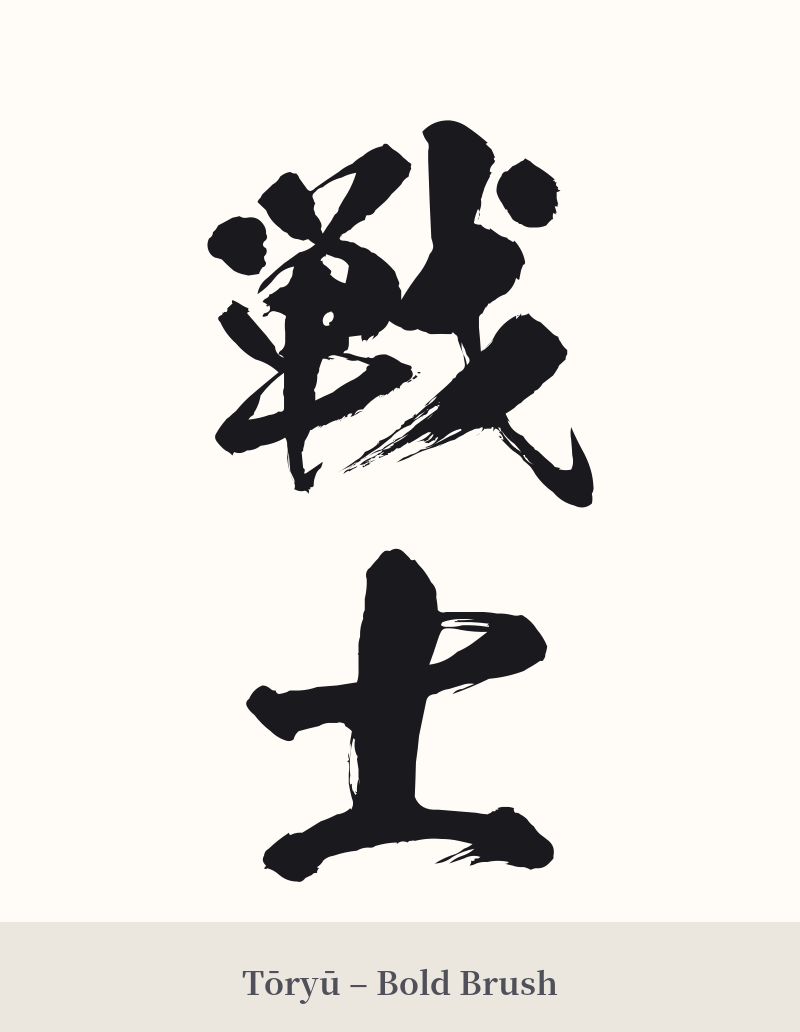
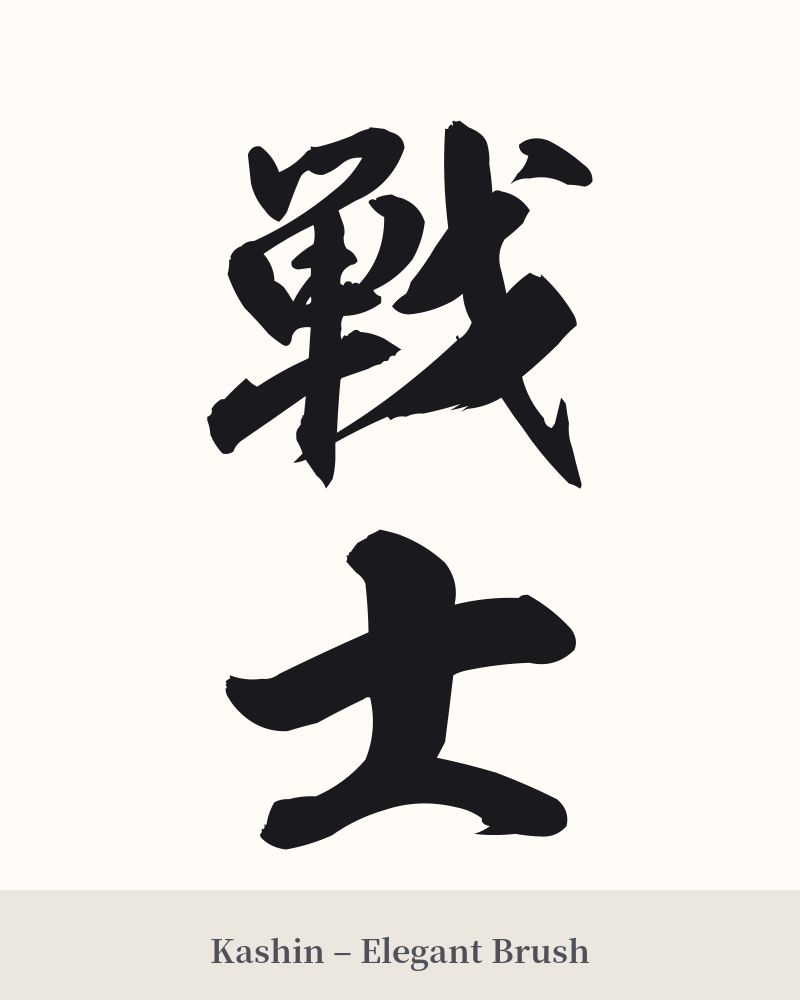
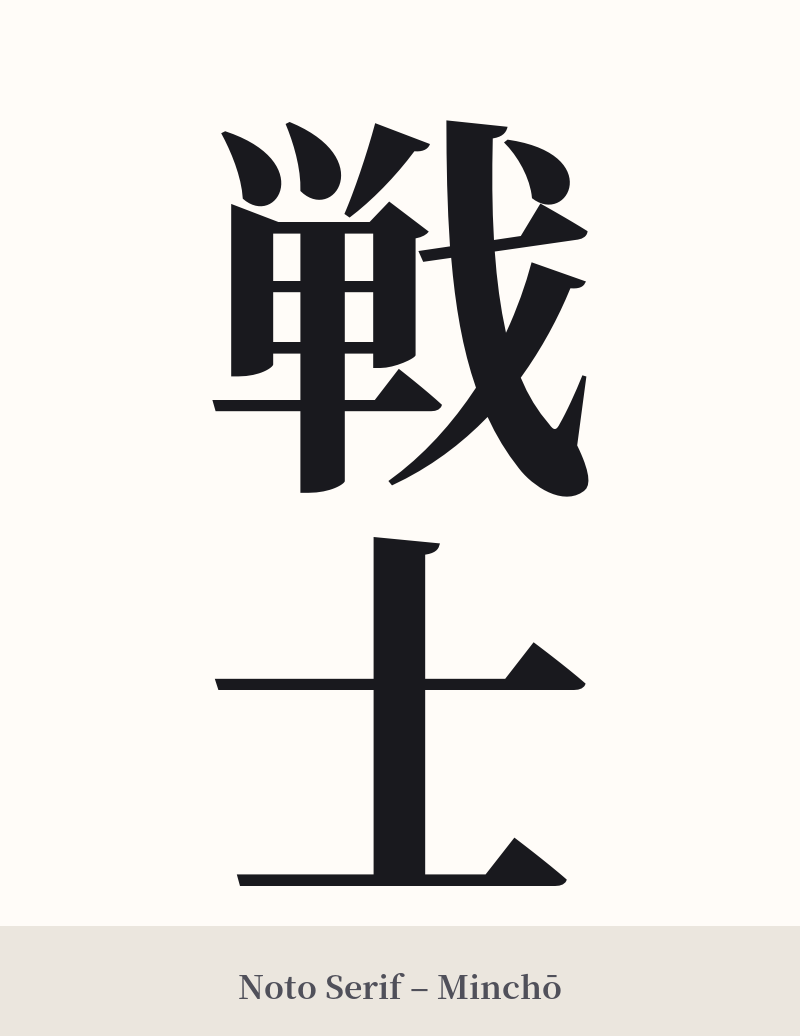
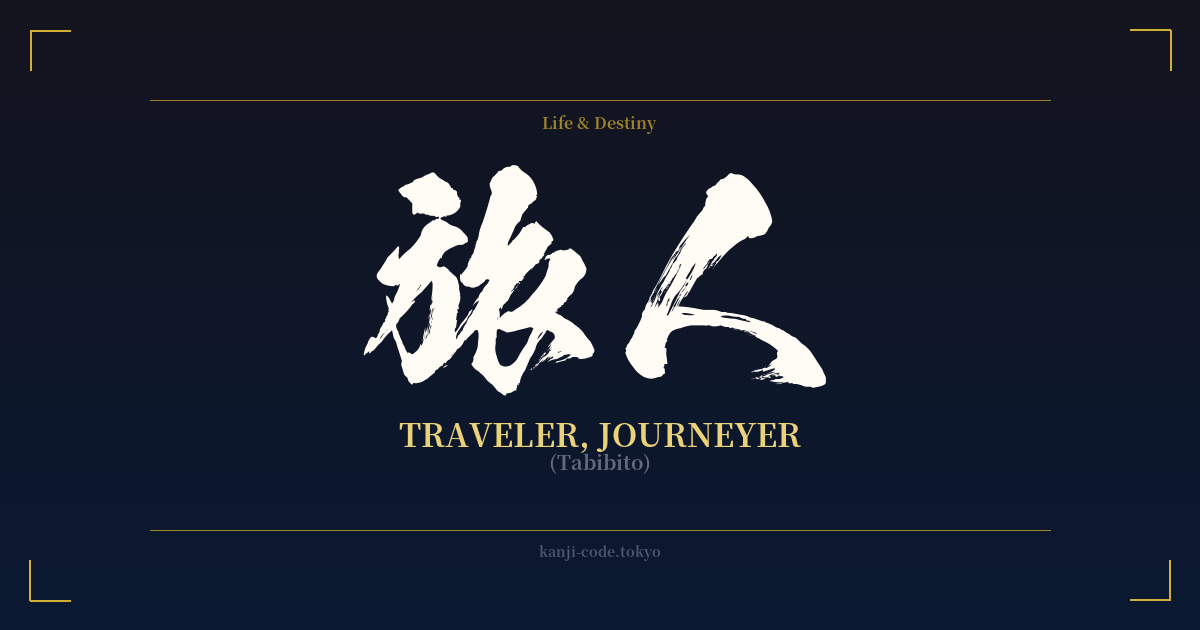
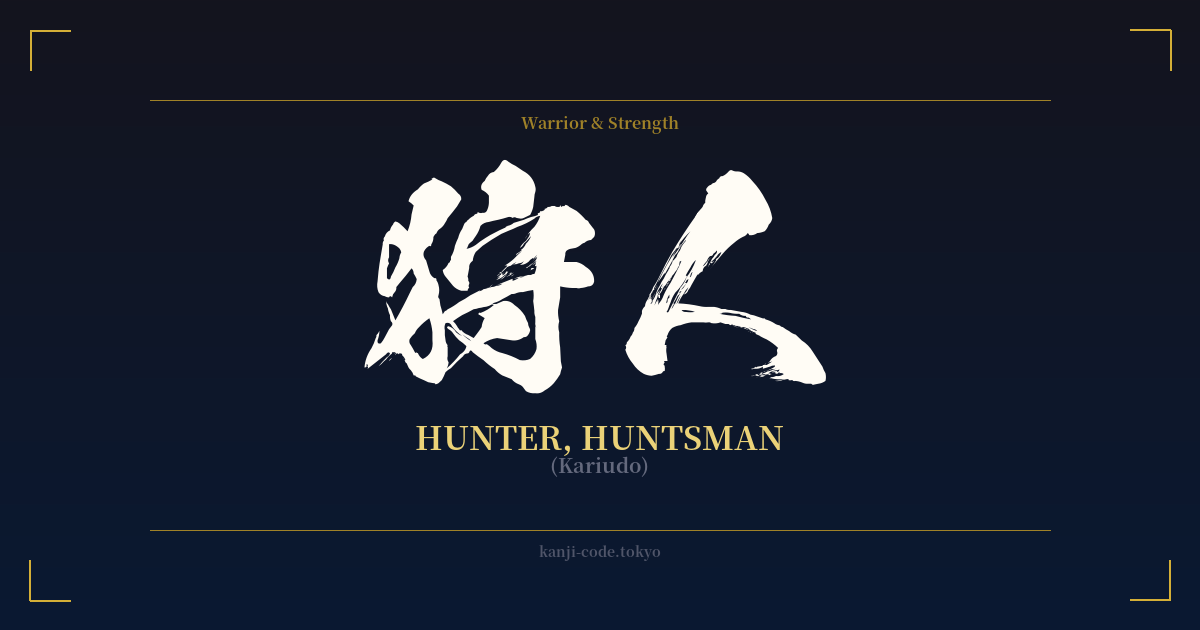
🖌️ Font Styles for 戦士
The same kanji can look dramatically different depending on the calligraphy style. Choose a font that matches the mood you want for your tattoo or design.
🎨 Tattoo Suitability
📐 Tattoo Design Guide
The kanji for 戦士 (Senshi) offers great flexibility for a tattoo design thanks to its balanced and dynamic appearance.
– Placement: Vertical placement is classic and works well on the forearm, bicep, calf, or along the spine. For a horizontal design, the chest or upper back provides a strong canvas.
– Font Style: A bold, expressive calligraphy brush script (shodō) emphasizes the 'warrior' spirit, with energetic strokes and splashes (hitsu) suggesting movement and action. For a more modern or sci-fi feel, a clean, sharp Mincho or Gothic font can look striking and precise.
– Visual Elements: While 戦士 stands powerfully on its own, it can be paired with other motifs. Common additions include a dragon (symbolizing strength and wisdom), a samurai helmet (kabuto), cherry blossoms (symbolizing the transient nature of life), or a red sun circle (Hinomaru) to ground it in Japanese imagery.
Comments