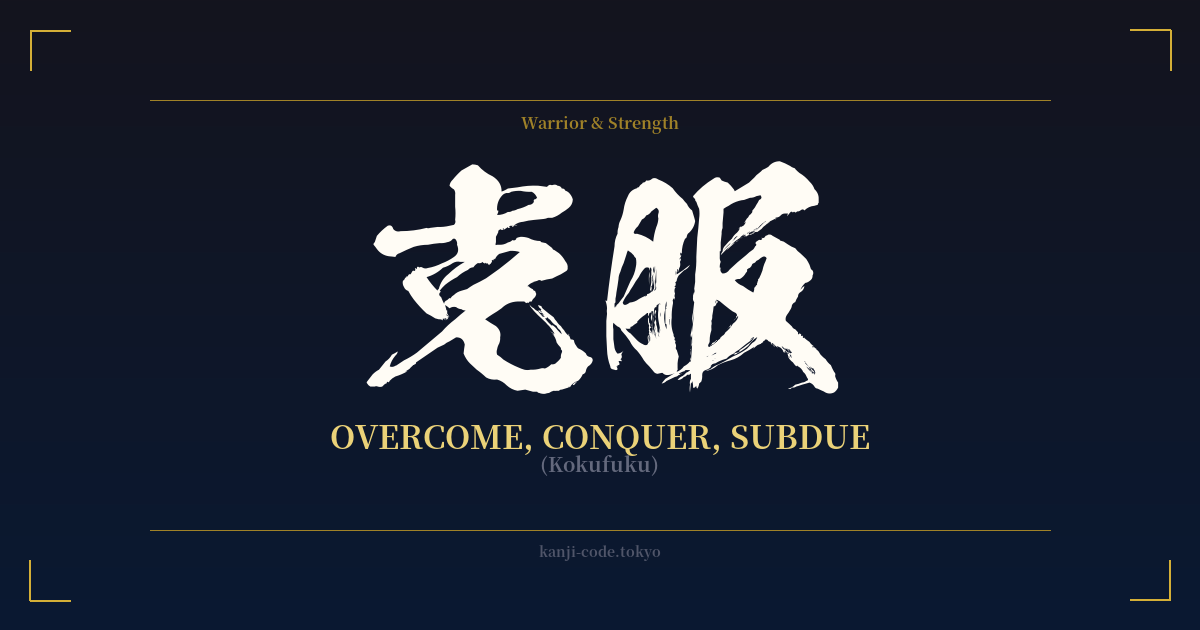
✍️ 克服 (Kokufuku) — Cultural Context
The Japanese word 克服 (Kokufuku) translates to overcoming, conquering, or subduing a great difficulty. It’s a term steeped in the concepts of perseverance and inner strength, representing not just a single victory, but the entire arduous process of mastering a challenge through effort and will.
Unlike the simpler word for winning, 勝つ (katsu), which can apply to a game or a single contest, 克服 implies a prolonged and significant struggle. It’s the word you would use for conquering a debilitating illness, mastering a deep-seated fear, or breaking a destructive habit. It speaks to a profound, internal transformation where a weakness is not just defeated, but brought under your complete control.
The power of the word is revealed in its constituent kanji. The first character, 克 (koku), means 'to overcome.' It carries a sense of assertive victory and prevailing against opposition. The second character, 服 (fuku), is fascinatingly complex. While its most common meaning today is 'clothing,' its older meanings include 'to submit,' 'to obey,' or 'to yield.'
Together, they create a powerful image: to truly overcome a challenge (克), you must make it submit to your will (服). It’s not about annihilating the obstacle but about domesticating it, turning a source of weakness into a testament of your strength. This duality is central to the Japanese martial and philosophical mindset, where conquering the self is seen as the ultimate victory.
In the context of Bushidō, the way of the warrior, a samurai's journey was filled with 克服. They sought to overcome the fear of death, the weakness of hesitation, and the ego's desire for glory. This internal battle was considered just as important, if not more so, than any external conflict. The goal was to achieve a state of mental fortitude where nothing could sway them from their duty and principles.
Today, 克服 remains a vital word in Japanese culture. It is frequently used in stories of personal triumph, from athletes overcoming injuries to individuals succeeding against social or economic odds. It embodies the spirit of resilience and the deeply held belief that with determination and endurance, any obstacle can be surmounted. It is a tribute to the quiet, unwavering strength required to turn hardship into victory.
🖌️ Font Styles for 克服
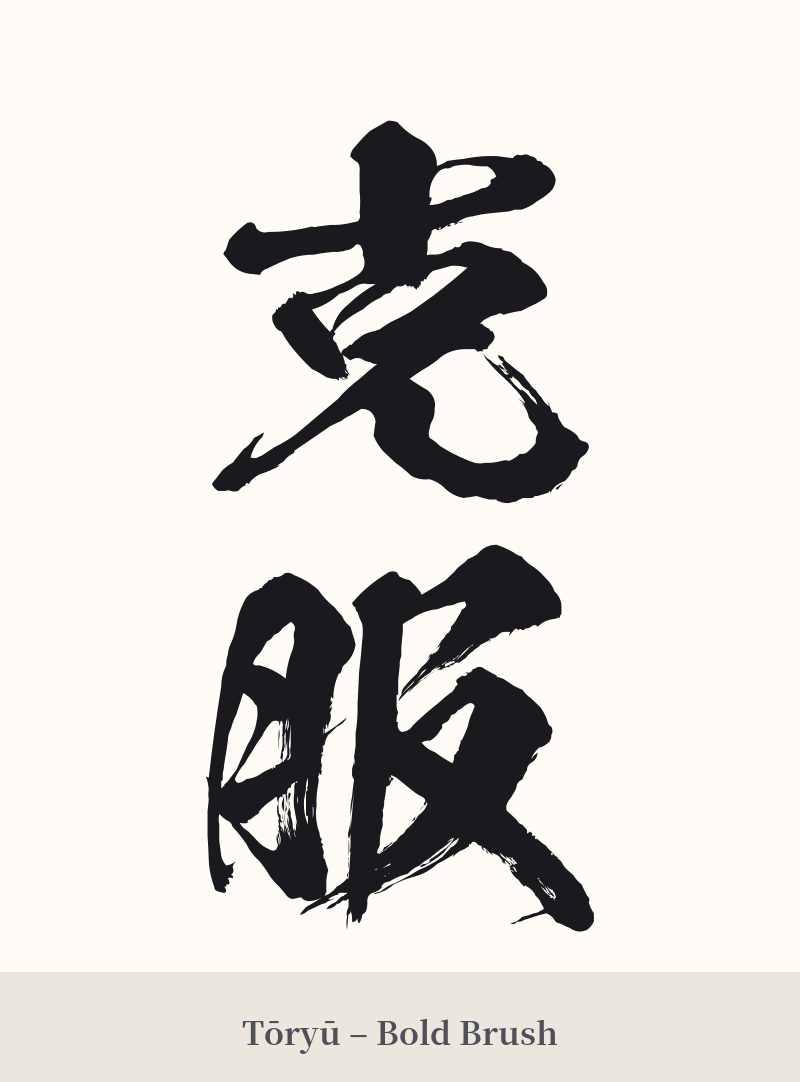
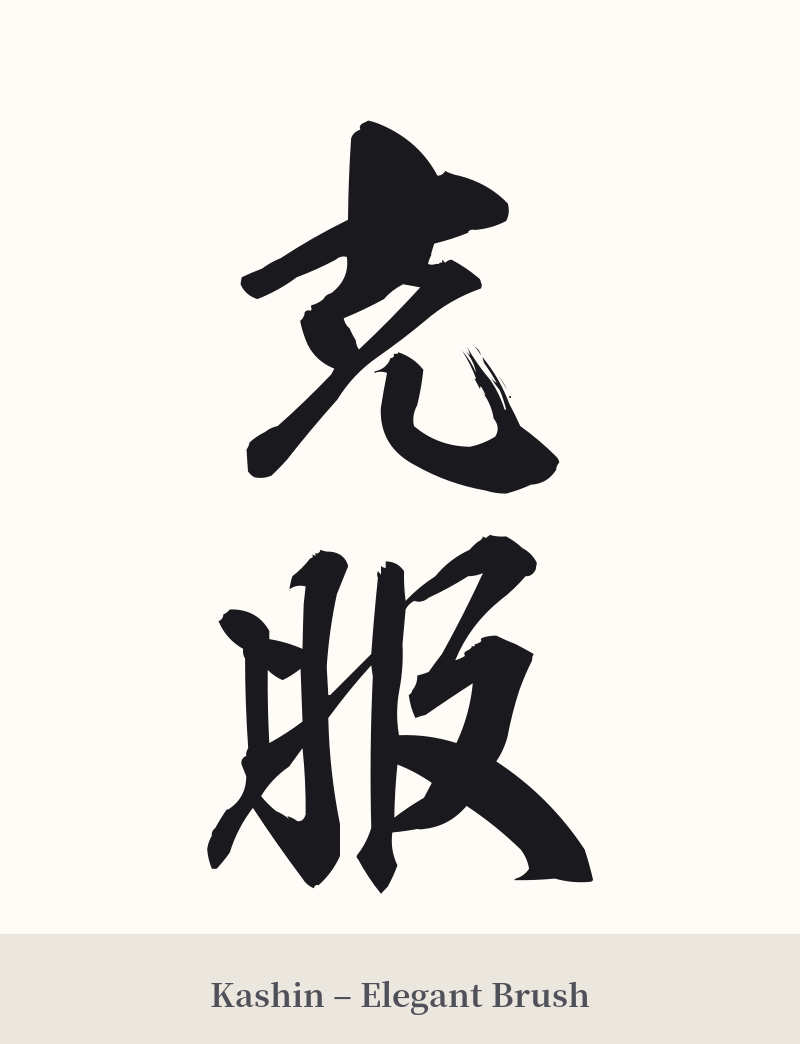
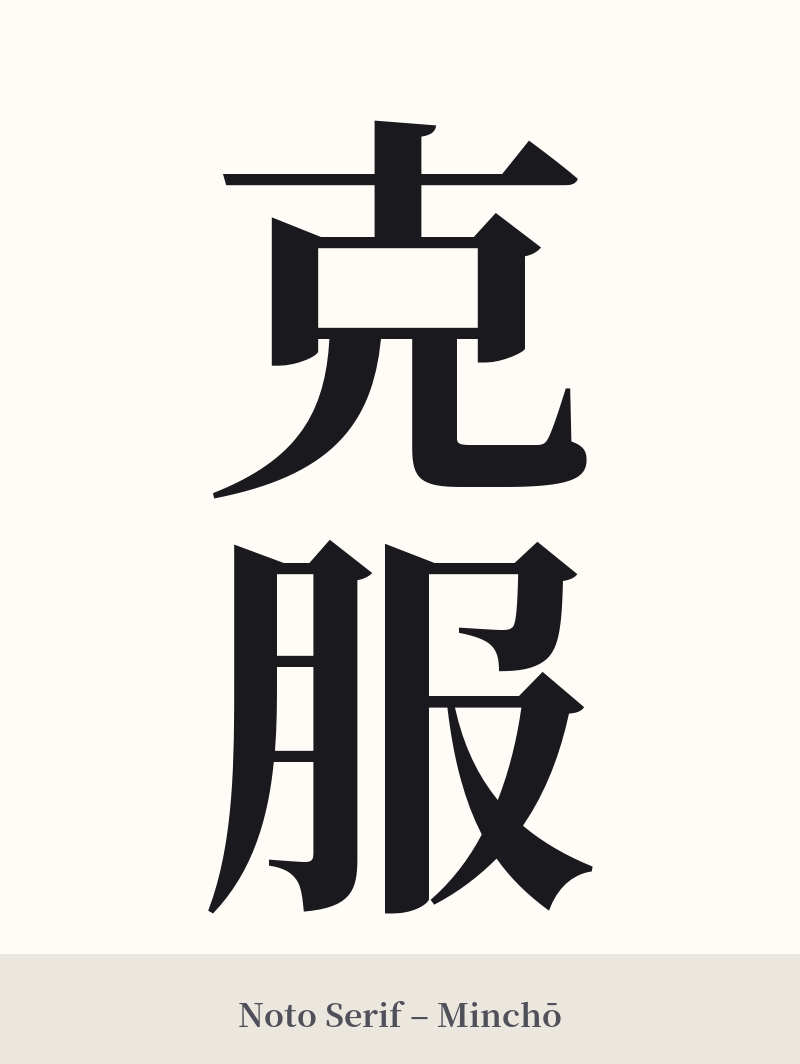
The same kanji can look dramatically different depending on the calligraphy style. Choose a font that matches the mood you want for your tattoo or design.
🎨 Tattoo Suitability
📐 Tattoo Design Guide
For a 克服 tattoo, the design should reflect the power and personal nature of the word.
– Placement: Vertical alignment is highly recommended and looks powerful on the forearm, calf, or along the spine. These placements create a strong visual line that complements the meaning of moving forward and upward. A horizontal placement across the chest or upper back can also work well, creating a sense of stability and grounded strength.
– Font Style: The choice of script can dramatically alter the feel. A dynamic, semi-cursive brush script (Gyōsho) can capture the struggle and eventual triumph. For a more resolute and unshakeable feel, a bold, angular block script (Kaisho) is an excellent choice. Avoid overly thin or delicate fonts that might undermine the inherent strength of the word.
– Visual Elements: While 克服 stands powerfully on its own, it can be paired with symbolic imagery. Consider a design where the kanji is integrated with a phoenix rising from ashes, a lotus flower growing from mud, or a dragon coiling around it. These additions can visually narrate the story of the struggle you have overcome.
Comments