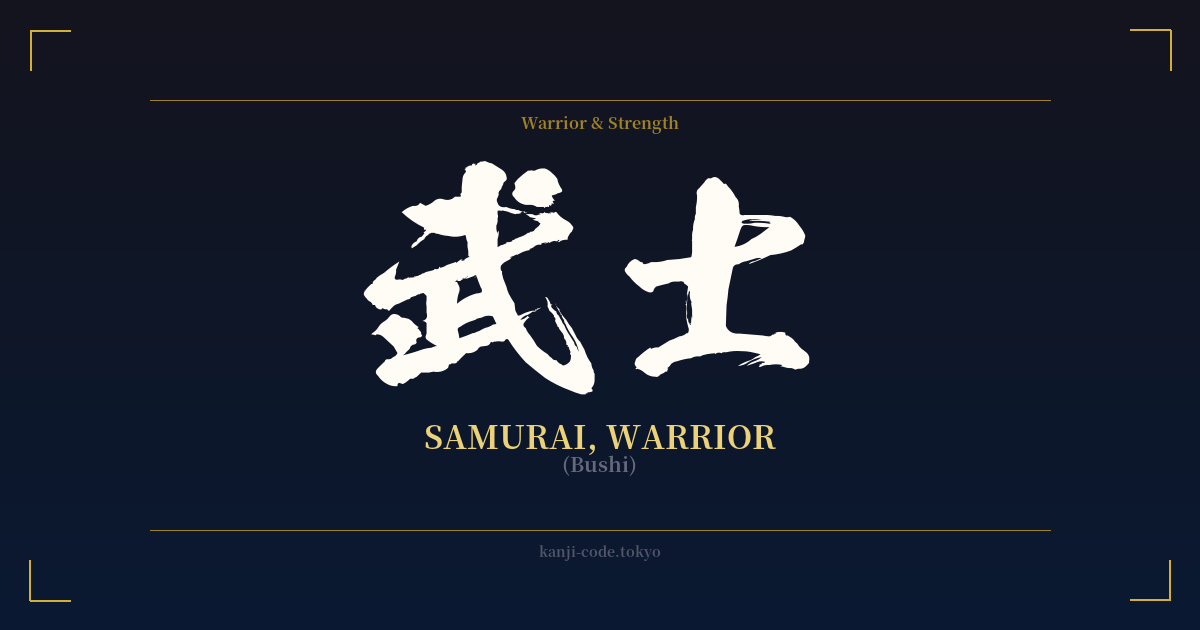
✍️ 武士 (Bushi) — Cultural Context
The word 武士 (Bushi) is one of the most iconic terms in the Japanese language, immediately conjuring images of the noble warriors of feudal Japan. While often translated simply as 'warrior' or used interchangeably with 'samurai,' its meaning is more nuanced and deeply rooted in Japanese history and philosophy.
Historically, the Bushi were the military nobility and officer caste that rose to power from the 10th century and dominated Japan for nearly 700 years. The term itself combines 武 (Bu), meaning 'military' or 'martial,' and 士 (Shi), meaning 'gentleman,' 'scholar,' or 'person of rank.' This combination highlights that a Bushi was not just a fighter, but a member of an educated and elite social class, defined by a strict code of conduct.
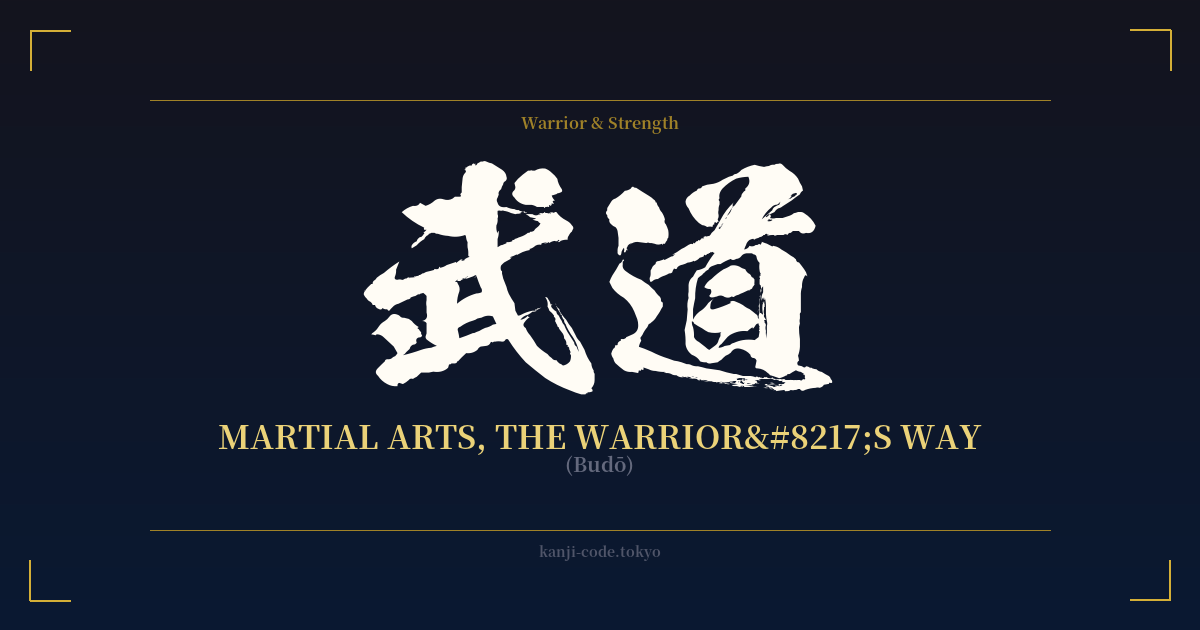
This code became famously known as 武士道 (Bushidō), or 'The Way of the Warrior.' Bushido was not a single written text but an evolving set of moral principles that guided the samurai's life. It emphasized virtues such as righteousness (義, gi), unwavering courage (勇, yū), compassion (仁, jin), respect (礼, rei), integrity (誠, makoto), honor (名誉, meiyo), and absolute loyalty (忠義, chūgi). For the Bushi, death in battle was an honor, while living a life of disgrace was the ultimate failure.
It's important to distinguish 武士 (Bushi) from 侍 (Samurai). The word 'samurai' originates from the verb 'saburau,' meaning 'to serve.' It originally referred to those who served the nobility. Over time, 'Samurai' became synonymous with the Bushi class, but 'Bushi' retains a stronger emphasis on the martial profession and warrior ethos itself. 'Bushi' is the warrior; 'Samurai' is the warrior in service to a lord.
During the peaceful Edo Period (1603-1868), the role of the Bushi shifted. With fewer wars to fight, they became administrators, bureaucrats, and scholars. However, they maintained their martial training and privileged social status. This era saw the formalization of Bushido as a philosophical and moral guide, shaping the ideal of the disciplined, cultured warrior.
The samurai class was officially dissolved during the Meiji Restoration in 1868 as Japan modernized. Yet, the spirit of the Bushi and the ideals of Bushido did not disappear. They were absorbed into the national identity, influencing everything from the conduct of soldiers in the modern Japanese military to the disciplined, loyal culture found in many Japanese corporations today. As a symbol, 武士 represents a legacy of strength, honor, and unwavering discipline that continues to fascinate the world.
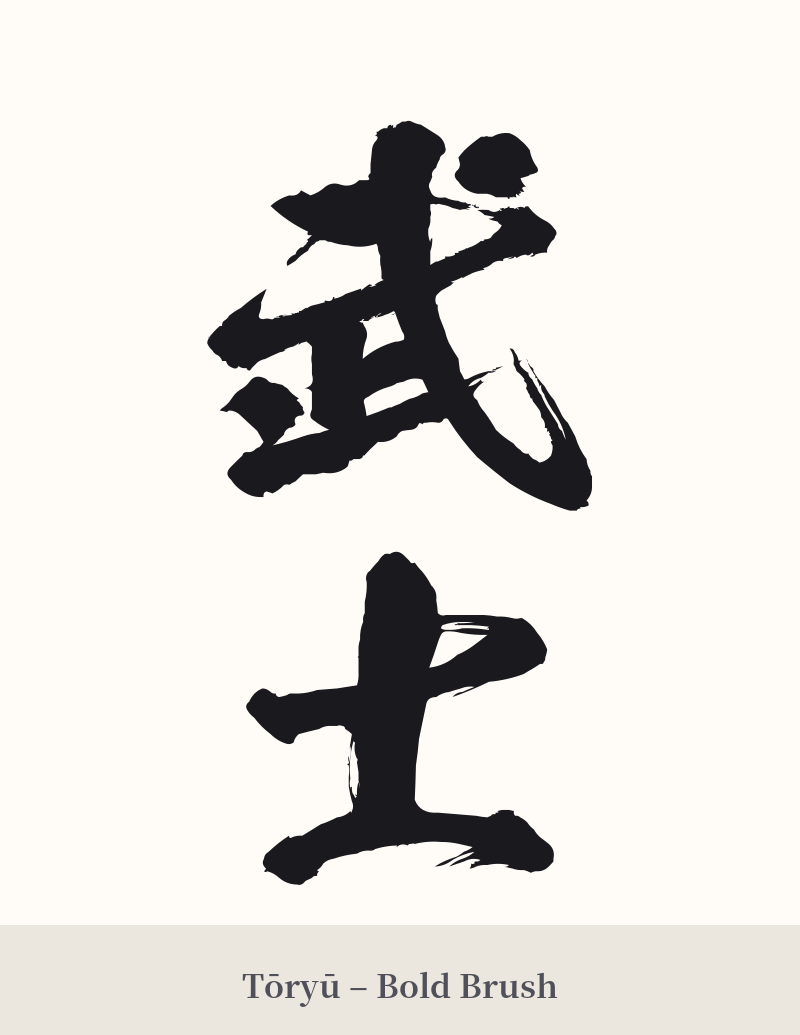
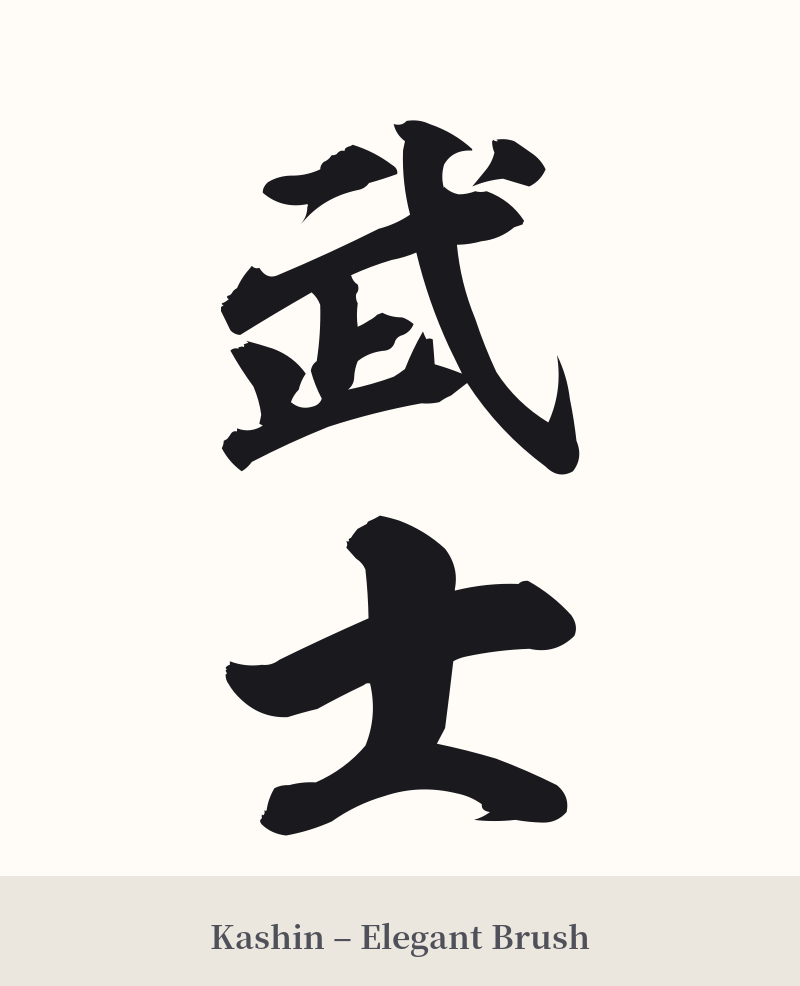
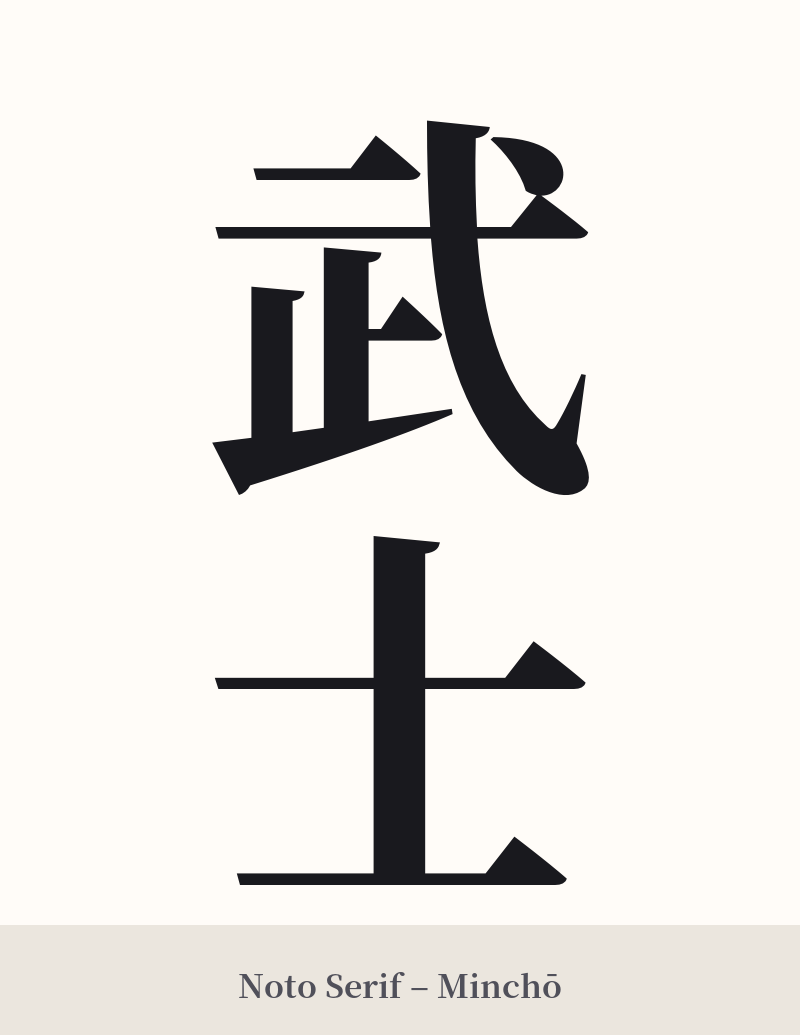
🖌️ Font Styles for 武士
The same kanji can look dramatically different depending on the calligraphy style. Choose a font that matches the mood you want for your tattoo or design.
🎨 Tattoo Suitability
📐 Tattoo Design Guide
A 武士 (Bushi) tattoo carries a powerful historical weight and should be designed with intention. Its classic form works well in a variety of styles and placements.
– Placement: Vertical alignment is traditional and looks excellent on the forearm, calf, or along the spine. For a horizontal design, it fits well across the chest or on the upper back, just below the neck. The shoulder blade is another strong choice, providing a solid canvas.
– Font Style: A bold, dynamic calligraphy script (shodō) is highly recommended. A semi-cursive style like Gyōsho can convey a sense of fluid action, while a standard block script like Kaisho offers a feeling of stability and discipline. Avoid overly thin or ornate fonts that might detract from the characters' inherent strength.
– Visual Tips: Consider pairing the kanji with other traditional Japanese motifs. A katana blade, a kabuto (samurai helmet), or a family crest (kamon) can add personal and historical context. Cherry blossoms (sakura) are often depicted with samurai to symbolize the beautiful but transient nature of life, a core tenet of the Bushi mindset. Ensure your artist is experienced with kanji to guarantee correct stroke order and balance, which is crucial for authenticity.
Comments