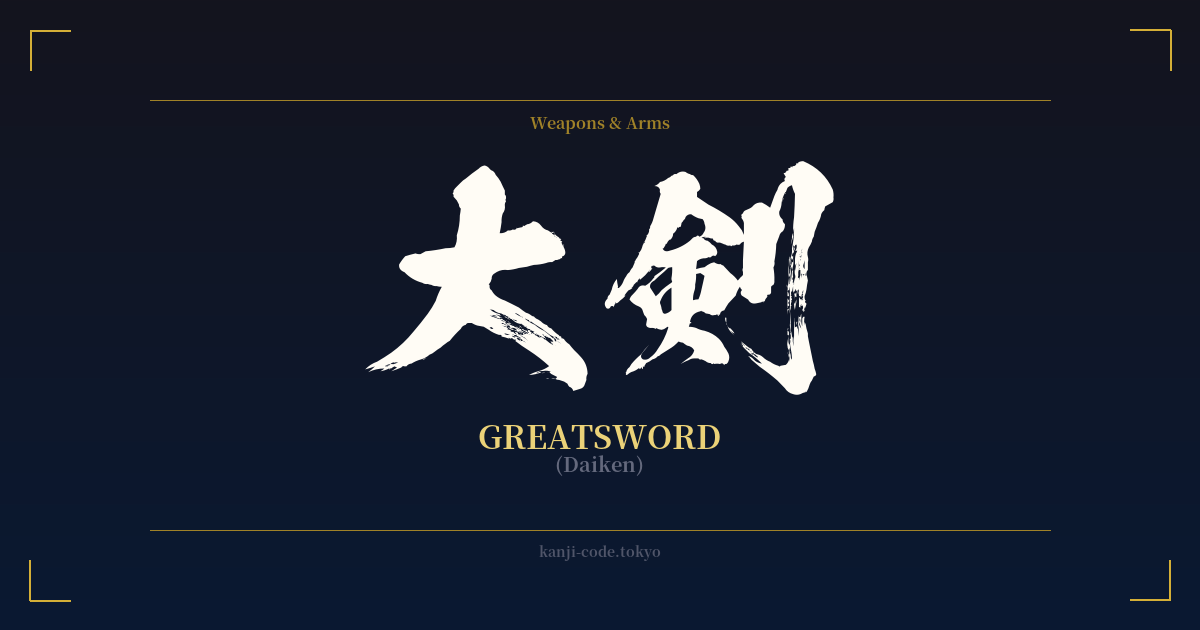
✍️ 大剣 (Daiken) — Cultural Context
The word 大剣 (Daiken) is a powerful and direct combination of two kanji: 大 (dai), meaning “great” or “large,” and 剣 (ken), meaning “sword.” Together, they form the Japanese term for “greatsword,” a weapon that conjures images of immense power, brute force, and larger-than-life heroes.
However, it's crucial to understand that Daiken is not a term from ancient samurai history. While Japan has a rich history of swordsmithing, the iconic weapon of the samurai was the katana (刀), a curved, single-edged blade prized for its speed, precision, and cutting ability. The historical Japanese equivalent of a large, two-handed sword would be the ōdachi (大太刀) or nodachi (野太刀), but the word Daiken itself belongs almost exclusively to the realm of modern fantasy.
The cultural home of 大剣 is in post-war Japanese pop culture, particularly in manga, anime, and video games. This is where the archetype of the greatsword truly flourished, heavily influenced by Western fantasy tropes. Think of iconic characters like Guts from the dark fantasy manga Berserk, whose colossal blade, the Dragonslayer, is the very definition of a Daiken. Similarly, Cloud Strife from the video game Final Fantasy VII and his impossibly large Buster Sword cemented the image of the greatsword-wielding protagonist in the minds of millions worldwide.
These characters define the Daiken archetype: often a lone warrior of immense physical strength, whose weapon is too heavy and unwieldy for any ordinary person. The greatsword is a symbol of their defiance against overwhelming odds, a tool of raw power that smashes through obstacles rather than elegantly slicing around them. It represents a departure from the disciplined, refined swordsmanship of the samurai, favoring untamed, overwhelming force.
Therefore, the meaning of Daiken is intrinsically tied to this modern mythology. It symbolizes not historical tradition, but the boundless imagination of fantasy worlds. It represents the power to shatter limits, the strength to carry immense burdens, and the will of a hero (or anti-hero) set against a world of monsters and gods.
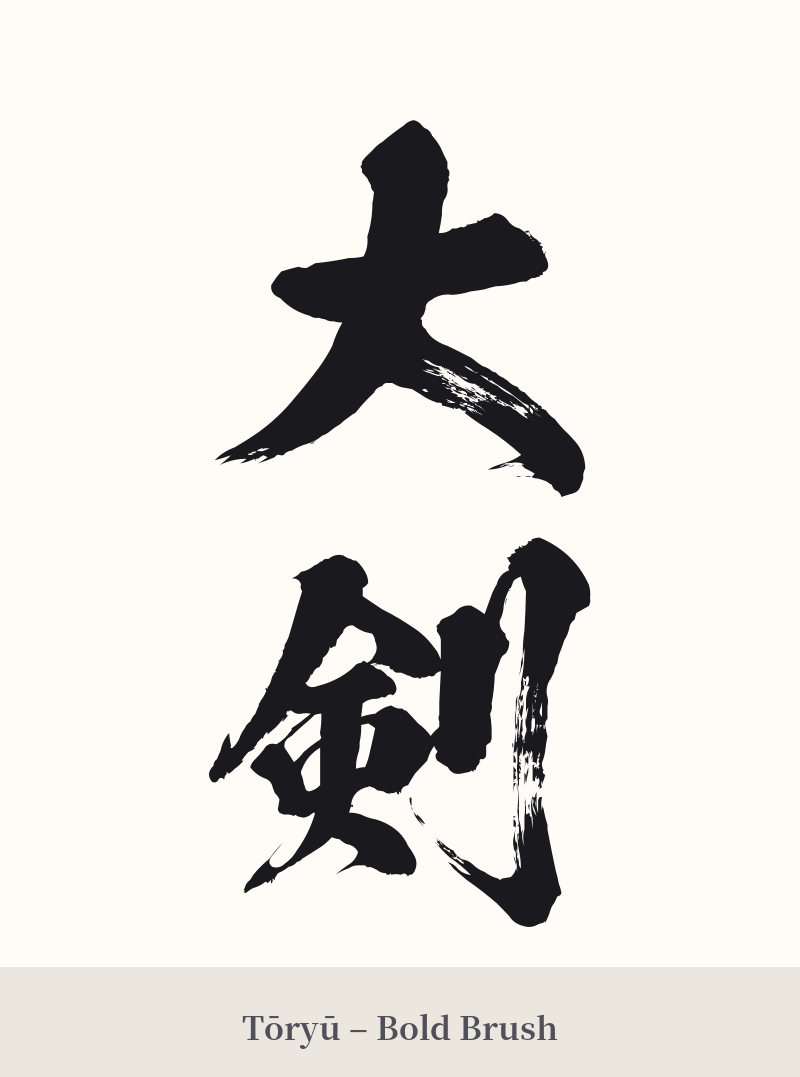
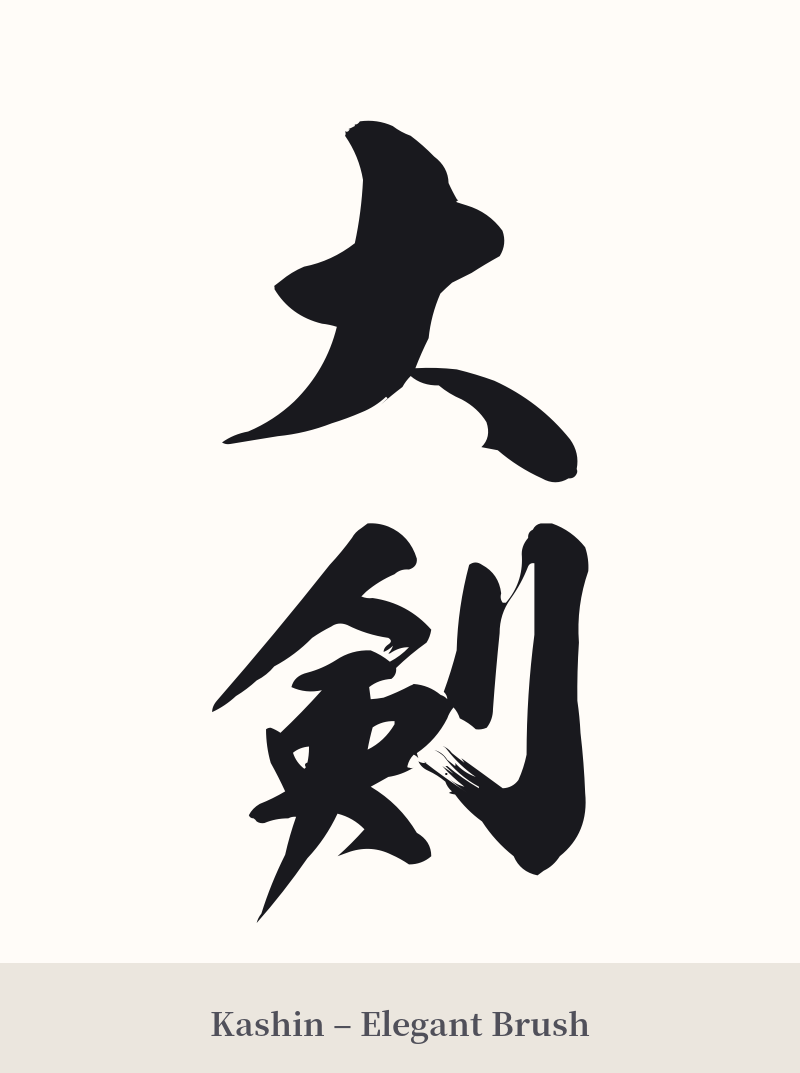
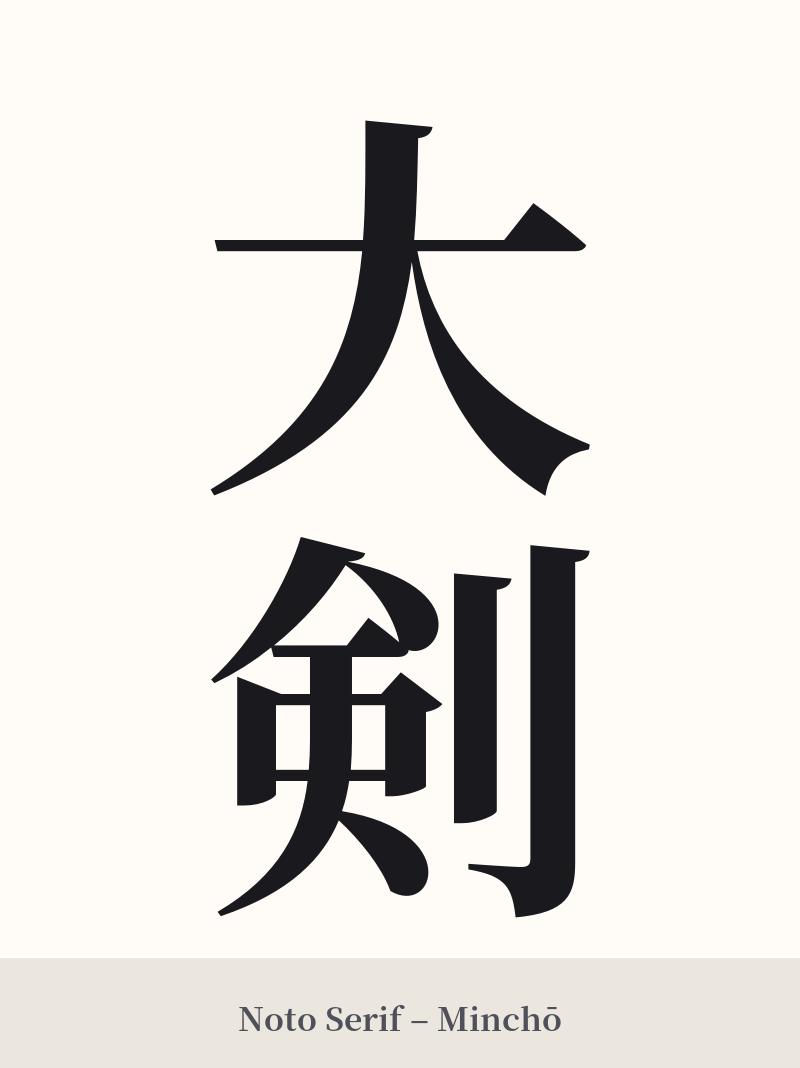
🖌️ Font Styles for 大剣
The same kanji can look dramatically different depending on the calligraphy style. Choose a font that matches the mood you want for your tattoo or design.
🎨 Tattoo Suitability
📐 Tattoo Design Guide
A 大剣 (Daiken) tattoo is about making a bold statement. The design should reflect the power and scale of the word itself.
– Placement: This kanji works exceptionally well in a vertical orientation, mimicking the form of a sword. Prime placements include the forearm (running from wrist to elbow), the calf, or down the spine. A horizontal placement across the upper back or chest can also create a strong, stable look.
– Font Style: Avoid delicate or overly ornate scripts. A bold, angular Kaisho (block script) emphasizes the strength and solid nature of a greatsword. A slightly more aggressive Gyosho (semi-cursive script) can add a sense of motion and raw energy, as if the sword is in mid-swing.
– Visual Tips: Consider integrating the kanji with other imagery. The two characters could form the hilt and blade of a stylized sword design. It can also be paired with fantasy elements like a dragon, magical runes, or a background of shattered rock to reinforce its meaning. A splash of black or red ink behind the characters can add a dynamic, impactful touch.
Comments