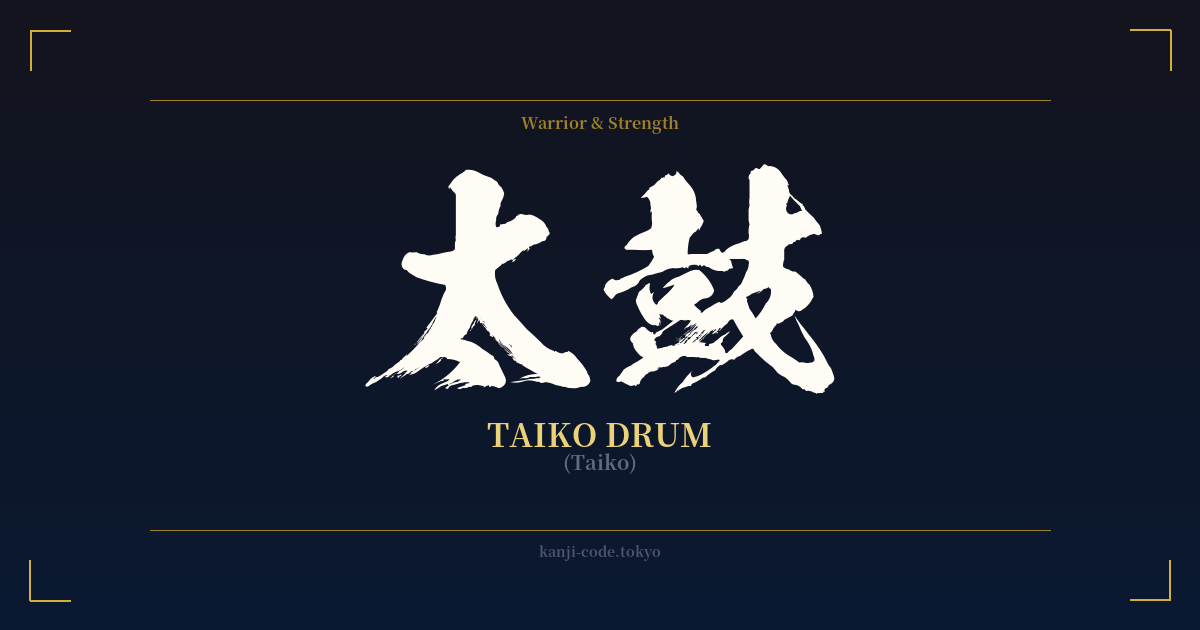
✍️ 太鼓 (Taiko) — Cultural Context
The sound of the 太鼓 (Taiko) is the very heartbeat of Japan. It's a thunderous, resonant boom that can be felt as much as it is heard, a force of nature harnessed into an instrument. More than just a drum, the taiko is a vessel of history, spirituality, and community, with a story that stretches back over a millennium.
Its origins trace back to ancient China and Korea, but like many cultural imports, Japan adapted the drum and made it uniquely its own. Historically, the taiko was a multifaceted tool. On the battlefields of feudal Japan, its powerful rhythms were used to intimidate enemies, set a marching pace, and relay commands, becoming an auditory weapon for the samurai classes. A single, powerful beat could signal a charge, while a frantic rhythm could sow chaos and fear.
Beyond the battlefield, the taiko found a sacred home in religious life. Within Shinto shrines and Buddhist temples, its sound was believed to be a voice that could reach the gods (kami). It was used to define the boundaries of a sacred space, to accompany ceremonial dances, and to offer thanks during agricultural rituals, praying for a bountiful harvest or warding off pests. The drum was a direct link between the mortal and divine realms.
In village life, the taiko was the center of the community. Its beat announced festivals (matsuri), called people together, and marked the passing of time. The instrument was deeply woven into the fabric of daily existence, a constant presence that unified people through shared sound and celebration.
The modern perception of taiko was revolutionized in the mid-20th century with the birth of kumi-daiko, or ensemble drumming. Pioneered by musicians like Daihachi Oguchi, this new art form took the taiko from its traditional role as an accompaniment and placed it center stage. Kumi-daiko groups transformed drumming into a visually and sonically stunning performance art, characterized by synchronized movements, physically demanding choreography, and complex polyrhythms. This style is what most people today associate with the word 'taiko.'
Symbolically, the taiko represents immense energy, primal power, and unwavering spirit. The act of playing is a display of discipline and strength, blending martial arts-like stances with musical precision. The sound itself is often called kodō (鼓動), a word that also means 'heartbeat,' linking the drum's rhythm to the very essence of life.
🖌️ Font Styles for 太鼓
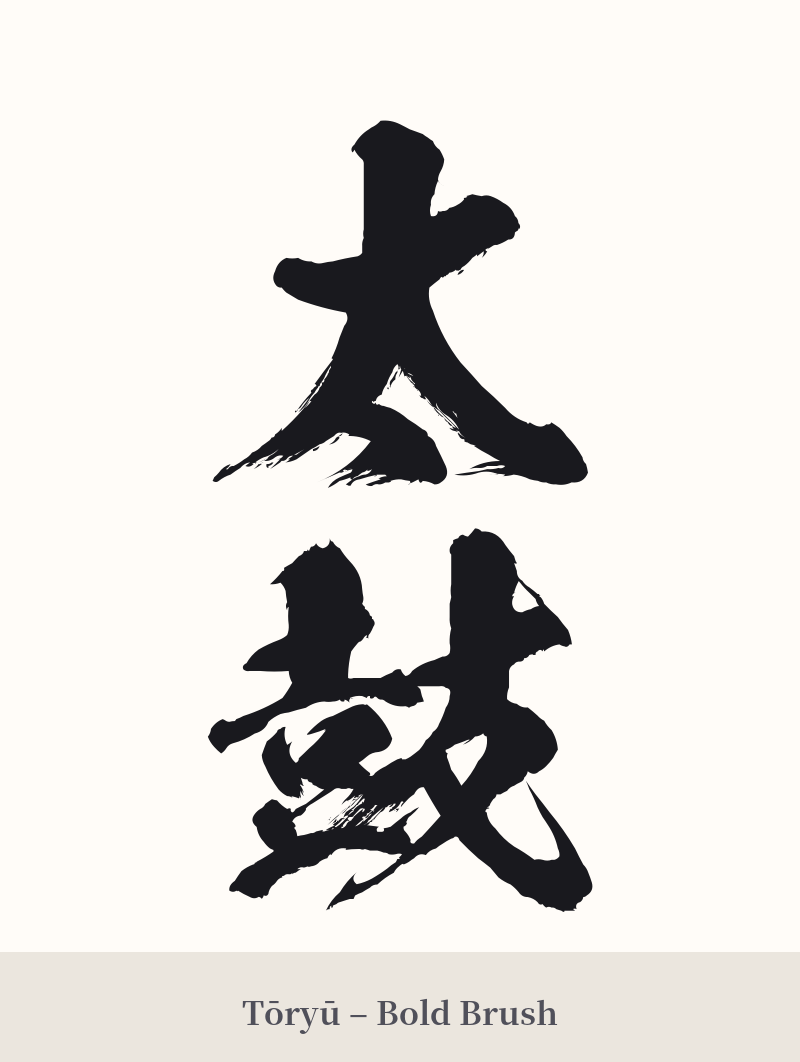
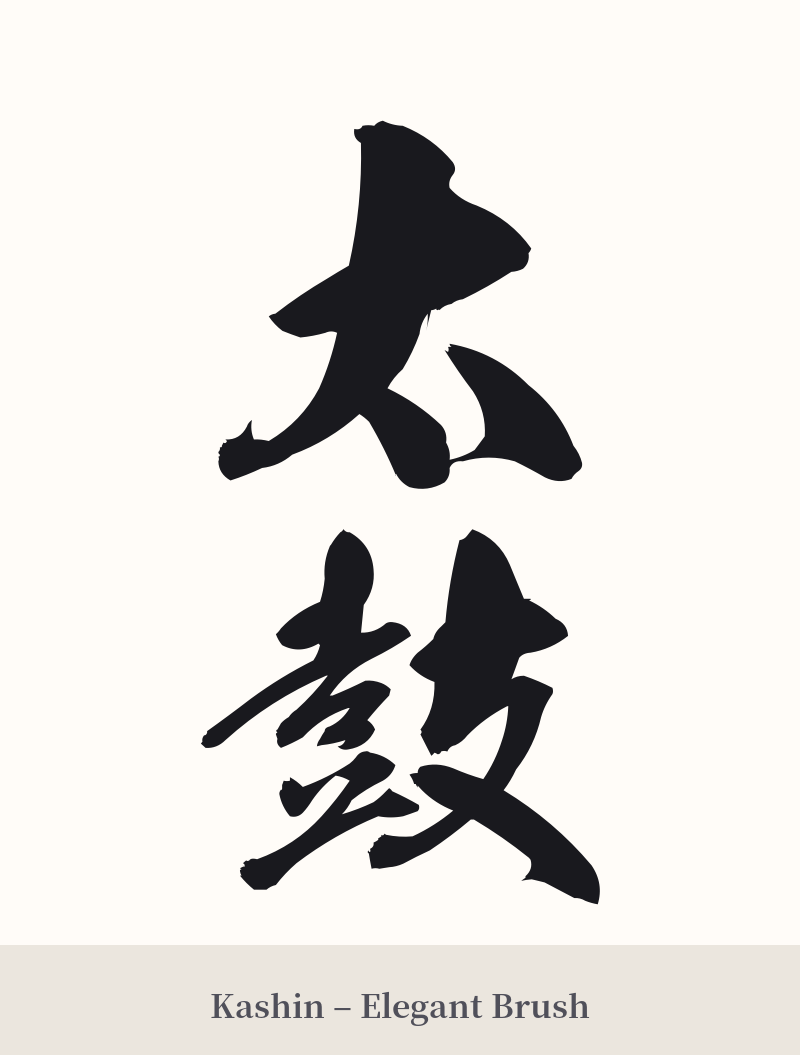
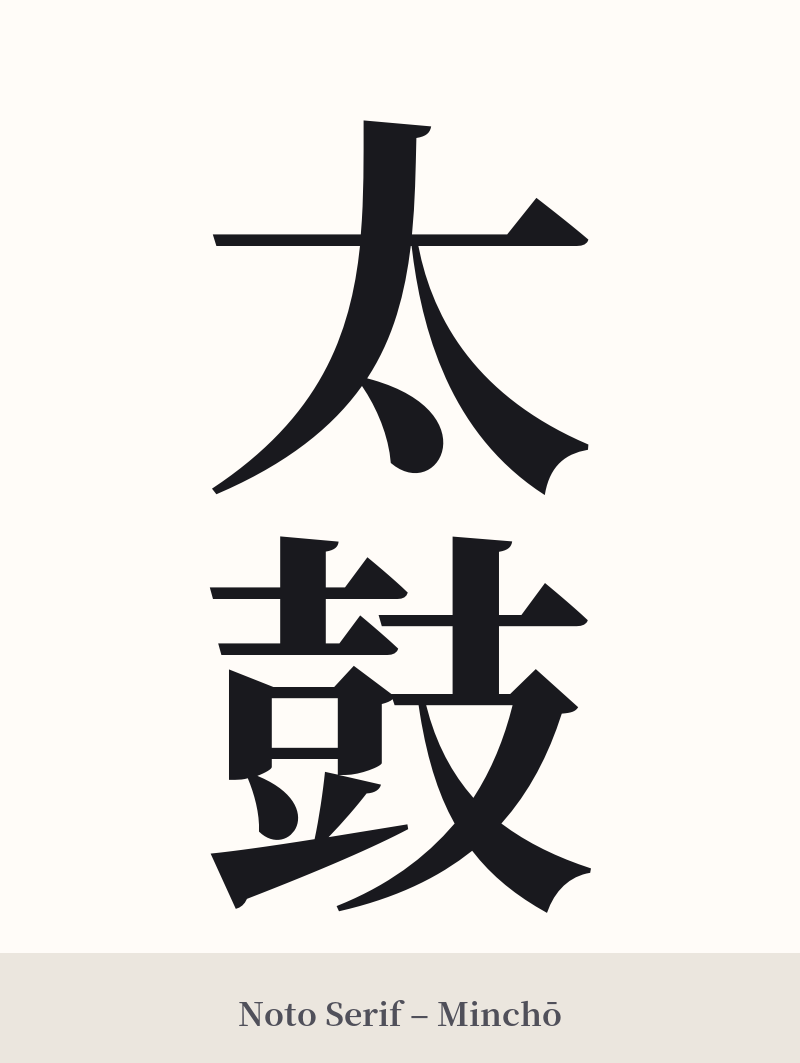
The same kanji can look dramatically different depending on the calligraphy style. Choose a font that matches the mood you want for your tattoo or design.
🎨 Tattoo Suitability
📐 Tattoo Design Guide
A tattoo of 太鼓 carries a powerful, resonant energy that can be enhanced with thoughtful design choices.
– Placement: Due to its symbolic weight and visual presence, 太鼓 works well in larger, prominent areas. The back, chest, or thigh allows space for a bold, impactful design. For a vertical arrangement, the forearm, calf, or along the spine are excellent choices.
– Font Style: The font can dramatically alter the feeling of the tattoo. A dynamic, semi-cursive style like Gyosho can capture the fluid, energetic movements of a taiko performance. For a more solid and traditional look, a bold Kaisho (block script) or a classic, thick-stroked Hige-moji (whiskered script) will emphasize the kanji's power.
– Visual Tips: Consider integrating other symbolic elements. A pair of bachi (drumsticks) crossed behind or below the kanji can add context. You might also include the mitsudomoe, the three-swirl comma symbol often painted on the drum's head, which represents the interplay of universal forces. Stylized sound waves or energy lines radiating from the characters can visually represent the drum's powerful sound.
Comments