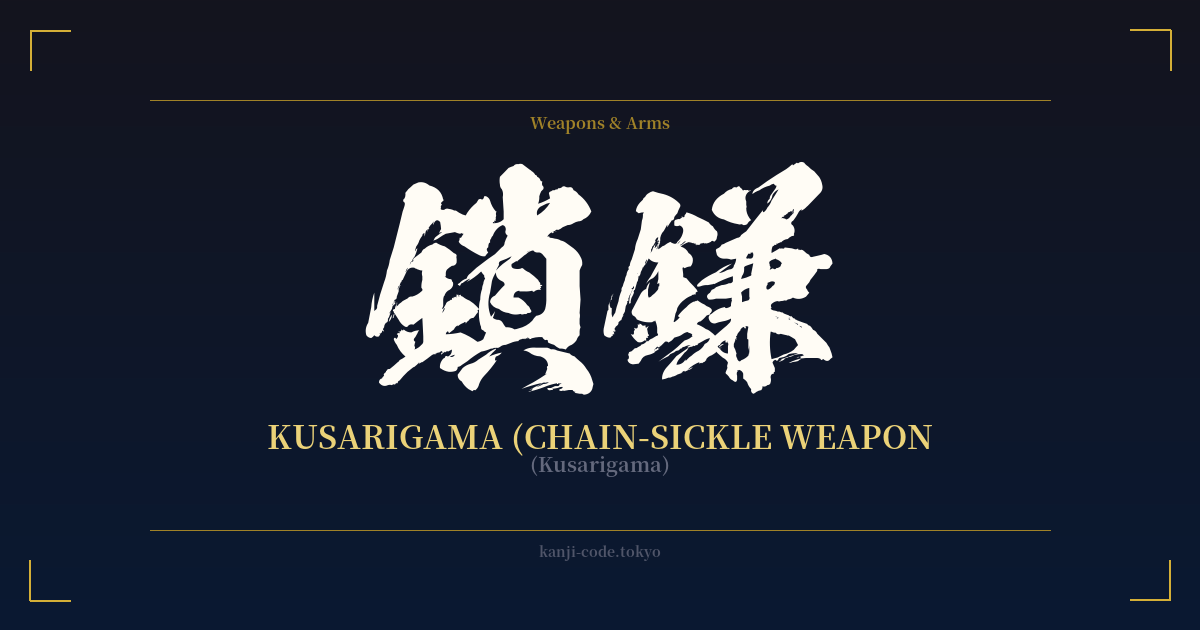
✍️ 鎖鎌 (Kusarigama) — Cultural Context
The Kusarigama, written as 鎖鎌, is one of the most visually distinctive and intriguing weapons from feudal Japan. Its name is a direct description of its components: a chain (鎖, kusari) attached to a sickle (鎌, kama). This hybrid weapon embodies the Japanese principle of adapting everyday objects for combat, as its blade component, the kama, originated as a simple farming tool used for reaping crops.
The genius of the Kusarigama lies in its versatility. It was a weapon that could dominate at multiple ranges. The weighted end of the chain, known as the fundo (分銅), could be swung to strike opponents from a distance, entangle their limbs, or ensnare their own weapons. Once the opponent was disabled or disarmed, the user could close the distance and finish the fight with the deadly sharp kama.
Mastering the Kusarigama, a discipline known as kusarigamajutsu (鎖鎌術), was exceptionally difficult. The swinging chain was a danger to both the opponent and the wielder. However, in the hands of an expert, it was a formidable tool capable of defeating even a master swordsman. Its unpredictability made it a weapon of surprise and ingenuity.
While sometimes associated with samurai, the Kusarigama is most famously linked with the ninja (shinobi). Its design was perfect for the ninja's preference for stealth, surprise, and versatile tools. The ability to conceal the weapon, use it for both combat and utility (like climbing), and its effectiveness against more conventional arms made it an ideal part of the shinobi's arsenal.
In modern pop culture, the Kusarigama has become an iconic symbol of the ninja, appearing frequently in anime, manga, and video games. It represents a lethal elegance, a blend of brute force and tactical finesse. It’s a symbol not just of a weapon, but of the resourcefulness and deadly skill of the warriors who wielded it.
🖌️ Font Styles for 鎖鎌
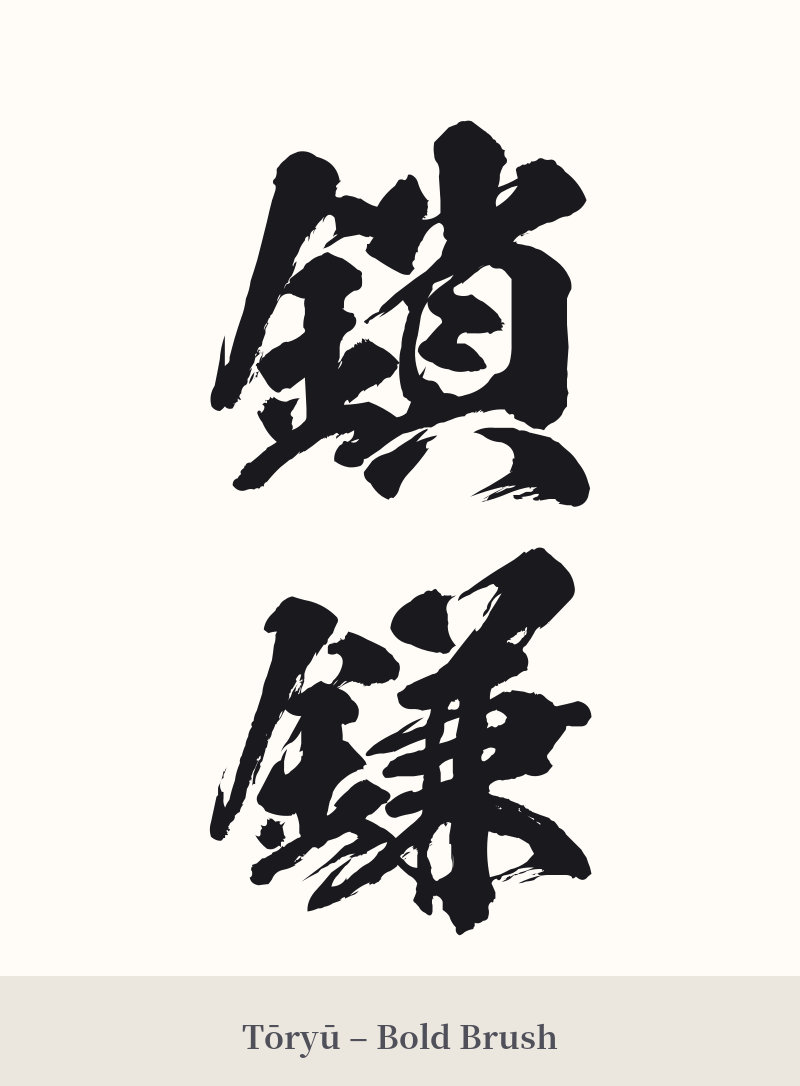
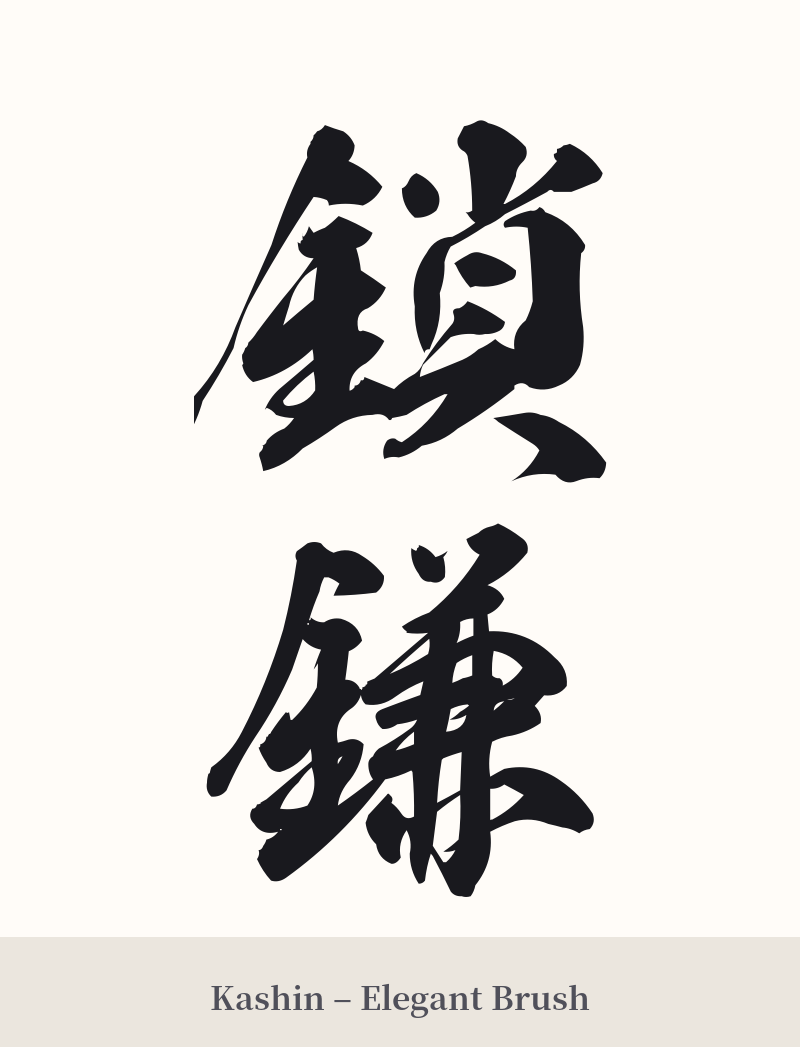
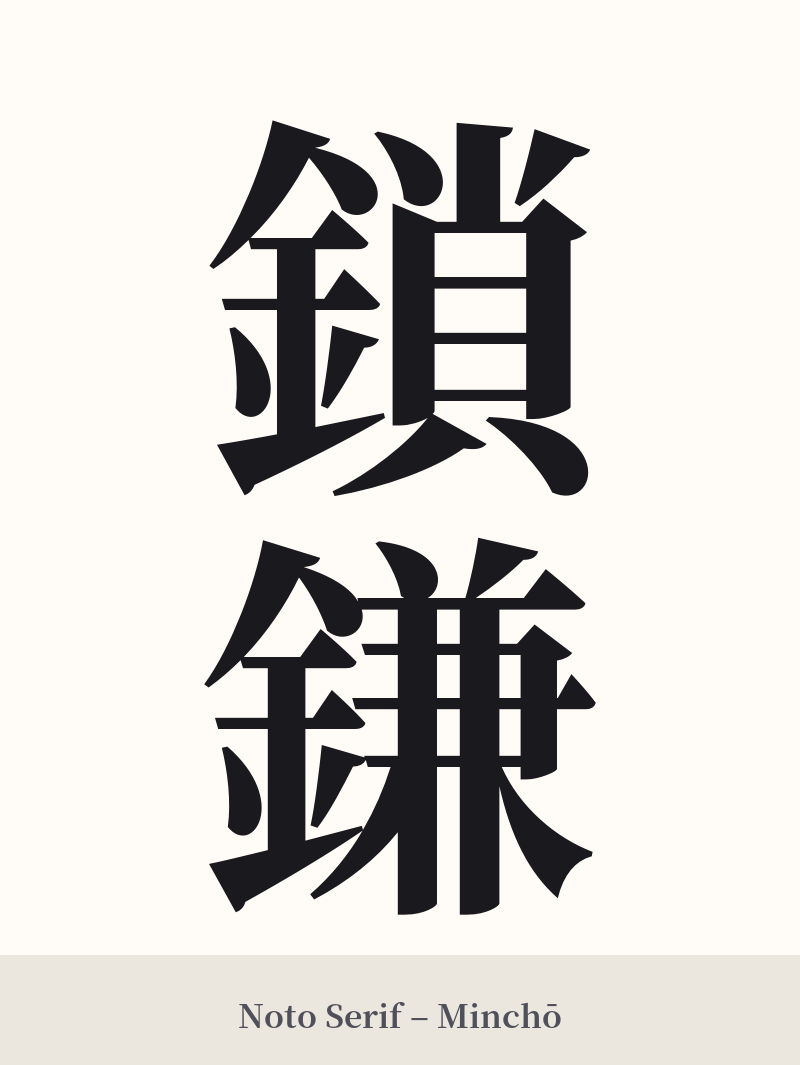
The same kanji can look dramatically different depending on the calligraphy style. Choose a font that matches the mood you want for your tattoo or design.
🎨 Tattoo Suitability
📐 Tattoo Design Guide
The kanji for Kusarigama, 鎖鎌, offers a visually complex and powerful tattoo. Its intricate nature demands careful consideration of style and placement.
– Placement: Due to its detail, larger muscle groups are ideal. The forearm, calf, or along the scapula on the back provide a great canvas. A vertical orientation on the arm or leg looks particularly striking.
– Font Style: A dynamic, semi-cursive calligraphy style (gyōsho) can capture the fluid motion of the chain. Conversely, a crisp, angular kaisho or Mincho style will emphasize the complexity and precision of each stroke, making it look like a detailed schematic.
– Visual Tips: Consider a design where the kanji itself is integrated with an illustration of the weapon. For example, the chain of a pictorial Kusarigama could wrap around the kanji, or the kanji could be formed from the links of a chain. This creates a cohesive and highly unique piece.
Comments