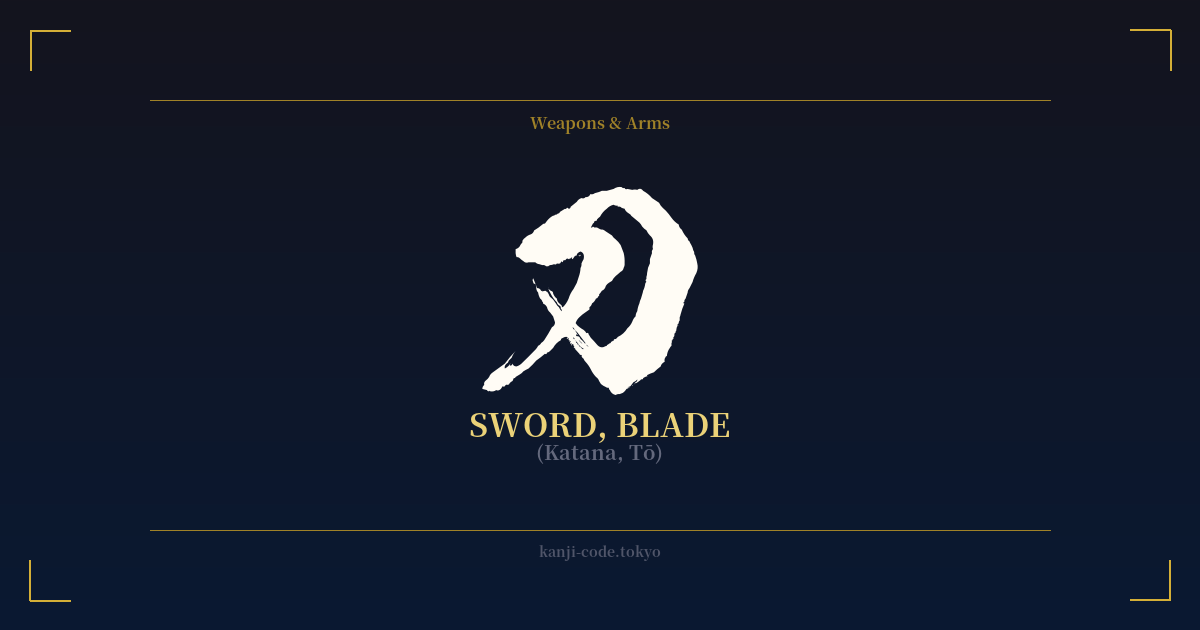
✍️ 刀 (Katana, Tō) — Cultural Context
The kanji 刀 (katana, tō) is one of the most recognizable and evocative characters in the Japanese language. Its form is a simple pictograph, a direct representation of a single-edged blade with a handle, making its meaning immediately apparent. Yet, beneath this simplicity lies a universe of cultural significance, deeply intertwined with the history and identity of Japan.
This character is most famously associated with the katana, the iconic curved sword of the samurai. For the samurai class, the sword was not merely a weapon; it was revered as their very soul. This belief is central to Bushidō, the warrior's code, which emphasized honor, discipline, and loyalty. The sword was a physical manifestation of these principles, a symbol of the bearer's status and commitment to their path. To lose one's sword was to lose one's honor.
The artistry of Japanese sword-making is legendary. Smiths would fold steel thousands of times, a laborious process that created blades renowned for their sharpness, resilience, and beauty. Each sword was unique, with its own name and story, and the intricate patterns (hamon) on the blade's edge were considered works of art. The process was steeped in Shinto ritual, viewing the creation of a sword as a sacred act.
It is crucial to distinguish 刀 (katana) from another kanji for sword, 剣 (tsurugi). While both mean 'sword,' 剣 refers to the older, double-edged, straight swords, often of Chinese or Korean origin, used in Japan's earlier history. 刀 specifically denotes the single-edged, curved blade that became the definitive weapon of the samurai. This distinction is vital for anyone considering a tattoo, as 刀 carries the specific cultural weight of the samurai tradition.
In modern Japan, the cultural resonance of 刀 continues. It is a powerful symbol in pop culture, from classic samurai films by Akira Kurosawa to modern anime like Demon Slayer and Rurouni Kenshin. Metaphorically, 刀 can represent precision, decisiveness ('a sharp mind'), or the cutting edge of a concept. It embodies a blend of lethal function and sublime artistry, a duality that continues to fascinate people worldwide.
🖌️ Font Styles for 刀
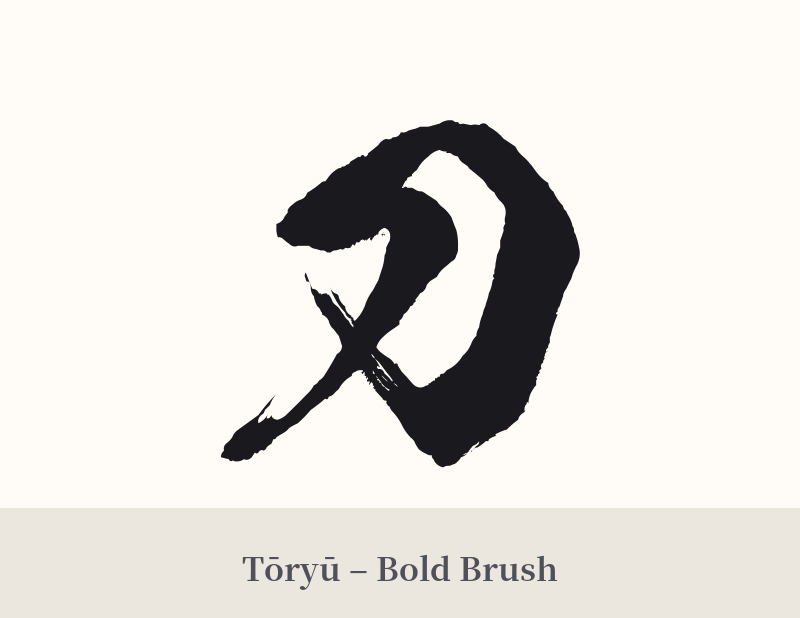
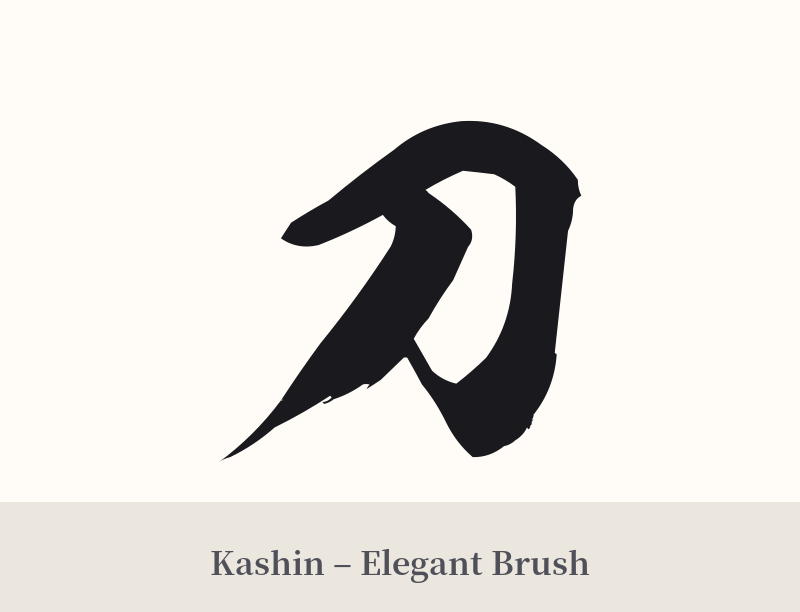
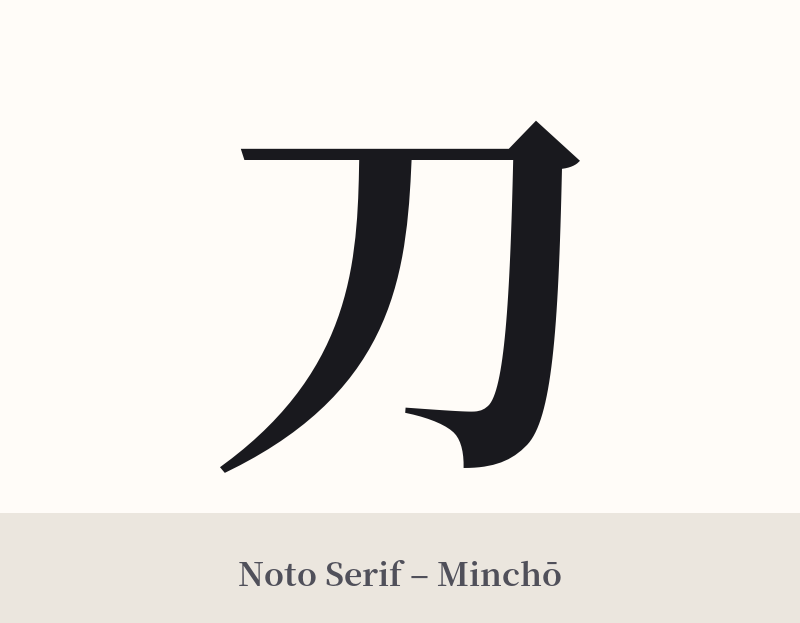
The same kanji can look dramatically different depending on the calligraphy style. Choose a font that matches the mood you want for your tattoo or design.
🎨 Tattoo Suitability
📐 Tattoo Design Guide
The kanji 刀 offers a wealth of design possibilities due to its simple, powerful form.
– Placement: Its strong verticality works well on the forearm, bicep, calf, or along the spine. Placed horizontally, it can fit neatly on the chest, upper back, or below the collarbone.
– Font Style: For a minimalist and modern look, a clean, sans-serif or Mincho-style font emphasizes its sharp, geometric shape. For a more traditional or dynamic feel, a bold shodō (calligraphy) brushstroke style can convey movement and raw power, as if drawn by a sword itself.
– Visual Combinations: 刀 pairs beautifully with other classic Japanese motifs. Consider wrapping it with a dragon (龍) to symbolize power and protection, or contrasting its martial nature with delicate cherry blossoms (桜) to represent the transient beauty of life, a core samurai aesthetic. It can also be incorporated into a larger scene with a samurai warrior or a family crest (mon).
Comments