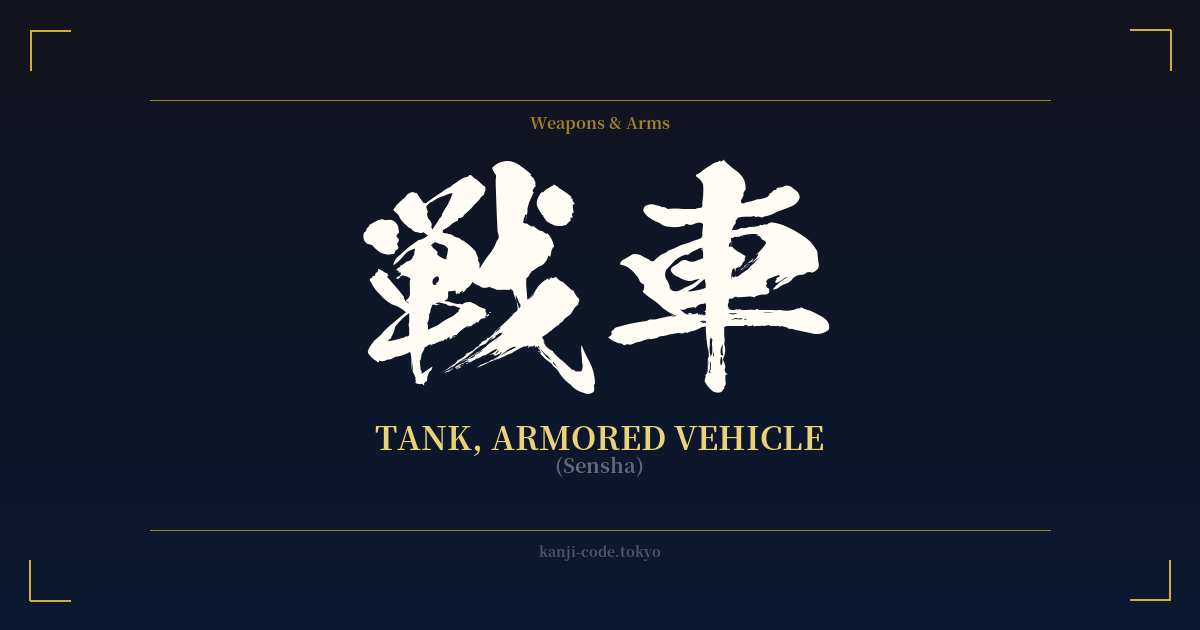
✍️ 戦車 (Sensha) — Cultural Context
The word 戦車 (Sensha) is the modern Japanese term for a tank or armored fighting vehicle. Its construction is straightforward and logical, a direct product of the 20th century's technological advancements in warfare.
The word combines two distinct kanji: 戦 (sen), meaning 'war' or 'battle,' and 車 (sha), meaning 'vehicle' or 'car.' Together, they literally form 'battle vehicle,' a perfect descriptor for the machine it names. This is not an ancient word steeped in centuries of folklore, but rather a modern compound created to identify a new and formidable weapon that changed the face of the battlefield.
The term entered the Japanese lexicon with the introduction of tanks themselves in the early 20th century. The Imperial Japanese Army developed and deployed its own tanks, from the early Type 89 I-Go to the more advanced models used in World War II. For many, particularly older generations in Japan and across Asia, the word 戦車 can evoke stark images of the Pacific War and the era of Japanese imperialism. It is a word tied to history, but a very specific, modern, and often painful chapter of it.
Unlike terms like 侍 (Samurai) or 武士道 (Bushido), which speak to a code of conduct, honor, and a historical warrior class, 戦車 is devoid of such romanticism. It represents the impersonal, industrial, and destructive power of modern warfare. It symbolizes mechanical might and collective military force, not individual skill or spiritual discipline.
In contemporary Japan, 戦車 is a standard, non-metaphorical term. You'll find it in history books, news reports about global conflicts, and military-themed video games and model kits. It has also found a unique niche in pop culture, most notably in the popular anime and manga series 'Girls und Panzer,' which paradoxically reframes tank warfare as a competitive high school sport. This has softened its image for some younger audiences, but it doesn't erase the word's primary, deeply rooted military meaning.
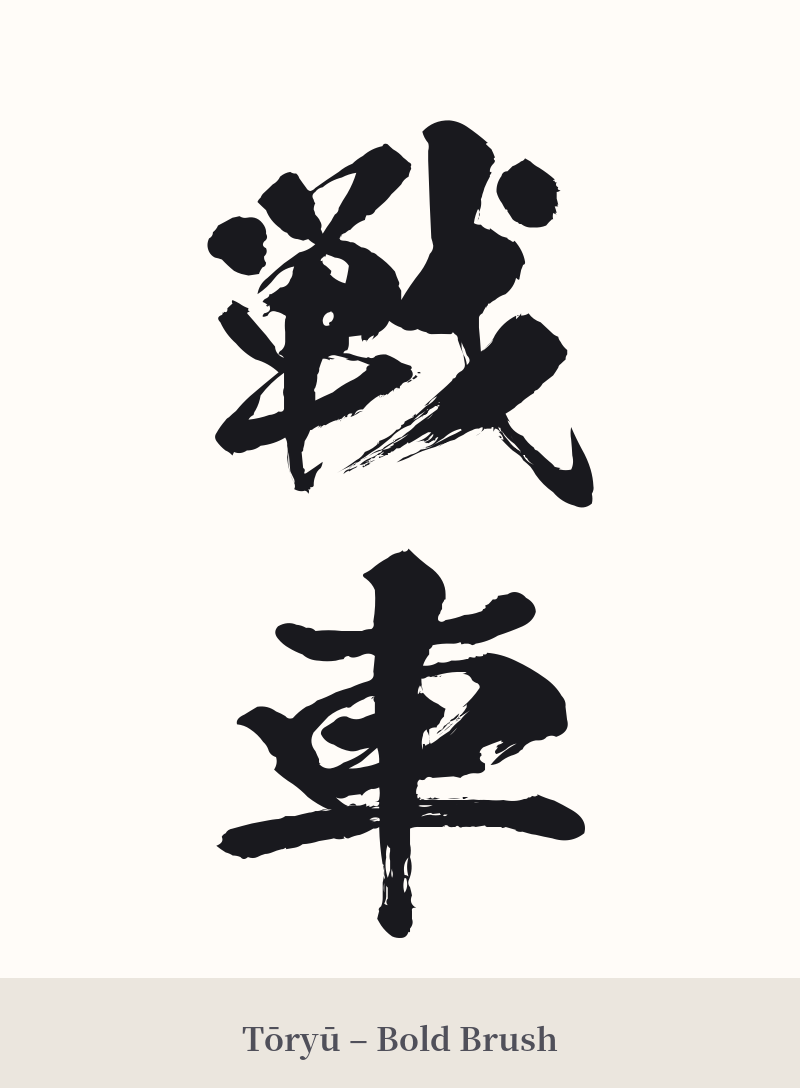
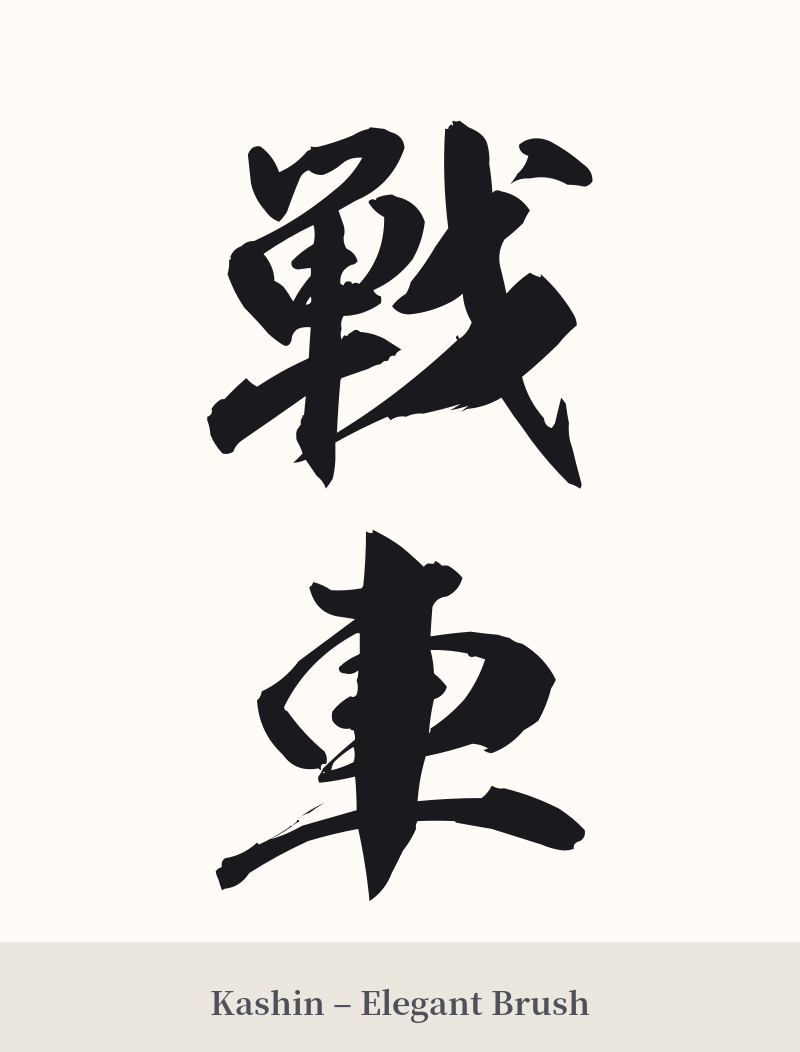
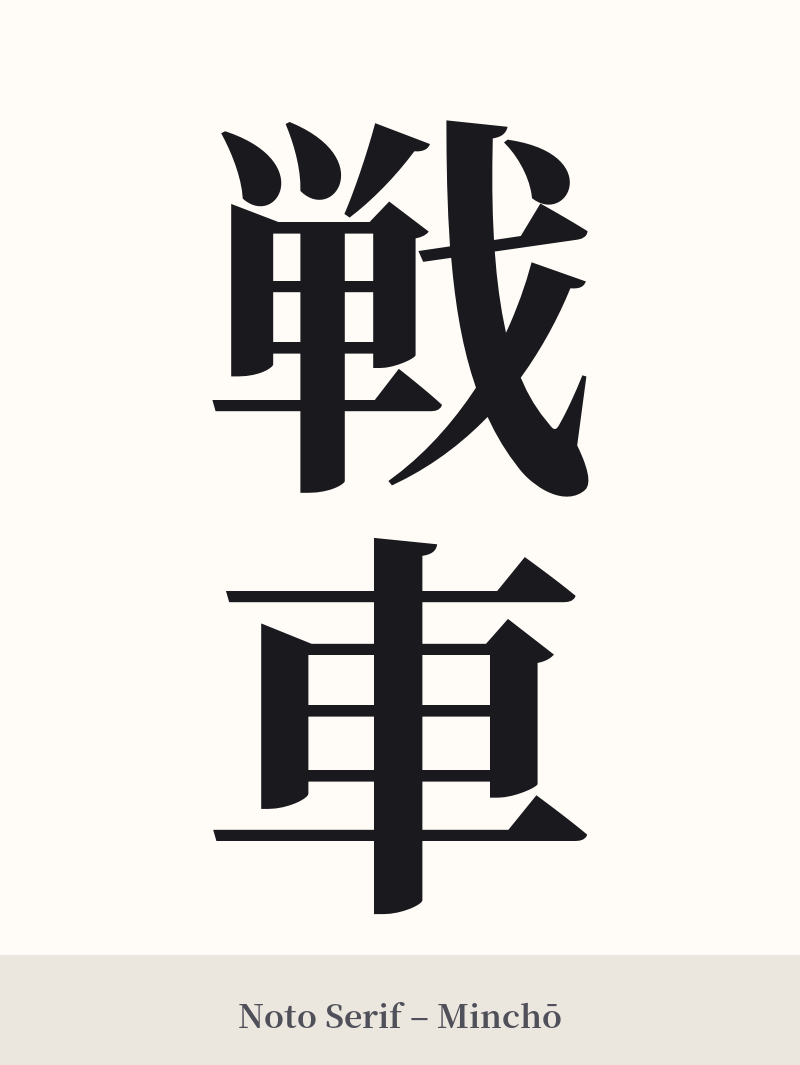
🖌️ Font Styles for 戦車
The same kanji can look dramatically different depending on the calligraphy style. Choose a font that matches the mood you want for your tattoo or design.
🎨 Tattoo Suitability
📐 Tattoo Design Guide
Given its modern and mechanical nature, a tattoo of 戦車 (Sensha) benefits from styles that reflect its meaning.
– Placement: Consider a flat, broad area like the forearm, calf, or upper back. This allows the two characters to be clearly legible, whether arranged vertically (top-to-bottom) or horizontally (left-to-right).
– Font Style: Blocky, geometric, or stencil-like fonts work exceptionally well, echoing the hard lines and industrial feel of a tank. A thick, powerful brush script (gyosho) can also be effective, emphasizing the 'battle' aspect with aggressive, dynamic strokes.
– Visual Tips: Avoid overly delicate or ornate styles, as they would clash with the word's blunt meaning. You could consider incorporating visual elements like tank treads wrapping around the arm, schematic-style lines, or even a stark contrast with a single, delicate element like a cherry blossom petal to symbolize the transience of life amidst the machinery of war.
Comments