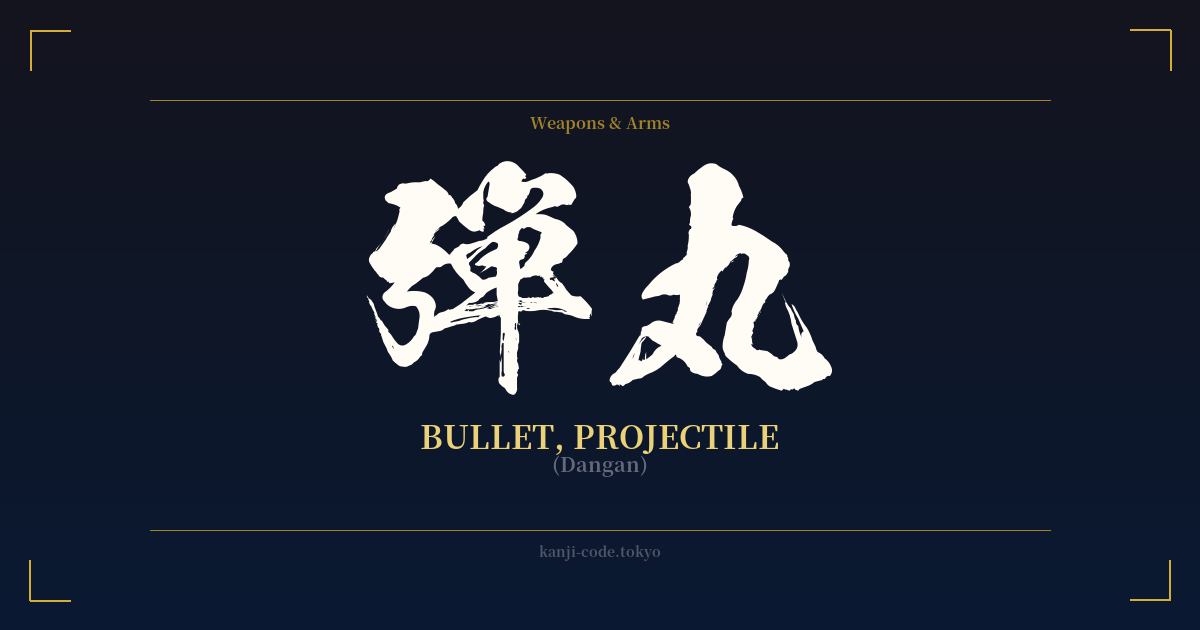
✍️ 弾丸 (Dangan) — Cultural Context
The Japanese word 弾丸 (Dangan) translates directly to 'bullet' or 'projectile'. It is a compound word that perfectly illustrates its own meaning through its constituent kanji. It represents a modern concept in Japanese history, tied directly to the introduction and evolution of firearms.
The word itself is a combination of 弾 (dan), meaning 'to shoot' or 'propel', and 丸 (gan), meaning 'round object' or 'ball'. Together, they form the literal image of a 'propelled round object', a clear and concise descriptor for a bullet. This modern term stands in stark contrast to the traditional weaponry of the samurai, such as the sword (刀) and the bow (弓), which carried deep cultural and spiritual significance.
The arrival of firearms in Japan in the 16th century, brought by Portuguese traders to the island of Tanegashima, marked a pivotal moment in the nation's history. These early matchlock firearms, known as 'tanegashima', revolutionized warfare, shifting the focus from the individual skill of the samurai to the collective power of infantry. The concept of the 'dangan' disrupted centuries of martial tradition. It was impersonal, mechanical, and deadly from a distance, forever changing the face of battle in Japan.
In contemporary Japan, a country with some of the strictest gun control laws in the world, the word 弾丸 is almost exclusively associated with police action, crime, or warfare depicted in media. It does not carry the romantic or honorable connotations of a samurai's blade. Instead, it evokes a sense of modern, often cold and efficient, force.
Metaphorically, 'dangan' is sometimes used to describe incredible speed. A 'dangan tour' or 'dangan interview' refers to a lightning-fast trip or meeting, completed in a very short amount of time. This usage highlights the bullet's primary attributes: speed and directness. However, this is a secondary meaning, and the primary association remains with weaponry and its consequences.
🖌️ Font Styles for 弾丸
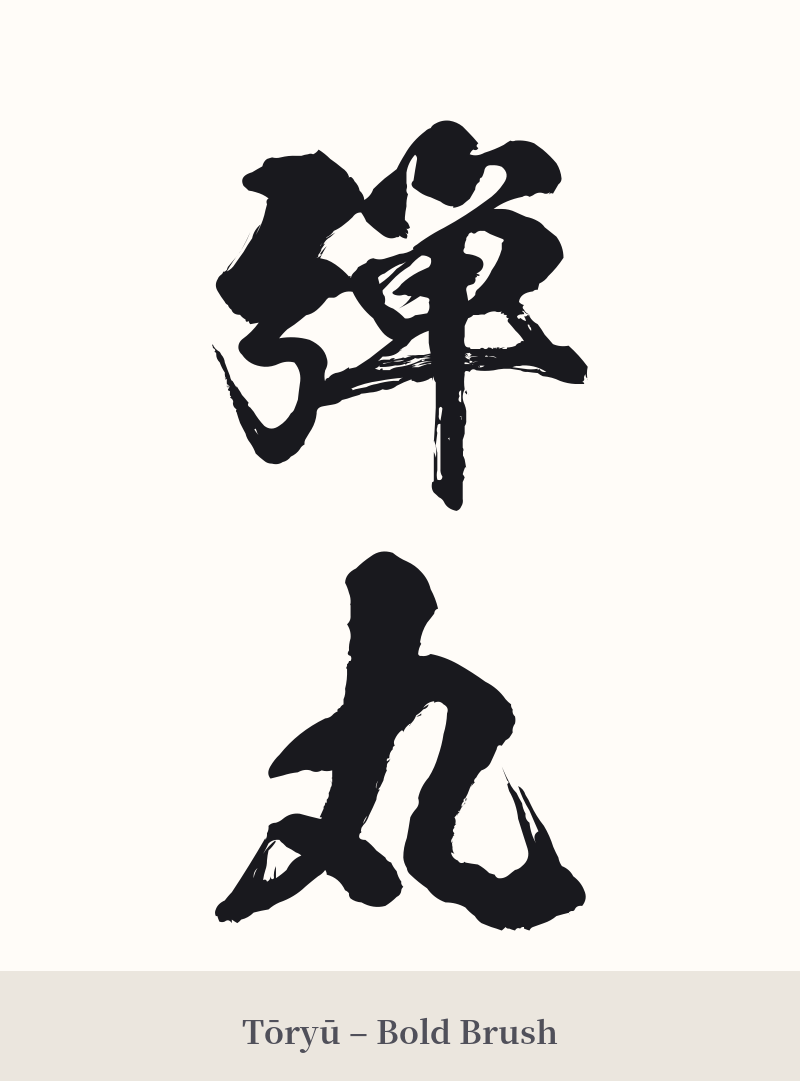
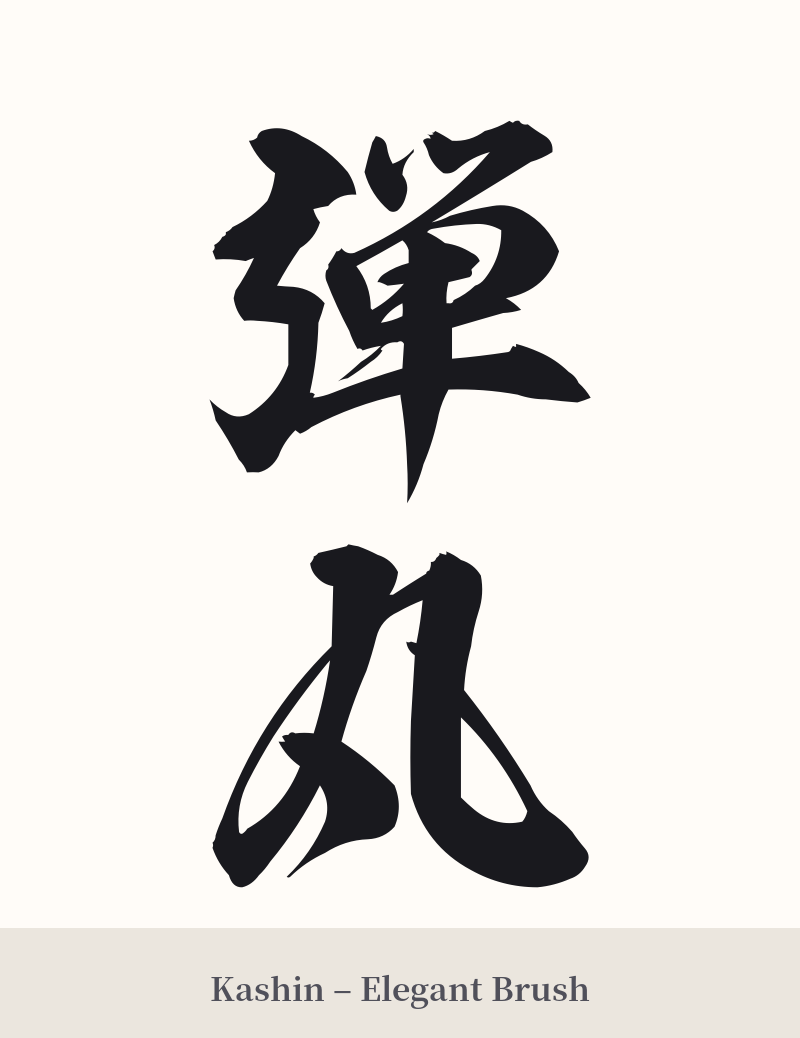
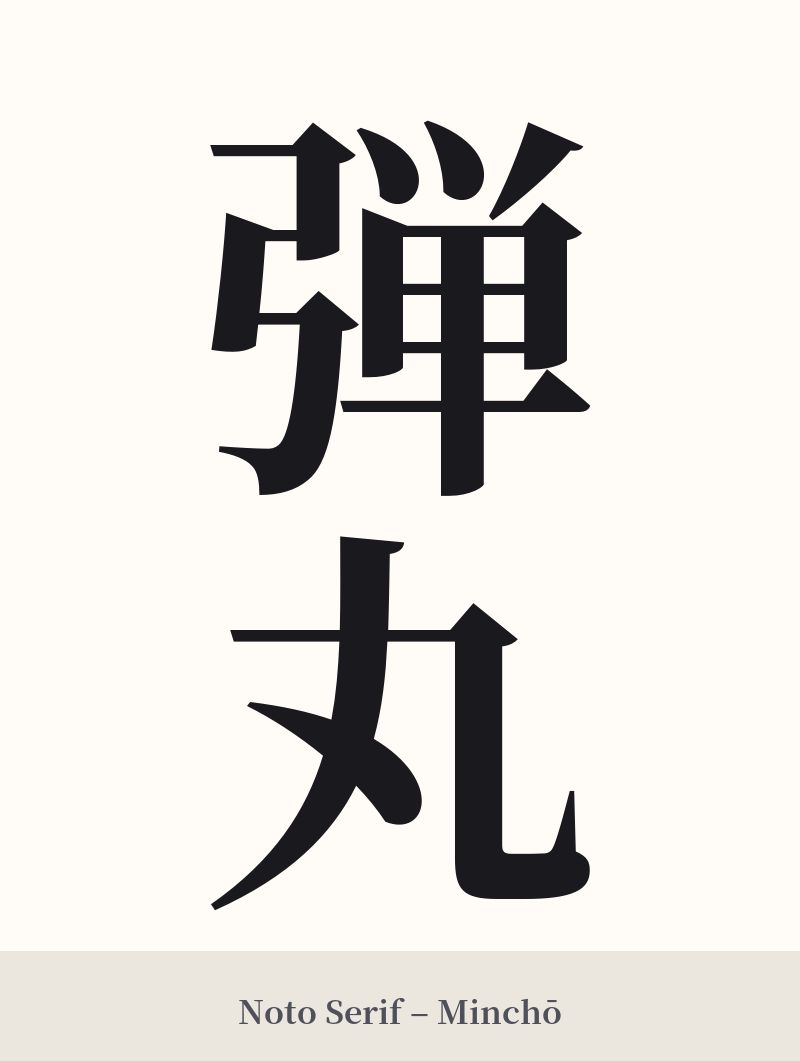
The same kanji can look dramatically different depending on the calligraphy style. Choose a font that matches the mood you want for your tattoo or design.
🎨 Tattoo Suitability
📐 Tattoo Design Guide
For a 弾丸 (Dangan) tattoo, the design should reflect the word's inherent sense of force and speed.
– Placement: Vertical alignment works very well on a forearm, bicep, or calf, emphasizing the projectile's path. Horizontal placement across the chest or upper back can create a sense of stability and power.
– Font Style: A sharp, angular, or blocky Mincho-style font can highlight the mechanical and modern nature of a bullet. Conversely, a dynamic and fluid brushstroke style (Gyosho or Sosho) can capture the raw energy and motion of the object in flight.
– Visual Tips: Consider pairing the kanji with abstract elements that suggest speed, such as motion lines or a subtle blur effect. The visual contrast between the more complex 弾 character and the very simple 丸 character is a key feature; a skilled artist can use this to create a balanced and compelling design.
Comments