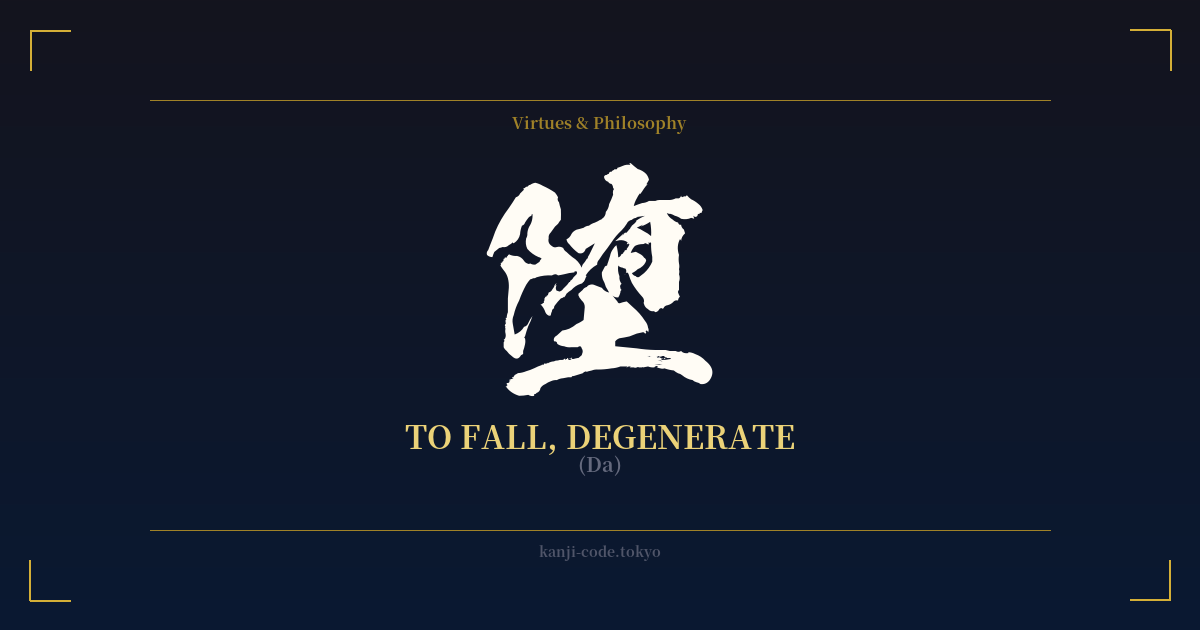
✍️ 堕 (Da) — Cultural Context
The kanji 堕 (da) is a character steeped in a sense of gravity and decline. Its origins lie in the physical world, originally depicting the collapse of an earth mound or a city wall. This literal image of falling into ruin provides the foundation for its much deeper, metaphorical meaning: a fall from grace, a descent into a lower state of being.
This is not the simple, neutral act of falling like a leaf from a tree, which is often represented by the kanji 落 (raku). Instead, 堕 carries a heavy moral and existential weight. It signifies a loss of virtue, a corruption of ideals, or a degeneration of one's status or soul. It implies a descent from a higher, more noble position to one that is debased and corrupt.
In Japanese culture and language, this character appears in powerful compound words that illustrate its negative scope. The most common is 堕落 (daraku), which translates to depravity, corruption, or moral degradation. It can describe an individual who has lost their way, a society in decline, or an artist who has compromised their integrity. It’s a term used to express profound disappointment in a fall from a previously held standard.
Another significant term is 堕天使 (datenshi), meaning "fallen angel." This concept, while rooted in Western theology, has been widely adopted and explored in Japanese popular culture, including anime, manga, and video games. Here, 堕 perfectly captures the essence of a divine or powerful being cast out from a celestial realm, often due to rebellion or sin. It evokes a tragic, romanticized, yet inherently corrupt figure, like Lucifer.
From a Buddhist perspective, 堕 can be linked to the concept of falling into lower realms of existence due to negative karma or attachment to worldly desires. It represents a spiritual failure, a movement away from enlightenment and toward suffering. This adds another layer of philosophical weight to the character, tying it to cycles of consequence and spiritual struggle.
Because of these strong connotations, 堕 is a somber and serious character. It speaks of tragedy, failure, and the process of becoming something less than what one was. It is the kanji of broken ideals and irreversible decline, making it a powerful but perilous symbol.
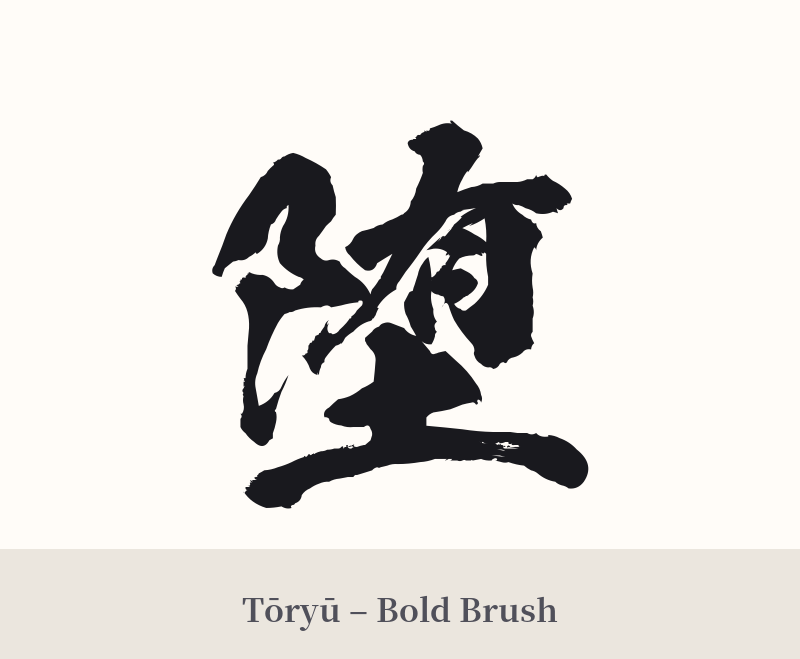
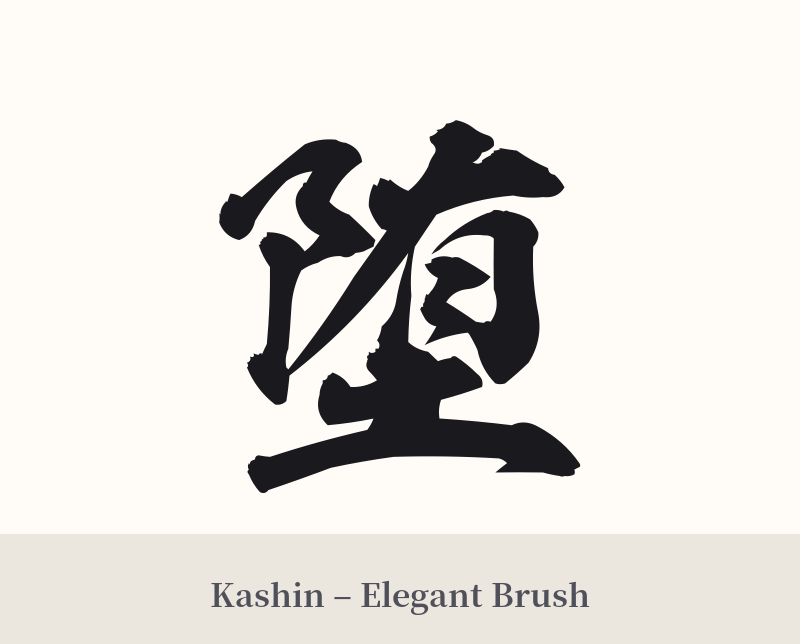
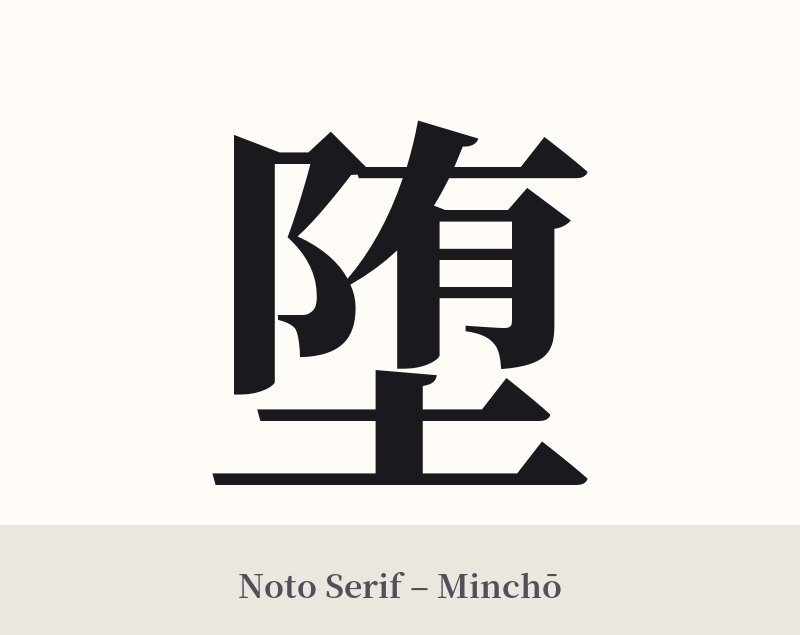
🖌️ Font Styles for 堕
The same kanji can look dramatically different depending on the calligraphy style. Choose a font that matches the mood you want for your tattoo or design.
🎨 Tattoo Suitability
📐 Tattoo Design Guide
A tattoo of 堕 is a bold statement, and its design should reflect its heavy meaning. Given its potential for misunderstanding, providing context through design is crucial.
– Placement: Consider areas that can host a single, impactful character, such as the back of the neck, the center of the upper back, or the inner forearm. These placements allow the character to stand alone as a deliberate focal point.
– Font Style: A rough, semi-cursive (gyōsho) or scratchy, untamed cursive (sōsho) calligraphy style can emphasize the chaos and tragedy of the fall. Conversely, a stark, formal block script (kaisho) can convey a sense of grim, unchangeable fate.
– Visual Elements: Combining 堕 with other imagery is highly recommended to clarify its intent. Consider pairing it with shattered wings for a 'fallen angel' theme, wilting or decaying flowers to represent the loss of purity, or broken chains to signify a fall into a corrupt form of freedom. Using dark, faded inks can suggest a slow decay, while adding a splash of red could symbolize sin or a painful descent.
Comments