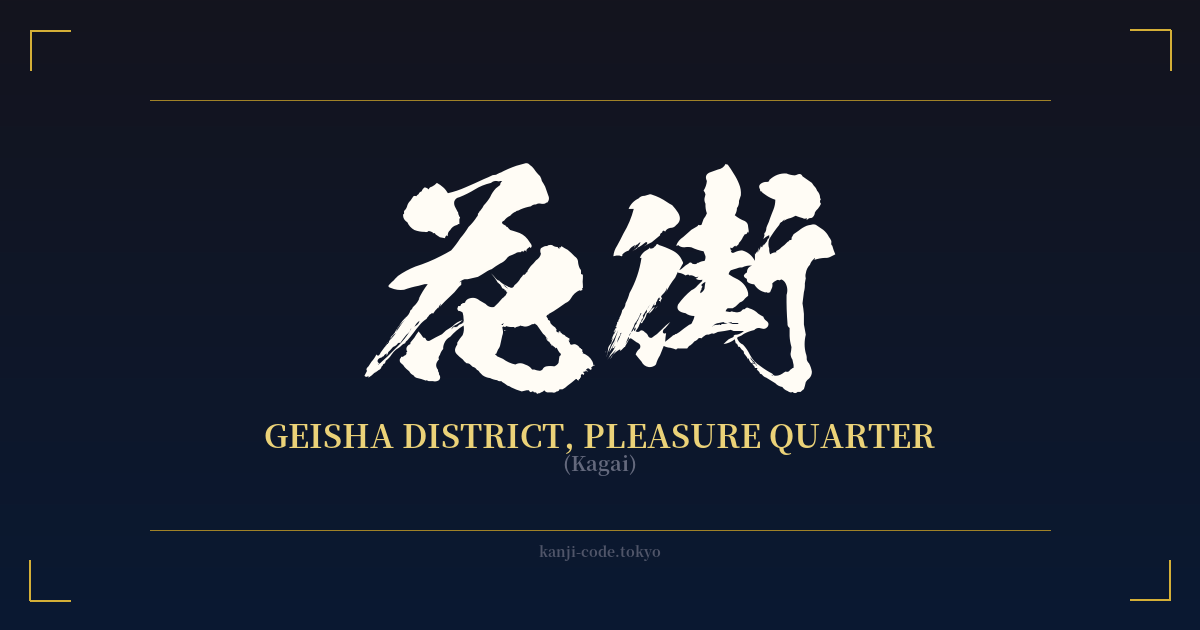
✍️ 花街 (Kagai) — Cultural Context
花街 (Kagai) literally translates to 'Flower Town' or 'Flower Street.' This evocative name refers to the districts in Japan where geisha live and work. These are not just neighborhoods; they are self-contained worlds of art, tradition, and exquisite entertainment that have captivated the Japanese imagination for centuries.
The most famous Kagai are found in Kyoto, with Gion being the most well-known, but they also existed in Tokyo (like Shimbashi and Asakusa) and other major cities. These districts are characterized by their traditional wooden architecture, including the okiya (geisha lodging houses) and ochaya (exclusive teahouses where geisha entertain guests).
The 'flower' in Kagai is a beautiful metaphor. It refers to the geisha themselves—viewed as flowers of Japanese culture due to their beauty, grace, and mastery of traditional arts. These arts include classical dance (buyō), playing instruments like the shamisen, poetry, and the refined art of conversation. A geisha is a living repository of Japanese culture.
It is critically important to distinguish Kagai from Yūkaku (遊廓), the historical red-light districts. While often located near each other, their functions were entirely different. Geisha are highly skilled artists and entertainers, not prostitutes. The world of the Kagai was built on aesthetics, exclusivity, and artistic patronage. Guests did not pay for sex, but for the privilege of being entertained by some of the country's most accomplished performers in an elegant setting.
This confusion is the primary reason the term is complex. The Kagai were part of the 'Floating World' (Ukiyo), a realm of fleeting pleasures and entertainment that included everything from kabuki theater to sumo wrestling and brothels. For an outsider, the lines can seem blurry, but within Japanese culture, the distinction is clear and significant.
Today, the remaining Kagai, especially in Kyoto, are protected cultural treasures. While the number of geisha has declined, they continue to practice their arts and are a powerful symbol of Japan's enduring traditions. For tourists, a walk through a Kagai like Gion is a step back in time, offering a glimpse into a world of refined beauty and hidden elegance.
🖌️ Font Styles for 花街
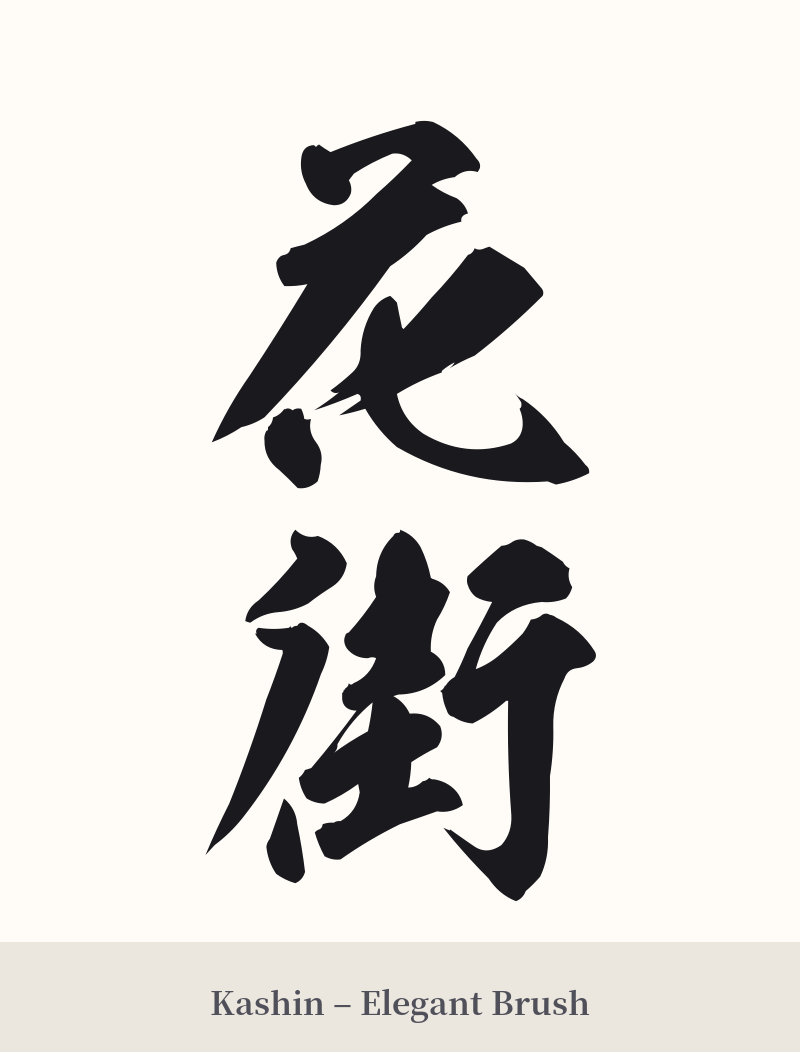
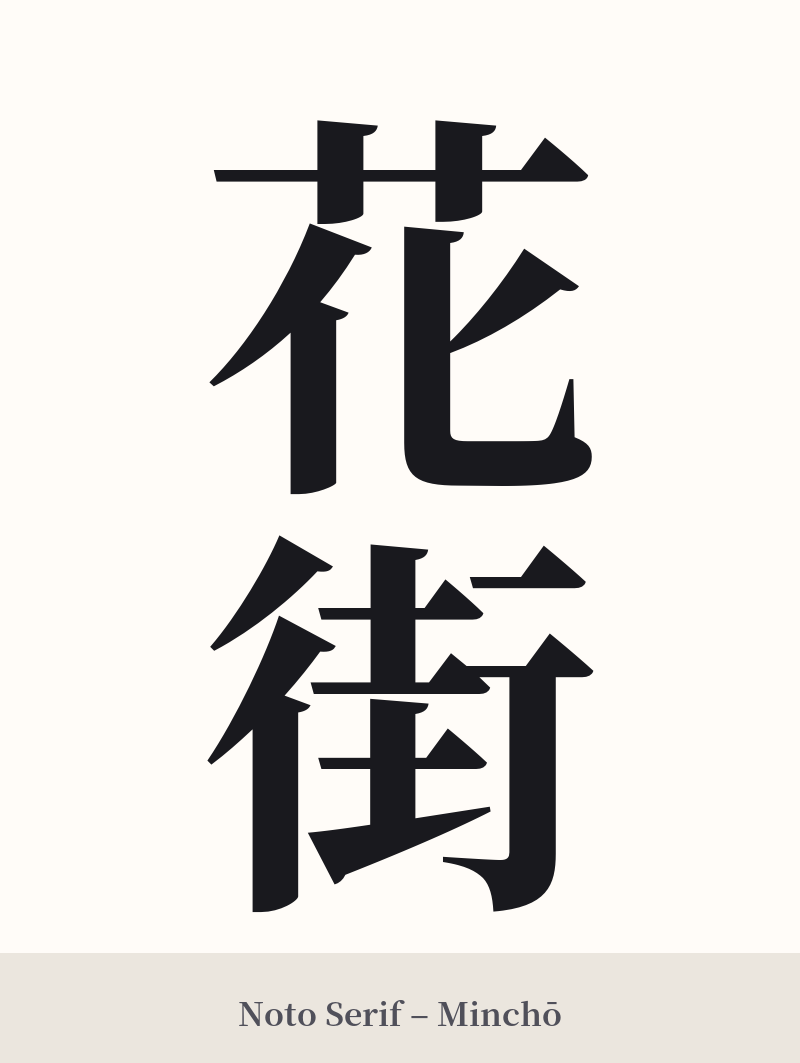
The same kanji can look dramatically different depending on the calligraphy style. Choose a font that matches the mood you want for your tattoo or design.

🎨 Tattoo Suitability
📐 Tattoo Design Guide
A tattoo of 花街 (Kagai) should be approached with thoughtfulness, reflecting its elegant and historical nature.
– Placement: Consider areas that allow for vertical alignment, such as the forearm, calf, or along the spine. This gives the two characters space to be read clearly and creates a graceful flow.
– Font Style: An elegant, semi-cursive script like Gyosho would beautifully capture the artistic and flowing nature of the geisha world. For a more traditional and formal look, a crisp Kaisho (block script) is also a strong choice. Avoid overly aggressive or modern fonts that would clash with the historical feel.
– Visual Complements: While the kanji can stand alone, incorporating a single, subtle element can enhance its meaning. Consider a few falling cherry blossom petals, a simple Japanese fan (sensu), or the silhouette of a paper lantern (chōchin) placed near the characters.
Comments