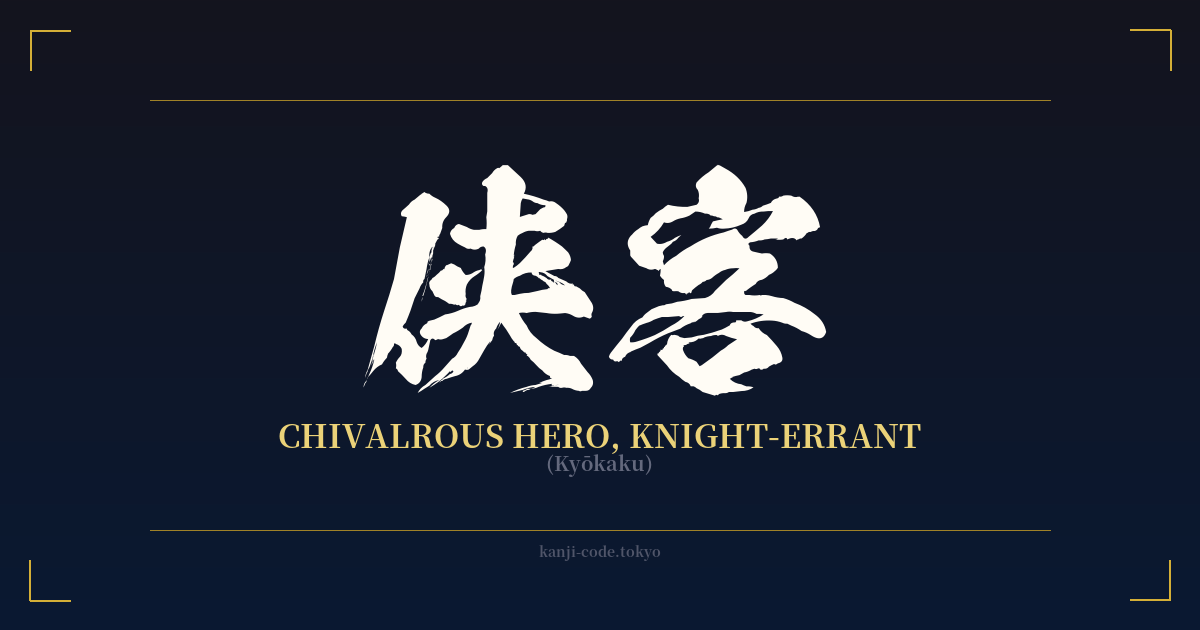
✍️ 侠客 (Kyōkaku) — Cultural Context
The term 侠客 (Kyōkaku) paints a vivid picture of a uniquely Japanese archetype: the chivalrous hero, the knight-errant, the honorable outlaw. These figures are the Japanese equivalent of Robin Hood, emerging from the commoner class to protect the downtrodden from corrupt officials and overbearing samurai.
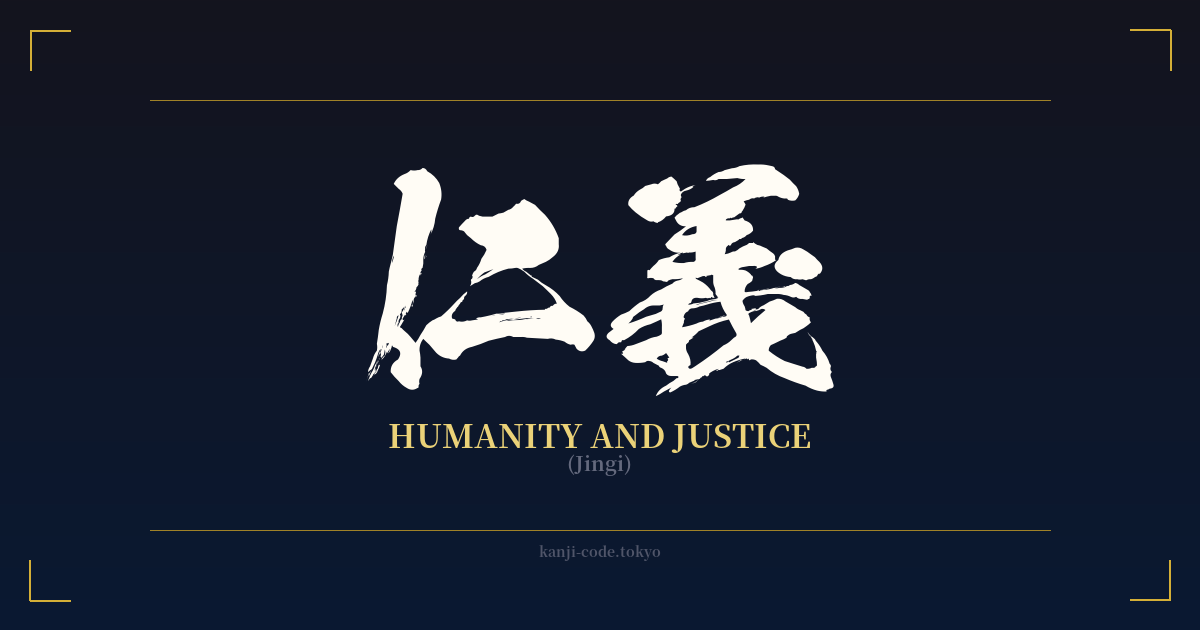
Historically, Kyōkaku flourished during the long peace of the Edo period (1603-1868). With society rigidly stratified, the samurai class became more bureaucratic, and the common people—merchants, craftsmen, and farmers—were often left vulnerable. In this vacuum, the Kyōkaku emerged. They were often gamblers, street performers, or laborers who lived by their own code of honor, known as 仁義 (jingi) – a blend of justice and duty.
Unlike a samurai, who serves a lord and upholds the feudal system, a Kyōkaku's loyalty was to the common person and their own principles. They were admired for their 男伊達 (otokodate), a swaggering, devil-may-care chivalry. They settled disputes, protected local businesses from extortion, and stood up for those who couldn't defend themselves. Their stories became the stuff of legend, celebrated in Kabuki theater, woodblock prints, and popular fiction.
These were not selfless saints; they were flawed, often rough-around-the-edges characters who lived in the grey areas of society. They were masters of both the sword and the quick-witted gamble, embodying a freedom and rebellious spirit that was both feared and admired.
The cultural context of Kyōkaku, however, has a crucial and complex modern layer: its adoption by the Yakuza. From their origins, Yakuza groups modeled themselves after the Kyōkaku, adopting their codes of 'jingi' and framing themselves as honorable outlaws protecting their territory. This romanticized self-image is a core part of Yakuza identity, heavily promoted in movies and manga.
Because of this, the line between the historical folk hero and the modern gangster has become blurred in the popular imagination. While the spirit of the Kyōkaku represents a noble ideal of justice for the common man, its direct association with organized crime in the modern era cannot be ignored. It's a term loaded with history, romance, and significant contemporary baggage.
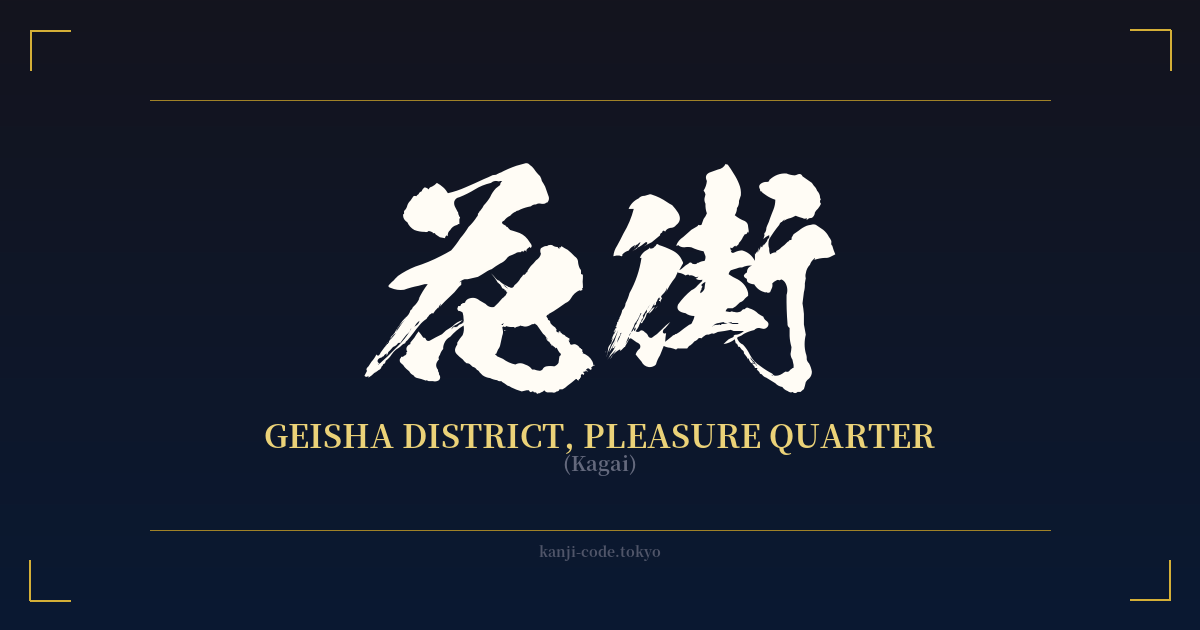
🖌️ Font Styles for 侠客
The same kanji can look dramatically different depending on the calligraphy style. Choose a font that matches the mood you want for your tattoo or design.
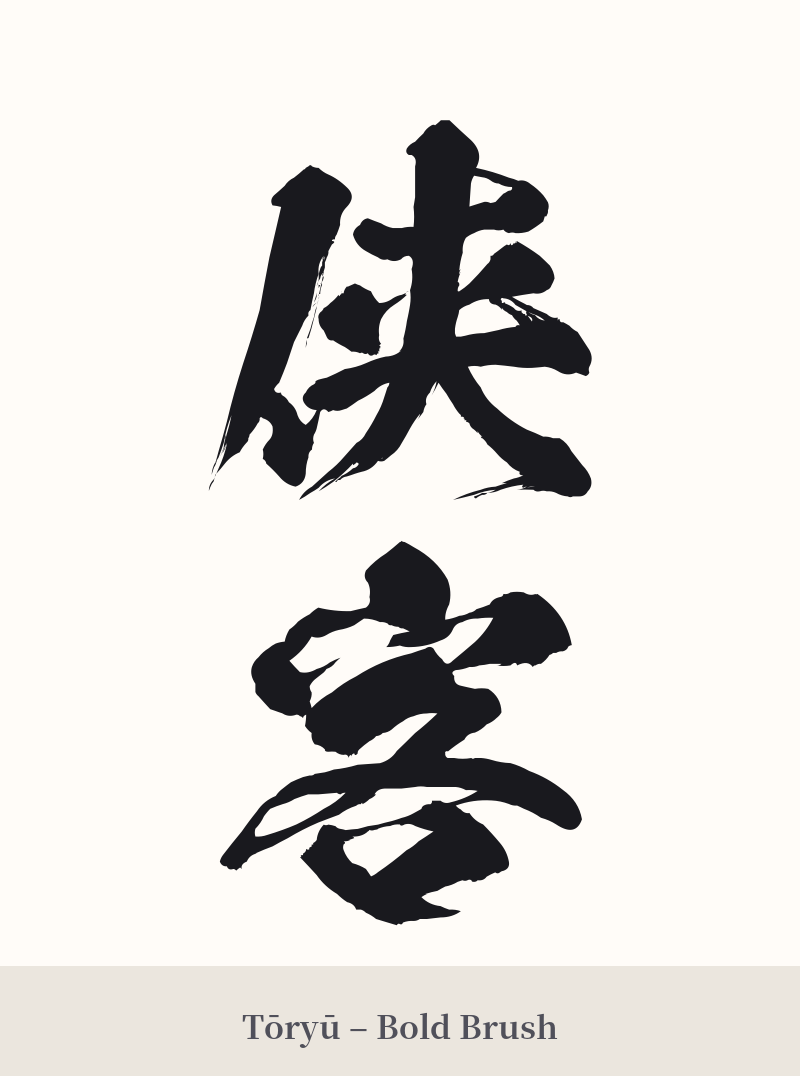
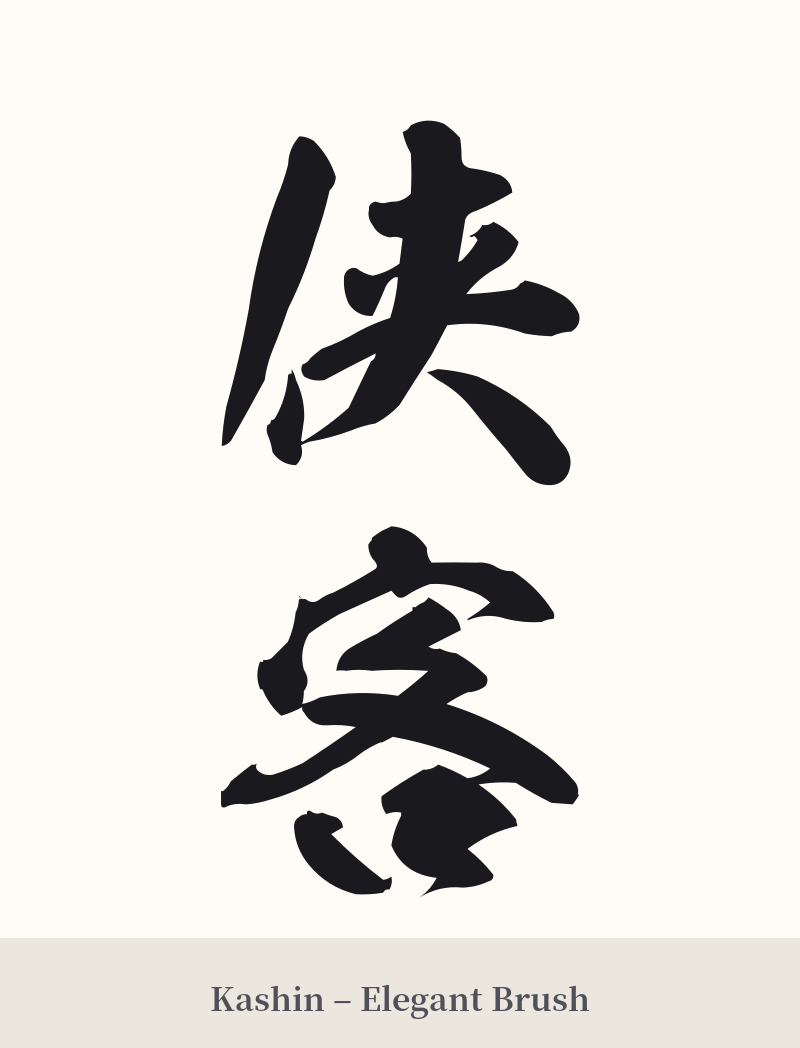
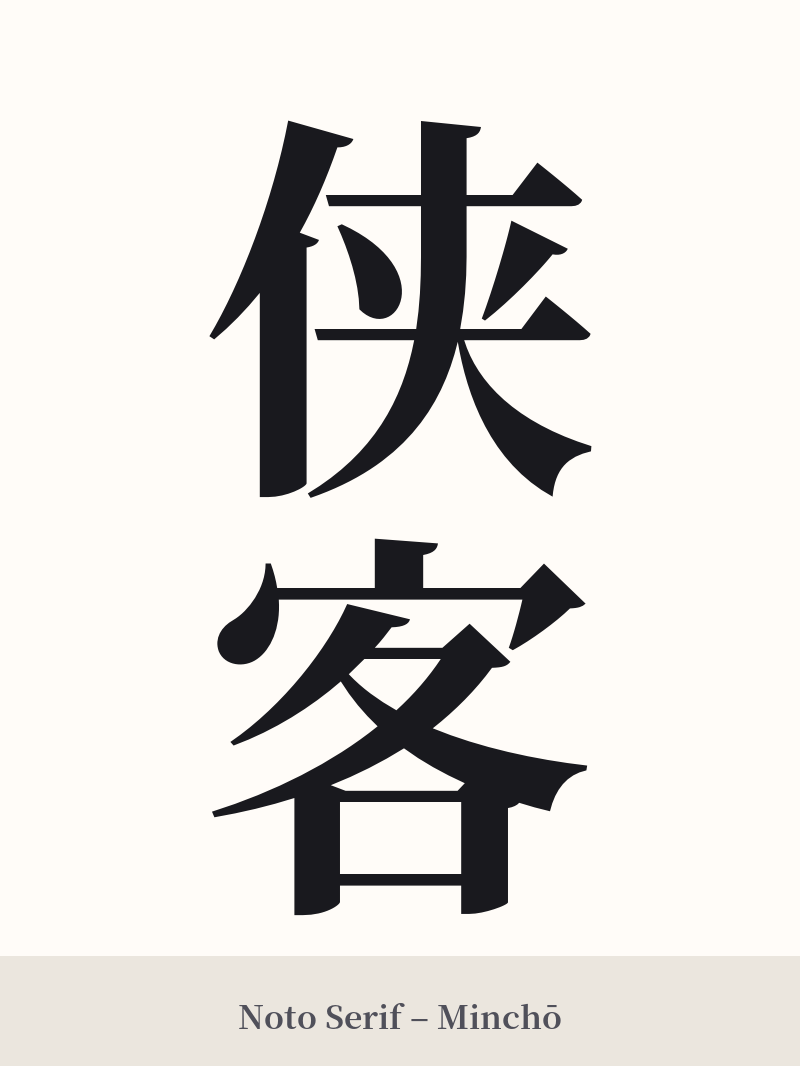
🎨 Tattoo Suitability
📐 Tattoo Design Guide
The word 侠客 works best with a design that reflects its blend of honor and rebelliousness.
– Placement: Vertical orientation is traditional and visually striking. It's well-suited for the forearm, the calf, or running down the spine or ribs.
– Font Style: Avoid rigid, blocky fonts (Kaisho). A more dynamic, semi-cursive (Gyosho) or even a rough, flowing cursive script (Sosho) better captures the 'wandering' and untamed spirit of the Kyōkaku.
– Visual Elements: Consider pairing the kanji with classic imagery associated with these figures. A traveler's straw hat (sugegasa), a single cherry blossom petal (symbolizing the transient nature of life), or a koi fish swimming upstream (representing perseverance) can add layers of meaning to the tattoo.
Comments