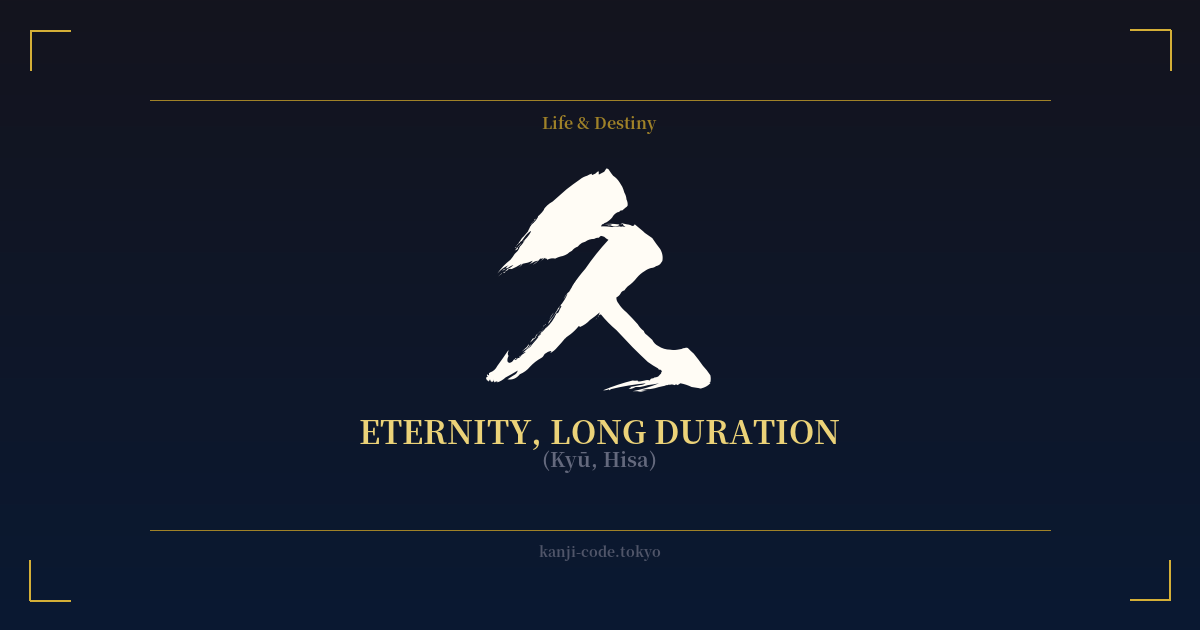
✍️ 久 (Kyū, Hisa) — Cultural Context
The kanji 久 (Kyū) is a simple yet deeply resonant character in the Japanese language, embodying the concepts of long duration, permanence, and the passage of time. Its origins are thought to be rooted in ancient imagery. One compelling theory suggests the character is a pictograph of a person being supported by a piece of wood. This is believed to represent the practice of moxibustion, an ancient form of heat therapy where burning mugwort is placed on the body, a process that required the patient to remain still for a long time. Thus, the character itself became a symbol of enduring a lengthy period.
In modern Japanese, 久 is most famously heard in the common greeting 「お久しぶりですね」(o-hisashiburi desu ne), meaning "It's been a long time" or "Long time no see." This everyday usage grounds the character in the relatable human experience of time separating and reuniting people. It speaks to a past duration, a gap that has now closed. This use highlights that 久 doesn't always mean a cosmic, unending eternity, but often a significant, measurable stretch of time.
However, 久 serves as a crucial building block for more powerful concepts of permanence. It forms the word 永久 (eikyū), which translates more directly to "eternity" or "perpetuity." This term is often used to describe things that are meant to last indefinitely, such as peace (恒久平和, kōkyū heiwa) or a permanent structure. Another related term is 持久力 (jikyūryoku), meaning "endurance" or "stamina," linking the idea of a long duration to physical and mental fortitude.
This appreciation for longevity is a cornerstone of Japanese aesthetics and philosophy. The culture holds deep respect for things that have withstood the test of time—ancient temples, gnarled pine trees that have lived for centuries, and family businesses (shinise) passed down through generations. The kanji 久 captures this quiet reverence for endurance. It's less about a dramatic, infinite "forever" (a nuance often carried by 永遠, eien) and more about a steadfast, patient, and persistent existence through time. It is also a common component in personal names, such as Hisako (久子, "long-life child") or Hisashi (久志, "long-held ambition"), embedding a parental wish for a long, prosperous, and meaningful life.
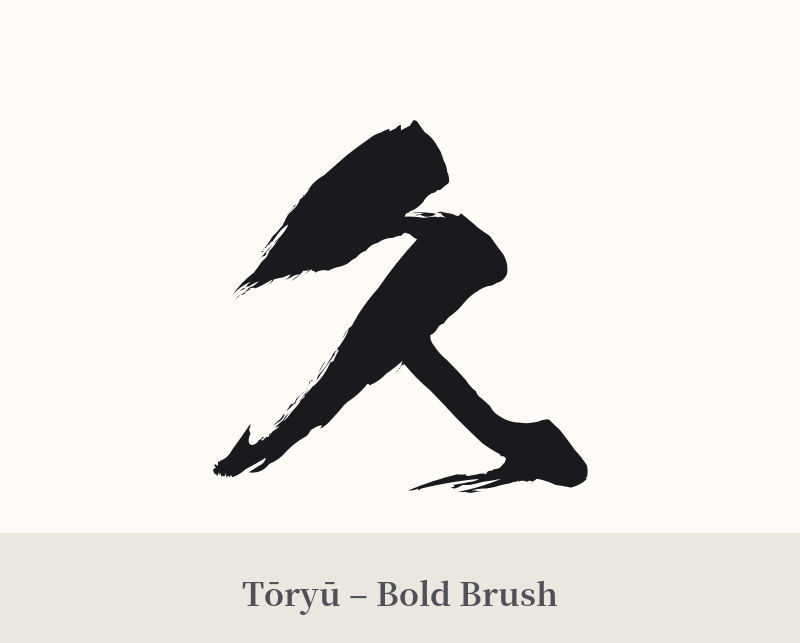
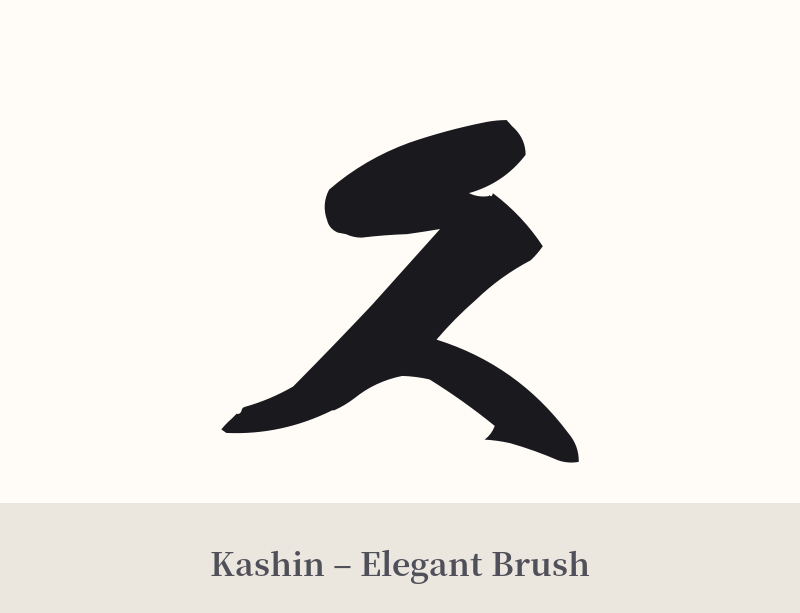
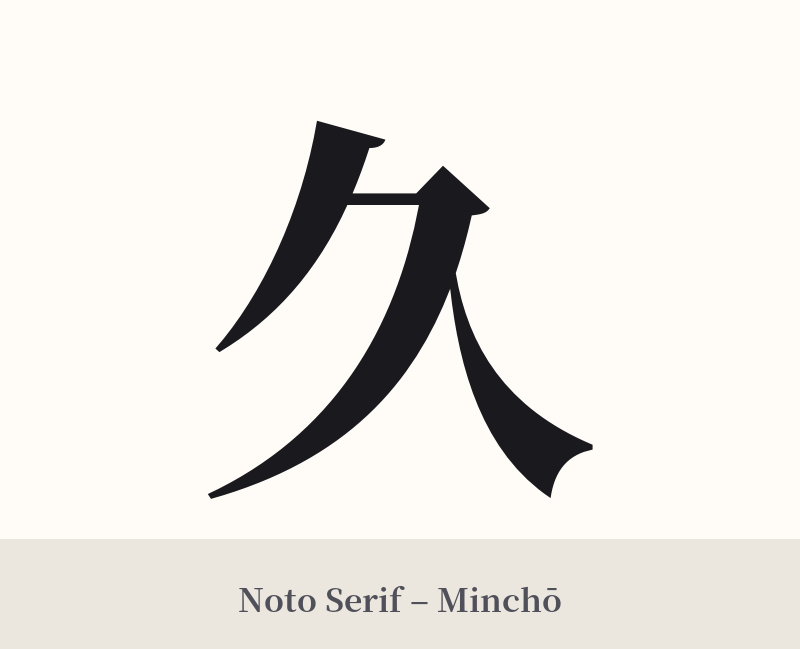
🖌️ Font Styles for 久
The same kanji can look dramatically different depending on the calligraphy style. Choose a font that matches the mood you want for your tattoo or design.
🎨 Tattoo Suitability
📐 Tattoo Design Guide
Due to its minimalist form, the design approach for 久 is crucial for its success as a tattoo.
– Placement: Its simplicity makes it ideal for subtle and discreet locations. Consider the inner wrist, behind the ear, on the ankle, or along the collarbone. For a larger piece, it's better integrated as an element within a more complex design rather than standing alone.
– Font Style: The choice of font dramatically changes its feel. A bold, angular Kaisho (block script) or Gothic Mincho style can give the three simple strokes a sense of weight and solidity, emphasizing permanence. Conversely, a flowing, cursive Sōsho (grass script) can evoke the feeling of time passing, giving it a more dynamic and artistic quality.
– Visual Tips: To enhance its meaning, consider pairing 久 with other symbols of longevity or cycles. Placing it within an Ensō (Zen circle) can represent eternal continuity. It could also be subtly incorporated into the image of a koi fish swimming upstream (symbolizing perseverance) or the roots of an ancient tree, visually grounding its meaning in nature's endurance.
Comments