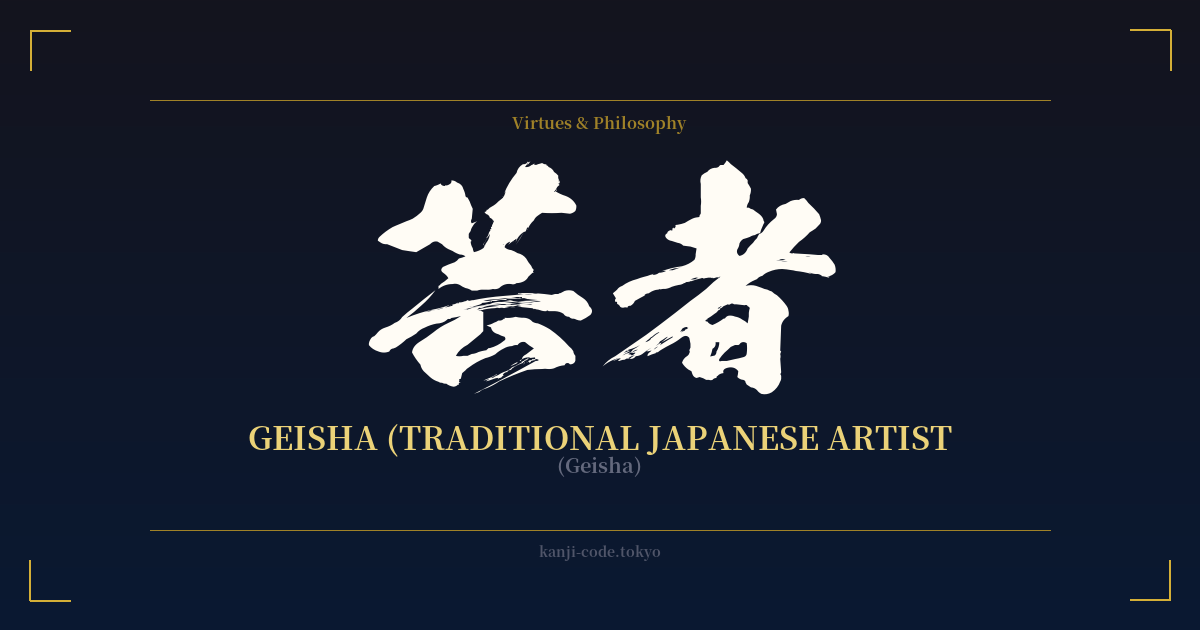
✍️ 芸者 (Geisha) — Cultural Context
The word 芸者 (Geisha) is one of the most famous, and most misunderstood, exports of Japanese culture. To understand its true essence, one must look at the kanji themselves: 芸 (gei) meaning 'art' or 'performance,' and 者 (sha) meaning 'person.' Combined, they literally mean 'an artist' or a 'person of the arts.' This is the true heart of the geisha's identity.
Historically, geisha emerged during the Edo Period (1603-1868) as professional entertainers. They were masters of traditional Japanese arts, dedicating their lives to rigorous training and refinement. Their skills included playing instruments like the three-stringed shamisen, performing traditional dances (Nihonbuyō), composing poetry, and mastering the art of witty and engaging conversation. They were the life of the party at high-end banquets (ozashiki), but they were artists, not courtesans.
It's crucial to distinguish geisha from the oiran, who were high-class courtesans of the same era. While both existed within the 'floating world' (ukiyo) of entertainment districts, their roles were distinct. Geisha sold their art and companionship, not their bodies. The geisha's world was one of immense discipline, with young women entering a geisha house (okiya) as apprentices (maiko) before earning the right to become a full-fledged geisha (geiko in the Kyoto dialect).
Unfortunately, this distinction was largely lost on the West. After World War II, interactions between American soldiers and women who simply dressed in kimono and called themselves 'geisha girls' for commercial reasons cemented a false, highly sexualized image. This stereotype has been perpetuated by films and fiction, creating a deep and persistent misunderstanding.
Today, the geisha tradition is a rare and protected cultural heritage, primarily centered in Kyoto's Gion district. The women who practice this profession are revered in Japan as living custodians of classical art forms. They represent a world of elegance, discipline, and artistic devotion that stands in stark contrast to the shallow, incorrect stereotypes held abroad.
🖌️ Font Styles for 芸者
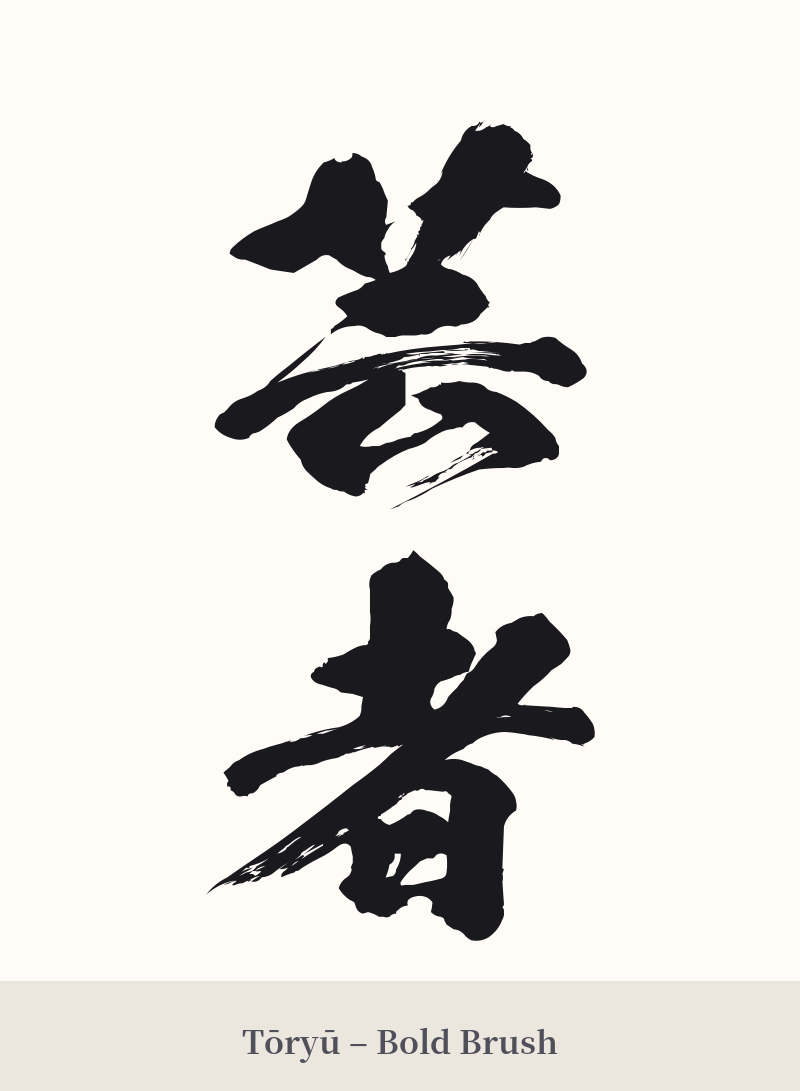
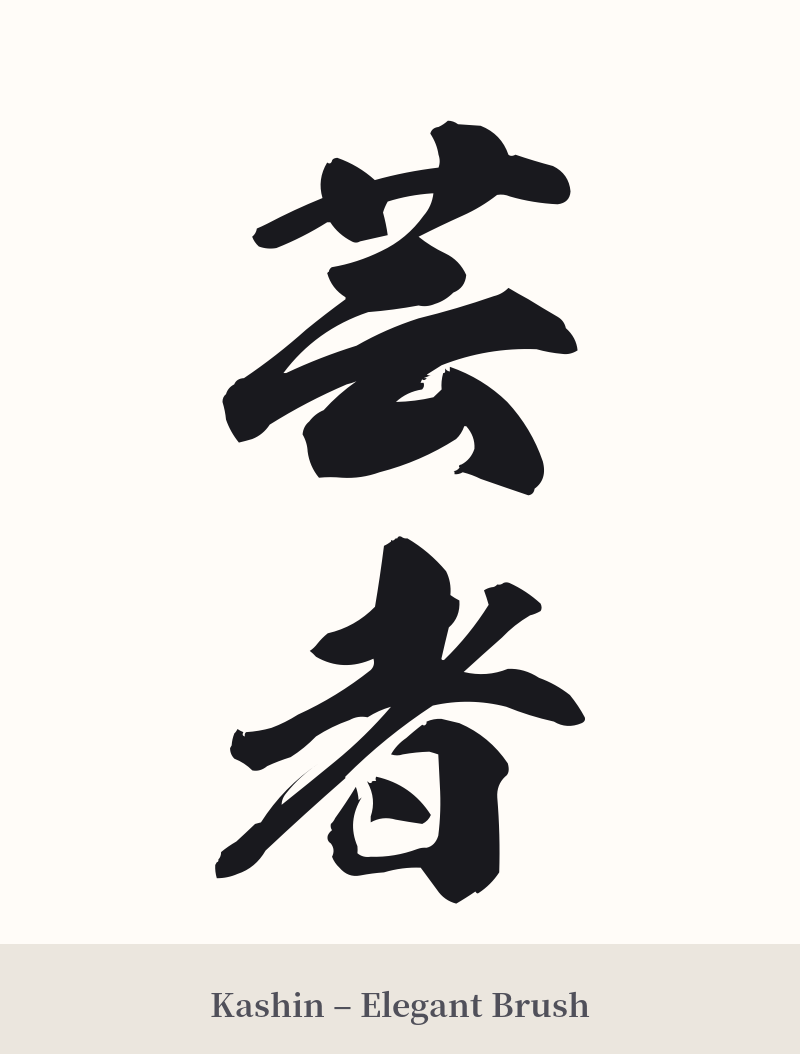
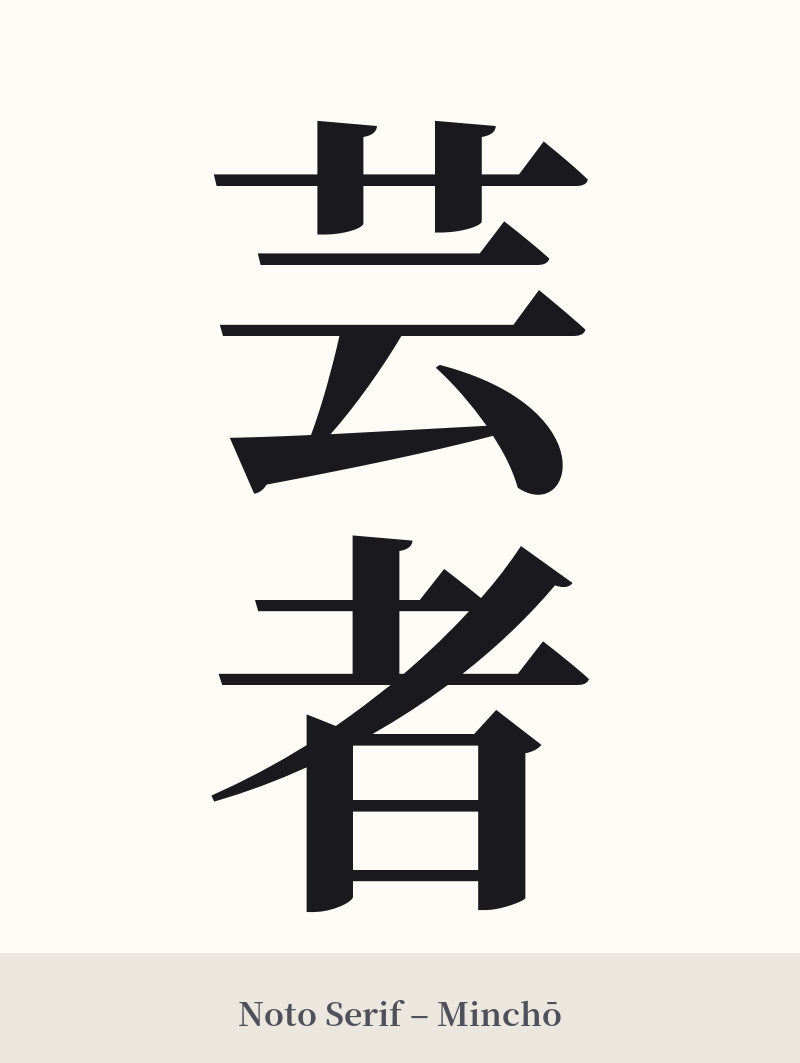
The same kanji can look dramatically different depending on the calligraphy style. Choose a font that matches the mood you want for your tattoo or design.
🎨 Tattoo Suitability
📐 Tattoo Design Guide
A tattoo of 芸者 carries an air of elegance and tradition that should be reflected in its design. Due to the vertical nature of the kanji, it is well-suited for placements that emphasize this orientation.
– Placement: The spine, forearm, or calf are excellent choices that allow the characters to be stacked vertically and flow with the body's lines.
– Font Style: The style of calligraphy is paramount. An elegant, flowing script like Gyosho (semi-cursive) can capture the artistic grace and movement associated with a geisha's performance. For a more formal and classic look, a clean Kaisho (block script) is also a strong choice.
– Visual Tips: It is generally best to let the kanji stand alone to convey its meaning with quiet confidence. Adding stereotypical imagery like cherry blossoms or fans can risk looking cliché and may reinforce the very misunderstandings one should be trying to avoid. Simplicity is key to honoring the refined nature of the word.
Comments