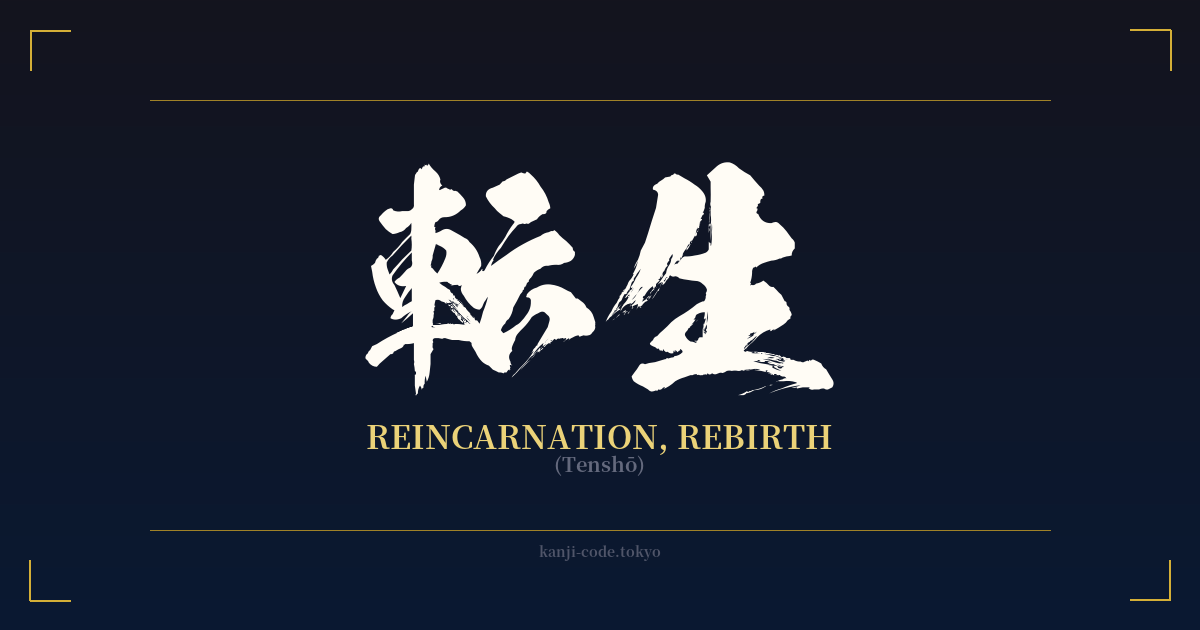
✍️ 転生 (Tenshō) — Cultural Context
転生 (Tenshō) is the Japanese word for reincarnation or rebirth. It encapsulates the idea of leaving one life and beginning another, a concept with deep roots in Eastern philosophy that has found vibrant new expression in modern Japanese pop culture.
Historically, the idea of Tenshō is intrinsically linked to Buddhism, which arrived in Japan in the 6th century. It is a core component of the doctrine of 輪廻 (Rinne), the Japanese term for Saṃsāra. This is the endless cycle of death and rebirth, driven by karma, from which practitioners of Buddhism seek to escape by attaining enlightenment. In this traditional context, reincarnation is not a desirable fresh start but a continuation of suffering to be overcome.
Beyond formal religion, the idea of souls being reborn has permeated Japanese folklore and storytelling for centuries. Tales of spirits returning in new forms, or of individuals recalling past lives, are common motifs that reflect a cultural familiarity with the concept of life as a cyclical journey rather than a linear one.
In the modern era, 転生 has exploded in popularity through the 'isekai' (異世界, 'different world') genre of anime, manga, and light novels. This narrative trope typically involves a protagonist from our world dying, often in a mundane or tragic way, and being reincarnated into a fantasy or game-like world. Here, they are often gifted with new powers, a new identity, and a chance to live a more exciting and meaningful life. Series like "That Time I Got Reincarnated as a Slime" (転生したらスライムだった件) have made Tenshō a household term for a new generation.
This modern interpretation has shifted the feeling of Tenshō from a burdensome cycle to a hopeful second chance. It represents the ultimate do-over, an escape from the constraints of a previous existence into a world of limitless potential. It speaks to a universal desire for a fresh start, for the opportunity to correct past mistakes and become the hero of one's own story. Thus, 転生 stands today at a fascinating cultural crossroads: it is both a profound spiritual concept from ancient tradition and a thrilling narrative device for modern fantasy.
🖌️ Font Styles for 転生
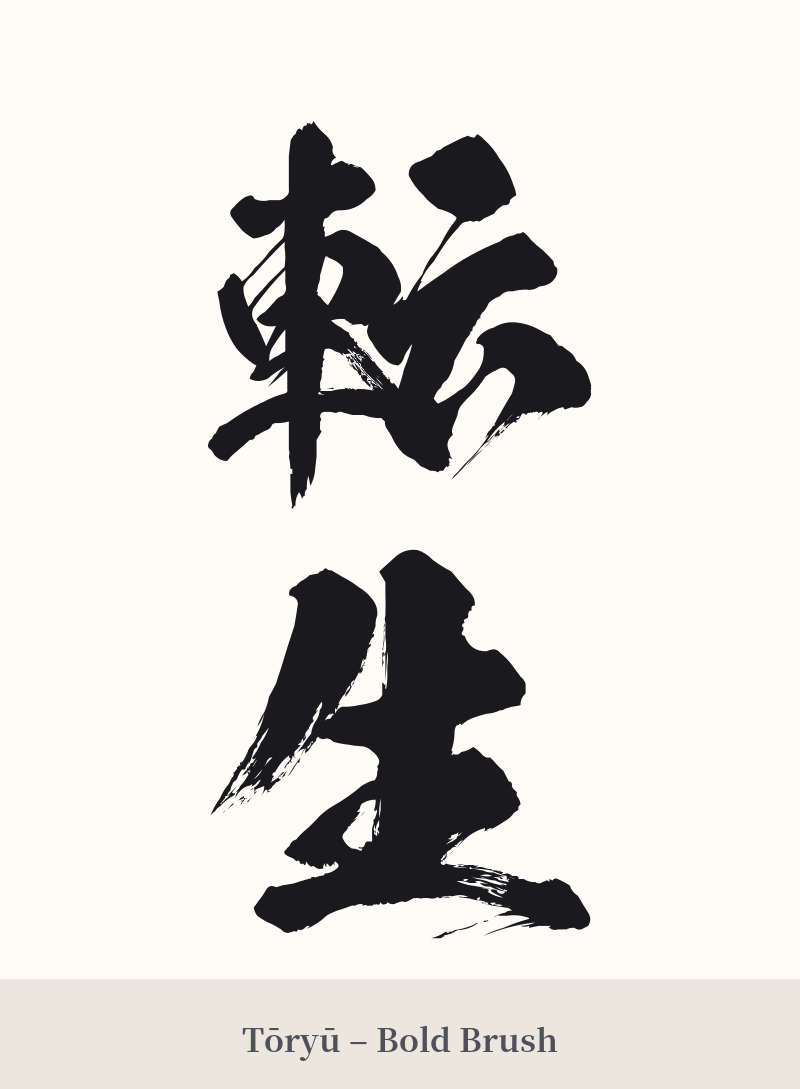
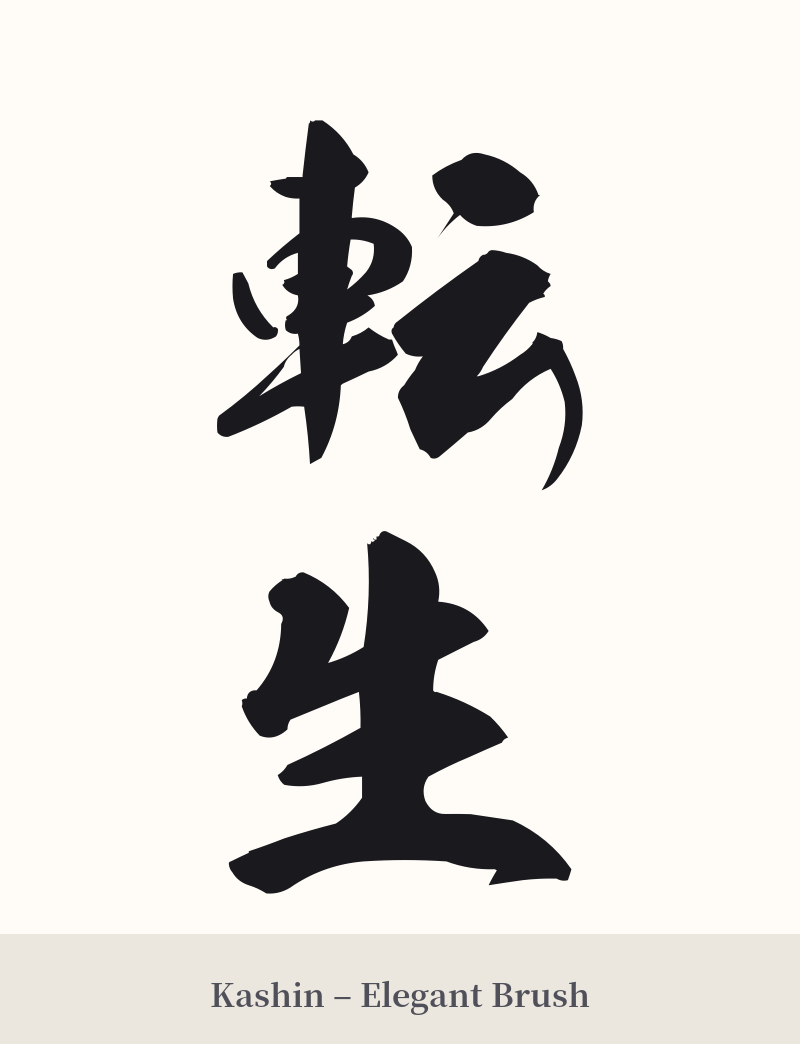
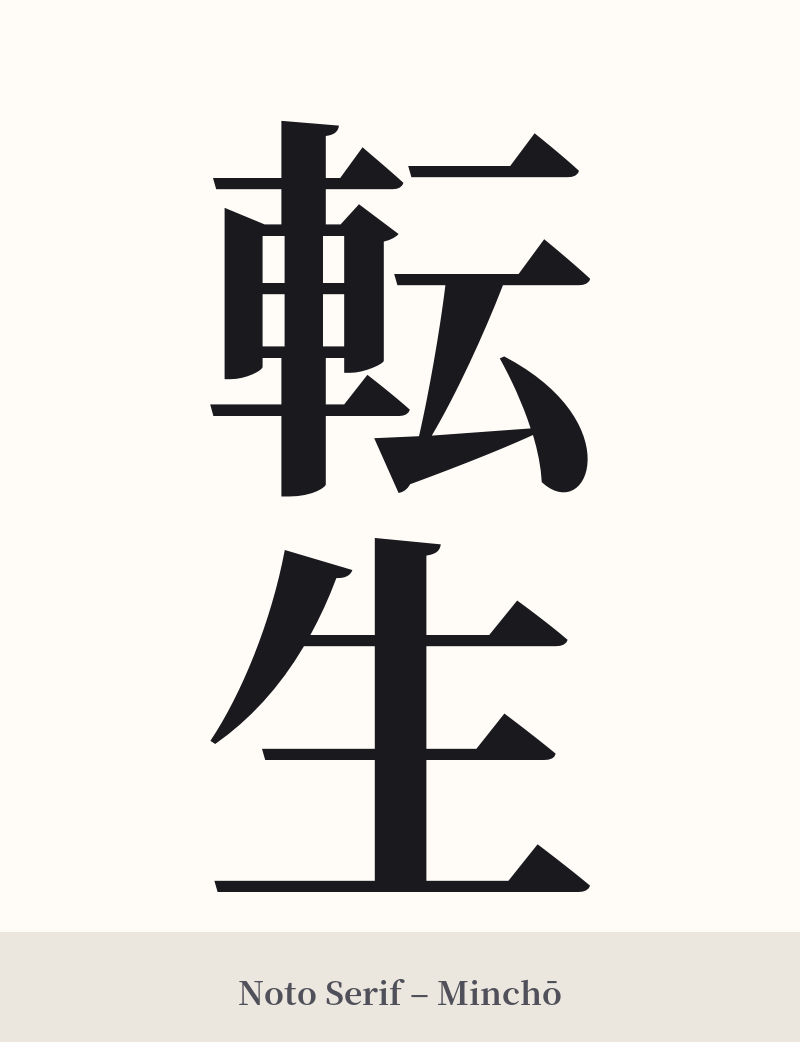
The same kanji can look dramatically different depending on the calligraphy style. Choose a font that matches the mood you want for your tattoo or design.
🎨 Tattoo Suitability
📐 Tattoo Design Guide
For a 転生 tattoo, the design can reflect either its spiritual or modern pop-culture meaning.
– Placement: A vertical orientation is classic and works well on the forearm, spine, or along the calf. A horizontal placement fits nicely across the collarbone, chest, or upper back.
– Font Style: For a traditional, spiritual feel, a dynamic brushstroke style (shodō) is perfect. It emphasizes the flow and movement inherent in the concept of rebirth. For a cleaner, more modern look that connects to its anime roots, a crisp Mincho or Kaisho font is a strong choice.
– Accompanying Imagery: Consider pairing the kanji with symbols of rebirth. A lotus flower rising from murky water, a phoenix, or an Enso (Zen circle) all beautifully complement the theme of a continuous life cycle and new beginnings.
Comments