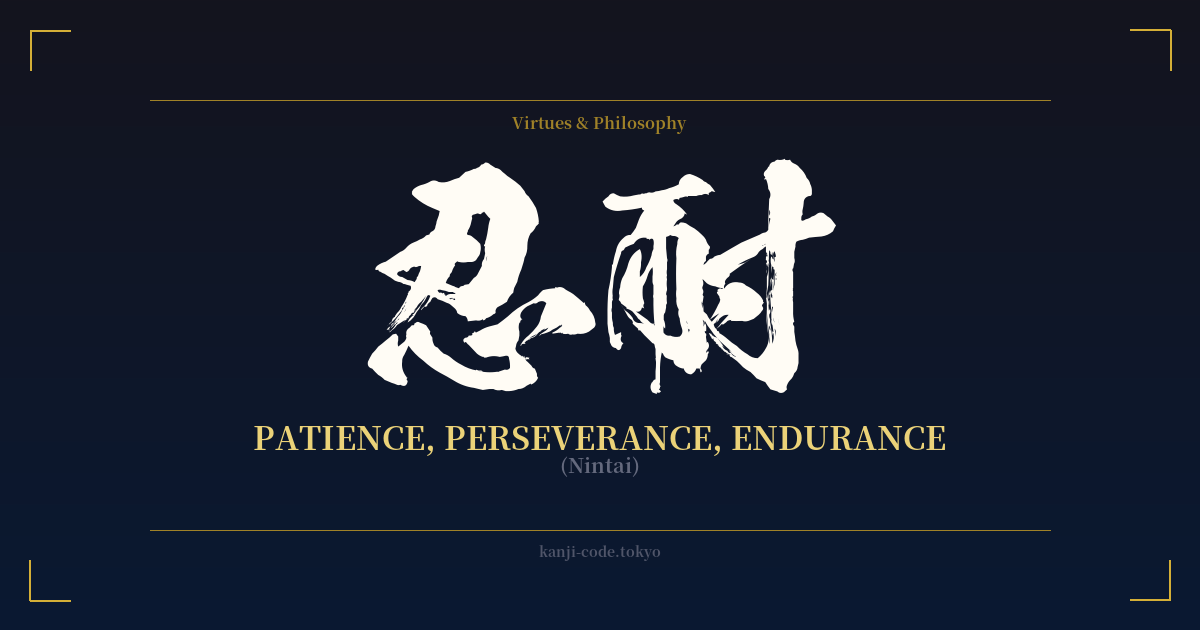
✍️ 忍耐 (Nintai) — Cultural Context
Nintai (忍耐) is one of the most significant virtues in Japanese culture, embodying the strength to persevere through adversity with patience and fortitude. It’s more than just waiting; it’s an active, disciplined endurance. This concept is deeply woven into the fabric of Japanese society, from the stoicism of the samurai to the resilience of modern life.
The word itself is a powerful combination of two kanji. The first character, 忍 (nin), is famously associated with the ninja (忍者), or “one who endures.” Visually, it depicts a blade (刃) over a heart (心). This stark imagery conveys the essence of enduring pain or hardship as if a blade were held to one's heart, requiring immense self-control and inner strength to remain steadfast.
The second character, 耐 (tai), means to withstand or endure. When combined, 忍耐 (Nintai) creates a concept of not just concealing one's suffering but actively withstanding pressure over time. It is the quiet strength that allows one to continue on a difficult path without complaint, focusing on the long-term goal.
Historically, Nintai was a cornerstone of Bushido, the samurai code. A warrior was expected to face pain, loss, and the prospect of death with unwavering composure. This wasn't about suppressing emotion but mastering it. This philosophy also has strong ties to Zen Buddhism, which teaches that enlightenment is achieved through disciplined practice and enduring the trials of the mind and body.
A common Japanese proverb, 「石の上にも三年」 (Ishi no ue ni mo sannen), which translates to "Three years on a stone," perfectly captures the spirit of Nintai. It suggests that if you sit on a cold stone for three years, it will eventually become warm. It’s a testament to the belief that perseverance will ultimately yield results.
It’s important to distinguish Nintai from a similar term, Gaman (我慢). While both relate to endurance, Gaman often carries a nuance of simply “putting up with” something for the sake of social harmony or because there is no other choice. Nintai, in contrast, is seen as a more proactive and noble virtue—choosing to endure for a higher purpose or personal growth. It is the strength of the marathon runner, the artist perfecting their craft, and the individual facing life's challenges with quiet dignity.
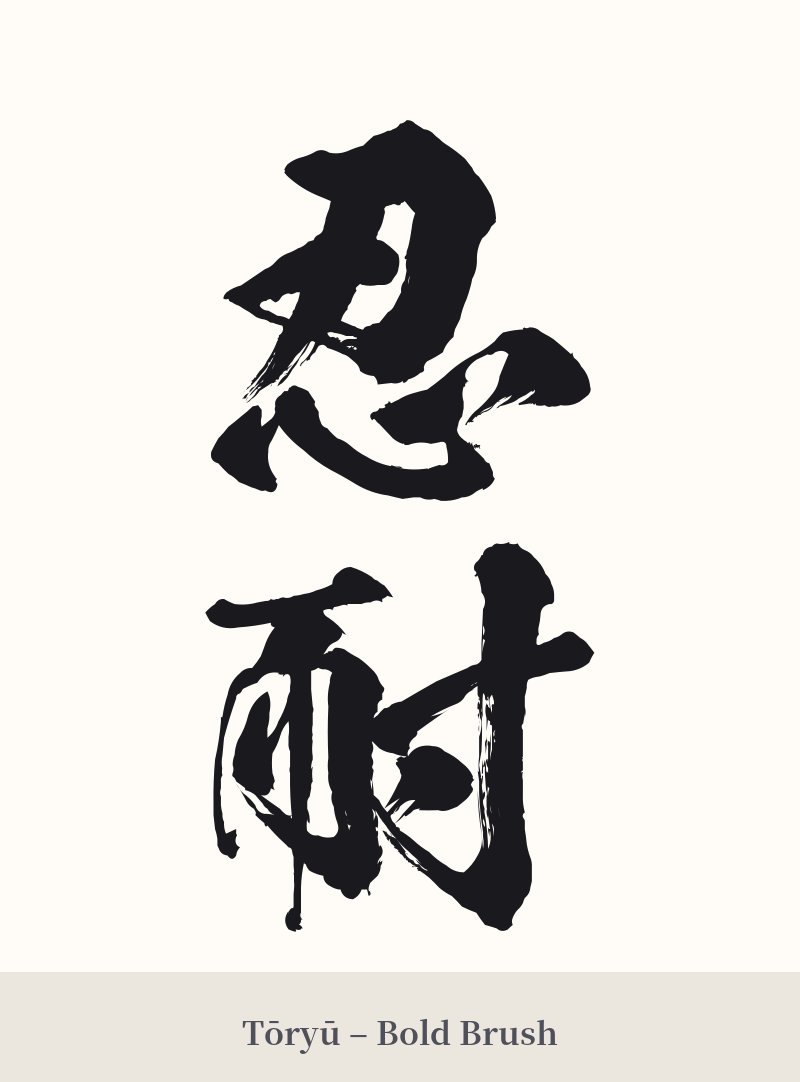
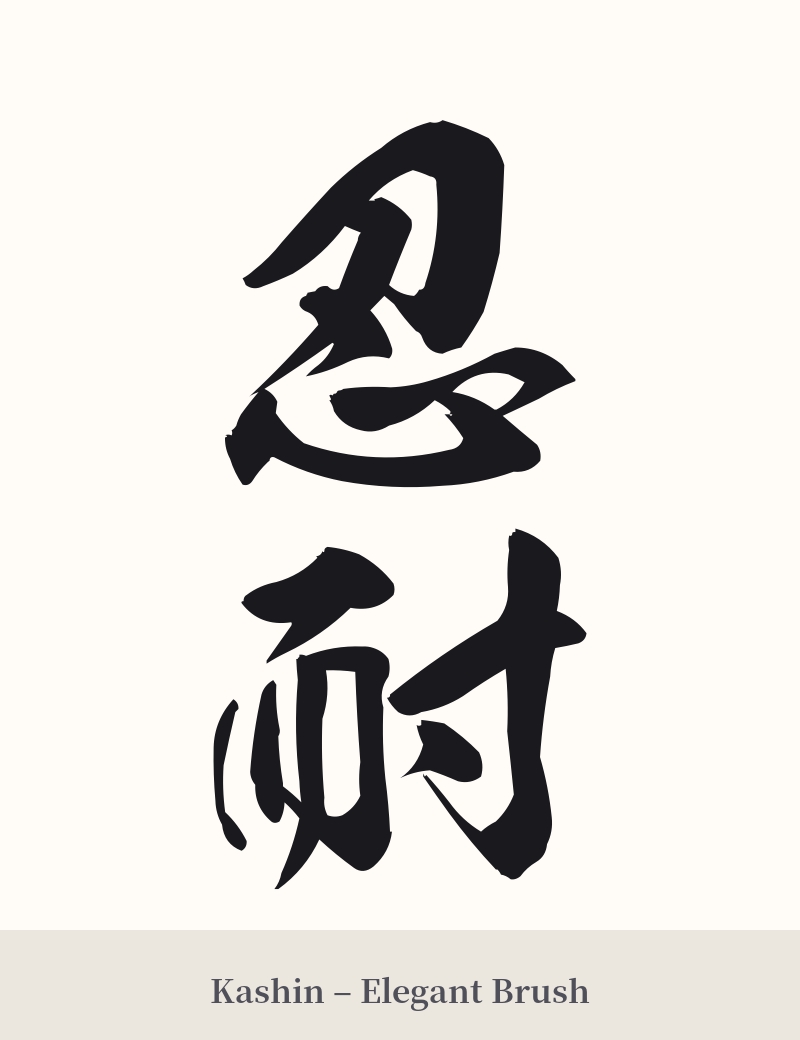
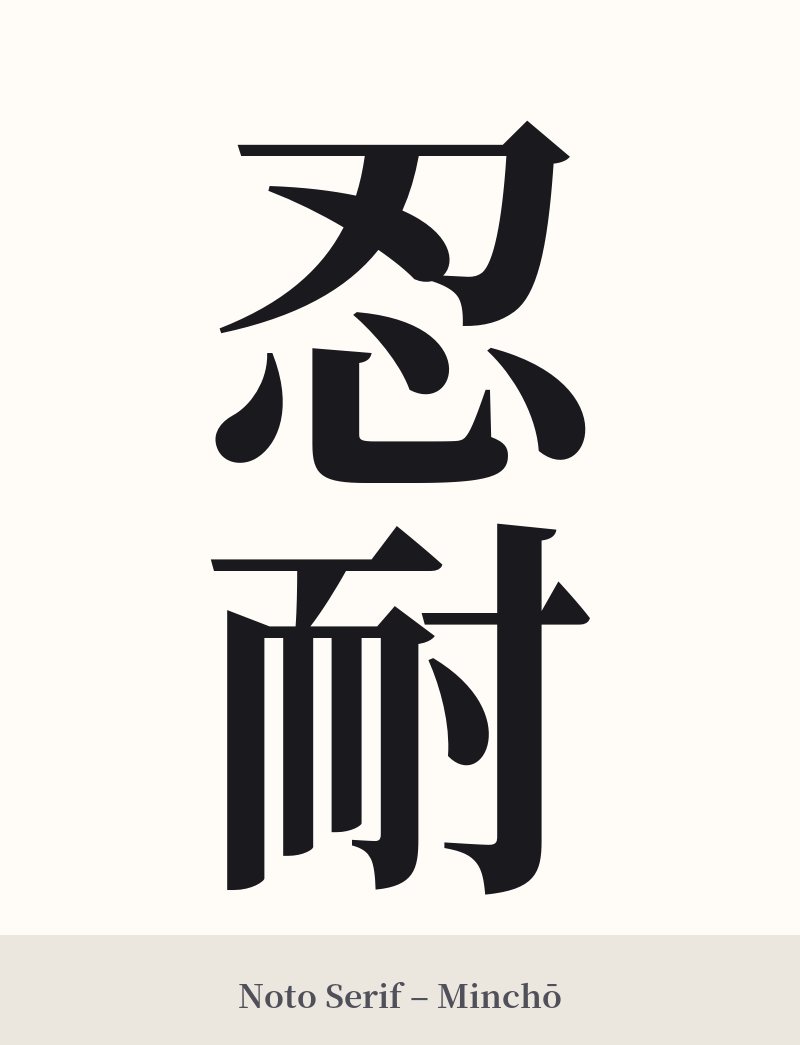
🖌️ Font Styles for 忍耐
The same kanji can look dramatically different depending on the calligraphy style. Choose a font that matches the mood you want for your tattoo or design.
🎨 Tattoo Suitability
📐 Tattoo Design Guide
Nintai offers a balanced and powerful aesthetic for a tattoo. Its two-character structure makes it versatile for various placements.
– Placement: A vertical orientation is classic and works beautifully along the forearm, bicep, calf, or down the spine. For a horizontal design, it fits well across the chest, upper back, or below the collarbone.
– Font Styles: The style can dramatically alter the feeling. A strong, angular Kaisho (block script) emphasizes fortitude and discipline. A slightly more fluid Gyosho (semi-cursive) can represent resilience and the ability to adapt. For a more artistic and expressive look, a dynamic Sosho (cursive) script can capture the flow of enduring through time.
– Visual Elements: Consider pairing Nintai with symbolic imagery. A koi fish swimming upstream reinforces the theme of persevering against the current. Resilient bamboo, which bends but does not break, is another excellent pairing. A Daruma doll, a symbol of goal-setting and perseverance, also complements the meaning perfectly.
Comments