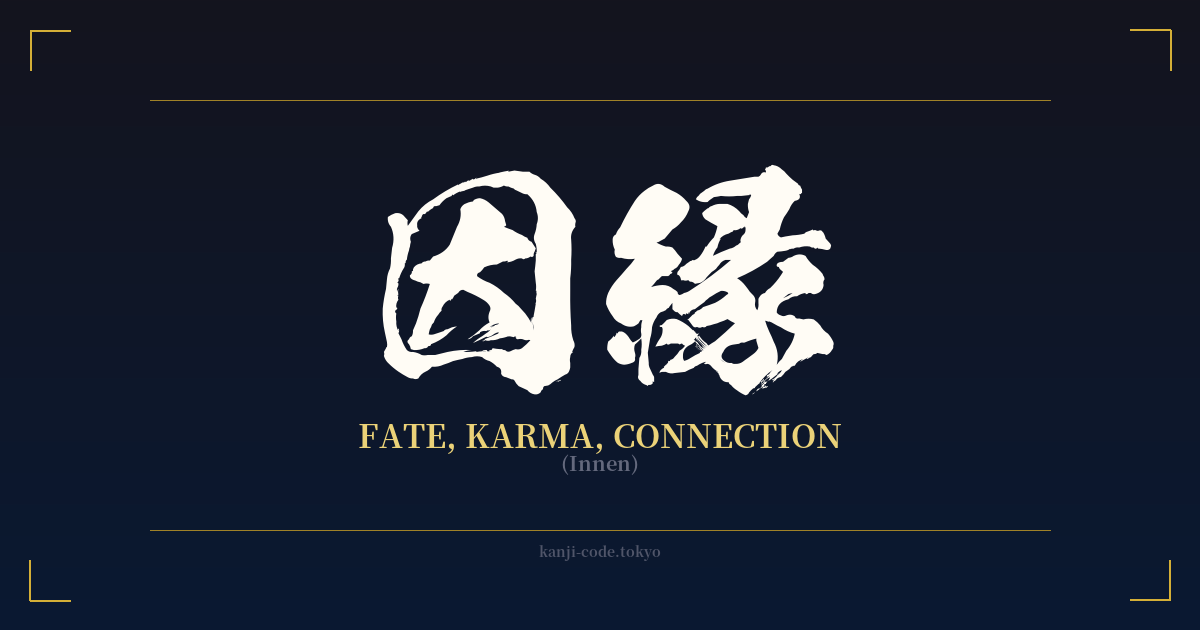
✍️ 因縁 (Innen) — Cultural Context
因縁 (Innen) is a word steeped in Buddhist philosophy that has permeated the Japanese language and psyche. It speaks to a concept far more intricate than simple 'fate' or 'destiny.' At its core, Innen is about the inescapable law of cause and effect, the karmic web that connects all events and relationships across time.
The word is composed of two characters: 因 (in), meaning 'direct cause,' and 縁 (en), meaning 'indirect condition' or 'relation.' In Buddhist thought, nothing happens by chance. Every outcome is the result of a primary cause (因) being activated by a set of external conditions (縁). A seed (因) will only sprout into a plant if it has the right conditions of soil, water, and sunlight (縁). Similarly, our lives are shaped by our past actions (causes) meeting the right circumstances (conditions).
This concept extends powerfully to human relationships. When two people meet and form a significant bond, whether it's love, friendship, or even a rivalry, it is said to be due to Innen. It implies that their connection was not random but a result of causes set in motion in the past, perhaps even in previous lives. This is the beautiful, romantic side of Innen—the idea that certain encounters are 'meant to be,' woven into the fabric of existence.
However, Innen has a darker, more common side in modern usage. The term can also refer to a long-standing grudge, a bitter history, or an inescapable, troublesome relationship. A feud between two families that spans generations is a classic example of negative Innen. This is where the phrase 『因縁をつける』(innen o tsukeru) comes from, which literally means 'to attach a cause' but is used to mean 'to pick a fight' or 'to look for trouble,' often by dredging up a past grievance as a pretext.
This duality is what makes Innen so complex. It is the invisible thread that can lead to a soulmate, but it is also the heavy chain that binds one to a rival or a painful past. In Japanese stories, from classic samurai tales to modern anime, characters are often driven by their Innen—a quest for revenge against a sworn enemy, a promise made to an ancestor, or a fateful meeting that changes the course of their life. This dynamic of inescapable connection, for better or for worse, is the true essence of 因縁.
🖌️ Font Styles for 因縁
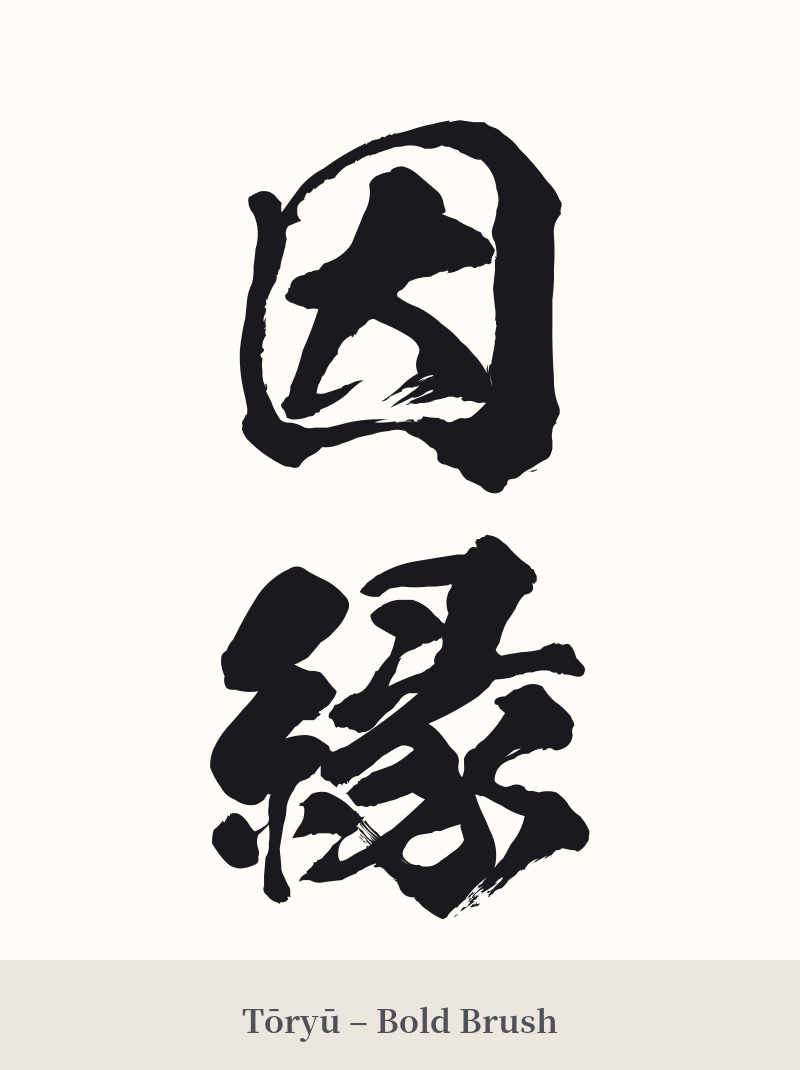
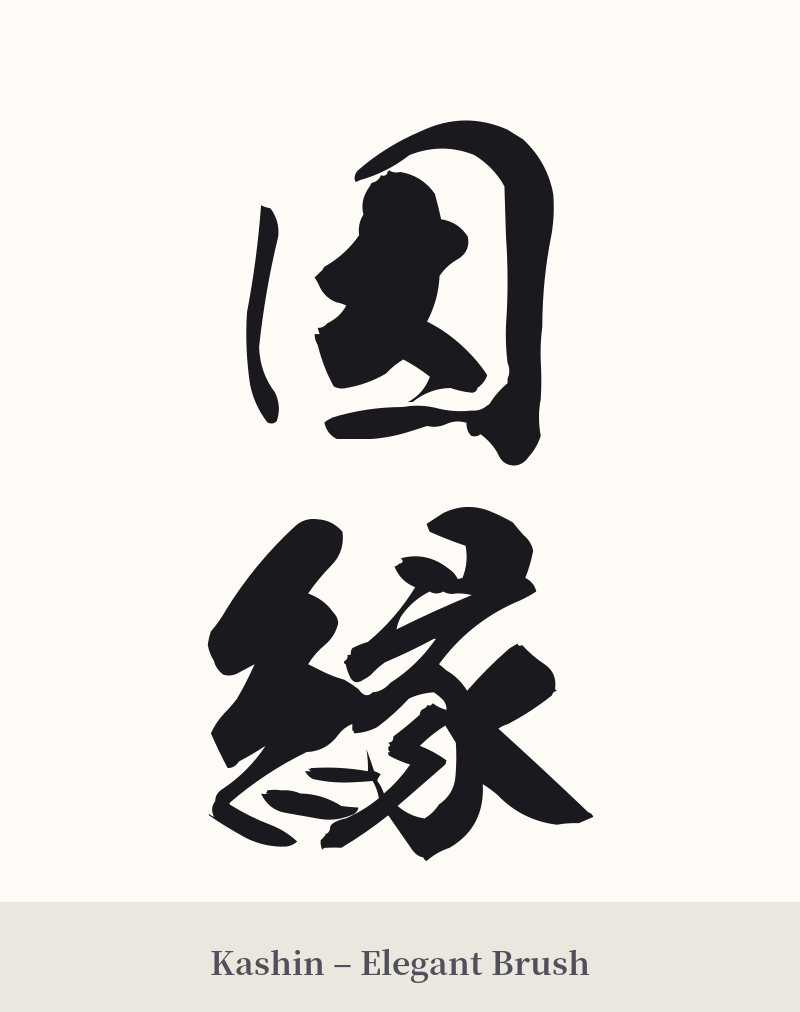
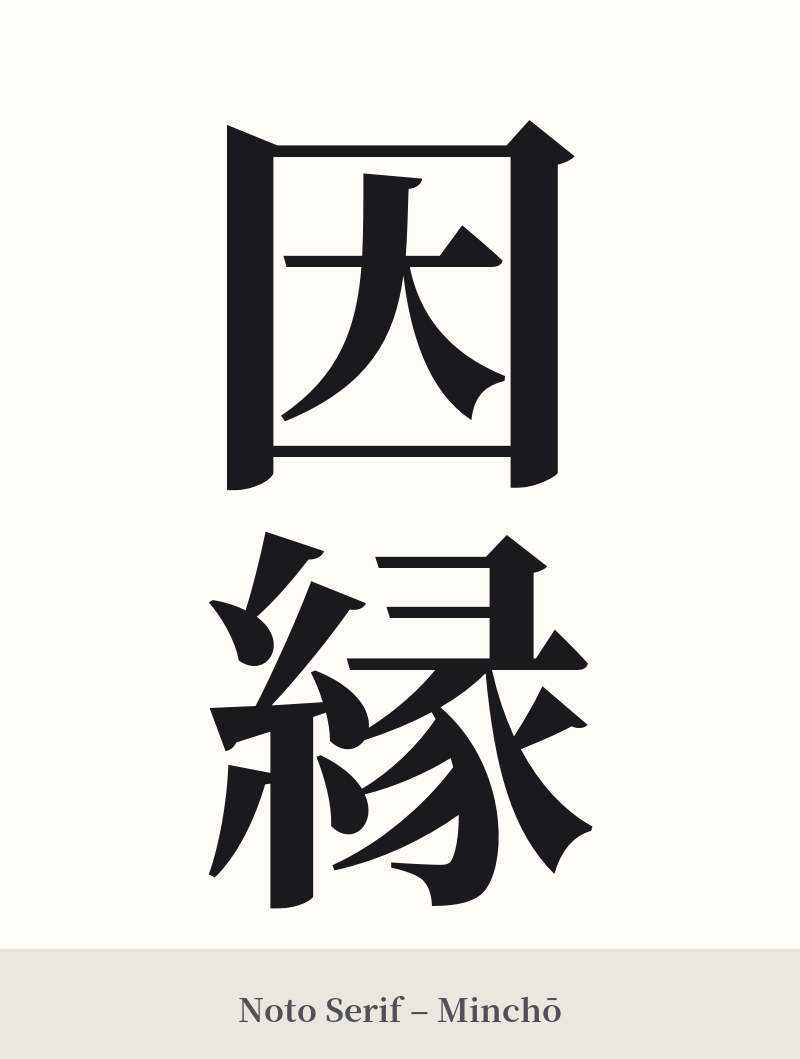
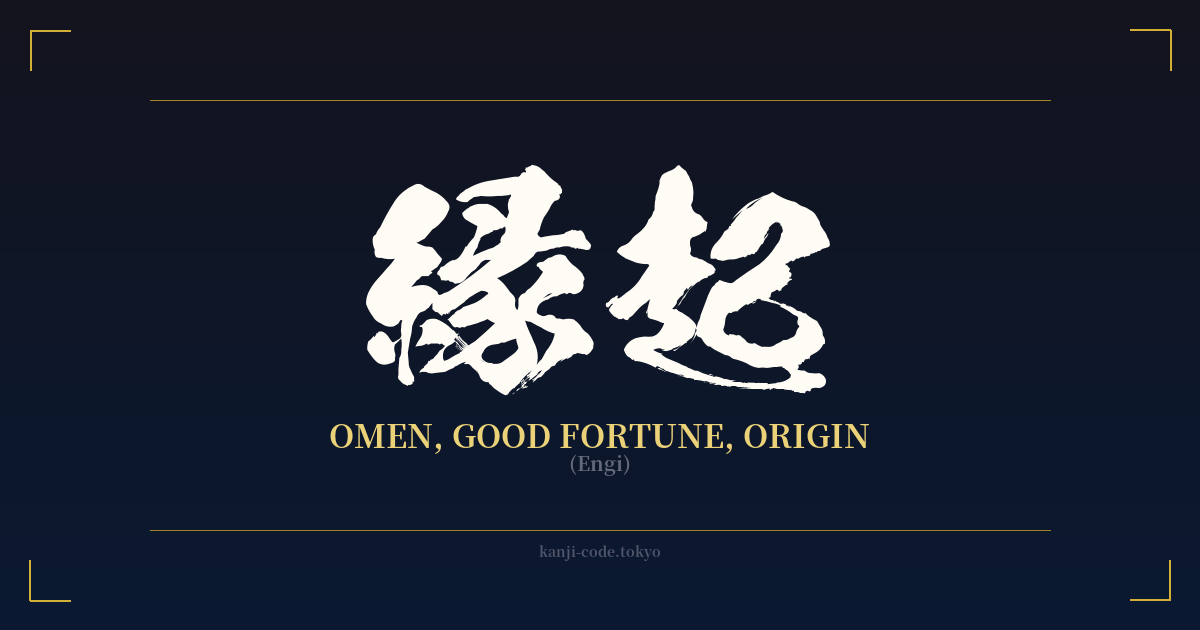
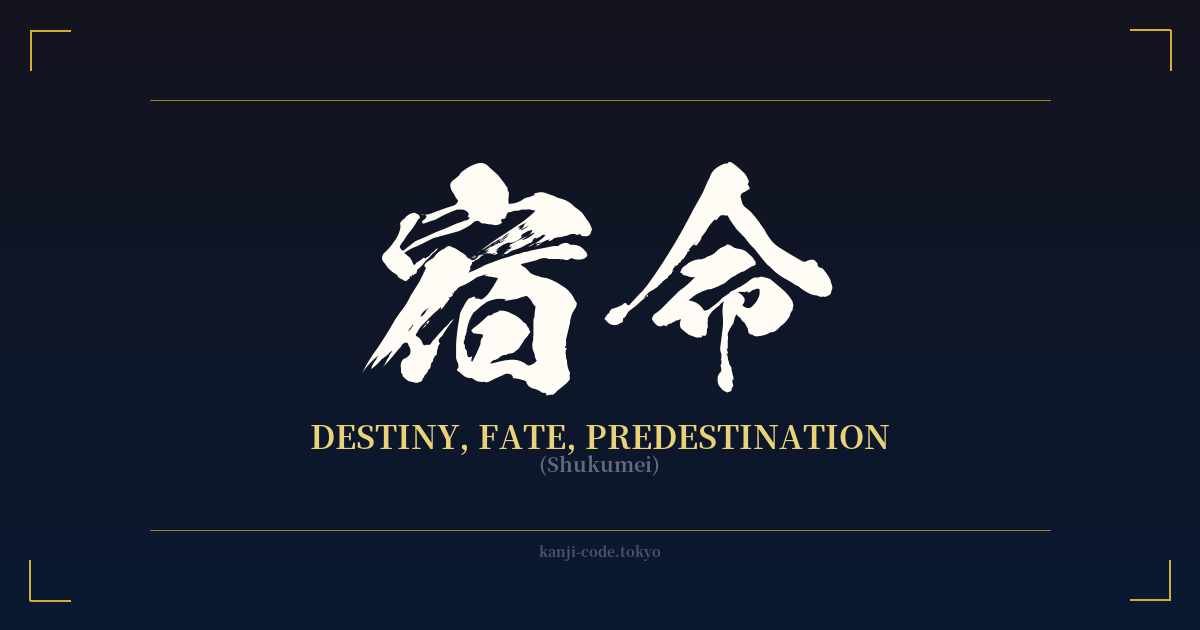
The same kanji can look dramatically different depending on the calligraphy style. Choose a font that matches the mood you want for your tattoo or design.
🎨 Tattoo Suitability
📐 Tattoo Design Guide
A tattoo of 因縁 (Innen) should be designed with its philosophical weight and visual contrast in mind.
– Placement: Vertical alignment is highly recommended to honor the traditional writing style. The spine, inner forearm, or along the calf are excellent placements that provide enough space for the characters to be rendered clearly.
– Style: A dynamic, semi-cursive or cursive brush script (書道, shodō) would work beautifully. This style can capture the flow of fate and the deep history of the word. Avoid overly blocky or generic fonts, which can strip the word of its elegance and nuance.
– Visual Tips: Embrace the contrast between the simple, stable form of 因 and the intricate, complex strokes of 縁. A skilled artist can use this to create a balanced and visually engaging piece. Due to the 15 strokes in 縁, this tattoo should not be done too small, as the lines could blur over time and become illegible.
Comments