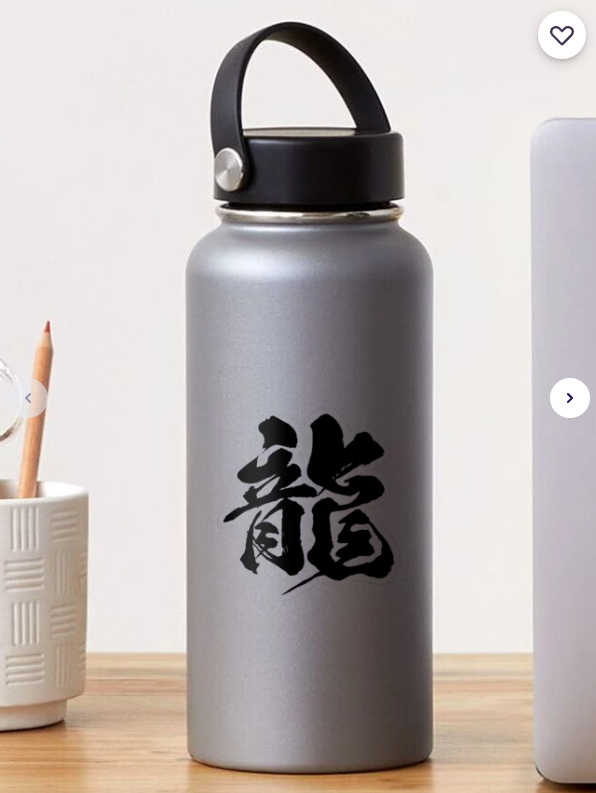
龍
Dragon
A creature born from oracle bones 3,000 years ago that still commands the sky, sea, and souls of those who dare ink it forever.
Imagine ancient Chinese scribes carving serpentine shapes into turtle shells, trying to capture a beast nobody had ever seen but everyone believed ruled the waters. That’s where 龍 (ryū) began—not as a word, but as a prayer etched in bone, a visual plea to forces beyond human control.
Over three millennia, those scratches evolved into one of the most complex characters in the Japanese writing system: 16 strokes winding together like the dragon’s own body. The top strokes suggest its crowned head and fierce horns, the middle curves ripple like scales caught mid-flight, and the bottom flows into a powerful tail that could summon tsunamis or gentle rain depending on its mood.
Unlike Western dragons hoarding gold in caves and burning villages, the Japanese dragon protects. It lives in underwater palaces, controls the tides, decides whether farmers eat or starve based on rainfall. Temples across Japan enshrine dragon deities—Ryujin, Watatsumi—beings older than Buddhism itself, woven so deeply into the culture that spring festivals parade 18-meter golden dragons through Tokyo streets covered in exactly 8,888 scales for luck.
✨ Kanji Styles Gallery
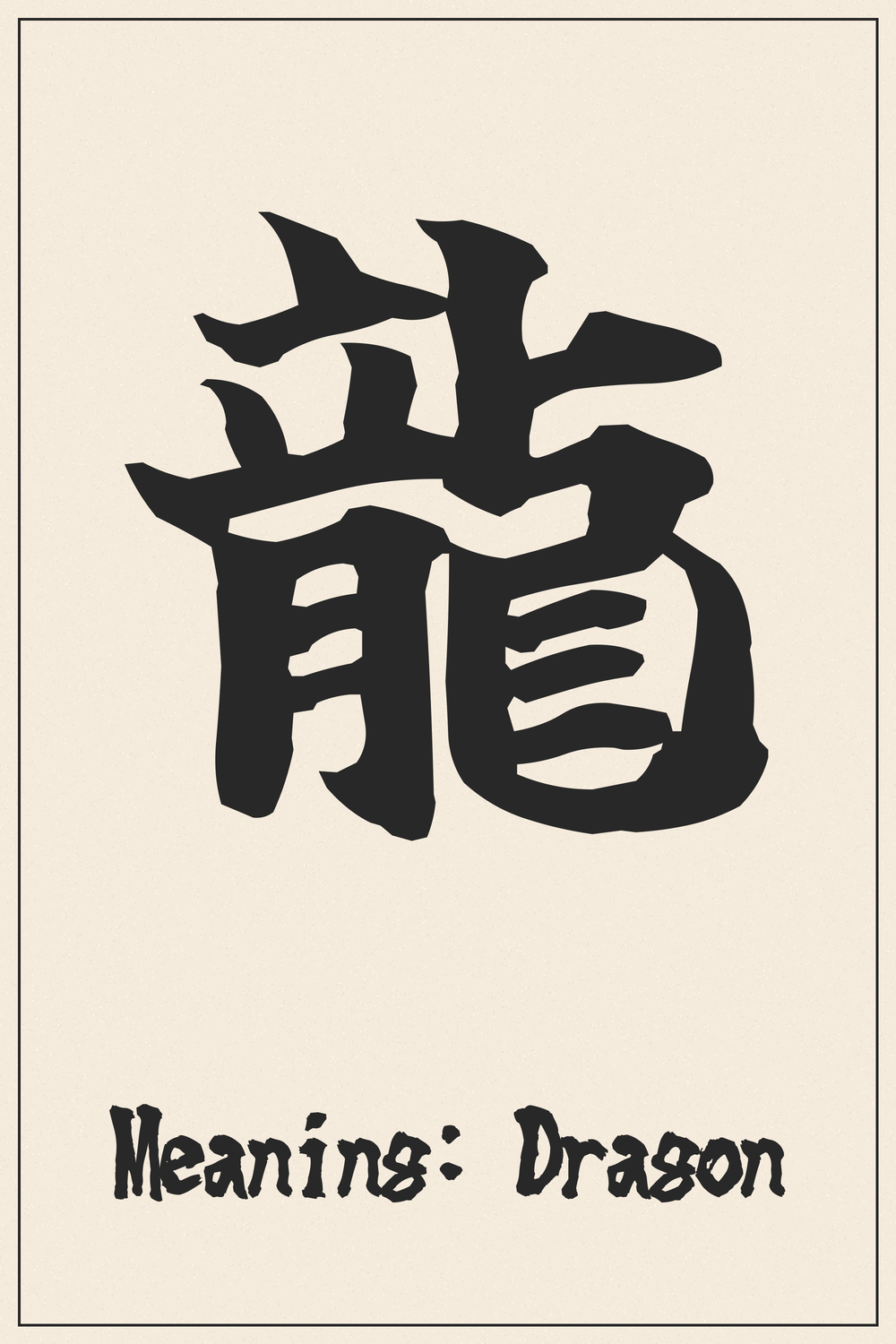
🖌️ Calligraphy Style
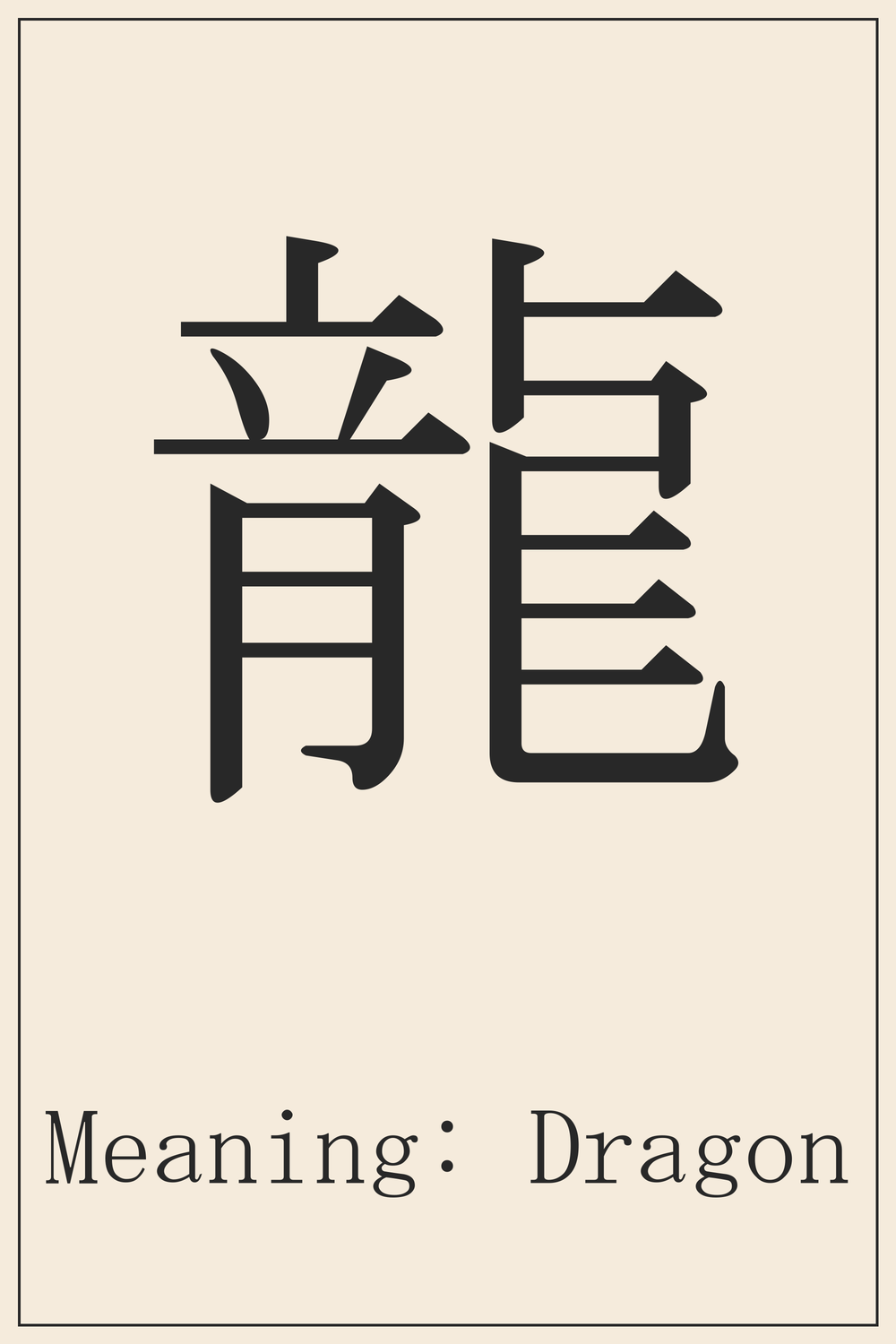
📝 Mincho Style
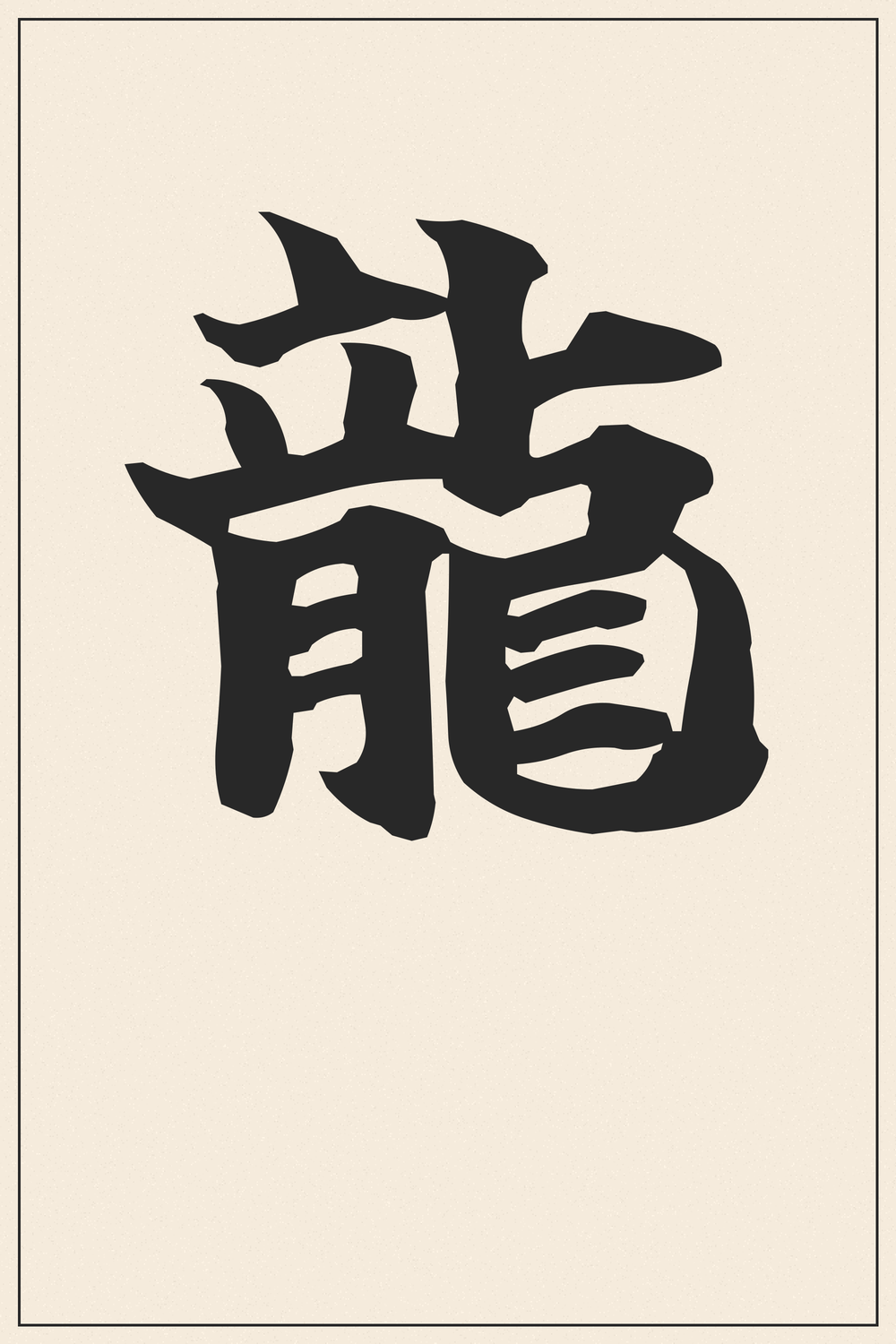
📜 Vertical Writing
⚡ Quick Facts
From Turtle Shells to Tattoo Parlors
The oldest known version of 龍 appears in oracle bone script—characters literally carved into tortoise shells and animal bones around 1200 BCE. Shang dynasty priests heated these bones until they cracked, then “read” the fracture patterns to predict the future. The character they carved for “dragon” showed a creature with a massive head, whiskers, and a twisting body.
By the time bronze age artisans were casting characters into ceremonial vessels, the dragon’s form had grown more elaborate. The large seal script version, used around 200 BCE, shows clear anatomical details: eyes bulging at upper left, fanged mouth at lower left, clawed legs on the right side, tail curling at upper right. Scribes were essentially drawing a mythological creature doing a full-body twist.
When Japan adopted Chinese characters over a thousand years ago, they inherited this intricate form. Modern 龍 preserves that ancient complexity—16 strokes that demand skill and precision. Meanwhile, a simplified variant 竜 (10 strokes) exists, showing the dragon face-on rather than coiled, but serious dragon tattoos stick with the traditional 龍. More strokes equal more visual drama.
The dragon character went through at least five distinct visual forms over 3,000 years, but its core shape—serpentine body with decorative head—stayed remarkably consistent. That’s rare. Most kanji simplified dramatically over time. The dragon refused to lose its complexity because reducing it would betray the creature’s majestic nature.
Dragons in the Deep
Japanese mythology places dragons firmly underwater, ruling from coral palaces at the ocean floor. Ryujin, the Dragon King, controls every tide and current. His mood determines whether fishing boats return full or empty, whether typhoons destroy coastal villages or spare them. Ancient fishermen prayed to him before setting sail.
According to legend, Ryujin possesses magical tide jewels that control the sea’s ebb and flow. He’s not alone down there—his daughter Otohime rules her own underwater realm, appearing in the famous folktale of Urashima Taro, where she marries a fisherman who saves a turtle. Time moves differently in dragon palaces. Three years underwater equals 300 human years above.
But dragons also command the sky. They rise as waterspouts and storm clouds, bringing rain that Japanese farmers literally worshipped. Drought meant starvation. Rain meant survival. The dragon decided which one happened. That’s why dragon imagery covers agricultural shrines across rural Japan—farmers weren’t decorating, they were begging for their lives in the most respectful way possible.
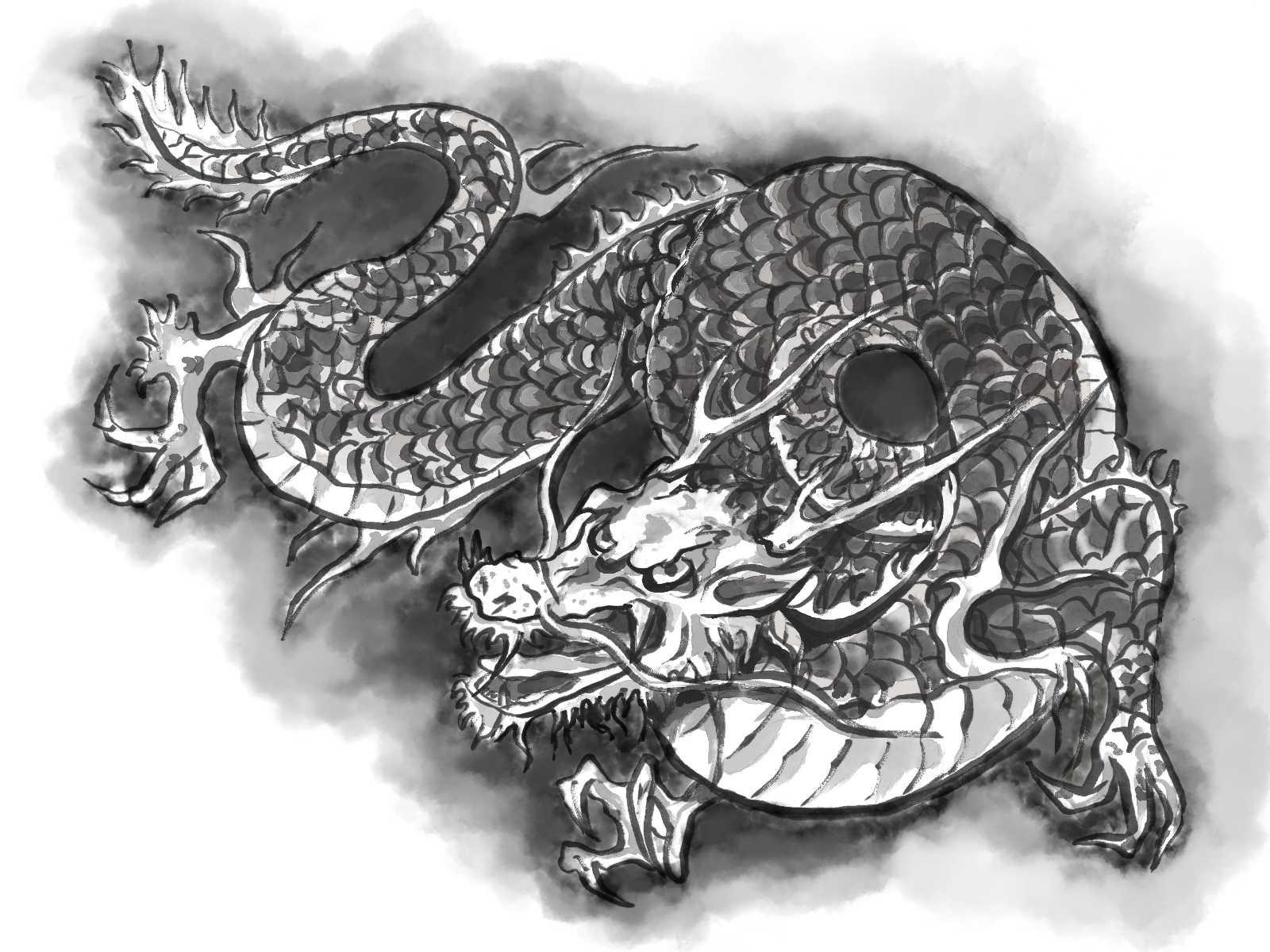
Ancient artistry captures the dragon’s serpentine power
East Meets West: The Dragon Divide
Here’s the crucial difference that tattoo artists need to understand: Western dragons and Eastern dragons are practically different species. European dragons breathe fire, hoard treasure, kidnap princesses, and generally act like flying sociopaths that heroes must slay. They’re villains.
Japanese dragons breathe water vapor, not flames. They lack wings but fly anyway through sheer divine power. They’re inherently benevolent—guardians, not destroyers. They protect Buddhist temples, safeguard sacred treasures, and govern natural forces with (mostly) fair judgment. You don’t slay a dragon in Japanese stories. You pray to it, negotiate with it, earn its blessing.
This matters for tattoos. A 龍 tattoo doesn’t say “I conquered the beast.” It says “I carry divine protection” or “I respect forces bigger than myself.” Getting this character inked means aligning yourself with power, wisdom, and natural balance—not domination. That cultural distinction separates authentic Japanese dragon imagery from generic Western fantasy art.
Traditional Japanese dragons have specific physical features: deer antlers, camel-like head, demon eyes, snake neck, carp scales, eagle claws, tiger paws, and cow ears. Nine distinct animals combined into one mythical apex predator. Tattoo artists who know this create authentic dragons. Those who don’t draw Chinese-Western hybrid monsters.
The Most Famous Dragon Slaying
Japanese mythology does contain one epic dragon-versus-god showdown that every Japanese person knows: Susanoo battling Yamata no Orochi, the eight-headed, eight-tailed monster. This wasn’t a benevolent dragon. This was a drunken terror demanding virgin sacrifices annually in Izumo province.
Susanoo, the storm god exiled from heaven for bad behavior, saw an opportunity. He offered to kill the dragon in exchange for marrying the last remaining daughter scheduled for sacrifice. His method? Get the dragon catastrophically drunk. He set out eight barrels of sake, one for each head. Yamata no Orochi couldn’t resist. After guzzling all eight barrels, the monster passed out.
Susanoo chopped off all eight heads while the dragon slept. When he sliced open the tail, he discovered the legendary sword Kusanagi no Tsurugi—one of Japan’s three imperial treasures—hidden inside the dragon’s body. He gifted it to his sister Amaterasu, the sun goddess. That sword allegedly still exists in Atsuta Shrine, though nobody’s allowed to see it. The dragon’s body became part of Japan’s imperial mythology.
龍 in Modern Japanese Life
Walk into any Japanese city and you’ll find dragons carved into temple gates, painted on shrine ceilings, sculpted as fountains in parks. The Sensō-ji Temple in Tokyo holds an annual festival featuring an 18-meter golden dragon parading through Asakusa. Its scales number exactly 8,888—a number considered extremely lucky because 8 (八, hachi) represents prosperity.
Japanese names occasionally incorporate 龍, though it’s relatively uncommon compared to simpler characters. Famous examples include actor Ryūnosuke (龍之介) and countless variations ending in -ryū for boys. The character appears more often in business names, martial arts schools (especially those emphasizing fluid, powerful techniques), and anything wanting to project strength with wisdom.
In the Japanese zodiac, the dragon (辰, tatsu) ranks fifth, representing people born in dragon years as confident, ambitious, and charismatic. Unlike the 12-year Western zodiac, the Eastern system means your birth year dragon follows you for life. Dragon-year people supposedly carry that creature’s powerful energy naturally—no tattoo required, but many get one anyway to double down.
Dragon imagery in Japan carries zero negative connotation—unlike demons or oni, which have darker associations. A dragon is always auspicious. That’s why it’s one of the safest mythological creatures for tattoos if you want pure positive symbolism without cultural landmines.
Reading and Pronunciation
The standard reading is “ryū” (りゅう), borrowed from Middle Chinese pronunciation. This is the on’yomi reading used in compounds like 龍神 (ryūjin, dragon god) or 龍宮 (ryūgū, dragon palace). You’ll hear it pronounced with a long “u” sound—”ryoooo”—not a short clip.
An alternative kun’yomi (native Japanese) reading is “tatsu” (たつ), the same pronunciation as 辰, the zodiac sign for dragon. This reading appears less frequently but shows up in traditional contexts and some personal names. Knowing both readings helps you understand dragon-related words when you encounter them in temples, festivals, or martial arts terminology.
🎨 Tattoo Design Ideas
- ✨ Full Traditional Calligraphy – All 16 strokes in bold, flowing brushwork creates maximum visual impact. Best for larger placements like shoulder blade, upper back, or chest where the character needs 5-7 inches to breathe properly without losing detail.
- ✨ Vertical Scroll Style – Place 龍 vertically along your spine or forearm with subtle background elements like clouds or waves. Traditional Japanese writing flows top-to-bottom, making vertical orientation culturally authentic and visually striking.
- ✨ Paired with Dragon Imagery – Combine the kanji with an illustrated dragon coiling around it. The character becomes the dragon’s heart or pearl. This layered approach tells a fuller mythological story in one piece.
- ✨ Minimalist Modern Approach – Clean, precise lines without calligraphic flourishes work for smaller placements (3-4 inches) on wrist or ankle. The complexity of 16 strokes provides enough visual interest even without decorative elements.
- ✨ Color Accent Strategy – While most kanji tattoos use solid black, adding deep blue or subtle gold to specific strokes can reference water or celestial elements without looking overdone. Keep it minimal—one accent color maximum.
- ✨ Combined Characters – Pair 龍 with 神 (god) for 龍神 (dragon god), or add 王 (king) for extra symbolic weight. Just ensure proper spacing and balance—Japanese reads right-to-left traditionally, so placement matters.
The Stroke Order Challenge
With 16 strokes, 龍 ranks among the more complex kanji in daily use. Japanese elementary students learn simpler characters first, typically encountering this one in later grades. Each stroke must flow in a specific sequence: generally top-to-bottom, left-to-right, with horizontal strokes before vertical when they intersect.
For tattoos, stroke order might seem irrelevant since it’s a static image. But understanding proper sequence helps you evaluate reference images. Bad references often show strokes that couldn’t physically flow from a brush following correct order—they look “off” even if you can’t articulate why. That’s because the stroke order creates natural balance and rhythm in the character’s final form.
When choosing a tattoo artist, find someone who either knows kanji structure or works with reference from Japanese calligraphy masters. Screen-printing a random font from Google Images often produces technically correct but aesthetically lifeless results. The dragon deserves strokes that suggest movement, power, and three millennia of artistic evolution.
Traditional Japanese full-body dragon tattoos (the kind covering entire backs and wrapping around torsos) still carry yakuza associations in Japan. A single kanji character avoids that stigma completely. You get dragon symbolism without the organized crime baggage. That’s strategically smart if you plan to visit Japan.
Why This Kanji Commands Respect
Among all kanji used for tattoos, 龍 consistently ranks in the top tier for visual drama combined with universally positive meaning. It doesn’t carry the complications of characters like 愛 (which Japanese people rarely say aloud) or 侍 (which some find dated or cliché). The dragon transcends those issues.
Its complexity demands skill. Badly executed simple kanji look incompetent. Badly executed 龍 looks catastrophic—16 strokes means 16 opportunities to mess up proportion, balance, and flow. When done right, though, this character announces that both the wearer and the artist took it seriously. It’s a technical achievement and a symbolic statement.
The dragon has survived as a symbol because it represents something humans perpetually chase: power tempered by wisdom, strength balanced with protection. It’s not mindless destruction. It’s controlled force—the difference between a tsunami and rain that feeds crops. That nuance gives 龍 enduring relevance. Empires fall, trends fade, but the dragon keeps flying.
Comments