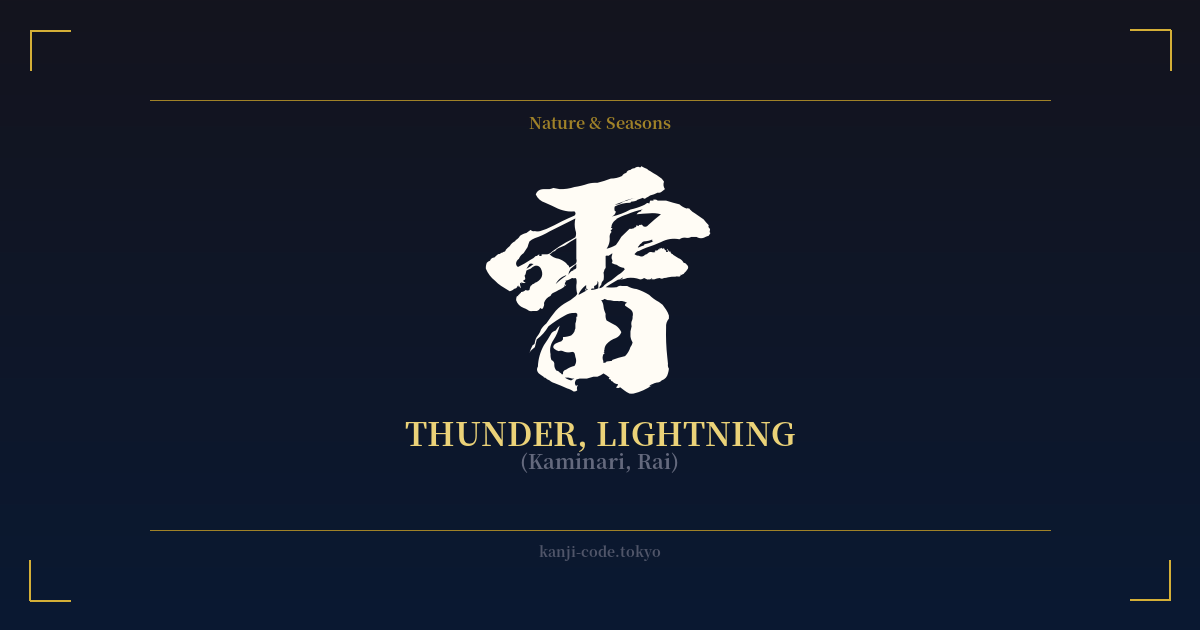
✍️ 雷 (Kaminari, Rai) — Cultural Context
The kanji 雷 (kaminari) is more than just a symbol for a weather phenomenon; it is a direct link to the divine, primal forces that shape the Japanese landscape and psyche. Its very structure tells a story. The character is a combination of the radical 雨 (ame), meaning 'rain,' at the top, and 田 (ta), meaning 'rice field,' at the bottom. This pictograph vividly captures the image of a powerful storm unleashing its energy over the agricultural heartland of Japan.
In Japanese culture, thunder and lightning are not merely meteorological events but the awe-inspiring work of a powerful deity. This brings us to Raijin (雷神), the God of Thunder. Often depicted as a fierce, muscular demon-like figure with a ring of drums, Raijin creates thunder by beating on them. He is one of the most recognizable figures in the Shinto pantheon, often paired with Fūjin (風神), the God of Wind. Together, they represent the untamable power of nature.
The word 'kaminari' itself breaks down into 'kami' (神, god) and 'nari' (鳴り, rumbling or sound). It literally means 'the rumbling of the gods,' cementing the idea that a thunderstorm is a divine spectacle. This duality of fear and reverence is central to the kanji's meaning. A lightning strike could destroy a home, but the rains that came with the storm were essential for a bountiful rice harvest.
This connection to agriculture is crucial. An old folk belief, still referenced today, is that a year with many thunderstorms is a year of good harvests. The lightning was thought to 'impregnate' the rice plants, leading to the word for lightning, 稲妻 (inazuma), which translates to 'rice plant's wife.'
There's also a famous piece of folklore that tells children to hide their belly buttons during a thunderstorm, lest Raijin swoop down and steal it. While whimsical, it underscores the deep-seated respect and fear that thunder commands.
In modern times, 雷 remains a potent symbol of power, speed, and energy. It is frequently used in anime, manga, and video games for characters with electrical abilities, and the name 'Raiden' (雷電, 'thunder and lightning') is a classic choice for powerful heroes and villains alike. The symbol has transcended its origins to become a universal signifier of raw, elemental force.
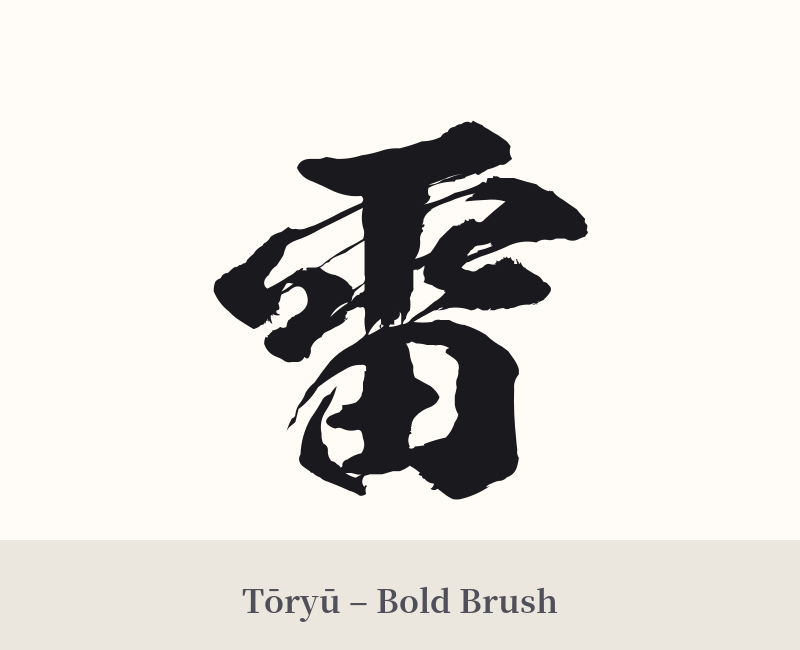
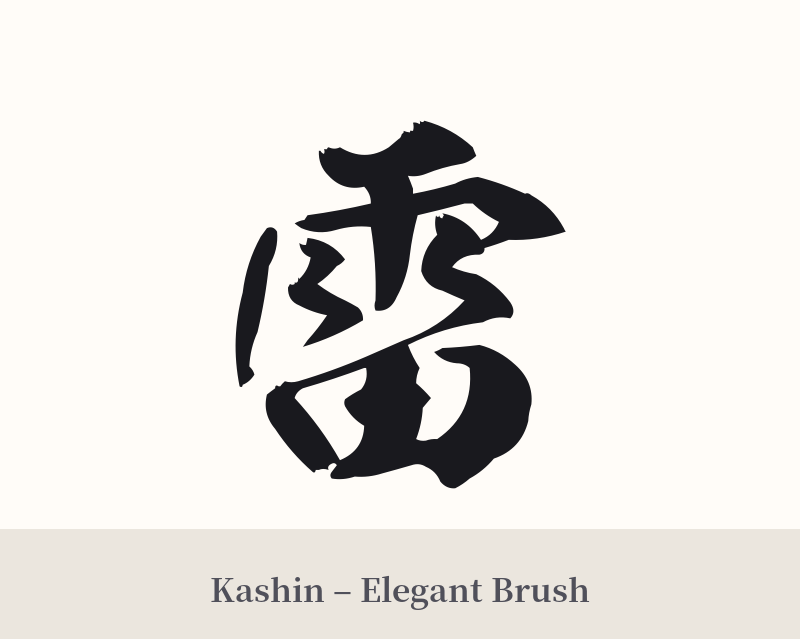
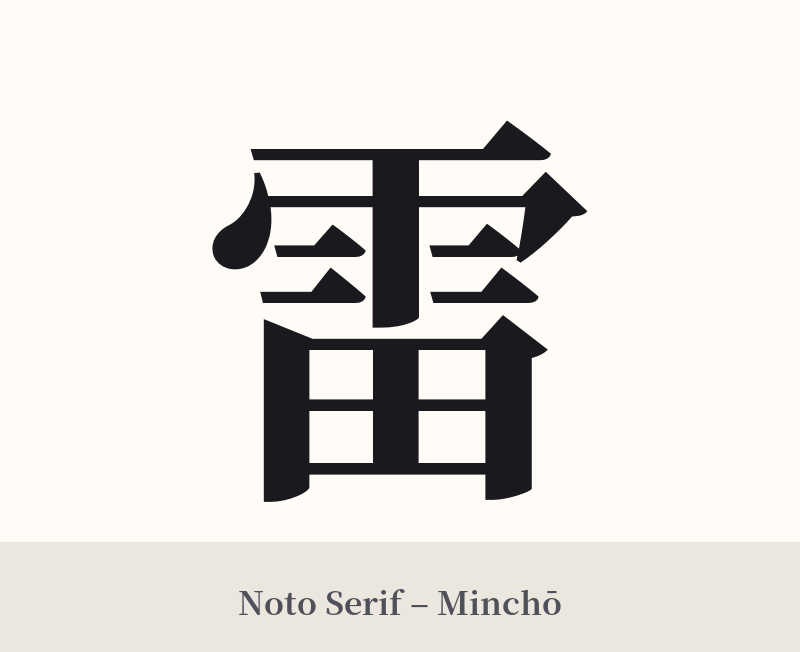
🖌️ Font Styles for 雷
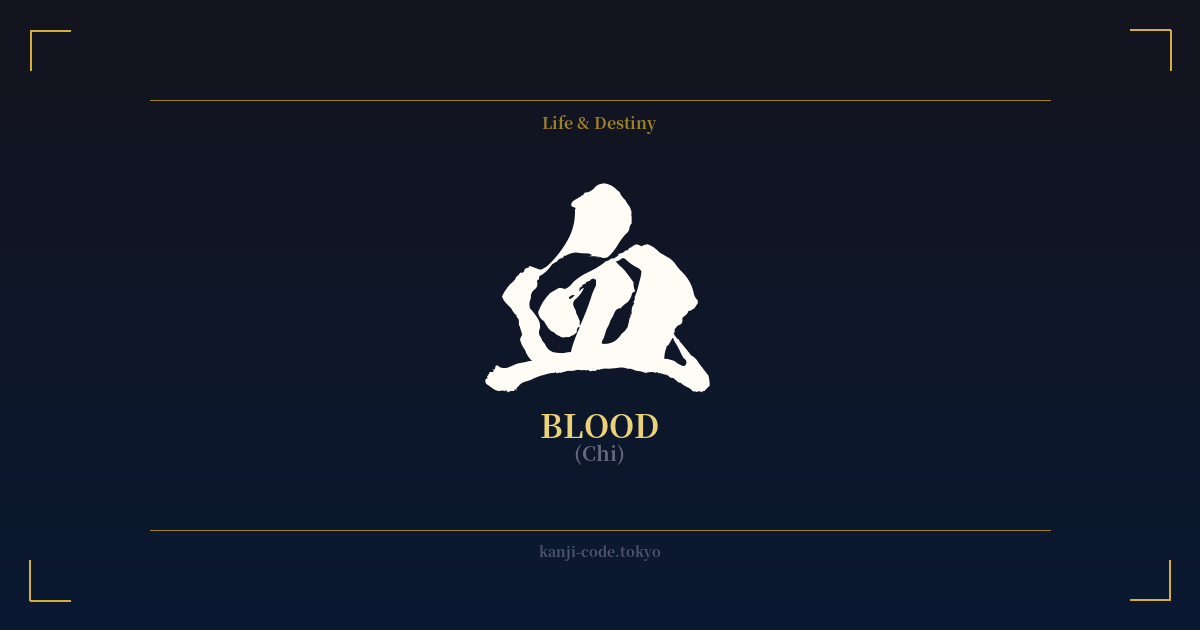
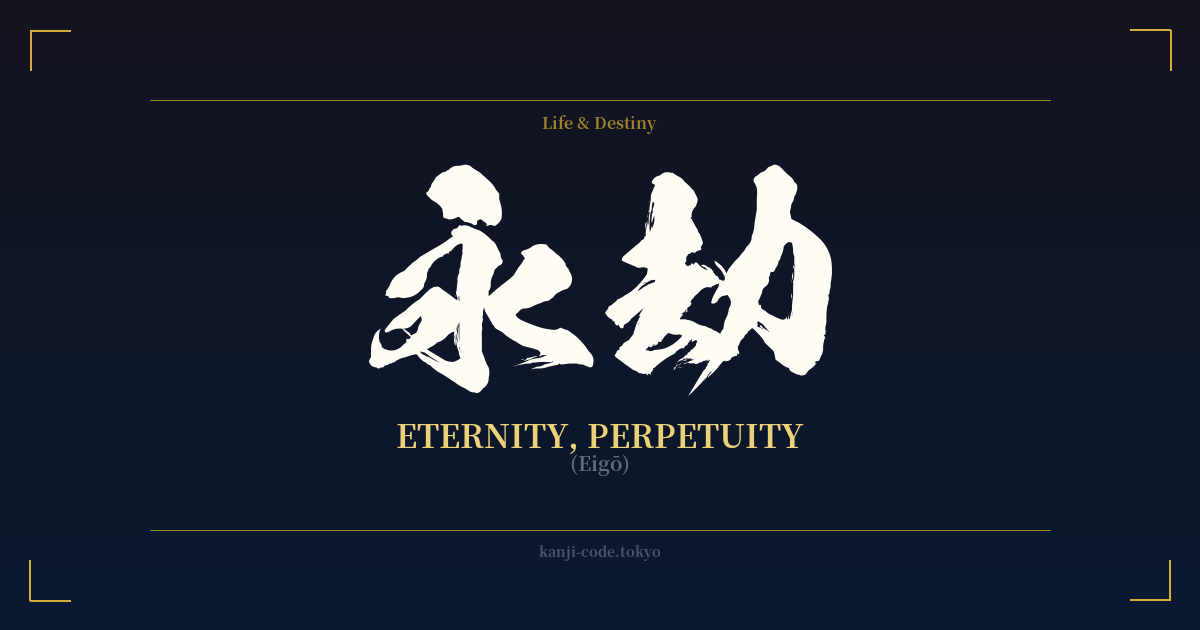
The same kanji can look dramatically different depending on the calligraphy style. Choose a font that matches the mood you want for your tattoo or design.
🎨 Tattoo Suitability
📐 Tattoo Design Guide
The kanji 雷 is a fantastic choice for a tattoo, offering both visual dynamism and profound meaning. Its balanced structure allows for a lot of creative freedom.
– Placement: Consider areas that emphasize power and flow. A vertical placement on the forearm, calf, or along the spine can accentuate its energetic nature. It also works well as a strong centerpiece on the chest or back.
– Font Style: A bold, aggressive calligraphy (shodō) style with sharp, energetic brushstrokes (hatsune) can capture the sudden crack of thunder. Look for styles that convey movement and force. Conversely, a more ancient, blocky script can give it a sense of old-world, divine power.
– Visual Tips: Don't be afraid to integrate 雷 into a larger scene. It is the perfect centerpiece for a design featuring Raijin himself, surrounded by storm clouds and taiko drums. You can also add visual effects like sparks or arcs of electricity emanating from the character's strokes to enhance the 'lightning' aspect. Pairing it with 風 (kaze/wind) creates the classic Fūjin-Raijin theme, representing the balance of natural forces.
Comments