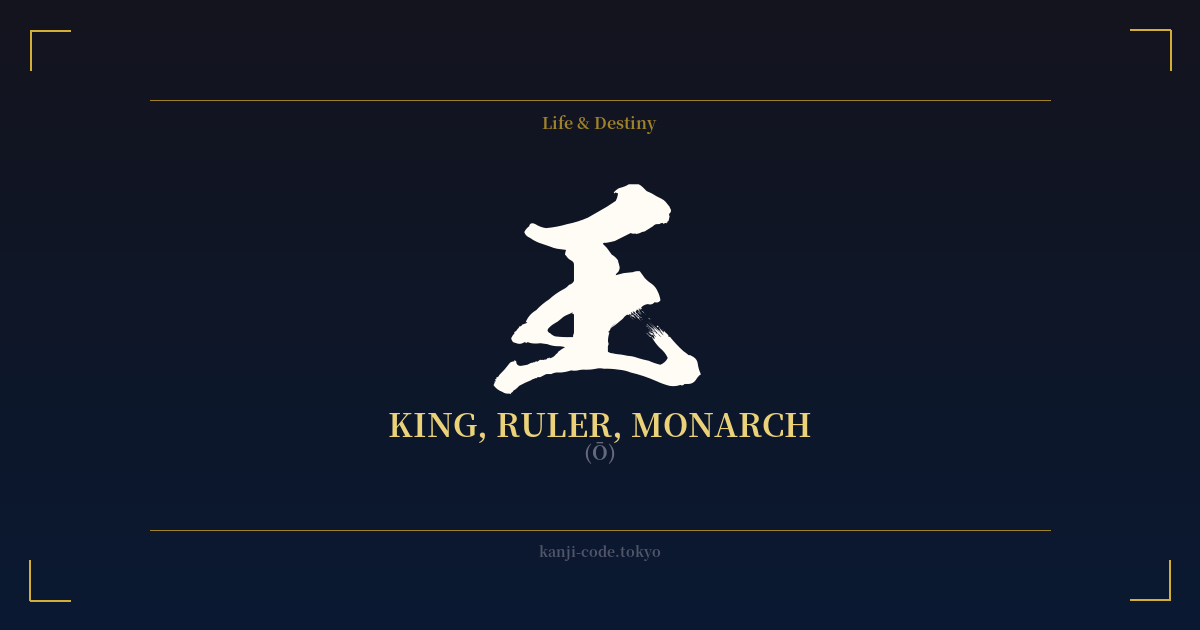
✍️ 王 (Ō) — Cultural Context
The kanji 王 (Ō) is one of the most fundamental and powerful characters in the Japanese language, representing the concept of a king, ruler, or monarch. Its elegant simplicity belies a deep well of philosophical and historical meaning that has resonated for millennia.
The character's origin is a beautiful piece of pictographic history. It is said to represent the connection between the three realms of existence. The top horizontal stroke symbolizes Heaven (天), the bottom stroke symbolizes Earth (地), and the middle stroke represents Humanity (人). The single vertical stroke that pierces through all three is the King—the one individual tasked with connecting and maintaining balance between the divine, the natural, and the mortal worlds. This isn't just about power; it's about responsibility and a sacred duty to bring order and harmony.
In Japan, the use of 王 is nuanced. While it directly translates to 'king,' the supreme ruler of Japan is the Emperor, or 天皇 (Tennō), a title that carries a divine connotation as a 'heavenly sovereign.' The title 王 was historically used for rulers of smaller domains within Japan or, more commonly, to refer to foreign monarchs. This distinction is crucial; a Japanese person would never refer to their own Emperor as 王.
Beyond literal monarchy, 王 has permeated Japanese culture as a symbol of ultimate mastery and supremacy in any field. You might hear someone called the 'king of ramen' or see the character used in brand names to imply being the best in the industry. This is perhaps most famously seen in pop culture, with titles like 海賊王 (Kaizoku-Ō), the 'Pirate King' from the series One Piece. This demonstrates the character's adaptability, representing not just inherited royalty but also achieved greatness and dominance.
It is also the central piece in Shogi (Japanese chess), known as the 王将 (Ōshō) or 'King General.' In the game, as in life, the king is the most important piece. Protecting the king is the primary objective, and its fall means the end of the game. This further cements the character's image as the vital center around which everything else revolves.
🖌️ Font Styles for 王
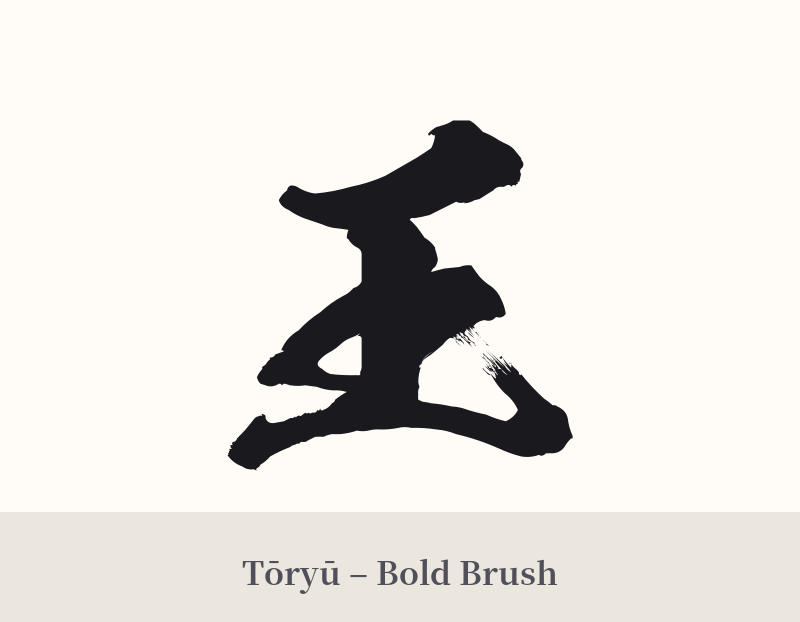
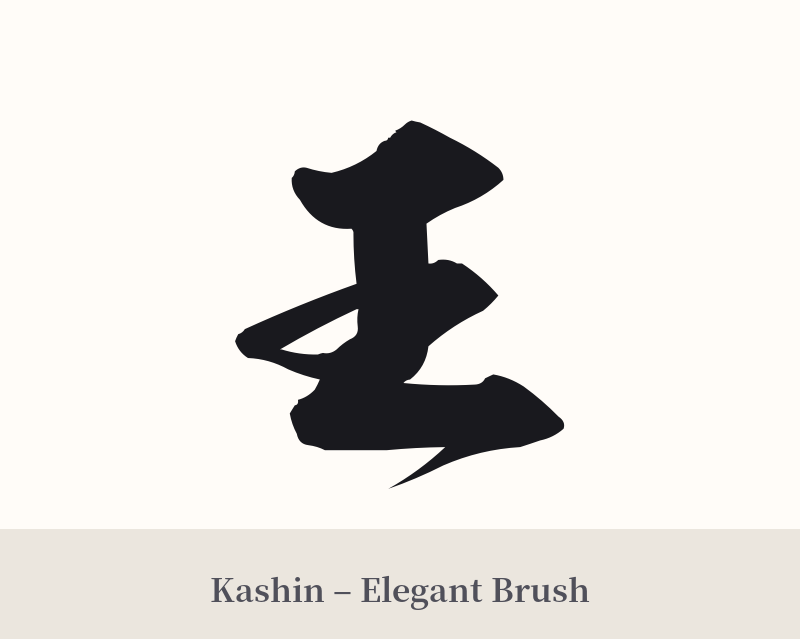
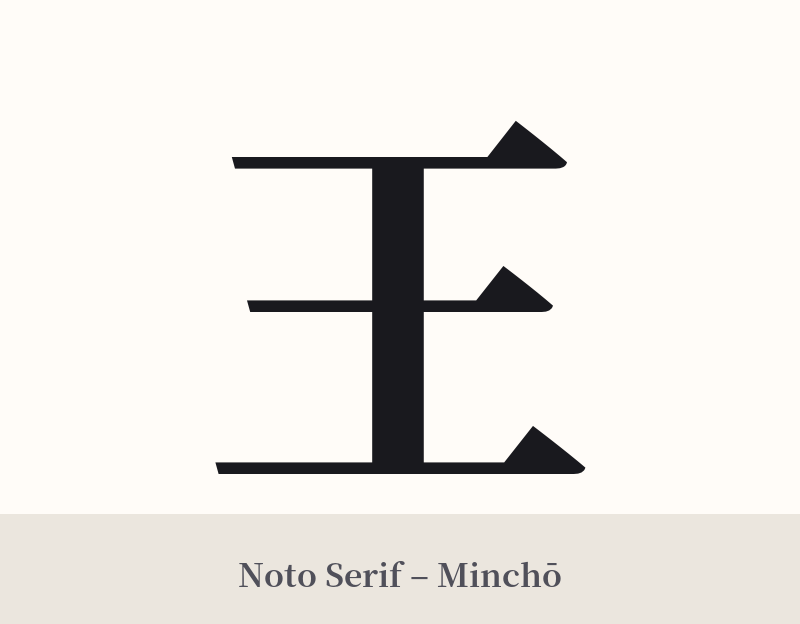
The same kanji can look dramatically different depending on the calligraphy style. Choose a font that matches the mood you want for your tattoo or design.
🎨 Tattoo Suitability
📐 Tattoo Design Guide
The kanji 王 is visually strong and balanced, making it versatile for tattoo design. Its simplicity allows it to work well both as a small, subtle piece and a large, commanding statement.
– Placement: For a bold declaration of personal authority or ambition, the center of the chest or upper back are ideal placements. A forearm or bicep placement works well for a more personal reminder of strength. A small, discreet tattoo could be placed on the wrist or behind the ear.
– Style: A thick, heavy brushstroke (shodō) style emphasizes the raw power and history behind the character. For a more modern and sharp aesthetic, a clean Mincho or Gothic font can look very sleek. The design of the Shogi (Japanese chess) piece is another popular and stylish option, often rendered in a stylized, angular script.
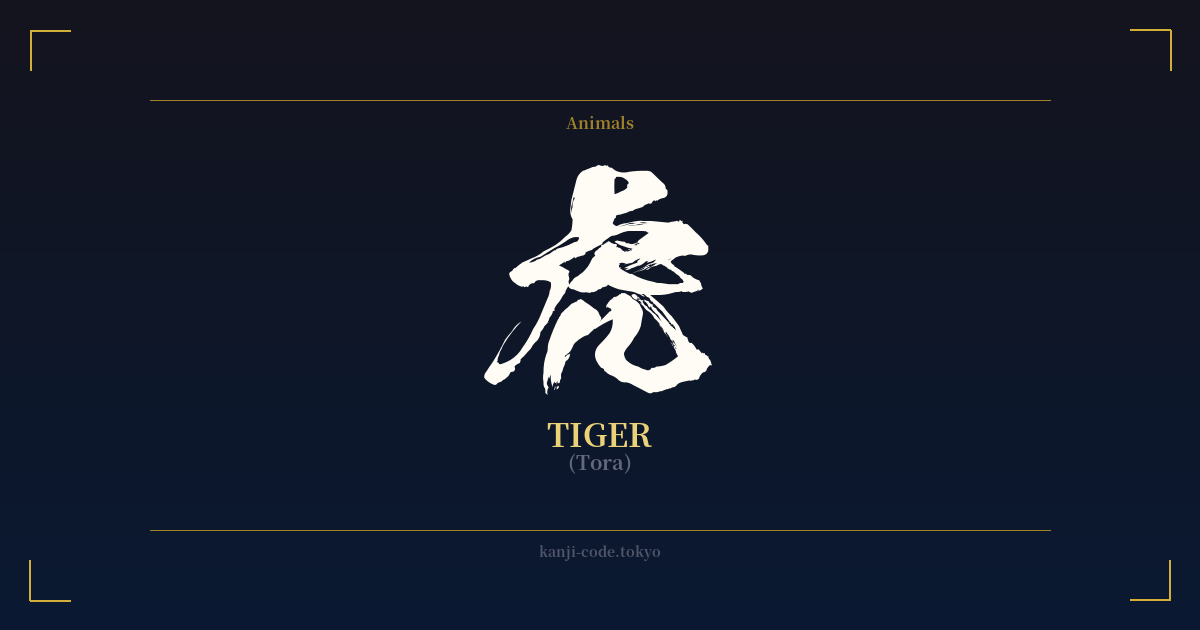
– Visuals: 王 is powerful enough to stand alone. Adding other elements can dilute its impact. However, if you wish to combine it, consider pairing it with symbols of power that complement its meaning, such as a dragon (龍) to represent wisdom and strength, or a tiger (虎) for physical prowess. Avoid cliché Western symbols like crowns, which can clash with the Eastern aesthetic.
Comments