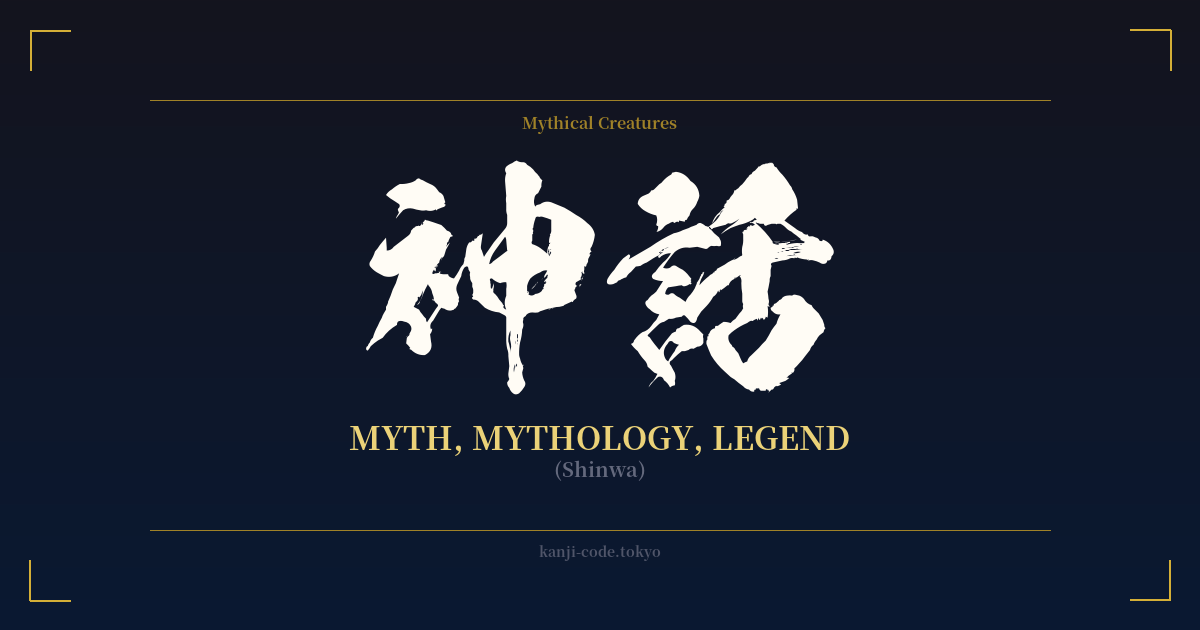
✍️ 神話 (Shinwa) — Cultural Context
神話 (Shinwa) is the Japanese word for myth or mythology, but its meaning is far richer than a simple translation suggests. The kanji themselves offer the first clue: 神 (shin or kami) means “god” or “divine spirit,” and 話 (wa or hanashi) means “tale” or “story.” Together, they literally translate to “tales of the gods.”
This term is the gateway to the very soul of Japan's foundational narratives. The most important collections of Japanese shinwa are the Kojiki (古事記, “Record of Ancient Matters”) and the Nihon Shoki (日本書紀, “Chronicles of Japan”), both compiled in the 8th century. These texts lay out the Japanese creation myth, beginning with the emergence of the first deities and the formation of the islands of Japan by the divine couple, Izanagi and Izanami.
Central to these myths is the sun goddess Amaterasu Ōmikami, the ruler of the heavens and the most revered deity in the Shinto religion. The stories recount her rivalry with her tempestuous brother, Susanoo-no-Mikoto, the god of seas and storms, and detail the lineage of gods that eventually leads to the first emperor of Japan, Jimmu. This divine ancestry of the Imperial line has been a cornerstone of Japanese identity and political structure for centuries, linking the earthly realm to the celestial plane.
Unlike Western mythologies that are often treated as relics of the past, Japanese shinwa remains a living part of the culture. The tales are not just stories; they are the basis for Shinto rituals, festivals, and the very concept of kami—the countless deities and spirits believed to inhabit everything from mountains and rivers to trees and waterfalls. Visiting a Shinto shrine is stepping into a physical space dedicated to a kami whose story is told in the shinwa.
In modern times, the influence of shinwa is pervasive. It provides a vast reservoir of characters, themes, and motifs for contemporary storytelling in anime, manga, and video games. Series like Noragami feature modern-day gods, while the epic scope of Naruto draws heavily on mythological figures and concepts. The video game Ōkami allows players to embody the goddess Amaterasu herself. Choosing 神話 as a design is to embrace this entire epic tradition, from ancient chronicles to its vibrant modern expressions.
🖌️ Font Styles for 神話
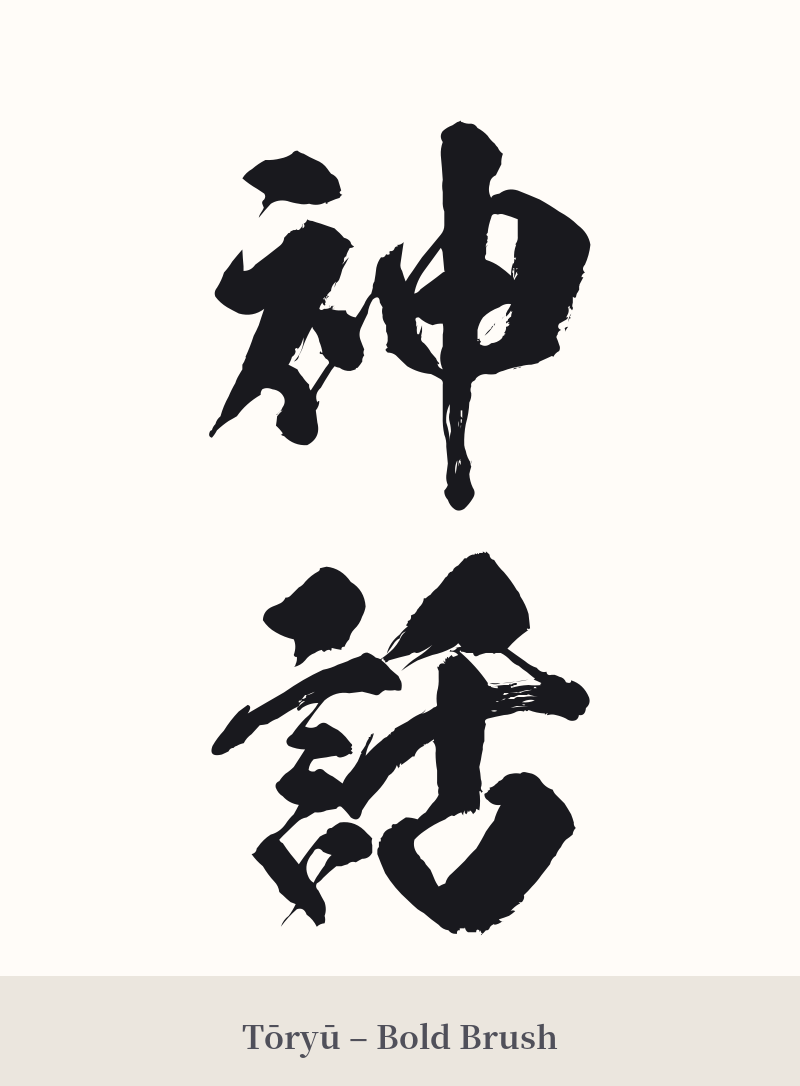
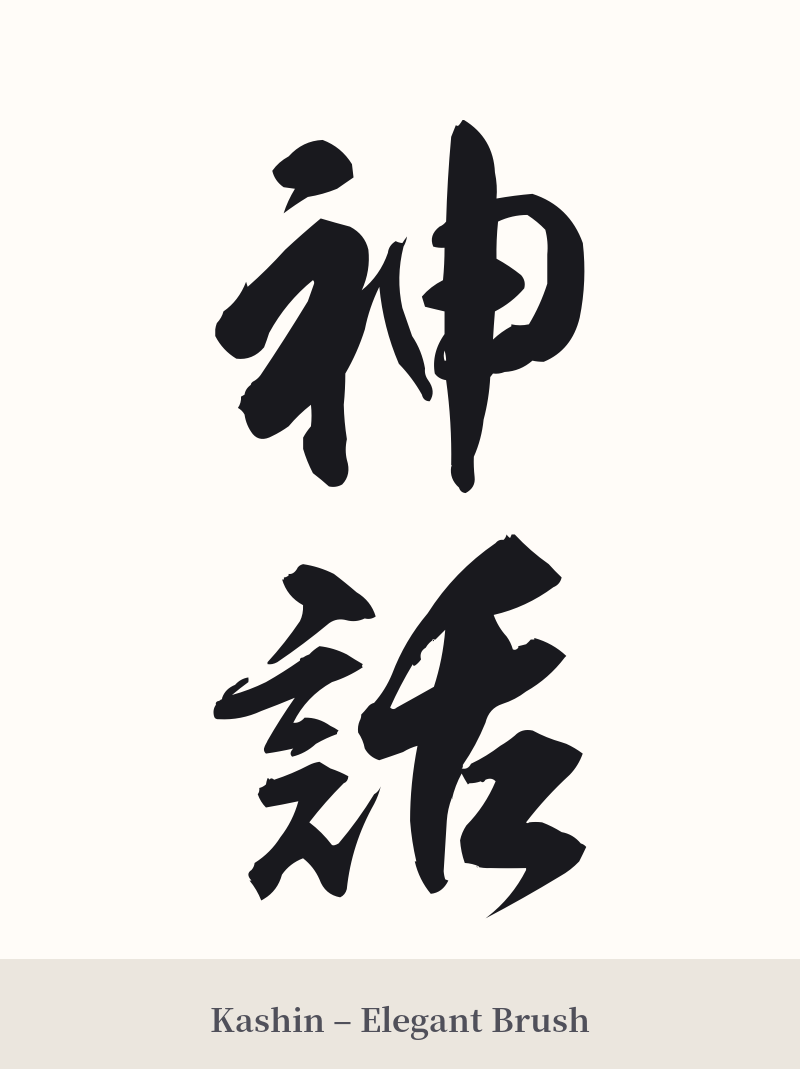
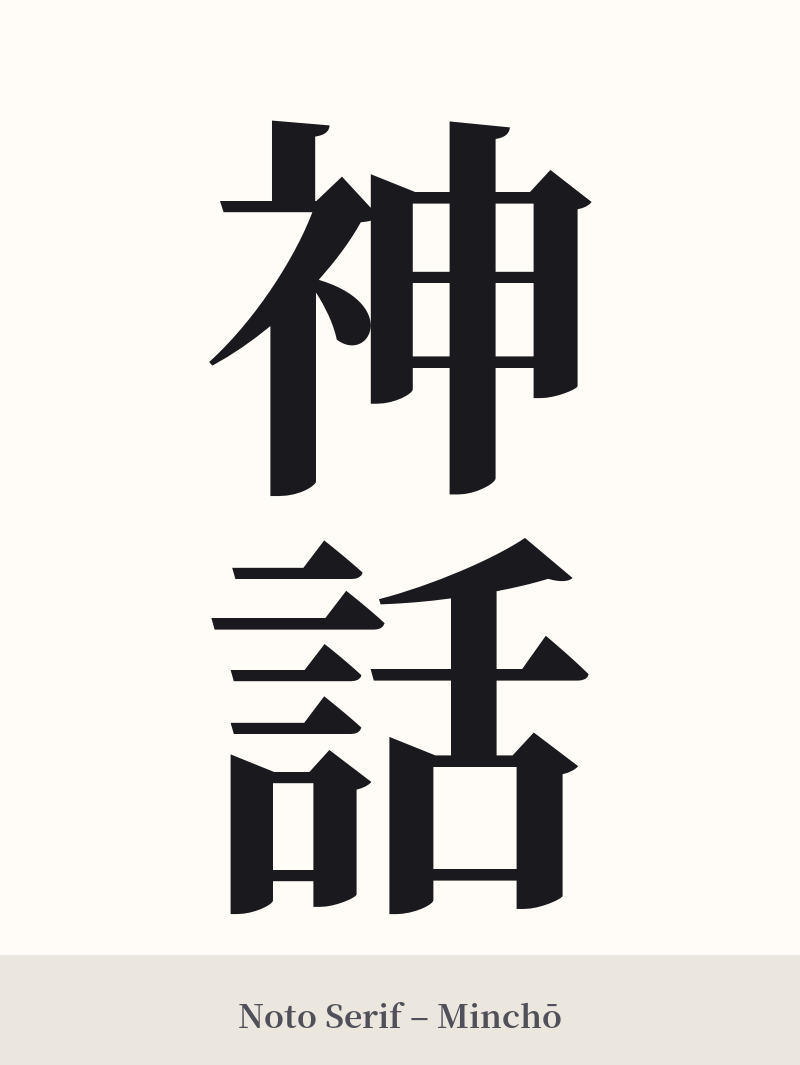
The same kanji can look dramatically different depending on the calligraphy style. Choose a font that matches the mood you want for your tattoo or design.
🎨 Tattoo Suitability
📐 Tattoo Design Guide
神話 is a visually balanced and meaningful word that works well for a variety of tattoo designs. Its two characters offer a nice symmetry.
– Placement: A vertical orientation is classic and looks powerful on the forearm, the calf, or running down the spine. For a horizontal design, it fits well across the chest, upper back, or on the inner bicep.
– Style: For a sense of history and flow, consider a semi-cursive script like Gyōsho (行書). This style evokes the feeling of ancient scrolls and storytelling. For a bolder, more impactful statement, a strong Kaisho (楷書) or even a dramatic, paint-splattered Shodo style would be excellent.
– Visual Elements: While the kanji stands strong on its own, it can be paired with imagery from Japanese mythology. Consider incorporating elements like swirling clouds, a red sun symbolizing Amaterasu, a dragon (Ryū), or a subtle torii gate in the background to frame the characters.
Comments