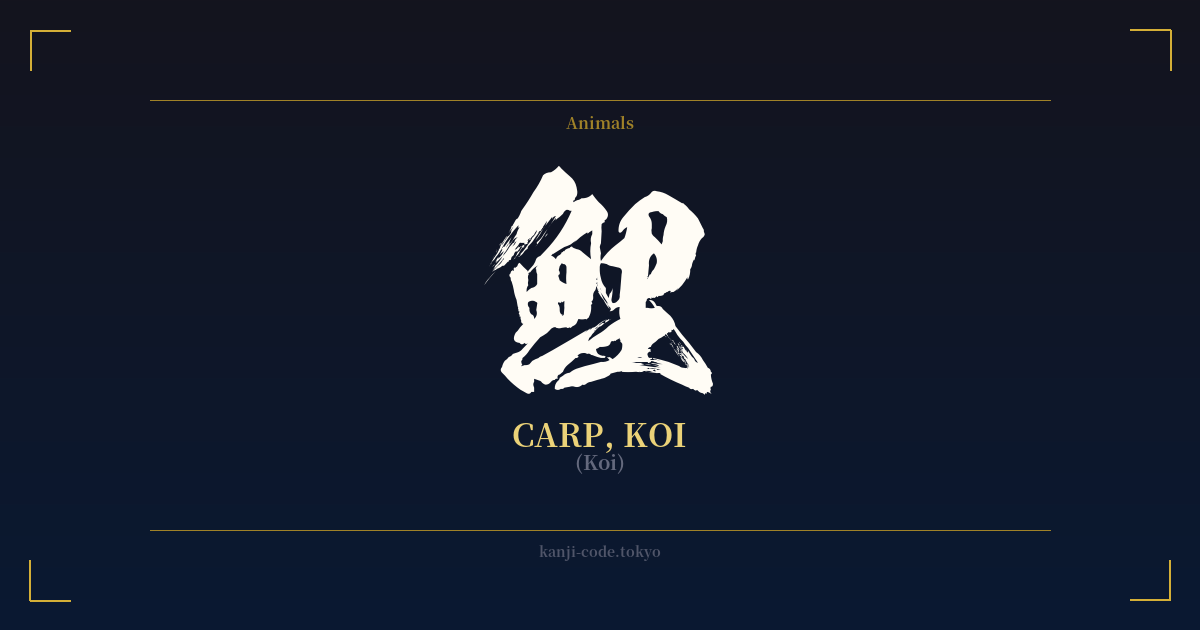
✍️ 鯉 (Koi) — Cultural Context
The kanji 鯉 (koi) simply means 'carp,' but its cultural significance in Japan extends far beyond the fish itself. It embodies some of the most admired virtues in Japanese society: strength, courage, patience, and perseverance. This symbolism is deeply rooted in a famous Chinese legend that has been wholeheartedly adopted into Japanese folklore.
The legend speaks of a school of golden koi swimming upstream against the powerful current of the Yellow River. After a hundred years of struggle, one koi finally reached the top of a great waterfall known as the Dragon's Gate (登竜門, Tōryūmon). The gods, impressed by its unwavering determination, transformed the koi into a magnificent golden dragon, a symbol of power and good fortune.
This story of transformation through sheer willpower makes the koi a powerful metaphor for overcoming adversity and achieving success. It represents the idea that anyone who perseveres through great challenges can achieve their highest aspirations. This narrative has resonated through Japanese history, particularly with the samurai class, who admired the koi's bravery. It is said that a carp, when caught, faces the knife without flinching, mirroring the stoicism and courage a warrior was expected to show in the face of death.
This aspirational symbolism is most visibly celebrated during Children's Day on May 5th. Families fly koinobori, large carp-shaped windsocks, to honor their children. A large black carp at the top represents the father, a red or pink one represents the mother, and smaller carp in blue, green, or other colors represent the children. These vibrant streamers swimming in the wind express the parents' hope that their children will grow up to be as strong, brave, and resilient as the legendary koi that conquered the waterfall.
In Japanese art, the koi is a ubiquitous motif, appearing in everything from ukiyo-e woodblock prints to modern designs. In the world of irezumi, or traditional Japanese tattooing, the koi is a foundational element, often depicted with flowing water, maple leaves, or on the verge of its transformation into a dragon. As a single character, 鯉 encapsulates this entire rich history of struggle, perseverance, and ultimate triumph.
🖌️ Font Styles for 鯉
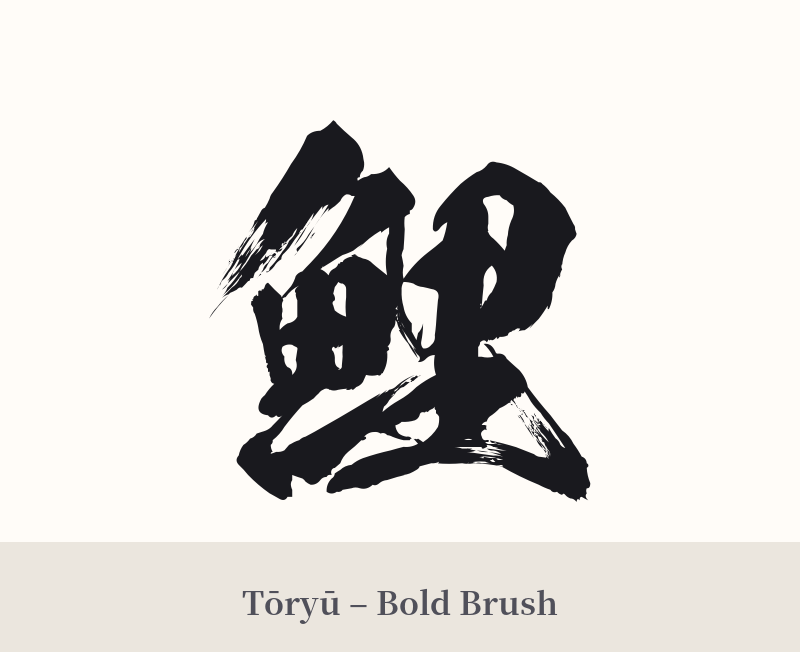
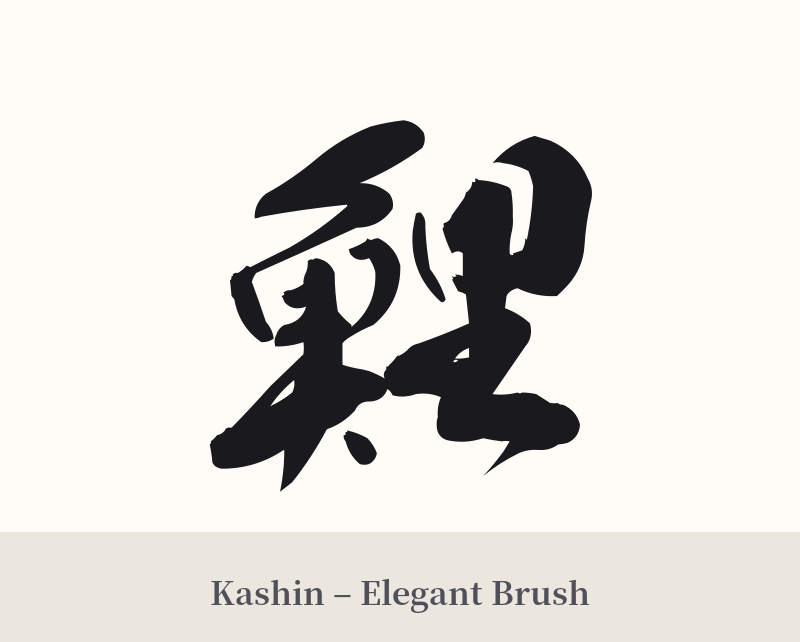
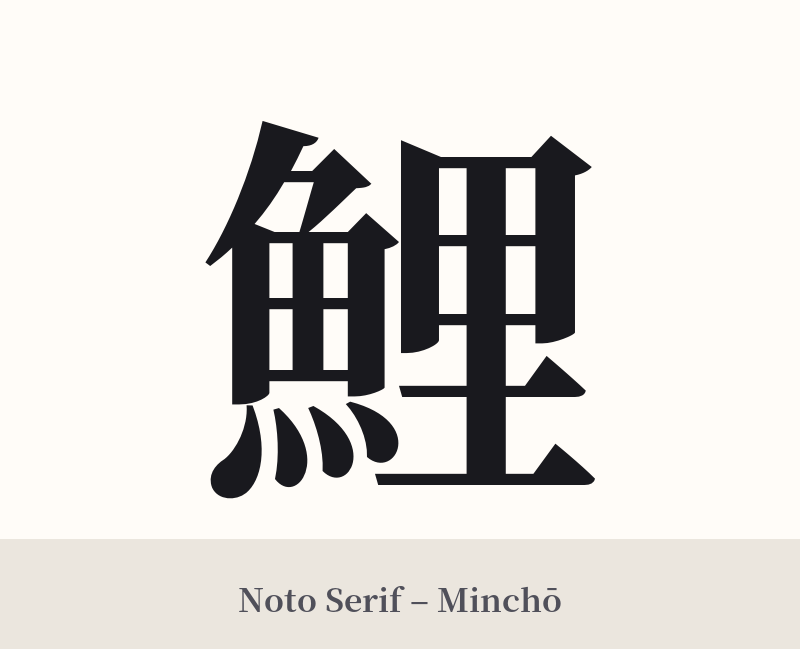
The same kanji can look dramatically different depending on the calligraphy style. Choose a font that matches the mood you want for your tattoo or design.
🎨 Tattoo Suitability
📐 Tattoo Design Guide
The kanji 鯉 is a visually compelling character that works well in a variety of tattoo designs.
– Placement: Consider vertical placements that echo the theme of swimming upstream, such as the forearm, the calf, or along the spine. It also serves as a strong focal point in a larger chest or back piece.
– Style: A bold, semi-cursive (gyōsho) or cursive (sōsho) calligraphic style can capture the fluid, energetic movement of the fish. For a design that emphasizes raw strength and stability, a crisp, angular block script (kaisho) is an excellent choice.
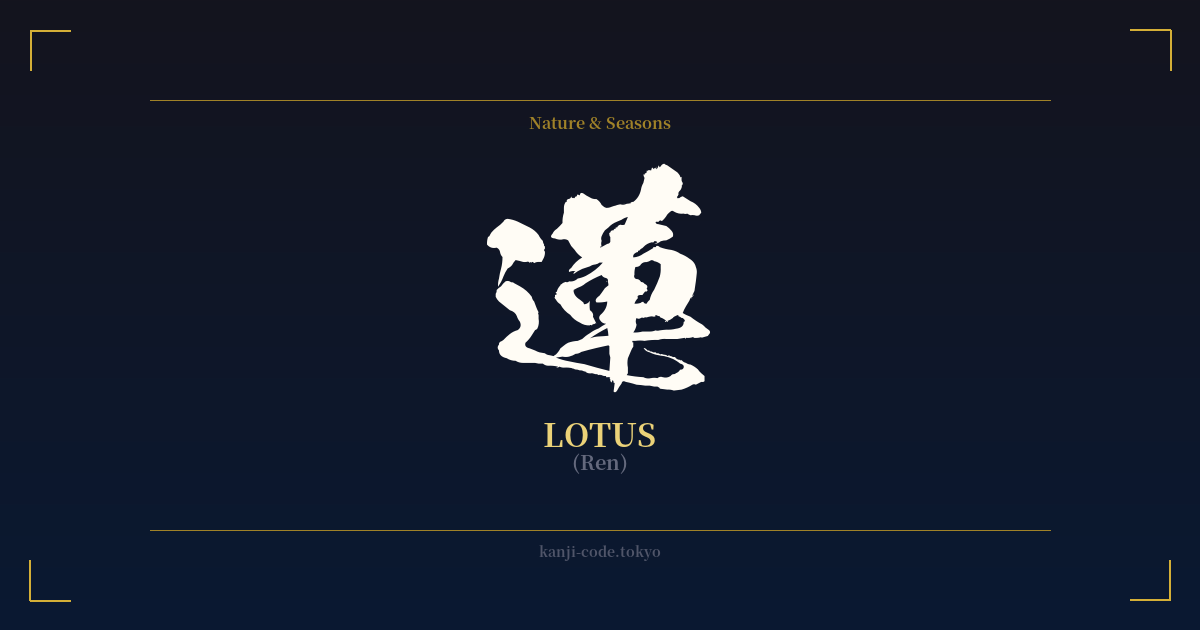
– Pairings: While powerful on its own, 鯉 is often paired with imagery to enhance its story. Consider incorporating flowing water, lotus blossoms (symbolizing purity and rebirth), or maple leaves. For the ultimate expression of its legend, the kanji can be integrated into a design that shows a koi transforming into a dragon (龍).
Comments