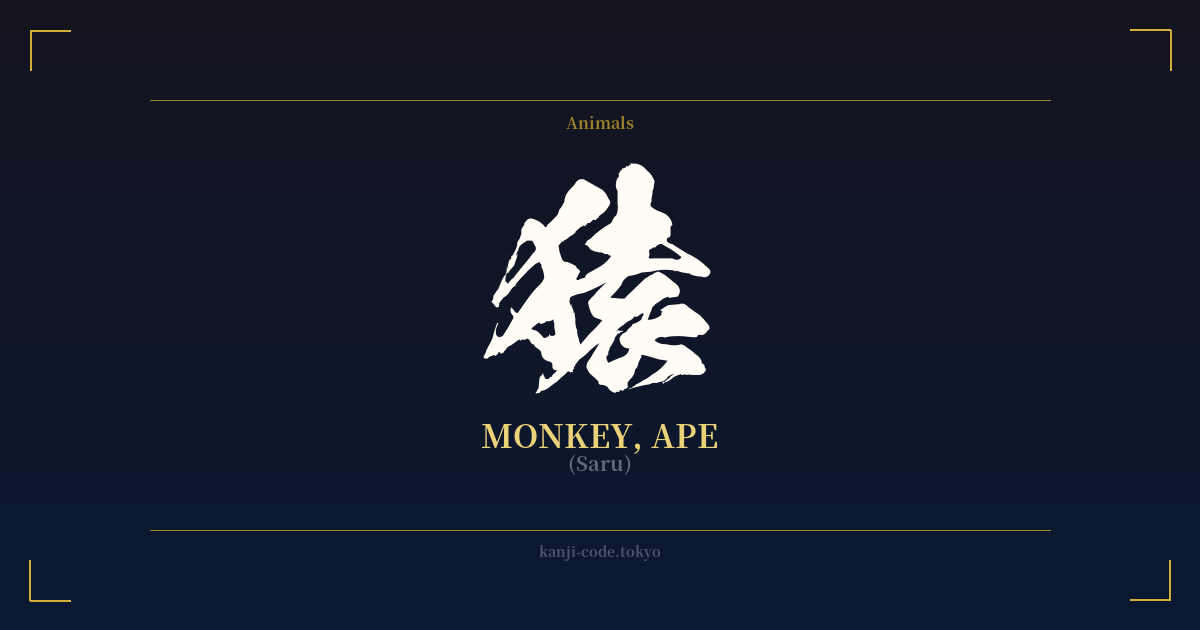
✍️ 猿 (Saru) — Cultural Context
The kanji 猿 (saru) is more than just a simple character for 'monkey'; it is a vessel for centuries of Japanese folklore, religion, and cultural identity. Its very structure hints at its meaning, with the left-side radical 犭 (kemonohen) being a common component in kanji for animals, immediately classifying it within the natural world.
In Japan, the monkey holds a dual-faceted symbolism. On one hand, it is a creature of immense intelligence, wit, and agility. This is perhaps most famously embodied by its inclusion as the ninth animal in the Japanese Zodiac (干支, Eto). Those born in the Year of the Monkey are often considered to be clever, curious, and natural problem-solvers, though sometimes prone to mischief.
This playful trickster archetype is deeply woven into Japanese culture, most notably through the influence of the Chinese classic Journey to the West. The hero, Sun Wukong—known as Son Gokū in Japan—is a powerful and rebellious monkey king who achieves enlightenment. His story is a cornerstone of East Asian literature and has inspired countless manga, anime, and games, cementing the monkey's image as a flawed but powerful hero.
Religiously, the monkey is also a significant figure. In Shintoism, monkeys are often seen as messengers of mountain deities (yama no kami) or even the avatar of certain gods, like Sarutahiko Ōkami, a powerful guide. This connection paints the monkey as a bridge between the human and divine realms, a protector of sacred spaces.
Perhaps the most globally recognized symbol involving Japanese monkeys is the 'three wise monkeys' (三猿, sanzaru). Depicting three primates covering their eyes, ears, and mouth, they represent the proverb 'see no evil, hear no evil, speak no evil' (見ざる, 聞かざる, 言わざる – mizaru, kikazaru, iwazaru). This is a clever pun, as the '-zaru' ending sounds identical to 'saru' (monkey). This concept originated at the Tōshō-gū shrine in Nikkō and has become a worldwide symbol of mindful discretion.
Even Japanese proverbs feature the monkey, such as '猿も木から落ちる' (saru mo ki kara ochiru), which translates to 'even monkeys fall from trees.' This serves as a humble reminder that even experts can make mistakes, showcasing the monkey as a standard-bearer for skill and mastery.
🖌️ Font Styles for 猿
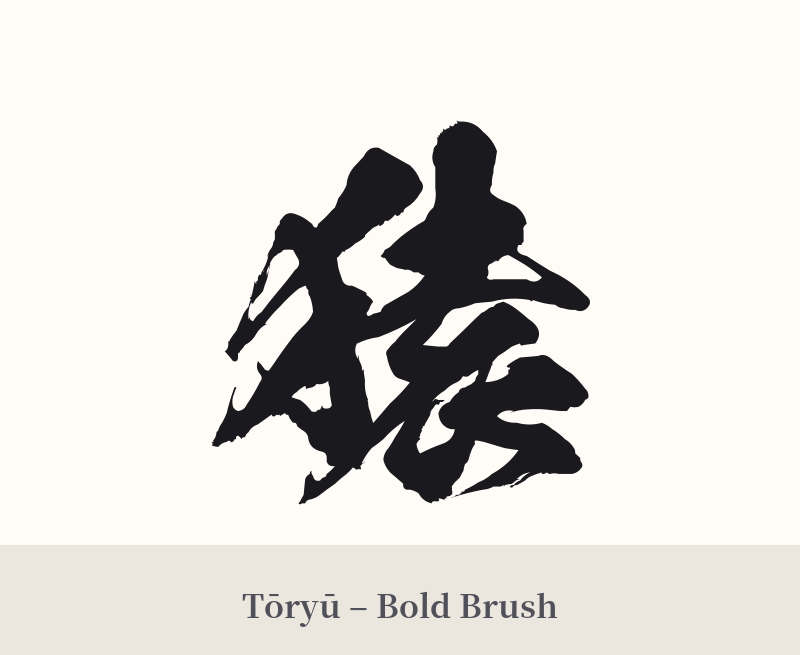
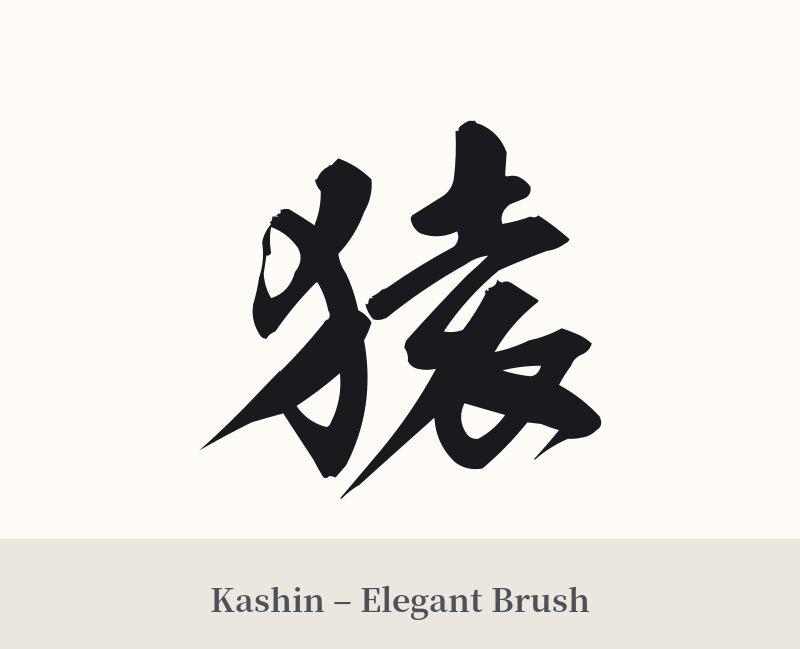
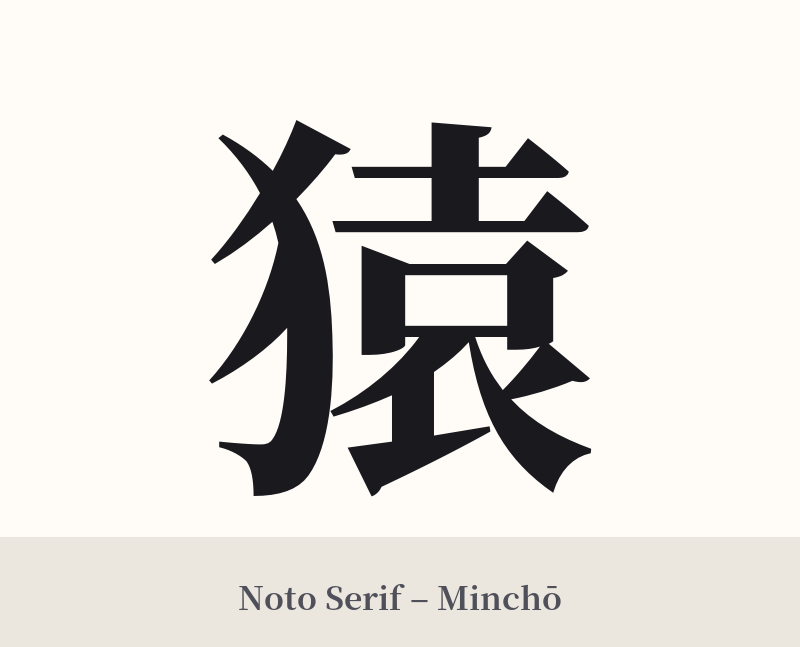
The same kanji can look dramatically different depending on the calligraphy style. Choose a font that matches the mood you want for your tattoo or design.
🎨 Tattoo Suitability
📐 Tattoo Design Guide
The kanji 猿 (saru) offers a lot of flexibility for a tattoo design, thanks to its rich symbolism and balanced form.
– Placement: This character works well on areas that can accommodate its vertical structure. The forearm, calf, or back of the shoulder are excellent choices. For a smaller design, the wrist or behind the ear could also be effective.
– Font Style: A dynamic, flowing brush script (shodō or gyōsho style) can emphasize the monkey's agility, wildness, and playful energy. For a more grounded and traditional feel, a clean, blocky Kaisho or Mincho style font will highlight the character's classic structure.
– Visual Tips: Consider integrating 猿 with other symbolic elements. A common pairing is with a peach, a symbol of immortality tied to the legend of Son Gokū. Placing it on a gnarled pine branch or amidst bamboo stalks can evoke its natural mountain habitat. For those born in the Year of the Monkey, it can be the centerpiece of a larger zodiac-themed design.
Comments