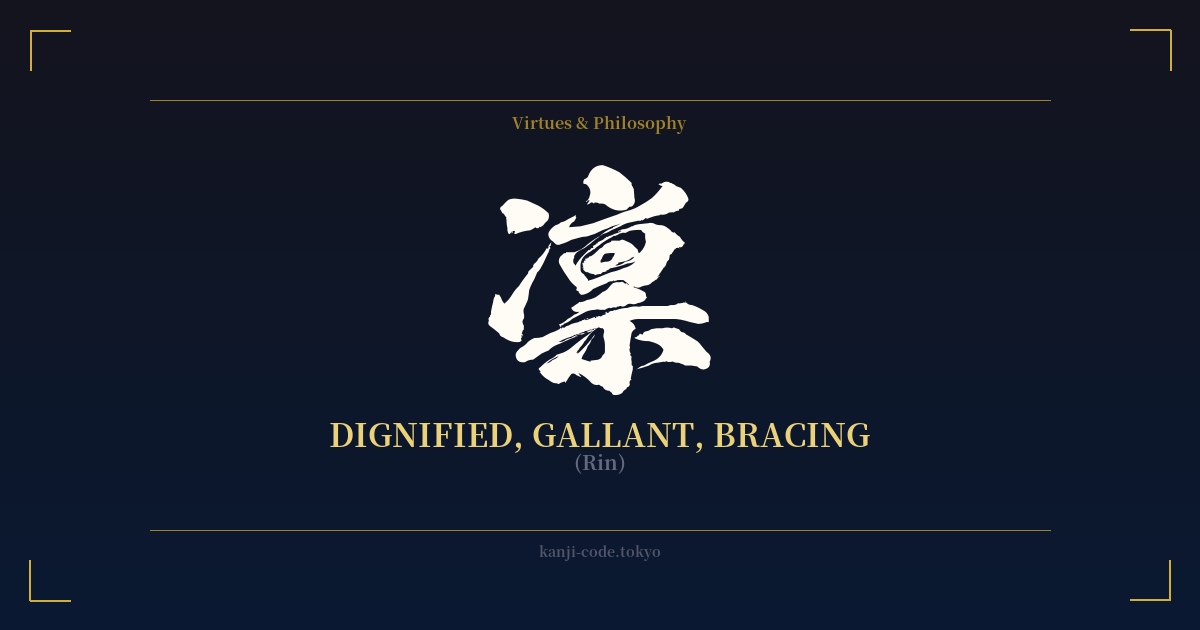
✍️ 凛 (Rin) — Cultural Context
The kanji 凛 (Rin) is a character of profound depth, embodying a specific and highly admired quality in Japanese culture. Its meaning goes far beyond a simple translation of 'cold' or 'dignified.' It represents a bracing, crisp, and noble presence, one that commands respect through quiet strength and composure.
The character itself offers clues to its meaning. It is composed of the 'ice' radical (冫) on the left and the character 稟 on the right. While 稟 originally related to receiving grain from a storehouse, it carries a phonetic role and a nuance of something being full or complete. Together, they evoke the image of something filled with the sharp, pure quality of ice or the crisp air of a winter morning.
This is not the negative, isolating cold of indifference (冷たい, tsumetai). Instead, 凛 is a positive and invigorating quality. Think of the sharp clarity you feel on a cold, clear day—that is the essence of 凛. It's the cold that awakens the senses and focuses the mind.
The most common and evocative use of this kanji is in the phrase 「凛とした」(rin to shita). This expression is used to describe a person, often a woman but not exclusively, who carries themselves with an unshakeable dignity and grace. A 'rin to shita' person is self-possessed, composed under pressure, and has a strong inner core. They do not need to be loud or aggressive to show their strength; it radiates from them naturally.
This concept is deeply tied to traditional Japanese aesthetics and warrior ethics. It resonates with the quiet strength of Zen philosophy and the composure expected of a samurai. It's the kind of strength that is not about physical power but about spiritual and mental fortitude. A 'rin to shita' atmosphere (凛とした空気, rin to shita kūki) describes a space that feels solemn, pure, and charged with a quiet intensity, like a traditional dojo before practice or a sacred shrine in the early morning.
To choose 凛 is to embrace a concept of strength that is refined, elegant, and internal. It's about integrity, self-respect, and a quiet confidence that needs no external validation. It is the beauty of a sharpened blade, the stillness of a winter landscape, and the unwavering spirit of someone who knows their own worth.
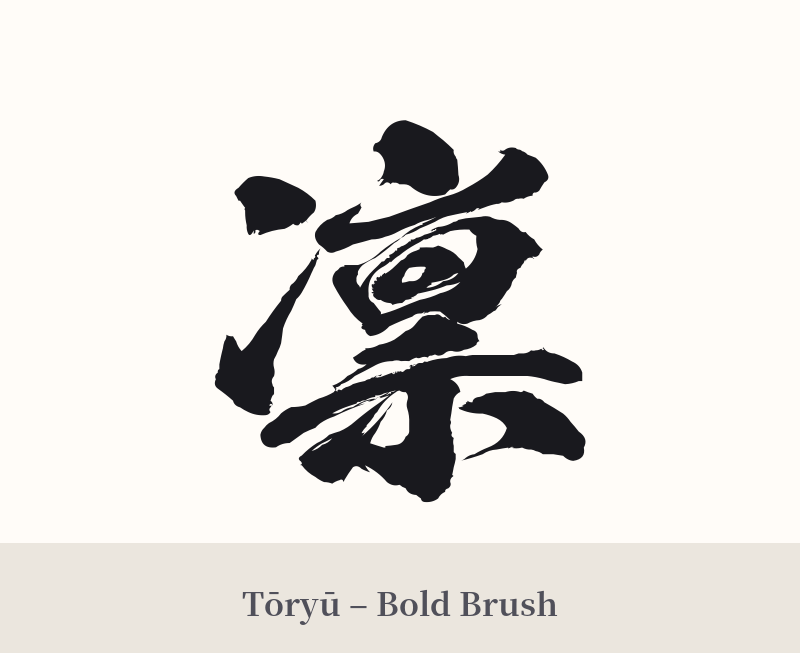
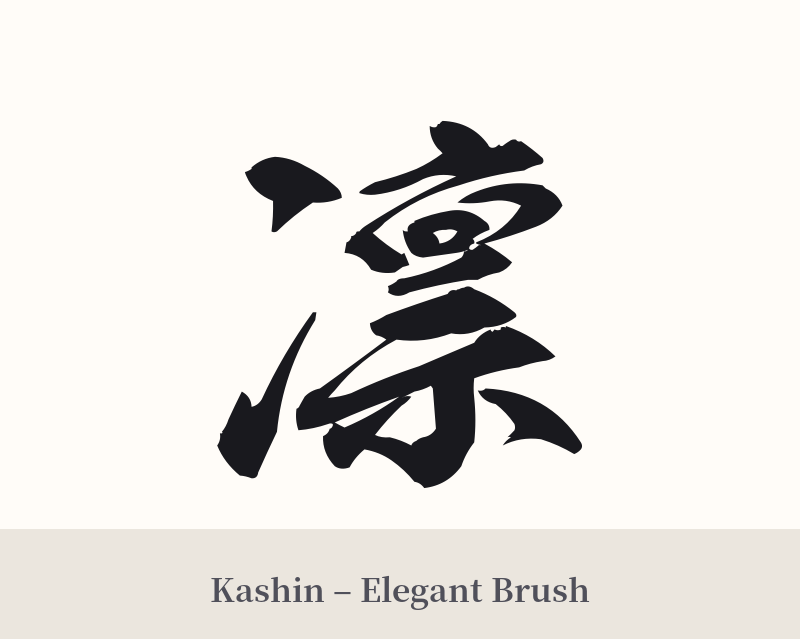
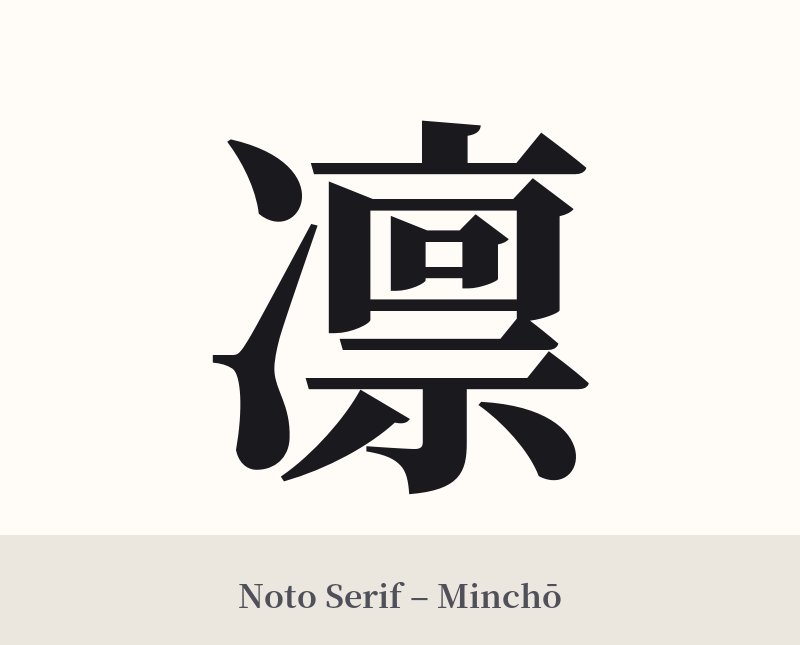
🖌️ Font Styles for 凛
The same kanji can look dramatically different depending on the calligraphy style. Choose a font that matches the mood you want for your tattoo or design.
🎨 Tattoo Suitability
📐 Tattoo Design Guide
The kanji 凛 has an elegant and balanced structure that lends itself well to various tattoo designs.
– Placement: Vertical placements are particularly effective for this character. Consider the spine, the length of the forearm, or the calf to emphasize its dignified and upright nature. For a more subtle approach, a smaller version on the wrist, behind the ear, or on the ankle can be very powerful.
– Font Style: A crisp, clear Kaisho (block script) style will mirror the kanji's meaning of sharpness and clarity. A slightly more fluid Gyosho (semi-cursive) style can add a touch of grace while maintaining legibility. A highly cursive Sosho style might be too abstract and could obscure the character's beautiful form.
– Visual Tips: While 凛 stands strong on its own, it can be paired with complementary imagery. Consider incorporating a single, delicate snowflake, a branch of a plum blossom (which blooms in winter), or a minimalist enso circle to represent the universe and enlightenment. A background of light, watercolor-like washes in cool tones (blues, grays, purples) can also enhance the 'bracing cold' aesthetic.
Comments