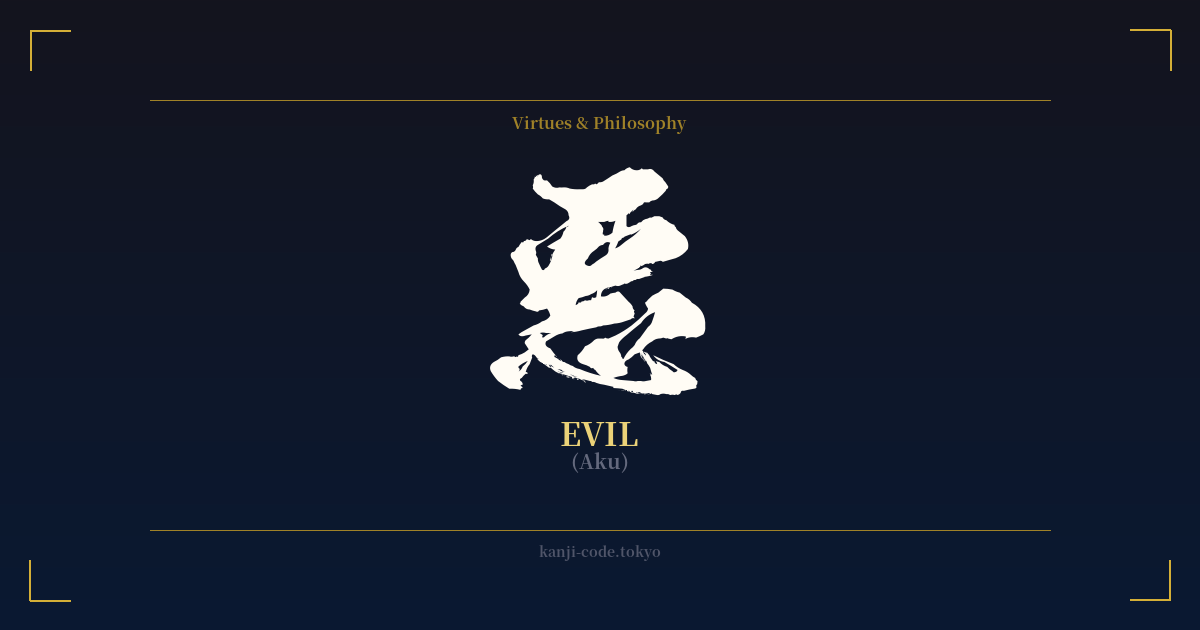
✍️ 悪 (Aku) — Cultural Context
The kanji 悪 (Aku) is one of the most direct and powerful characters in the Japanese language, representing the concept of evil, badness, and wrongdoing. Its etymology offers a fascinating glimpse into its core meaning. The character is a combination of 亞 (a), which provides the phonetic sound, and 心 (kokoro), which means 'heart' or 'mind'. Thus, 悪 can be interpreted as representing a twisted, ugly, or inferior heart—the very seat of malevolent thought and intention.
However, the concept of 'Aku' is not as simple as the English word 'evil'. In everyday Japanese, its adjectival form, 悪い (warui), is used constantly for things that are merely 'bad' in a non-moral sense. You might say 天気が悪い (tenki ga warui) for 'bad weather' or 気分が悪い (kibun ga warui) to mean 'I feel sick'. This mundane usage contrasts sharply with the profound moral weight the character carries when standing alone.
In Japanese philosophy and religion, particularly Buddhism, 悪 is the direct counterpart to 善 (Zen), meaning 'good'. It refers to actions, thoughts, and words that create negative karma, leading to suffering for oneself and others. It is a fundamental concept in the moral fabric of the culture, representing the path away from enlightenment and harmony.
Perhaps the most famous modern depiction of 悪 for a Western audience is its prominent display on the back of the character Akuma (whose name is written 悪魔, 'devil' or 'demon') from the Street Fighter video game series. In this context, the kanji symbolizes his complete abandonment of humanity in his quest for supreme power. He is not just a 'bad guy'; he is a being who has embraced a principle of destructive power, making the 悪 on his back a brand of his philosophy.
This distinction is critical. 悪 is not just about being a villain; it's about a fundamental state of being that is contrary to good, harmony, and righteousness. Its starkness is its power, but also its greatest pitfall for those considering it as a design. It represents a powerful force, but one that is almost universally understood as negative and destructive.
🖌️ Font Styles for 悪
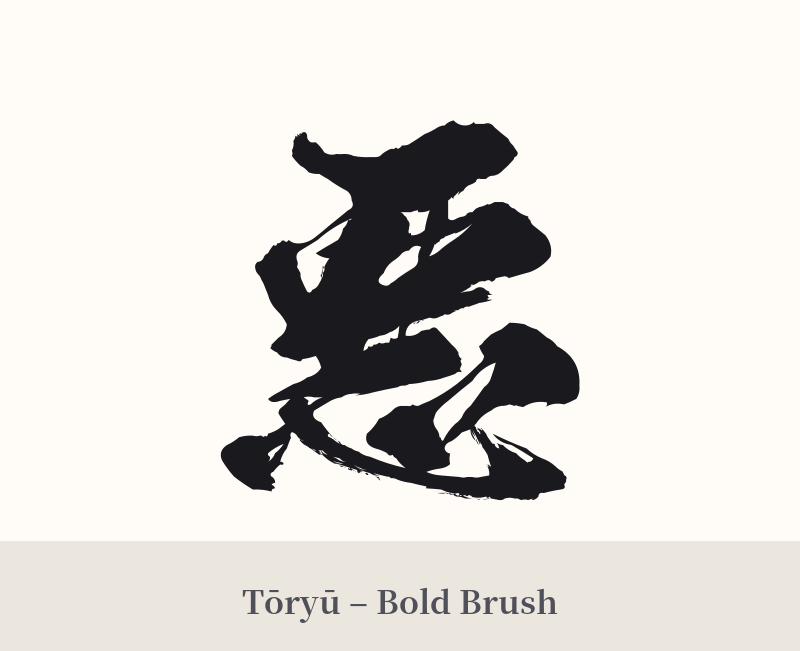
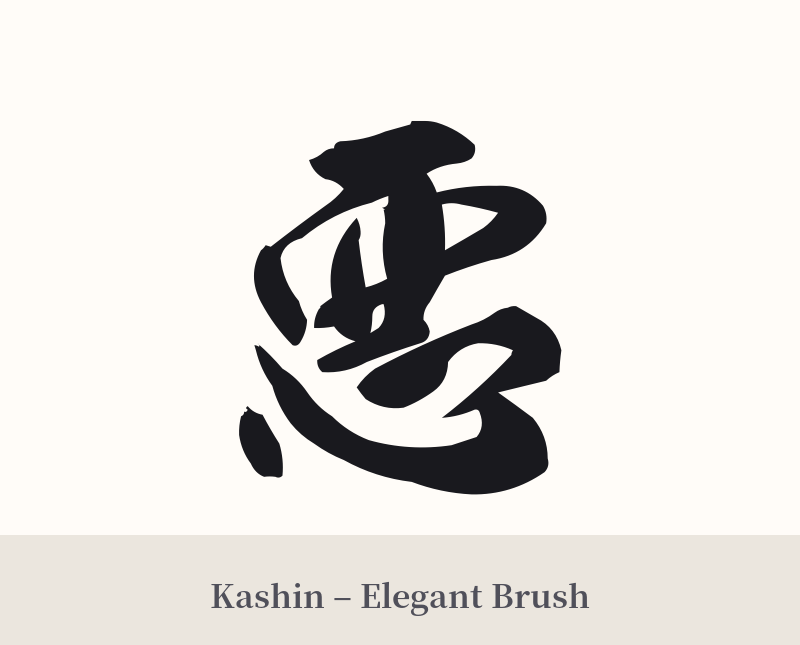
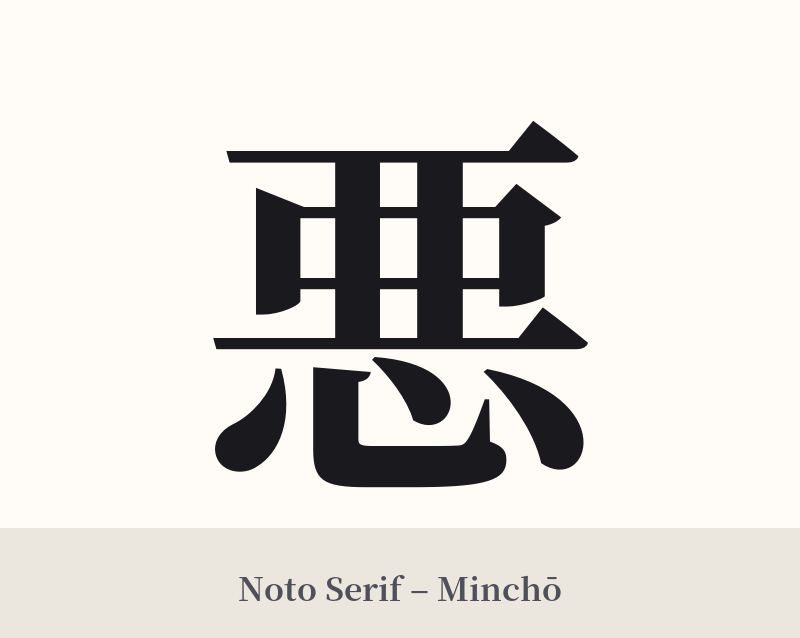
The same kanji can look dramatically different depending on the calligraphy style. Choose a font that matches the mood you want for your tattoo or design.
🎨 Tattoo Suitability
📐 Tattoo Design Guide
Given the intense meaning of 悪, its design should be deliberate and thoughtful. It's a statement piece, not a subtle accent.
– Placement: Common placements for a single, powerful kanji like this include the center of the back (emulating the famous Akuma design), the chest, or the forearm. These spots give the character space to breathe and assert its presence.
– Font Style: The style can dramatically alter the feeling. A thick, aggressive, and semi-cursive brushstroke (like a Shodō master's work) will emphasize the raw, chaotic, and powerful aspect of evil. In contrast, a sharp, clean, and angular font like Mincho can suggest a colder, more calculated, and deliberate form of malevolence.
– Visual Tips: This kanji is best left to stand alone. Pairing it with other imagery is difficult and often creates a confusing message. Combining 悪 with a lotus flower, for instance, would be a direct contradiction. If you must pair it, consider elements that align with its dark nature, such as black flames, an Oni mask, or abstract chaotic lines, but be aware this will create an unequivocally dark and aggressive tattoo.
Comments