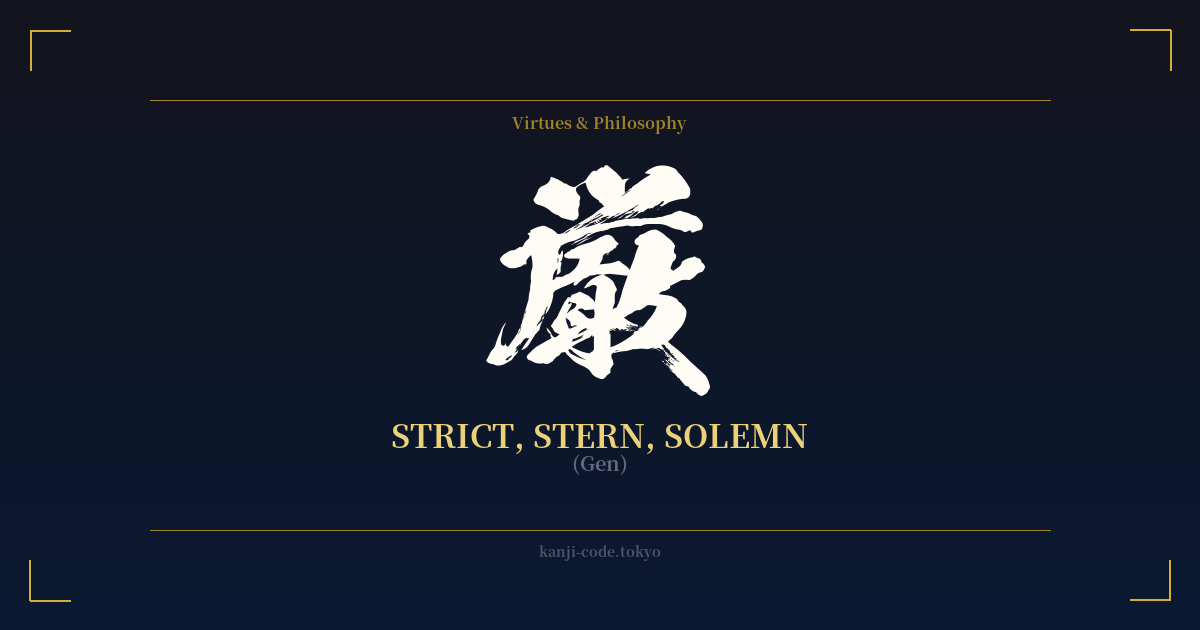
✍️ 厳 (Gen) — Cultural Context
The kanji 厳, read as `gen` or found in words like `kibishii` (severe) and `ogosoka` (solemn), carries a weight of seriousness and authority that is deeply woven into Japanese culture. At its core, it signifies strictness, but this is not merely about punishment or harshness. It’s a concept that encompasses discipline, rigor, and the profound solemnity of a sacred or formal setting.
In the context of Bushido, the way of the samurai, 厳 was a foundational principle. It represented the unyielding self-discipline required of a warrior, the strict adherence to a code of honor, and the gravity of life-and-death situations. A samurai's training was `kibishii`—rigorous and demanding—to forge not just a skilled fighter, but a person of immense inner strength and fortitude.
This idea extends into the world of traditional arts and martial arts (`budō`). A `dōjō`, or training hall, is a place of 厳. The atmosphere is quiet, respectful, and focused. The `sensei` (teacher) is often strict, not out of cruelty, but to push students beyond their perceived limits and ensure the techniques are passed down with precision and respect. This strictness fosters a disciplined mind and a spirit that can remain calm under pressure.
Beyond the martial, 厳 is a key element of Japanese spiritual life. The term `sōgon` (荘厳) combines 厳 with a character for 'villa' or 'formality' to mean solemnity or majesty. It describes the awe-inspiring atmosphere of a grand Shinto shrine or a quiet Buddhist temple. It's the feeling of stillness and reverence you experience in a space that is set apart from the everyday world, a place where you feel the presence of something ancient and powerful. This solemnity commands respect without words.
In modern Japan, while the contexts have changed, the feeling of 厳 remains. It's found in the formal etiquette of a tea ceremony, the intense focus of a master craftsman, and the stern but fair expectations of a respected elder or mentor. It's a reminder that some things demand our full attention, our deepest respect, and our most disciplined effort. It is the quality that separates the sacred from the profane, the master from the apprentice, and the meaningful from the trivial.
🖌️ Font Styles for 厳
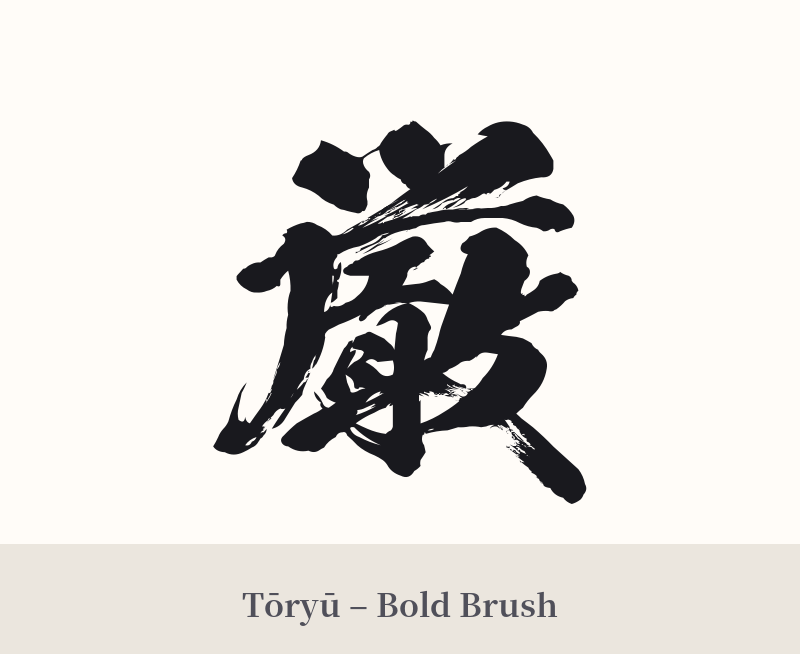
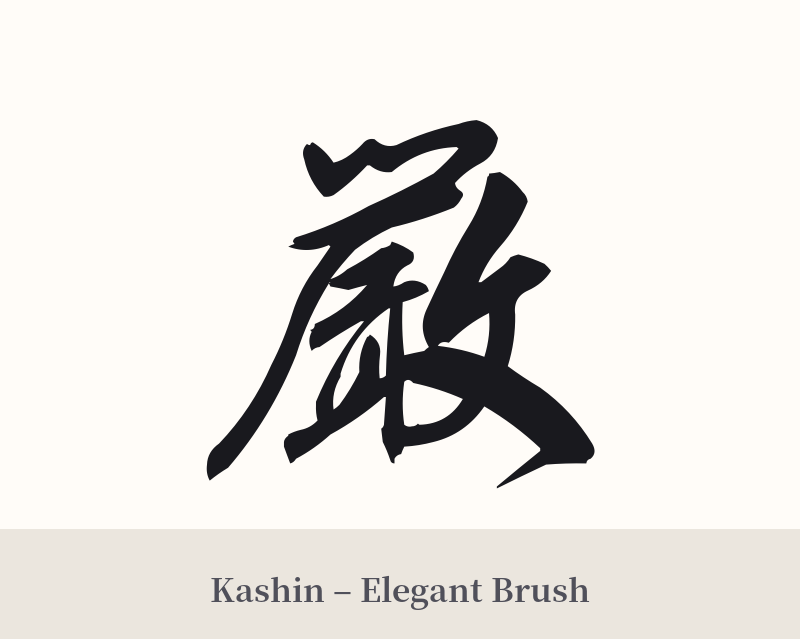
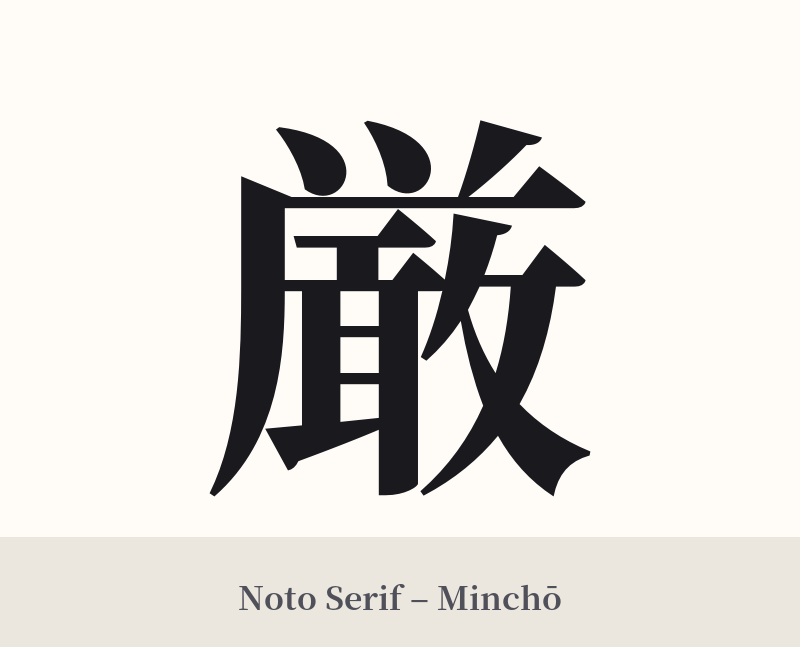
The same kanji can look dramatically different depending on the calligraphy style. Choose a font that matches the mood you want for your tattoo or design.
🎨 Tattoo Suitability
📐 Tattoo Design Guide
The kanji 厳 carries a heavy, authoritative presence, and your tattoo design should reflect that. Its complexity is both a strength and a challenge.
– Placement: Choose a flat, relatively large surface to give the 17 strokes room to breathe. The forearm, inner bicep, calf, or upper back are excellent choices. Avoid highly curved areas like the ribs or hands, where the character's precise geometry could become distorted.
– Size: This is not a kanji for a small, discreet tattoo. To prevent the strokes from blurring together over time, it needs to be of a significant size. Discuss the minimum viable size with your artist to ensure long-term legibility.
– Font Style: A strong, traditional script is the best match. `Kaishotai` (block script) will emphasize its rigid, formal structure. A bold `Gyoshotai` (semi-cursive script) can add a touch of dynamic power while retaining its authority. Avoid thin, wispy, or overly stylized fonts that would undermine its inherent strength.
Comments