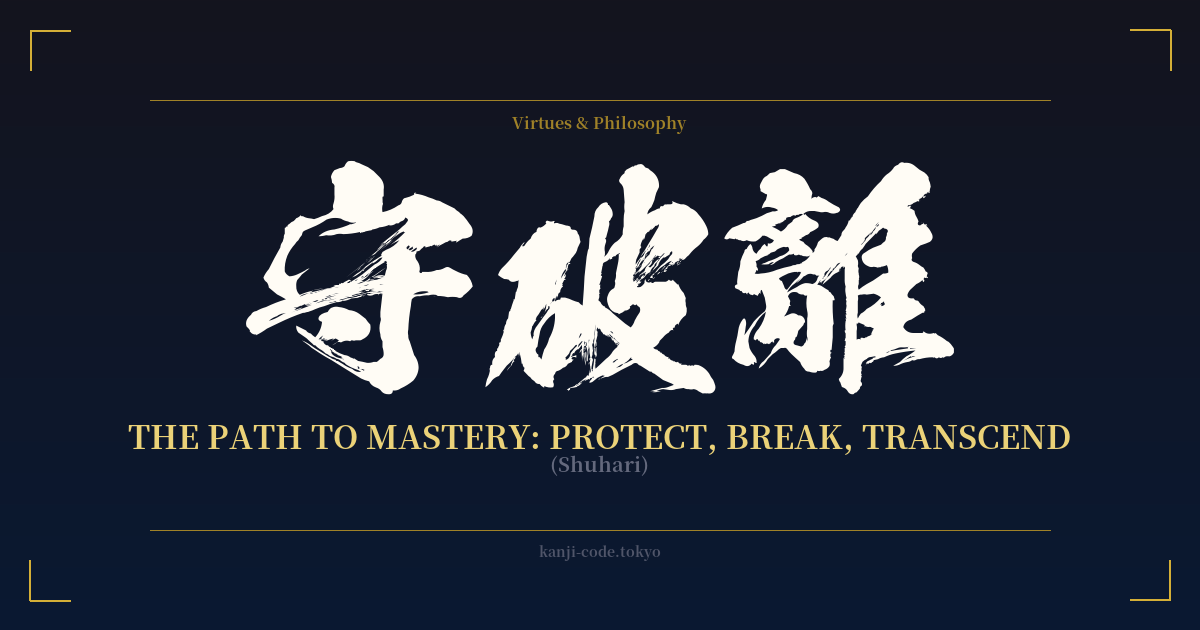
✍️ 守破離 (Shuhari) — Cultural Context
Shuhari (守破離) is a powerful Japanese concept that outlines the three stages of learning on the path to mastery. It's not just a word, but a complete philosophy for acquiring a skill, whether it's a martial art, a creative discipline, or a professional craft. Its wisdom is timeless and universally applicable, describing a journey from rigid imitation to creative transcendence.
The concept's origins are often traced back to the master of Noh theater, Zeami Motokiyo (c. 1363–c. 1443). In his writings on theatrical performance, he described a process for actors to first perfectly imitate their masters, then innovate upon those teachings, and finally achieve a state of unique, personal expression. This framework was later adopted and popularized within the world of Japanese martial arts, where it became a cornerstone of Budo (武道), the martial way.
The first stage is Shu (守), meaning 'to protect' or 'to obey'. In this phase, the student is a vessel, diligently absorbing the fundamentals. They follow the teacher’s instructions and the established forms (kata) without deviation. This is a critical period of building a solid foundation, repeating techniques until they become muscle memory. It is about discipline and trust in the tradition.
The second stage is Ha (破), meaning 'to break' or 'to detach'. Once the student has internalized the basic teachings, they begin to question and experiment. They analyze the principles behind the techniques and explore variations, breaking from the rigidity of the initial forms. This is not rebellion for its own sake, but a conscious effort to understand the 'why' behind the 'how', adapting the art to their own body and mind.
The final stage is Ri (離), meaning 'to separate' or 'to transcend'. At this level, the practitioner has achieved true mastery. They are no longer bound by rules or forms because the art has become a part of them. They move beyond the teachings of their master to create their own unique techniques and expressions. They don't just practice the art; they are the art. Their movements are natural, fluid, and spontaneous, born from a deep, intuitive understanding.
Today, the Shuhari model is applied far beyond traditional arts. It's a key principle in Agile software development, a guide for creative professionals, and a framework for anyone seeking personal growth. It reminds us that true mastery is not a destination but a continuous process of learning, challenging, and ultimately, becoming.
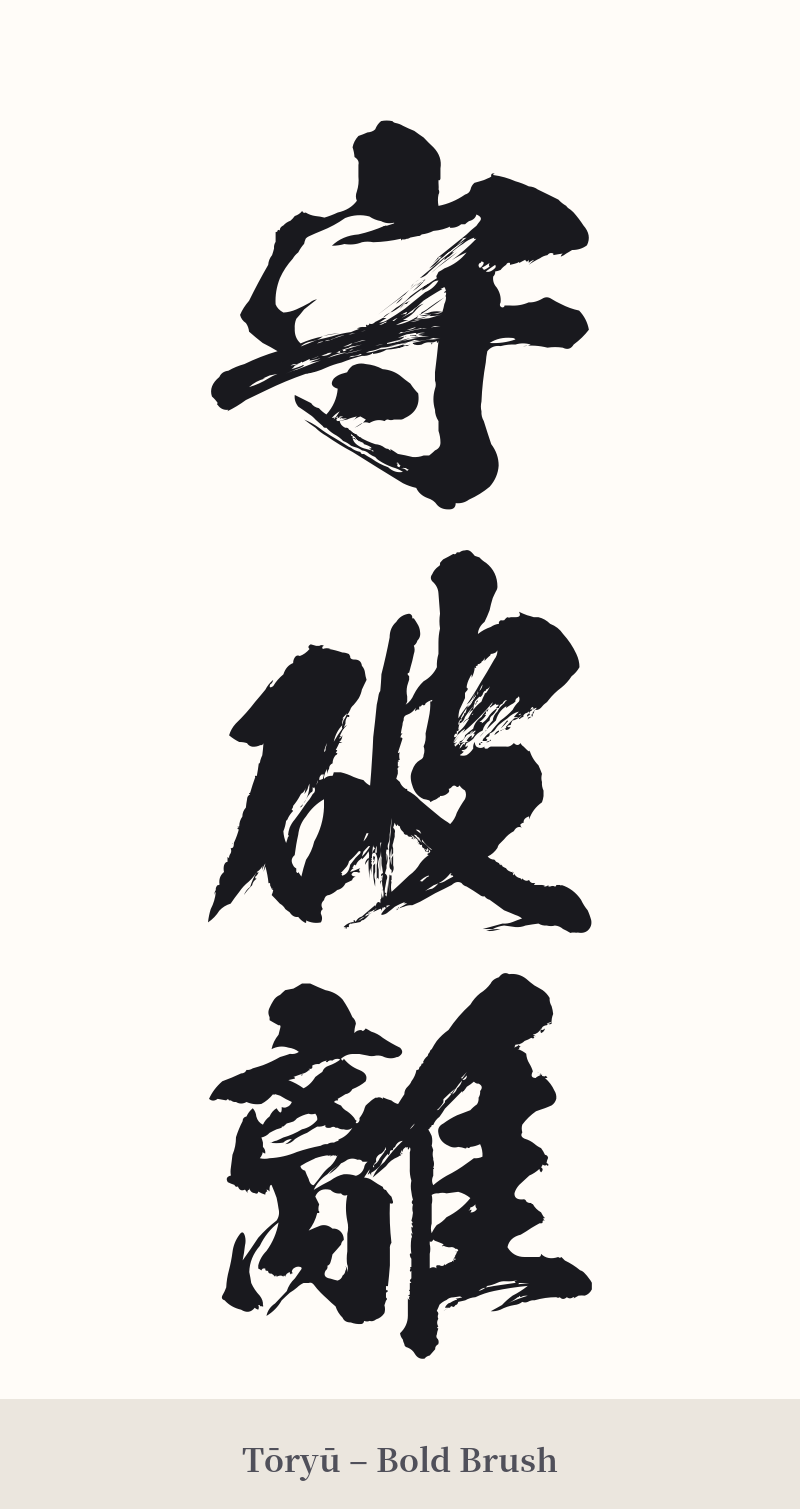
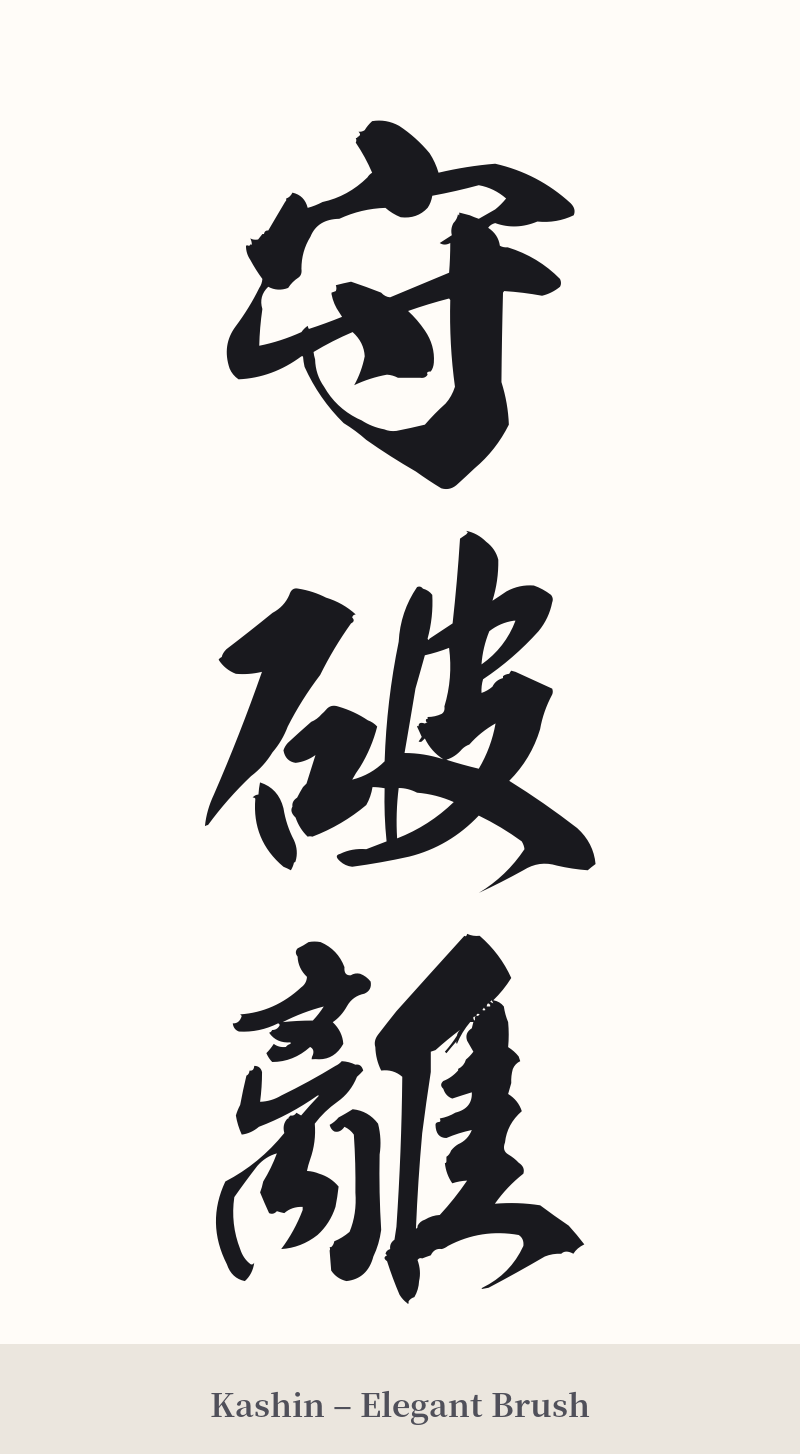
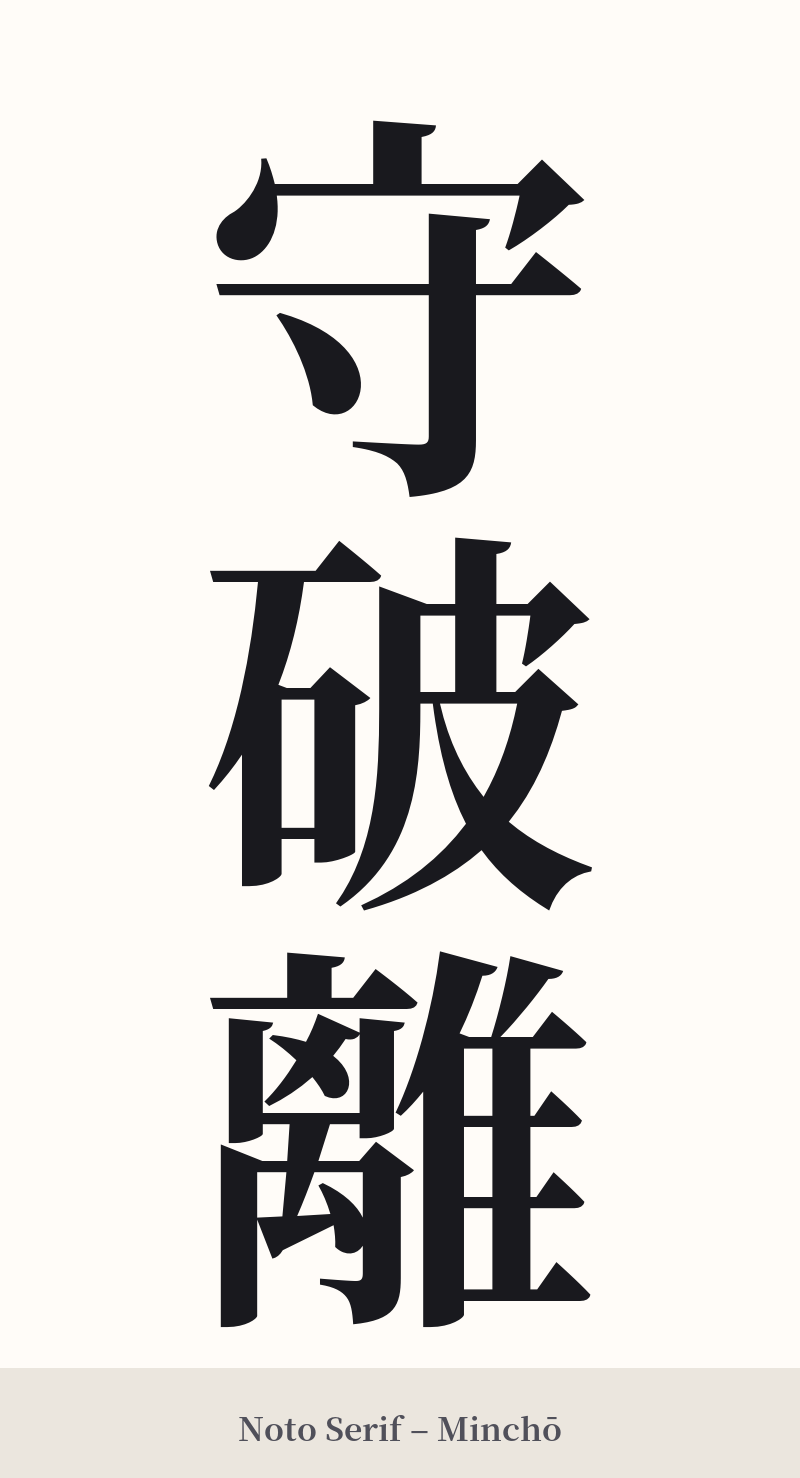
🖌️ Font Styles for 守破離
The same kanji can look dramatically different depending on the calligraphy style. Choose a font that matches the mood you want for your tattoo or design.
🎨 Tattoo Suitability
📐 Tattoo Design Guide
Shuhari is a visually compelling word that tells a story of progression. Its three characters lend themselves perfectly to a vertical design, which is the traditional and most aesthetically pleasing orientation.
– Placement: A vertical tattoo of Shuhari looks powerful running down the forearm, the calf, or along the spine. These placements allow for the necessary size to render the characters clearly, especially the complex final one.
– Style: A semi-cursive (Gyosho) or cursive (Sosho) calligraphy style is highly recommended. The flowing, dynamic strokes of these styles beautifully mirror the concept's theme of evolution and breaking free. For a more disciplined and traditional feel, a bold, blocky Kaisho script can also be very effective.
– Visual Tips: The most critical factor is the artist's skill. The character 離 (ri) is intricate and demands precision. Emphasize to your artist the need for clean lines and proper spacing to ensure the tattoo remains legible as it ages. Avoid making it too small; this is a concept that deserves space to be represented properly.
Comments