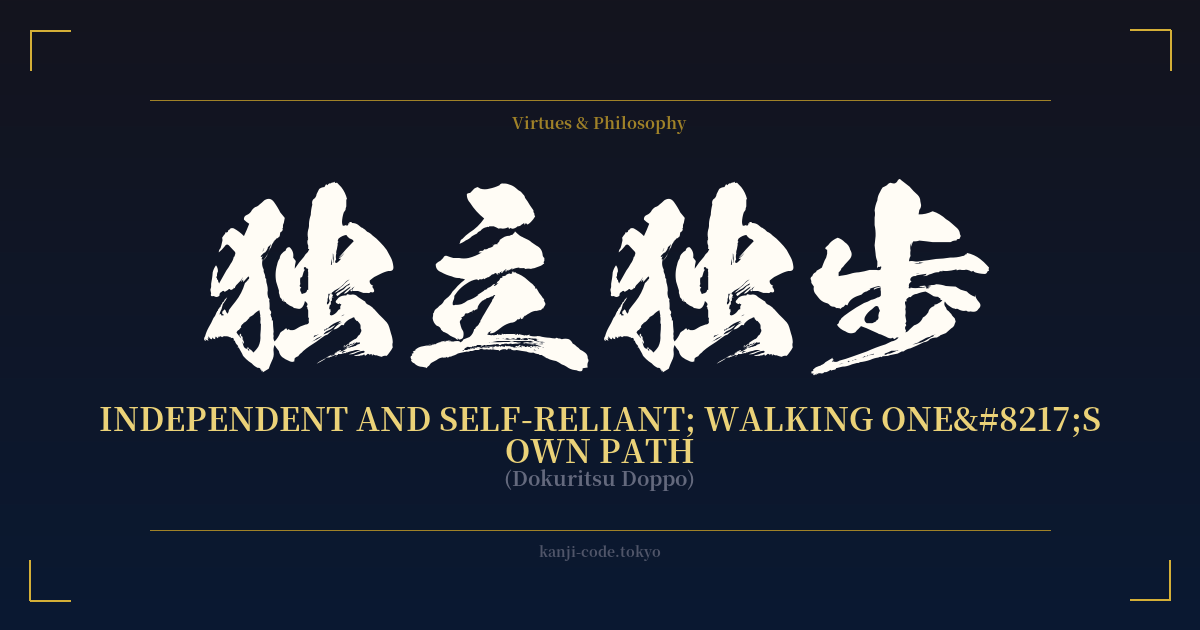
✍️ 独立独歩 (Dokuritsu Doppo) — Cultural Context
独立独歩 (Dokuritsu Doppo) is a four-character idiom, known as a 'yojijukugo,' that encapsulates a profound philosophy of individualism and integrity. It translates literally as 'independent, walking alone,' but its meaning goes far beyond simple solitude. It describes a person who forges their own path, guided by their own principles and beliefs, without being swayed by the opinions or influences of others.
The phrase is composed of two parts: 独立 (dokuritsu), meaning 'independence' or 'standing alone,' and 独歩 (doppo), meaning 'walking alone.' Together, they create a powerful image of a figure moving forward with quiet determination. This isn't about being antisocial or rebellious for the sake of it; rather, it's about possessing the inner strength and self-reliance to trust your own judgment and live authentically.
This concept resonates deeply within certain aspects of Japanese culture, particularly those influenced by Zen Buddhism and Bushido, the way of the warrior. Zen philosophy emphasizes enlightenment through direct personal experience, not through reliance on scriptures or teachers alone. Similarly, the ideal samurai was expected to have an 'immovable mind' (不動心, Fudōshin) and the conviction to act on their own, even in the face of death. Miyamoto Musashi, the legendary swordsman, embodied this spirit in his text 'The Path of Aloneness' (Dokkōdō), which outlines principles for a life of asceticism and self-discipline.
In modern Japan, a society often characterized by its emphasis on group harmony (和, wa), 独立独歩 stands as a powerful counterpoint. It is a term of high praise for entrepreneurs, artists, artisans, and anyone who breaks from the norm to pursue a unique vision. It celebrates the courage to be different and the dedication required to master a craft or a way of life on one's own terms. It speaks to the quiet confidence of someone who doesn't need external validation because their purpose comes from within. Choosing this phrase signifies an admiration for strength, integrity, and the unwavering commitment to one's personal journey.
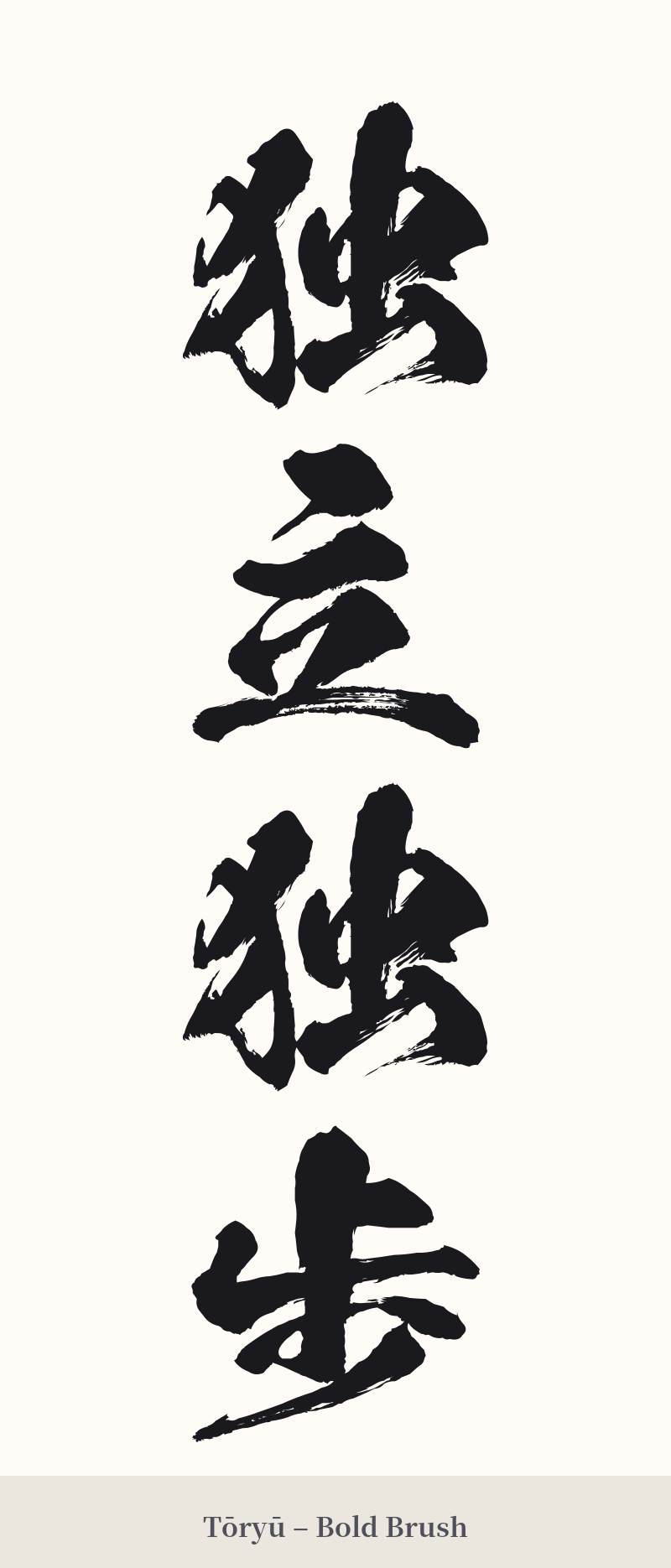
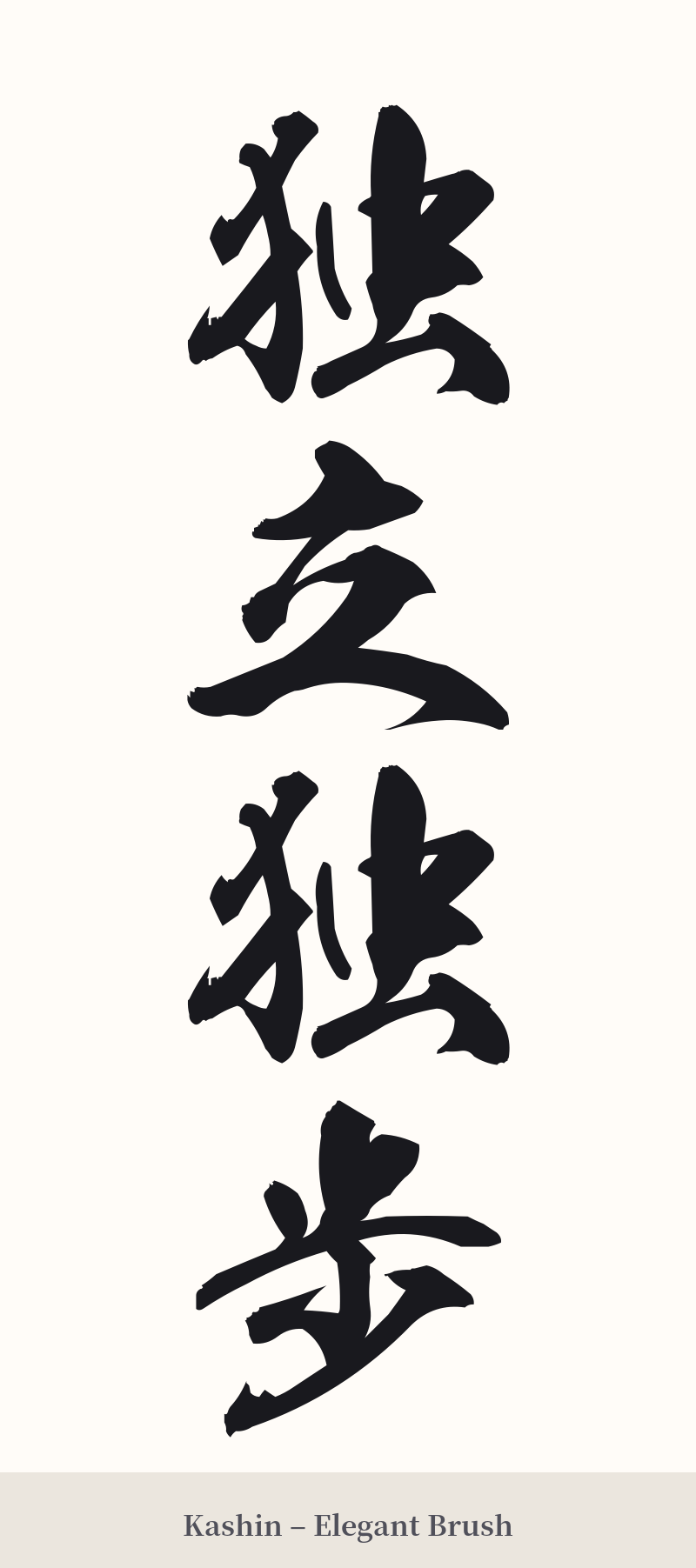
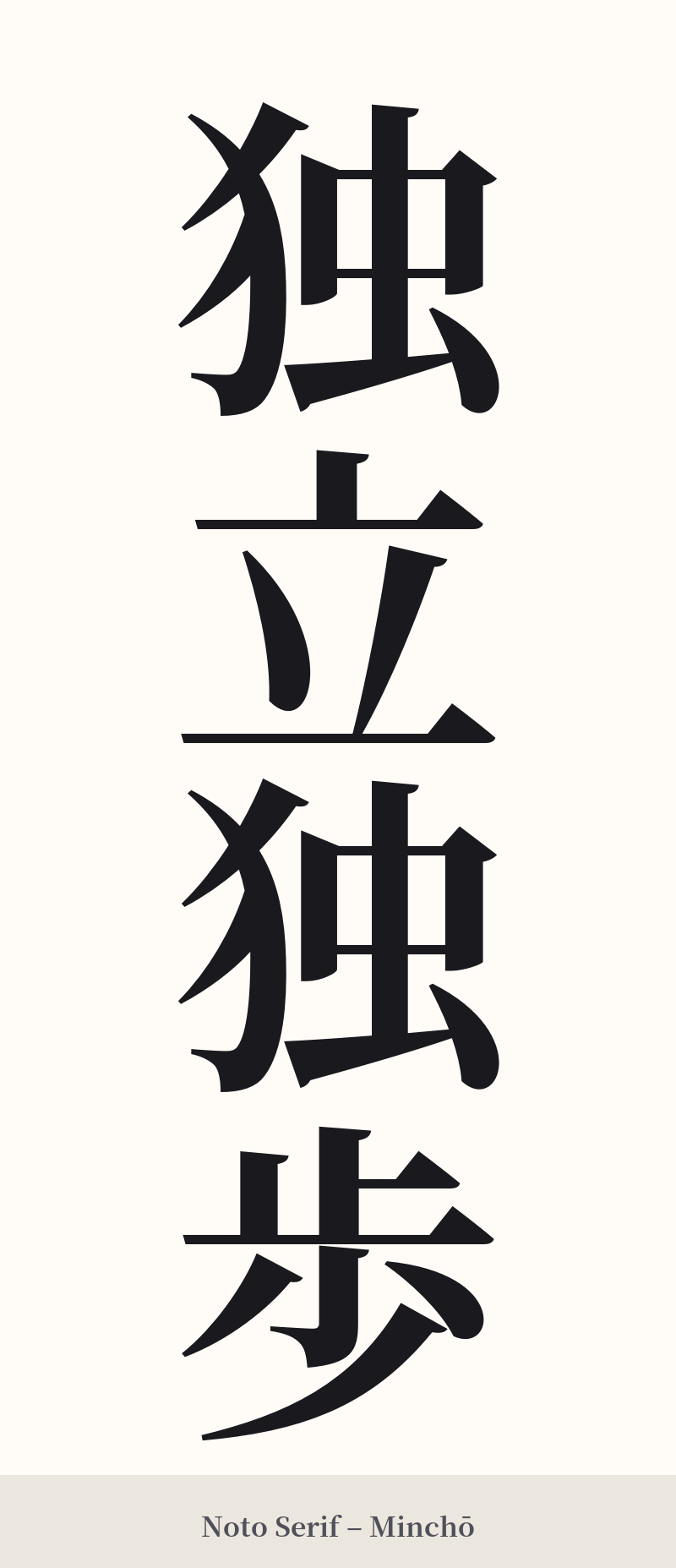
🖌️ Font Styles for 独立独歩
The same kanji can look dramatically different depending on the calligraphy style. Choose a font that matches the mood you want for your tattoo or design.
🎨 Tattoo Suitability
📐 Tattoo Design Guide
For a powerful and traditional look, a vertical orientation is highly recommended for 独立独歩. This style is common for yojijukugo and fits well on the forearm, calf, or along the spine. A horizontal layout can also work effectively across the chest, upper back, or along the collarbone.
– Font Styles: Consider a 'Gyosho' (semi-cursive) script for a dynamic and artistic feel that balances readability with flow. For a stronger, more defined statement, a 'Kaisho' (block script) font emphasizes clarity and conviction. A fully cursive 'Sosho' script can be beautiful but may sacrifice legibility for a more abstract, artistic expression.
– Visual Elements: While the characters are powerful on their own, you could complement the design with subtle imagery. Consider incorporating elements like a single path winding into the distance, footprints, or a solitary enso (Zen circle) to visually reinforce the theme of a personal journey and enlightenment.
Comments