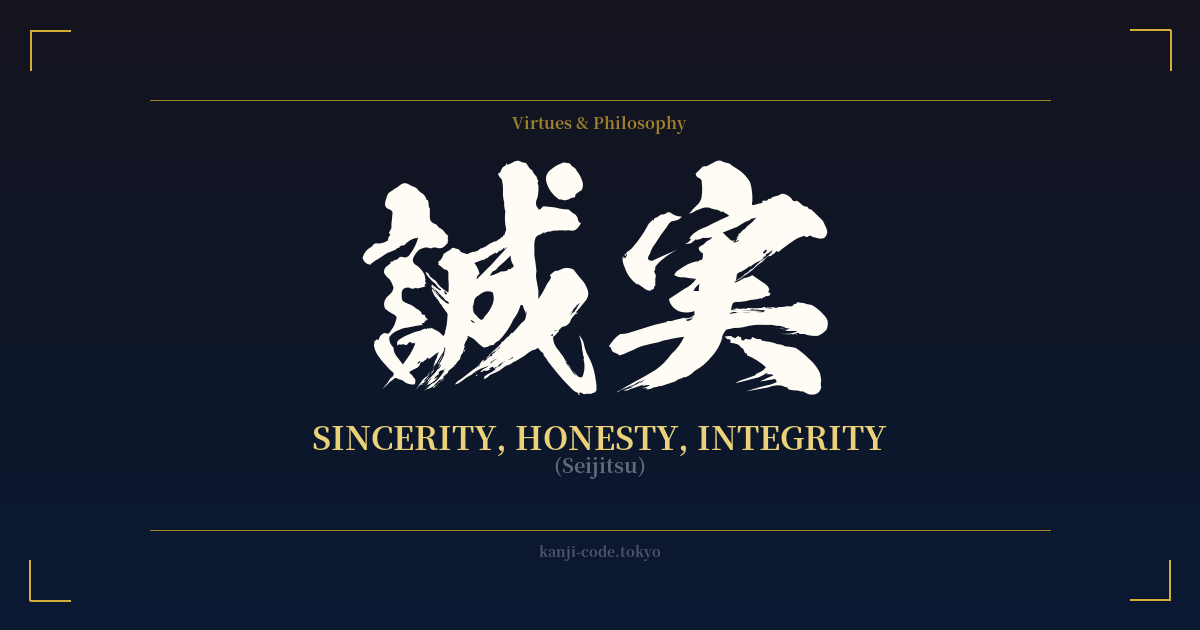
✍️ 誠実 (Seijitsu) — Cultural Context
In Japan, 誠実 (Seijitsu) is more than just a word; it's a cornerstone of character, a fundamental virtue that underpins societal trust. While often translated as 'sincerity' or 'honesty,' its meaning runs much deeper, encapsulating a state of being where one's words, thoughts, and actions are in perfect alignment. It is integrity in its purest form.
The concept is a fusion of two powerful kanji: 誠 (sei, or makoto) and 実 (jitsu). The first character, 誠, represents a truthfulness that emanates from the heart. It’s the sincerity of one’s inner self. The second character, 実, means 'reality,' 'fruit,' or 'substance.' It signifies something tangible and real. Together, 誠実 describes a sincerity that is not just felt but is actively demonstrated and bears real-world fruit. It is honesty put into practice, integrity made manifest.
This distinguishes it from a similar word, 正直 (shōjiki), which refers more to straightforwardness or telling the truth in a specific situation. A person can be 'shōjiki' in a moment, but being 'seijitsu' describes their entire disposition. It is the quality you seek in a lifelong partner, a trusted business associate, or a respected leader. To be called a 'seijitsu na hito' (a person of integrity) is one of the highest compliments in Japanese culture.
Historically, the value of Seijitsu is deeply woven into the fabric of Bushido, the code of the samurai. For a warrior, sincerity and integrity were paramount, as their word was their bond and their reputation was their most valuable asset. This ideal has permeated modern Japanese culture, especially in business and craftsmanship. A company that responds to a crisis with Seijitsu—taking full responsibility and acting transparently—can earn immense public trust. Likewise, a craftsman who pours their sincere effort into their work is said to embody this principle.
Choosing Seijitsu is to embrace a philosophy of living truthfully, where your inner convictions are consistently reflected in your outward behavior. It is a quiet, steadfast strength, a commitment to being genuine in a world that can often feel superficial.
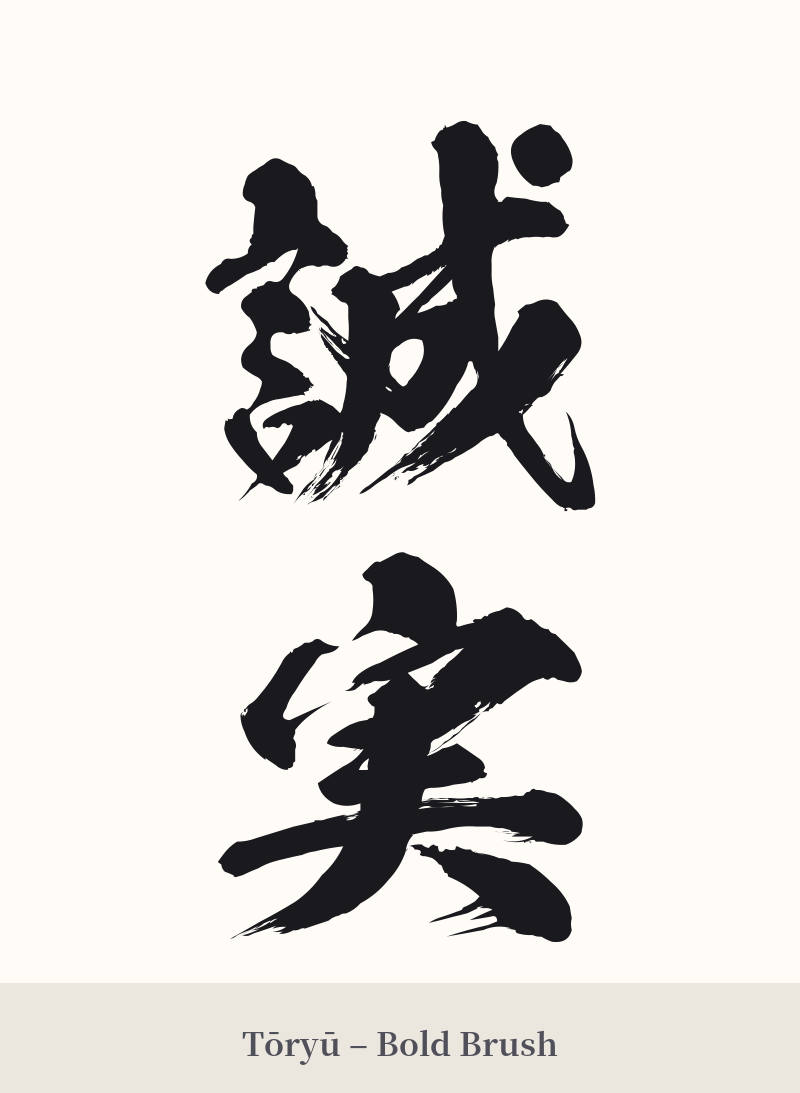
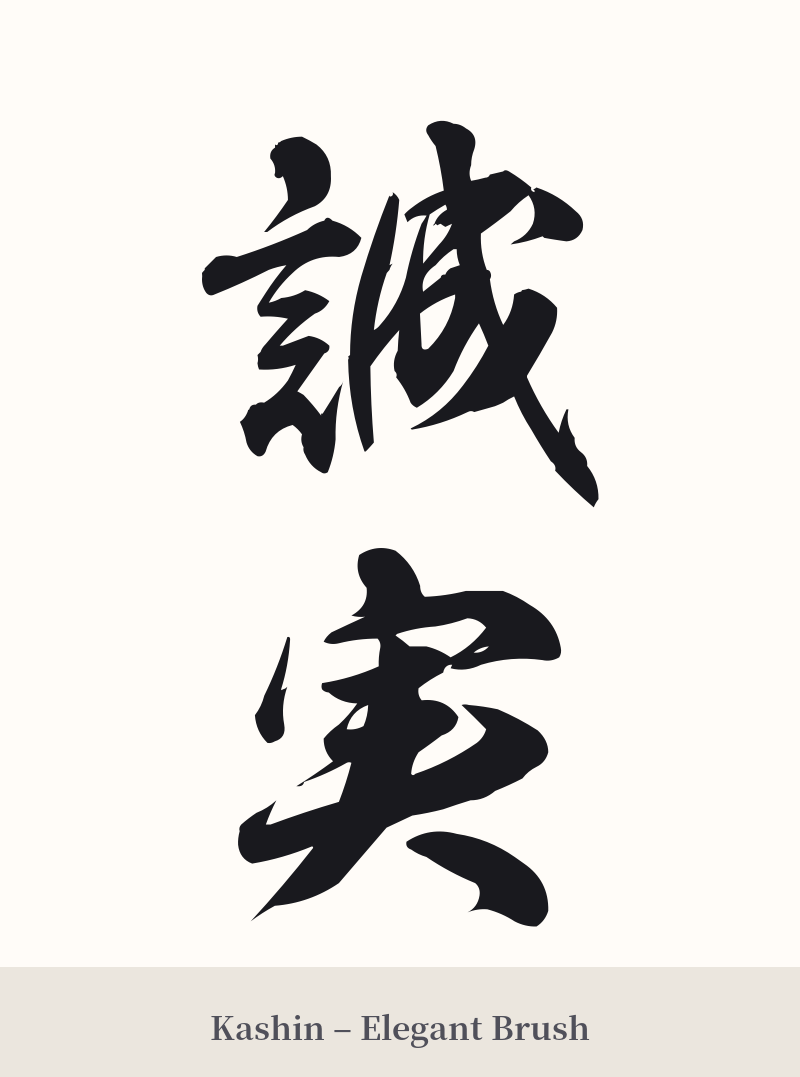
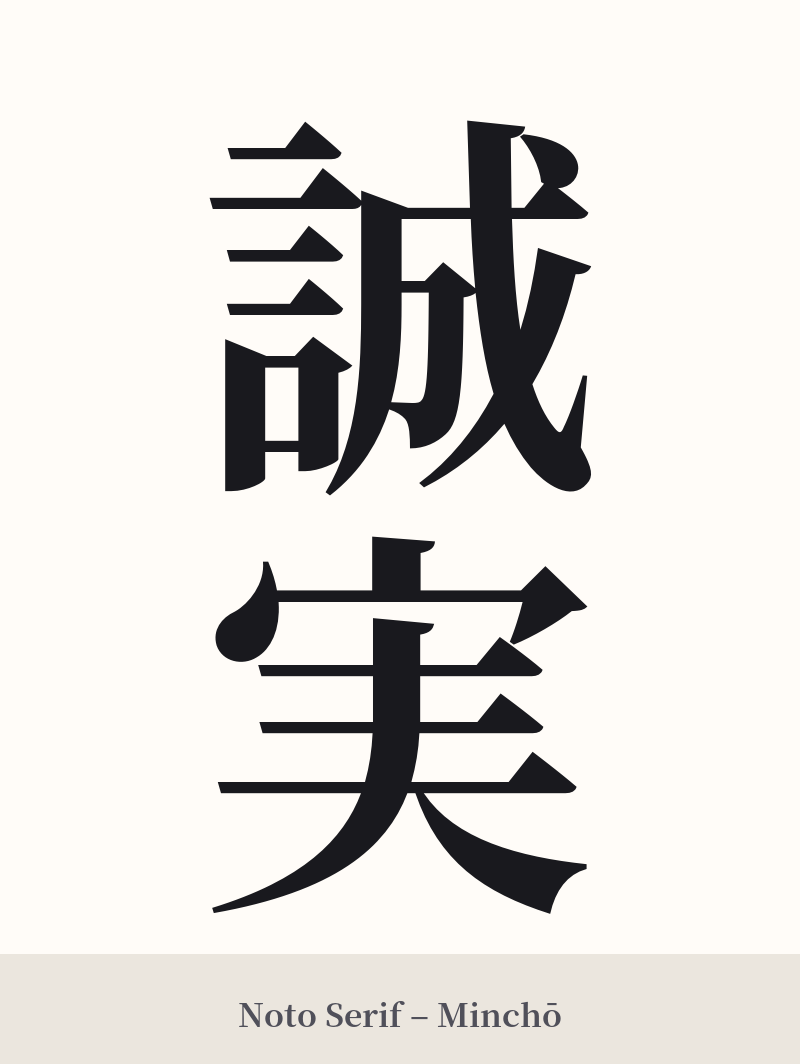
🖌️ Font Styles for 誠実
The same kanji can look dramatically different depending on the calligraphy style. Choose a font that matches the mood you want for your tattoo or design.
🎨 Tattoo Suitability
📐 Tattoo Design Guide
For a concept as foundational as Seijitsu, the design should reflect its strength and clarity.
– Placement: Consider locations that feel central or foundational to you. The inner forearm, the chest over the heart, or vertically along the spine are all powerful choices that align with the meaning of a core principle.
– Font Style: The script can heavily influence the tone. A strong, clear Kaisho (block script) emphasizes the unwavering nature of integrity. For a more personal and fluid feel, a Gyosho (semi-cursive) style can suggest that this virtue is an organic part of your being.
– Visual Elements: Seijitsu stands powerfully on its own, but if you wish to add imagery, choose symbols of integrity and purity. A single, straight stalk of bamboo, a calm body of water, or the Enso circle representing wholeness and truth can complement the kanji without overpowering it. It's best to avoid overly complex or chaotic backgrounds, as they can detract from the word's core message of clarity.
Comments