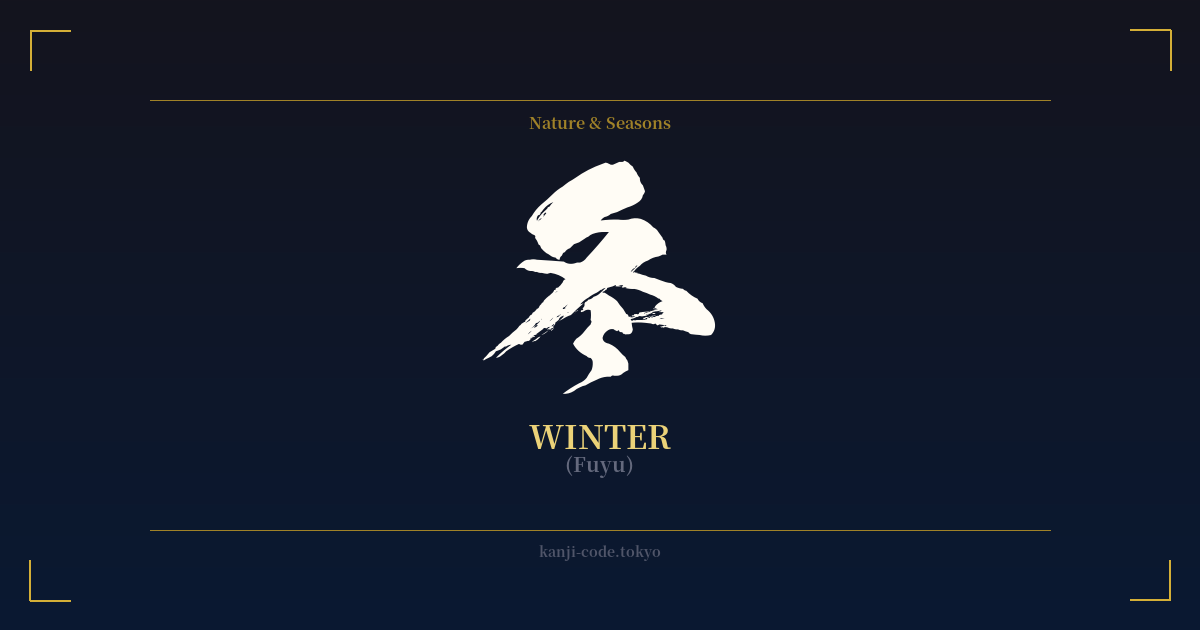
✍️ 冬 (Fuyu) — Cultural Context
In Japanese culture, the kanji 冬 (Fuyu) represents far more than just the coldest season of the year. It embodies a profound sense of stillness, quiet introspection, and the stark, serene beauty of a world at rest. Winter is a time for turning inward, a necessary pause in the cyclical dance of nature before the vibrant rebirth of spring.
The character's origin tells a story of finality and preservation. The ancient oracle bone script is thought to depict a knot at the end of a rope, symbolizing the end of the year's agricultural cycle. The bottom two strokes, 冫, are the radical for 'ice,' firmly grounding the character in the cold, frozen essence of the season. It represents the tying up of the year's work, a time when all is stored and secured against the cold.
This sense of quiet endurance is a cornerstone of its cultural meaning. Japan's winters can be harsh, especially in the northern regions, and the ability to withstand the cold is a respected trait. This is reflected in the concept of 'fuyugomori' (冬籠り), or winter seclusion, akin to hibernation. It’s a time for family to gather around the 'kotatsu' (a heated table), for reflection, and for conserving energy for the year ahead.
Winter is also a major theme in Japanese arts, particularly in 'haiku' poetry, where 'fuyu' is a 'kigo' (season word). Words like 'samui' (cold), 'yuki' (snow), and 'kogarashi' (wintry wind) are used to evoke specific feelings of loneliness, purity, or the crispness of the air. The stark image of a bare tree against a grey sky or the silent fall of snow on a temple roof are powerful symbols of 'wabi-sabi'—the beauty found in imperfection and transience.
From the dazzling Sapporo Snow Festival to the quiet ritual of 'yukimi' (snow viewing) with a cup of hot sake, winter is celebrated, not just endured. It's the season for enjoying 'onsen' (hot springs) while snow falls around you, a perfect contrast of heat and cold, activity and stillness. As a symbol, 冬 speaks to the strength found in quiet, the beauty in austerity, and the promise of renewal that lies dormant, waiting beneath the snow.
🖌️ Font Styles for 冬
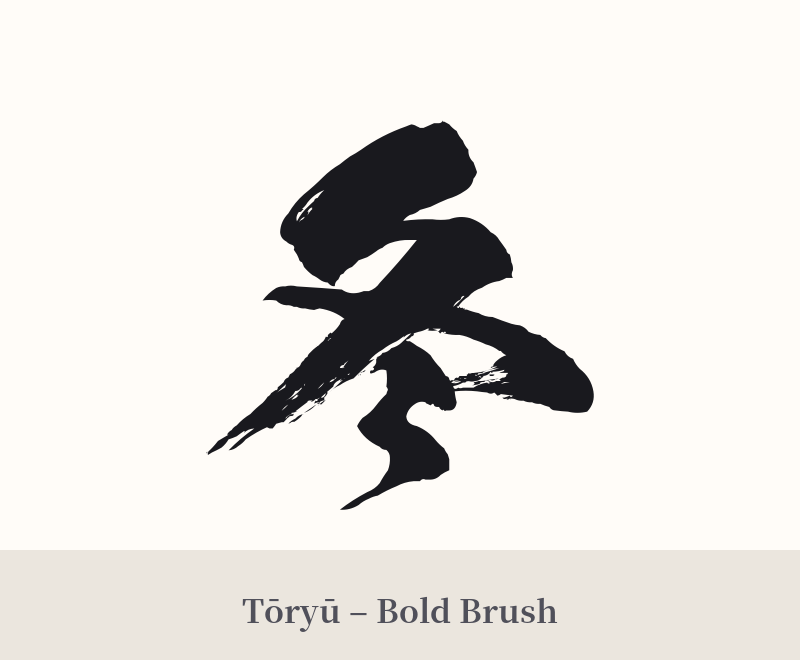
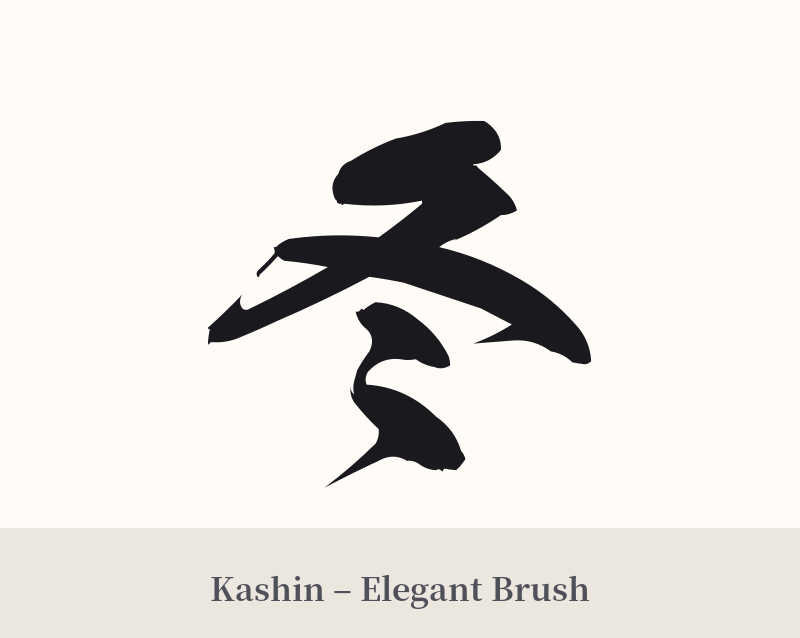
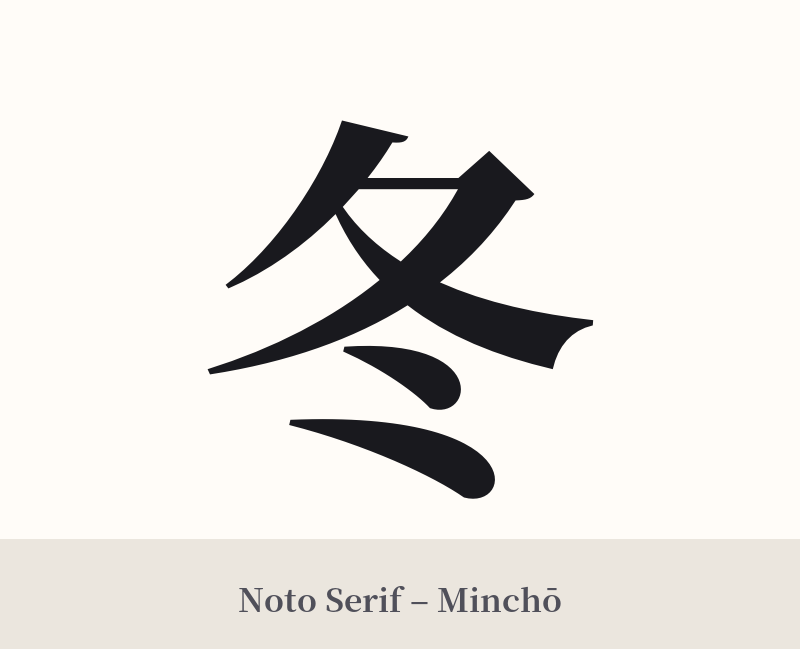
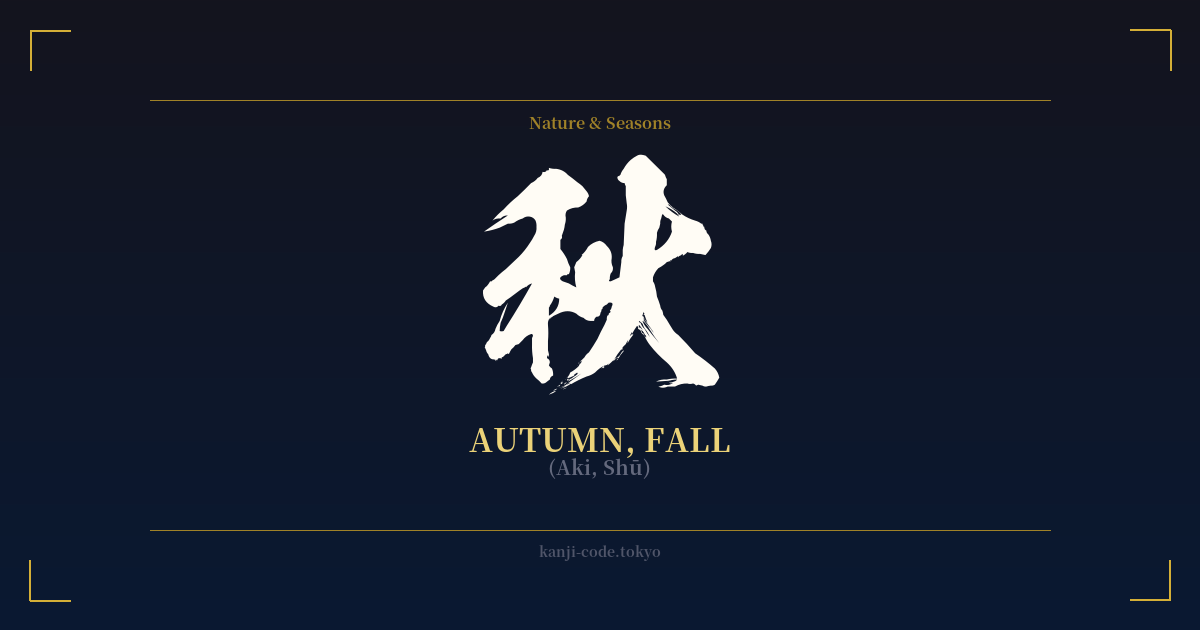
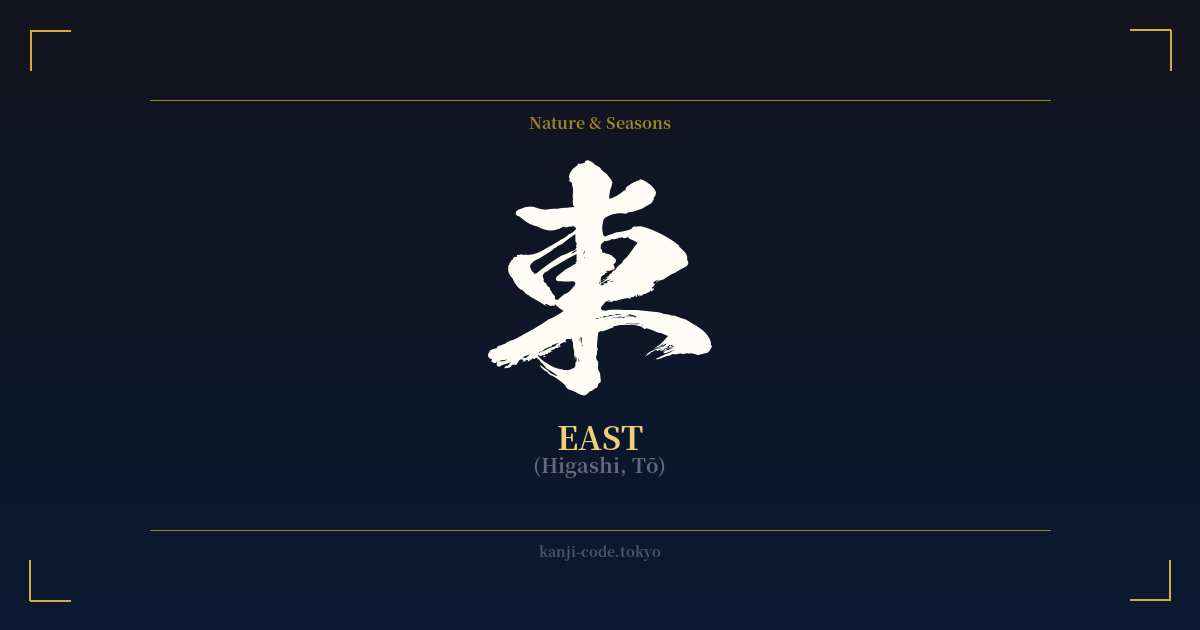
The same kanji can look dramatically different depending on the calligraphy style. Choose a font that matches the mood you want for your tattoo or design.
🎨 Tattoo Suitability
📐 Tattoo Design Guide
The simple elegance of 冬 (Fuyu) offers versatile design possibilities.
– Placement: For a subtle touch, consider the inner wrist, ankle, or behind the ear. For a more prominent statement, the forearm, calf, or the nape of the neck allows the character to stand with quiet confidence.
– Font Style: A minimalist, clean font (like Mincho) emphasizes its serene and modern feel. Conversely, a dynamic, expressive calligraphy or brushstroke (shodō) style can capture the raw, untamed energy of a winter storm or the elegant flow of falling snow.
– Visual Elements: While it stands beautifully on its own, 冬 can be woven into a larger composition. Consider pairing it with classic winter motifs like snowflakes (雪), a solitary crane, a bare branch, or a single plum blossom (梅), which famously blooms in late winter, symbolizing hope and perseverance.
Comments