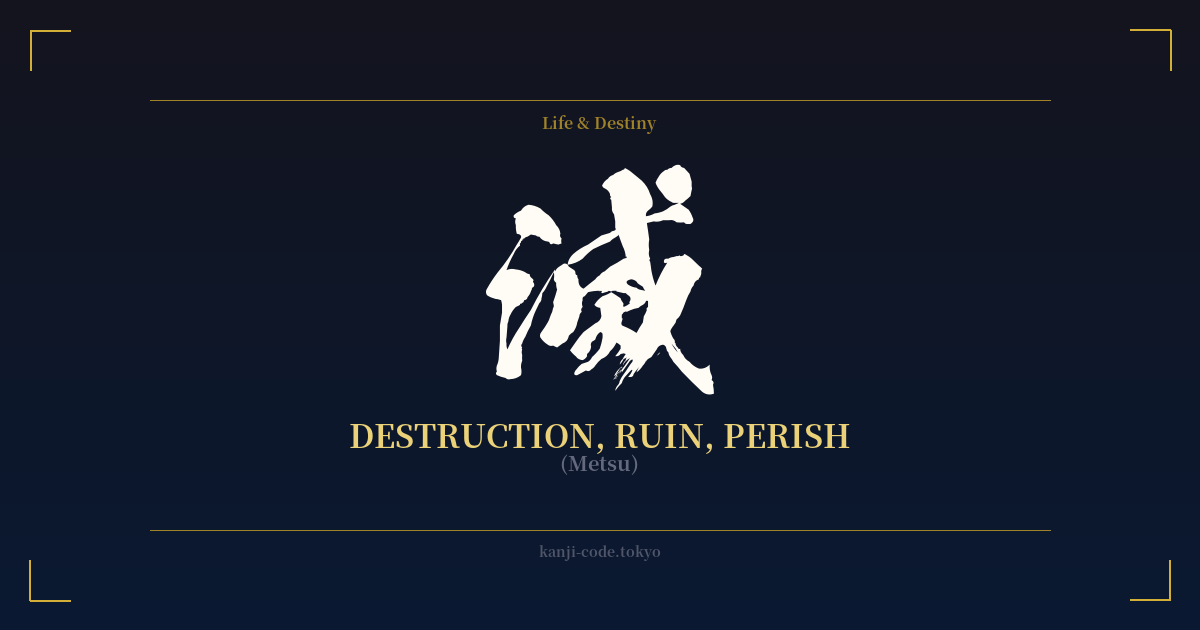
✍️ 滅 (Metsu) — Cultural Context
The kanji 滅 (Metsu) is a character charged with an aura of finality and power. Its core meaning revolves around destruction, ruin, perishing, and annihilation. It’s a visually striking character that tells a story of its own. The left-side radical, 氵, represents water, while the right side is a component that originally depicted a weapon, like an axe or halberd, being used with force. Together, they evoke the image of extinguishing something completely, like dousing a fire with water or obliterating it with a weapon. There is no ambiguity; this is an end.
In modern Japan, you encounter 滅 in words that convey total finality. For instance, 絶滅 (zetsumetsu) means 'extinction,' 全滅 (zenmetsu) means 'annihilation' or 'total destruction,' and 滅亡 (metsubō) signifies 'downfall' or 'ruin,' often used for the collapse of empires or civilizations. The verb form, 滅びる (horobiru), is a staple of historical epics, describing the fate of defeated samurai clans and fallen castles.
However, the character holds a profound and surprisingly positive meaning within Buddhism. It is the third of the Four Noble Truths (苦集滅道 – Ku Jū Metsu Dō), where 滅 represents 'Nirodha,' the cessation of suffering. In this context, it isn't about physical destruction but about extinguishing the flames of desire, craving, and ignorance that cause pain. This 'destruction' is the path to enlightenment and peace (Nirvana), a complete opposite to its more common, violent interpretation. This duality gives the kanji a fascinating depth.
More recently, 滅 has exploded in global consciousness thanks to the phenomenal success of the anime and manga series Kimetsu no Yaiba (鬼滅の刃), or Demon Slayer. The 'Metsu' in the title is translated as 'Slayer' or 'Destroyer,' and the character itself is emblazoned on the back of the Demon Slayer Corps uniforms. Here, it symbolizes a righteous destruction—the mission to eradicate demons and protect humanity. This has imbued the kanji with a new heroic, defiant, and protective nuance, representing the will to fight against overwhelming darkness.
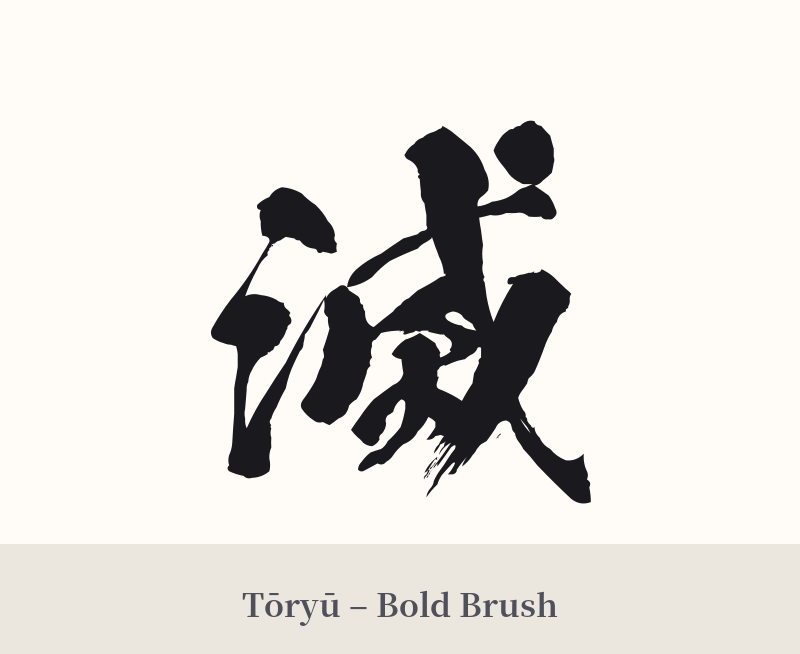
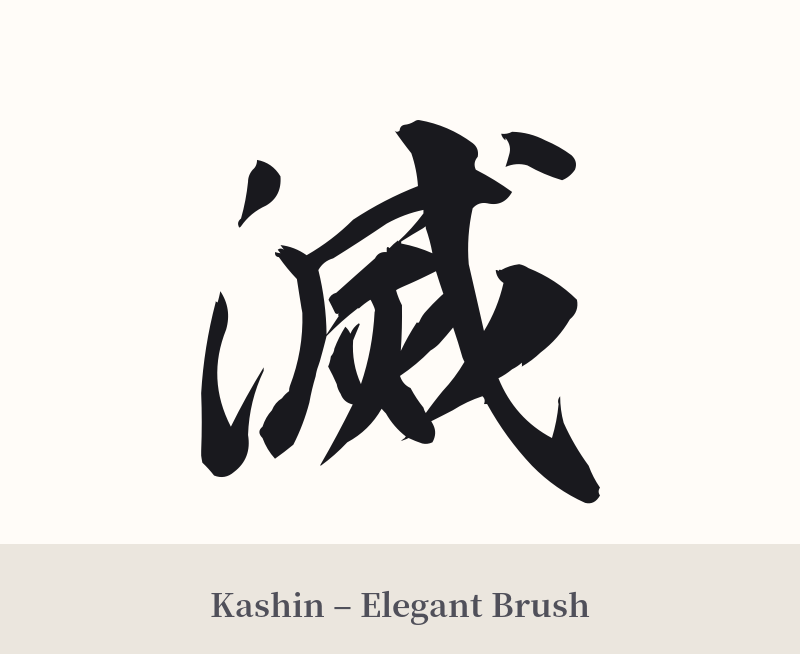
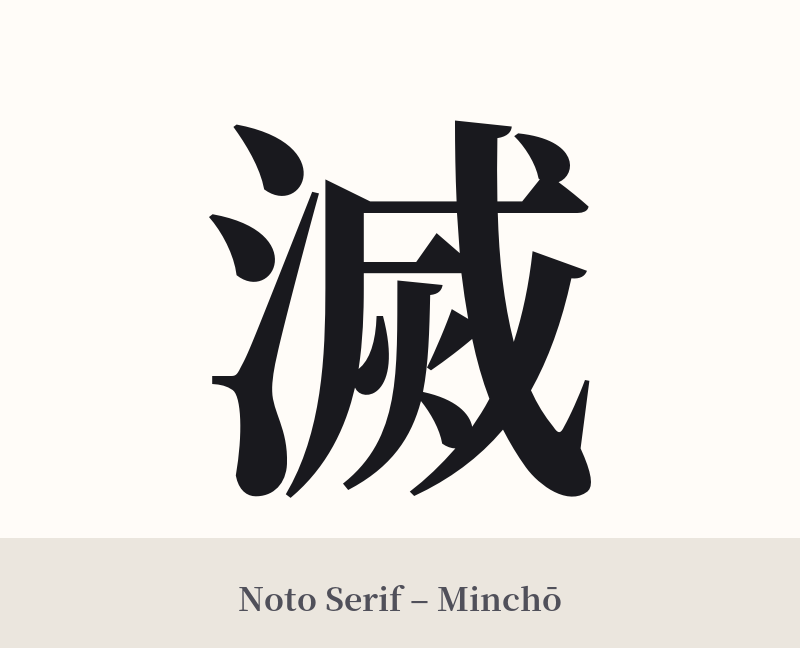
🖌️ Font Styles for 滅
The same kanji can look dramatically different depending on the calligraphy style. Choose a font that matches the mood you want for your tattoo or design.
🎨 Tattoo Suitability
📐 Tattoo Design Guide
The kanji 滅 is a powerful statement piece that works best as a standalone symbol. Its inherent intensity calls for placement where it can be seen and felt.
– Placement: The upper back, centered between the shoulder blades, is a classic choice, directly referencing its use in 'Demon Slayer'. The forearm, calf, or chest are also excellent spots that provide a flat canvas for the character's bold strokes.
– Style: A dynamic, semi-cursive calligraphy style (gyōsho) can emphasize the energy and force of destruction. For a more modern or stark look, a heavy, block-like font (kaisho or even a stylized Mincho) can create an imposing, architectural feel. Avoid overly thin or delicate lines, as they can diminish the character's inherent power.
– Visuals: While it stands strong on its own, it can be integrated with other elements. Pairing it with red or orange ink, perhaps in a splash or brushstroke effect, can suggest fire and battle. Conversely, surrounding it with a serene element like a lotus flower can highlight its Buddhist meaning of 'cessation of suffering,' creating a beautiful and meaningful contrast.
Comments