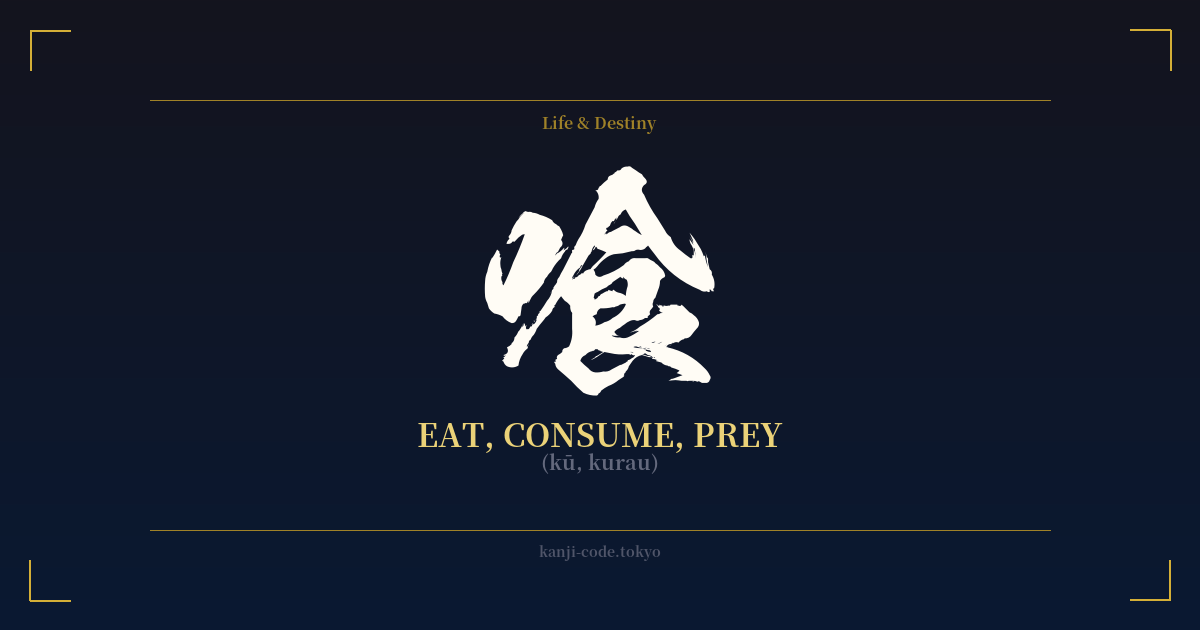
✍️ 喰 (kū, kurau) — Cultural Context
When a Japanese person sees the kanji 喰, the standard act of eating a meal is rarely the first thing that comes to mind. While its root meaning is 'to eat,' 喰 (kū, kurau) bypasses polite society and taps directly into the primal, visceral act of consumption. It’s the kanji of predators, of survival, and of a hunger so profound it borders on violence.
Contrast this with its common counterpart, 食 (shoku, taberu). 食 is the character for your daily bread, for sharing a meal with family, for sustenance. 喰, on the other hand, is the wolf tearing into its prey. It’s the sound and fury of devouring, not the quiet satisfaction of dining. The character itself is a powerful combination of 口 (kuchi, mouth) on the left and 食 (shoku, food) on the right, graphically illustrating the act of stuffing food into a mouth.
The verbs associated with 喰, 'kū' (食う) and 'kurau' (喰らう), reinforce this raw feeling. 'Kū' is a gruff, informal, and masculine way to say 'eat,' often used to sound tough or unrefined. 'Kurau' is even more potent. It means to devour, to gorge, but also extends metaphorically to receiving a blow, like 'to take a punch' (一発喰らう, ippatsu kurau). This usage paints a picture of forcefully taking something in, whether it's food or damage.
In modern Japan, the cultural weight of 喰 has been overwhelmingly shaped by fiction, particularly manga and anime. It is the go-to kanji for depicting monsters and supernatural entities that prey on humans. The most famous example is 'Tokyo Ghoul' (東京喰種, Tōkyō Gūru), where 'ghoul' is written with the characters for 'consume' and 'species.' This single series has cemented the association of 喰 with a dark, predatory, and tragic existence for an entire generation.
Because of this, 喰 carries an edgy, counter-cultural vibe. It's a statement against politeness and refinement, an embrace of a more instinctual, untamed nature. It speaks of a hunger that cannot be easily satisfied—be it for food, power, or life itself. This makes it a potent symbol, but one that walks a fine line between profound meaning and aggressive posturing.
🖌️ Font Styles for 喰
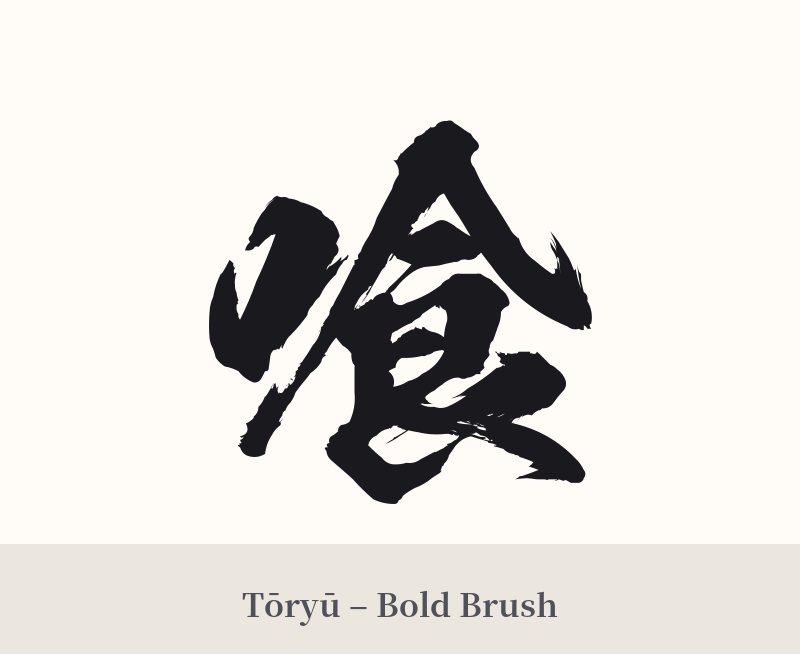
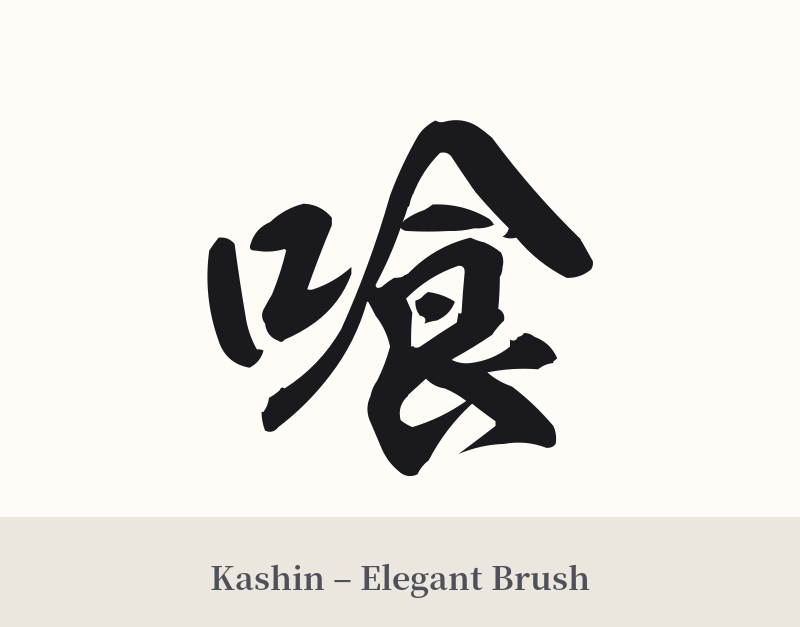
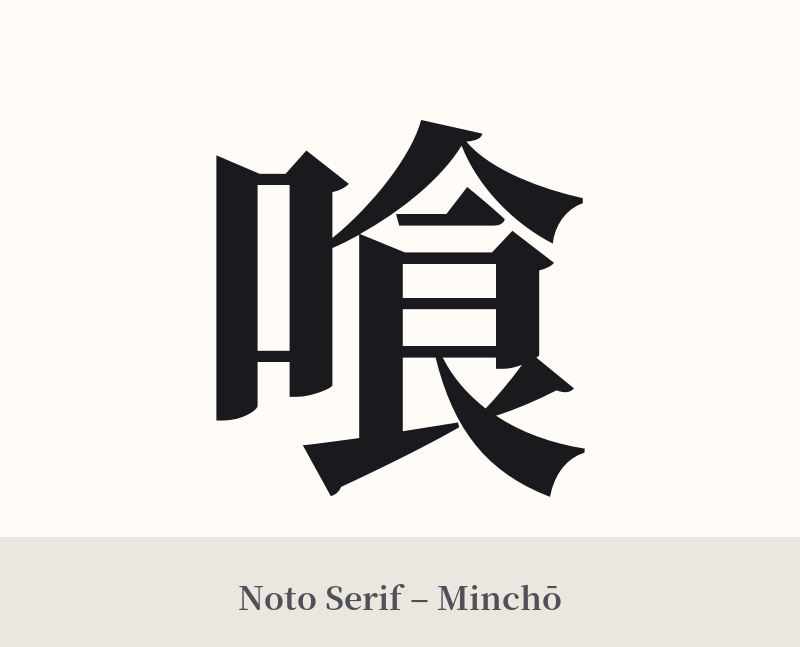
The same kanji can look dramatically different depending on the calligraphy style. Choose a font that matches the mood you want for your tattoo or design.
🎨 Tattoo Suitability
📐 Tattoo Design Guide
The raw power of 喰 lends itself to bold tattoo designs. Consider these suggestions:
– Placement: Areas that suggest strength and action are ideal. The forearm, calf, back shoulder, or chest are excellent canvases. These placements allow the character to be seen and felt as a symbol of power.
– Font Style: An aggressive, semi-cursive brush script (gyosho) can capture the chaotic energy of consumption. Alternatively, a thick, heavy kaisho (block) style can give it an imposing, immovable weight. Avoid thin or delicate fonts, as they would contradict the character's inherent meaning.
– Visual Tips: This kanji stands strong on its own, but can be enhanced with complementary imagery. Consider pairing it with abstract ink splatters that resemble blood or dark energy. It could also form the centerpiece of a design featuring a predator like a wolf, snake, or dragon, reinforcing the theme of devouring prey.
Comments