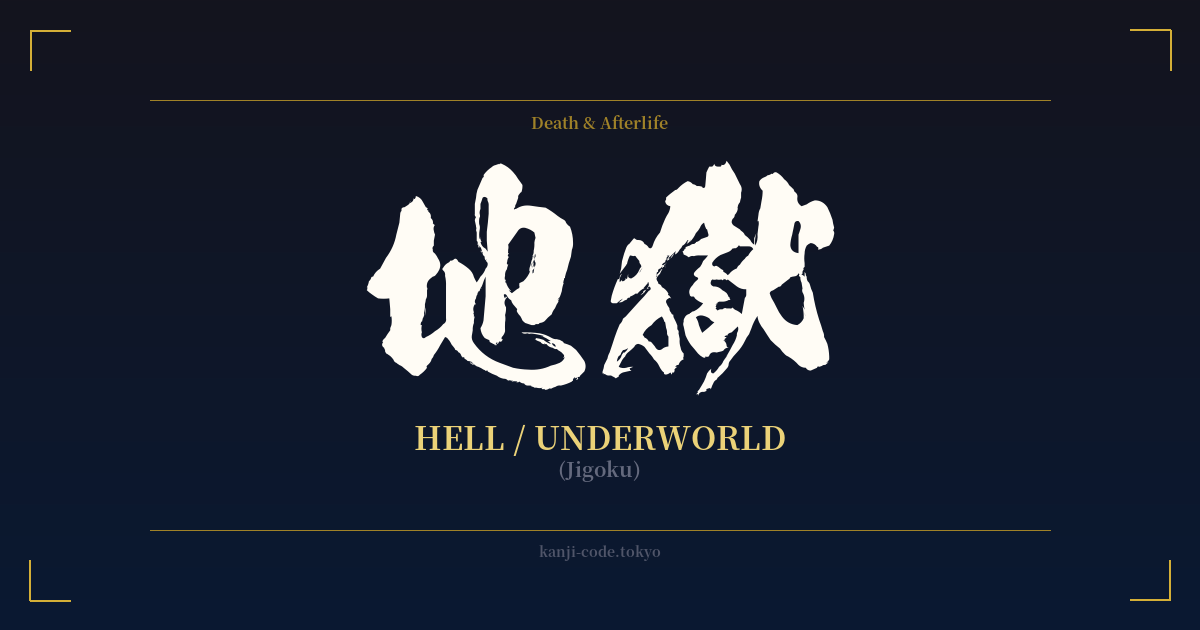
✍️ 地獄 (Jigoku) — Cultural Context
The Japanese word 地獄 (Jigoku) translates directly to 'Hell' or 'underworld,' but its cultural roots are deeply embedded in Buddhism, giving it a different nuance than the Western concept of eternal damnation.
Literally, the characters break down to 地 (ji) meaning 'earth' and 獄 (goku) meaning 'prison.' Together, they form the term 'earth prison,' a subterranean realm of suffering. This isn't a place of final, eternal punishment. In Japanese Buddhist cosmology, Jigoku is a temporary stop in the cycle of reincarnation (samsara). It is a place where souls go to atone for their karmic debts accumulated in life before they can be reborn.
The ruler of Jigoku is the formidable King Enma (閻魔大王, Enma-daiō), who judges the souls of the deceased. With a scroll detailing every action of a person's life, he dispassionately assigns them to one of the many hells to work off their negative karma. These hells are vividly described in religious texts and art, particularly in 'Jigoku-zōshi' (Hell Scrolls).
There are numerous levels and types of hells, often grouped into the Eight Great Hells, each designed to punish specific transgressions. For example, the 'Hell of Crushing' awaits those who were violent, while the 'Hell of Black Rope' is for thieves and murderers. These depictions are graphic and meant to serve as a strong moral deterrent against evil deeds.
Over time, Jigoku has permeated Japanese culture beyond religion. It appears in countless folktales, Noh plays, and modern media. The classic 1960 horror film 'Jigoku' offers a terrifying cinematic tour of the underworld. More recently, the popular anime and manga series 'Hōzuki no Reitetsu' (Hozuki's Coolheadedness) provides a darkly comedic and bureaucratic take on the daily operations of Jigoku.
In everyday language, 'jigoku' is also used metaphorically to describe any situation of extreme suffering or hardship, such as 'juken jigoku' (受験地獄), the 'exam hell' that students endure while preparing for university entrance exams.
🖌️ Font Styles for 地獄
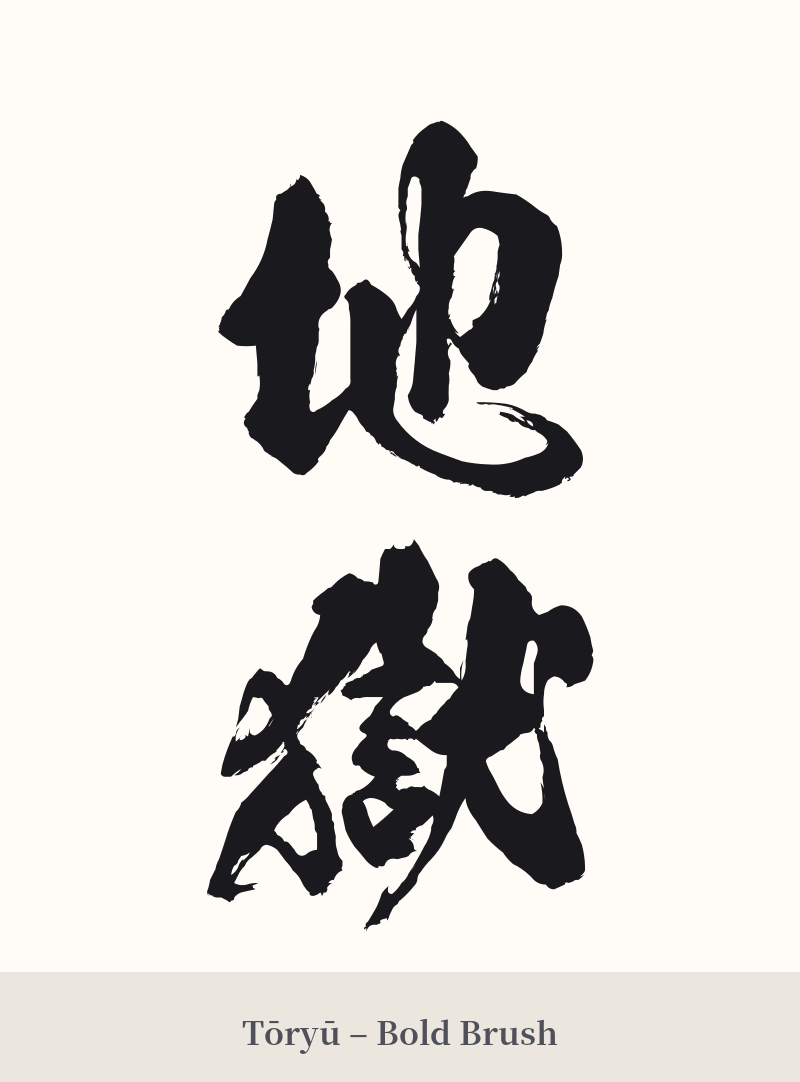
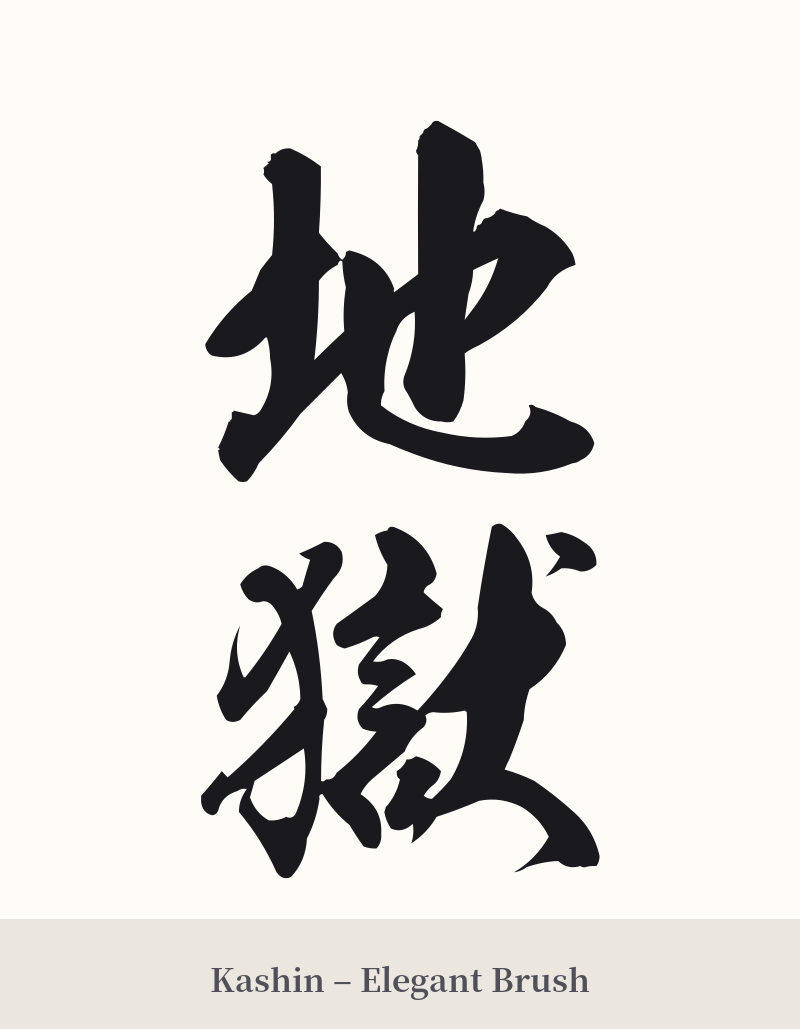
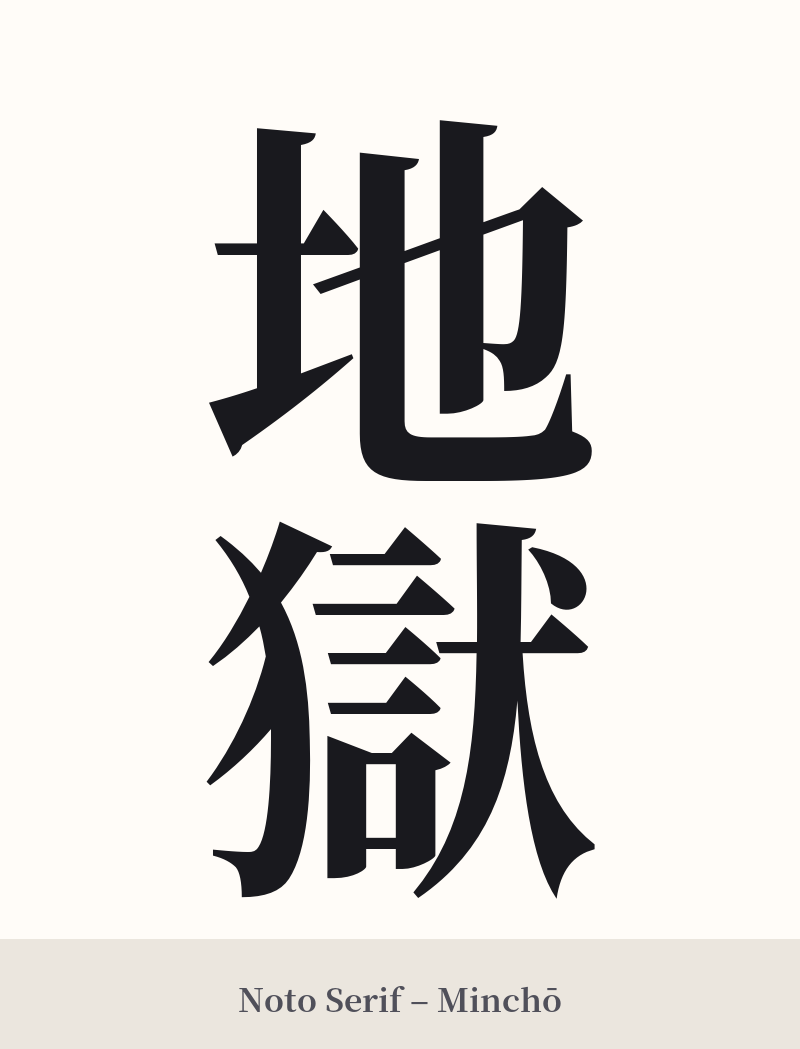
The same kanji can look dramatically different depending on the calligraphy style. Choose a font that matches the mood you want for your tattoo or design.
🎨 Tattoo Suitability
📐 Tattoo Design Guide
A tattoo of 地獄 (Jigoku) is a bold and dark statement, and the design should reflect its heavy meaning.
– Placement: This design needs space to breathe and for the details to be clear, especially in the second character. Larger placements like the back, chest, or a full forearm or calf are ideal. A vertical orientation along the spine or a limb is particularly dramatic.
– Font Style: Aggressive and powerful styles work best. A gritty, energetic brushstroke style (shodō) can capture the chaotic energy of the word. Thick, blocky, or angular fonts also suit the theme well. Avoid thin, delicate, or gentle scripts, as they would clash with the meaning.
– Visual Embellishments: Consider incorporating classic Japanese imagery associated with the underworld. This could include flames, often in red or orange ink, swirling around the kanji. Depictions of Oni (demons), King Enma, or elements from traditional Irezumi backgrounds like turbulent water or dark clouds can create a powerful and cohesive piece.
Comments