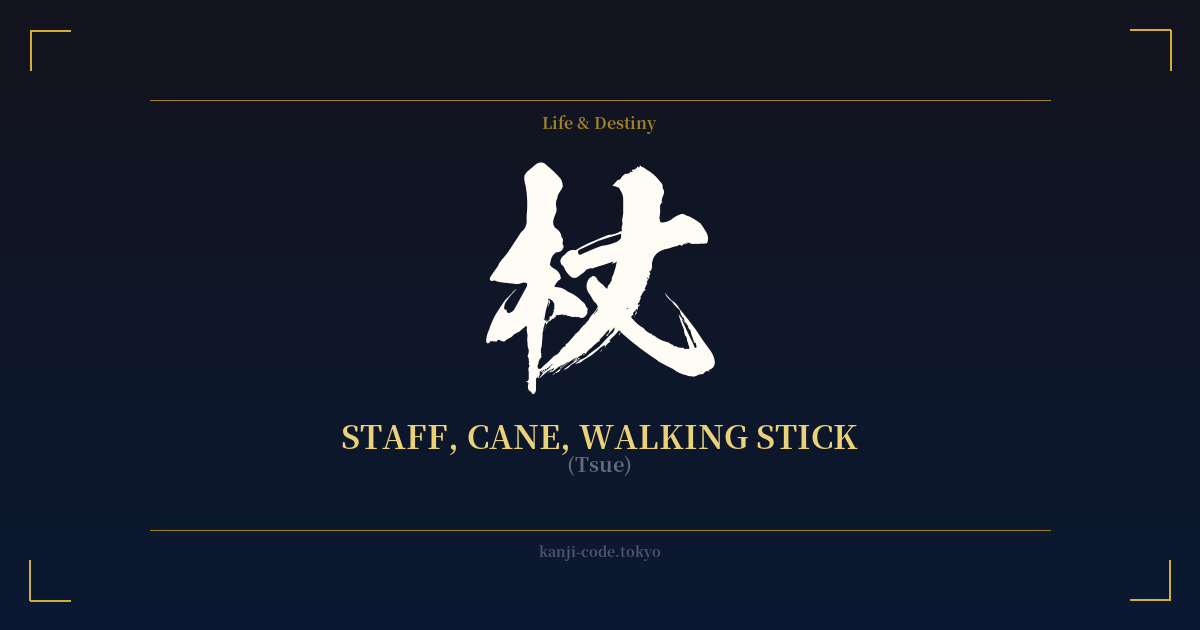
✍️ 杖 (Tsue) — Cultural Context
The kanji 杖 (tsue) refers to a staff, cane, or walking stick. While its function as a physical support is straightforward, its cultural and spiritual significance in Japan is incredibly deep, transforming it from a simple tool into a powerful symbol of journey, wisdom, and protection.
The most iconic representation of the 杖 is the 金剛杖 (kongōzue), the pilgrim's staff. It is an essential companion for those undertaking journeys like the famous Shikoku 88 Temple Pilgrimage. This staff is far more than a walking aid; it is considered a physical manifestation of Kōbō Daishi (Kūkai), the founder of Shingon Buddhism. Pilgrims believe the great master walks with them, embodied in their staff, offering guidance and protection from harm. As such, the kongōzue is treated with immense respect. It is carefully washed at the end of each day, and in traditional inns, it is given a place of honor, as if it were a guest itself.
Beyond pilgrimage, the staff is a common attribute of wise figures in Japanese folklore. Mountain hermits (sennin), wandering monks, and even supernatural beings like the Tengu are often depicted leaning on or wielding a staff. Here, the 杖 symbolizes a life of wandering, accumulated wisdom through experience, and a deep connection to nature. It suggests a journey not just over physical terrain, but through spiritual and intellectual realms.
This character also carries a martial aspect. Read as 'jō,' it refers to a short staff, a formidable weapon in the martial art of jōjutsu. This adds a layer of controlled strength and discipline to the kanji's meaning. It’s a reminder that what appears to be a simple support can also be a tool of power and self-defense, embodying the principle that true strength is often hidden and unassuming.
From the sacred pilgrim's companion to the hermit's symbol of wisdom and the warrior's weapon, 杖 encapsulates a spectrum of meanings. It speaks to the journey of life itself—the need for support, the long road to wisdom, and the quiet strength we carry within us. It is a kanji not of weakness, but of endurance, resilience, and the profound journey of the human spirit.
🖌️ Font Styles for 杖
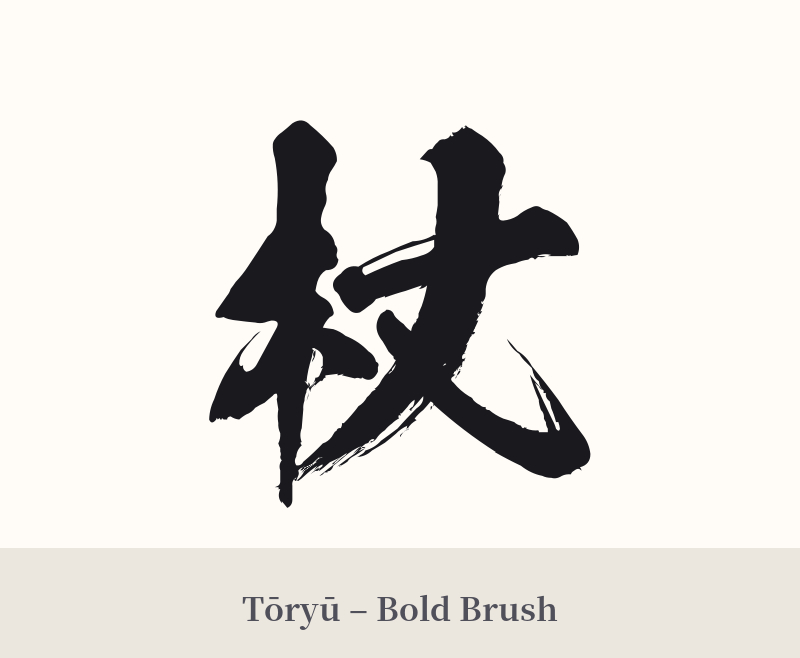
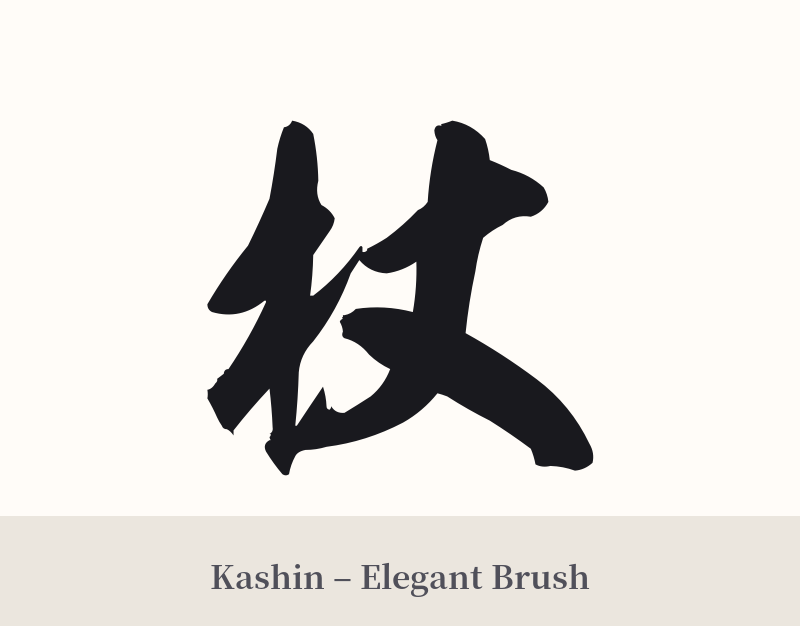
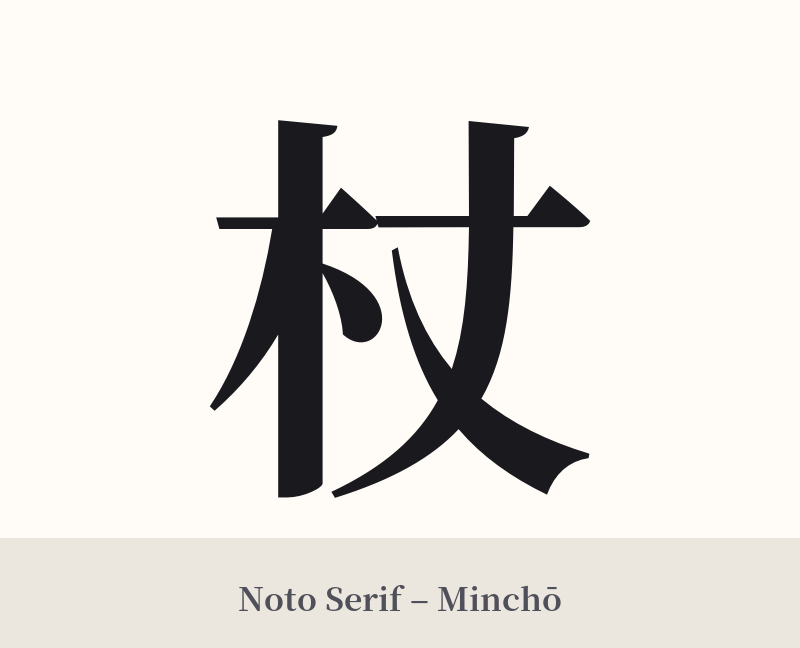
The same kanji can look dramatically different depending on the calligraphy style. Choose a font that matches the mood you want for your tattoo or design.
🎨 Tattoo Suitability
📐 Tattoo Design Guide
The kanji 杖 offers a blend of simplicity and symbolic weight, making it versatile for tattoo design.
– Placement: Its vertical nature makes it ideal for the forearm, calf, or even along the spine to emphasize the concept of support and alignment. A smaller version could fit well on the wrist or ankle, symbolizing a single step on a long journey.
– Style Suggestions: A traditional shodō (calligraphy) brushstroke style would look powerful, giving it an ancient, weathered feel. For a more subtle look, a clean, minimalist Mincho font emphasizes its simple elegance. You could also have the strokes textured to look like wood grain, directly referencing its physical form.
– Visual Companions: Consider pairing 杖 with other elements to enhance its meaning. Placing it alongside a mountain landscape or a temple gate can evoke the theme of pilgrimage. Combining it with a lotus flower can symbolize spiritual growth, or with a dragonfly to represent perseverance and the wisdom of experience.
Comments