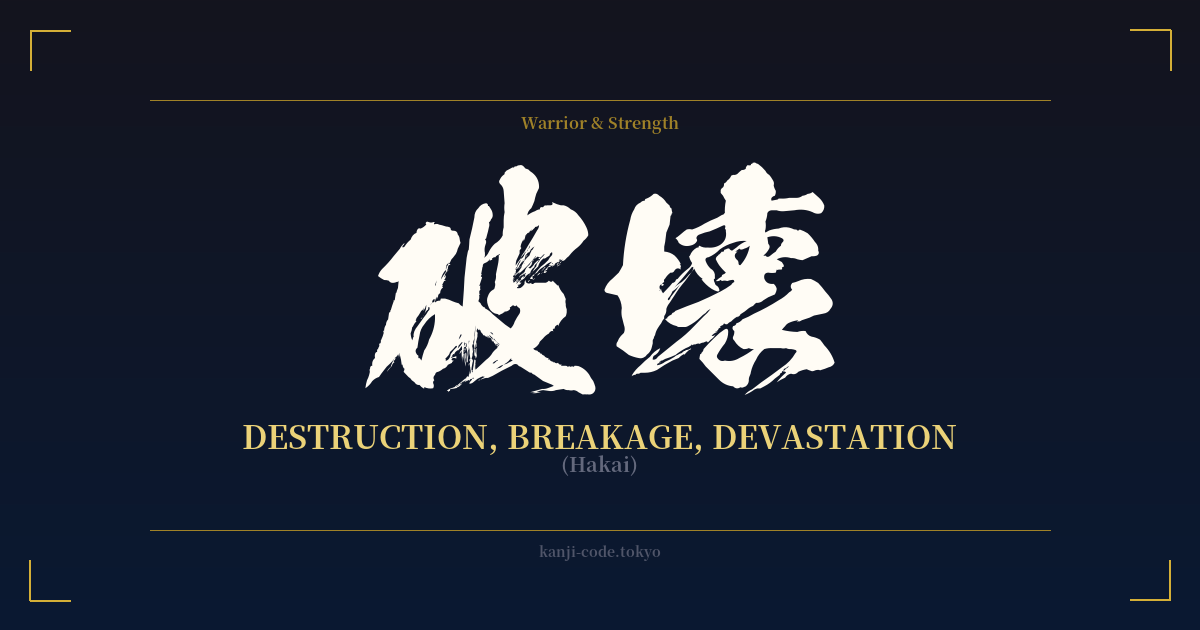
✍️ 破壊 (Hakai) — Cultural Context
The Japanese word 破壊 (Hakai) translates to 'destruction,' but its essence goes far beyond simple breakage. It signifies a complete and utter annihilation, a leveling force that leaves nothing behind. This is not the accidental shattering of a plate; it is the deliberate demolition of a building, the devastating power of a natural disaster, or the obliteration of an enemy. The word carries immense weight and finality, making it one of the most intense terms in the Japanese lexicon.
The power of Hakai is amplified by its constituent kanji. The first character, 破 (Ha), means to 'rend' or 'tear,' often used for breaking seals, records, or promises. The second, 壊 (Kai), means to 'demolish' or 'break down,' typically referring to physical structures or systems. Together, they form a compound word that describes destruction on both a conceptual and physical level—a total and irreversible unmaking.
In modern pop culture, Hakai has gained global recognition, largely thanks to the anime series Dragon Ball Super. In the show, 'Hakai' is the signature ability of the Gods of Destruction, a divine power that can erase anything from existence instantly. This has cemented the word's association with ultimate, overwhelming power for an entire generation of fans, making it a popular choice for those wanting to convey a sense of supreme strength.
Beyond fiction, Hakai is a real and serious term used to describe the devastation wrought by war, earthquakes, and tsunamis. It appears in news reports and historical accounts, always denoting catastrophic events. This grounds the word in a stark reality that adds to its gravity.
However, Hakai can also be viewed through a philosophical lens. In some Buddhist schools of thought, the destruction of ego, illusion, and worldly attachments is a necessary step toward enlightenment. Deities like Fudō Myōō wield destructive power to vanquish evil and ignorance, turning destruction into a purifying act. This concept of 'creative destruction'—the idea that old structures must be torn down to make way for the new—provides a more nuanced, even positive, interpretation. A tattoo of Hakai could symbolize a radical personal transformation, the shattering of old limitations, or the will to overcome a formidable obstacle.
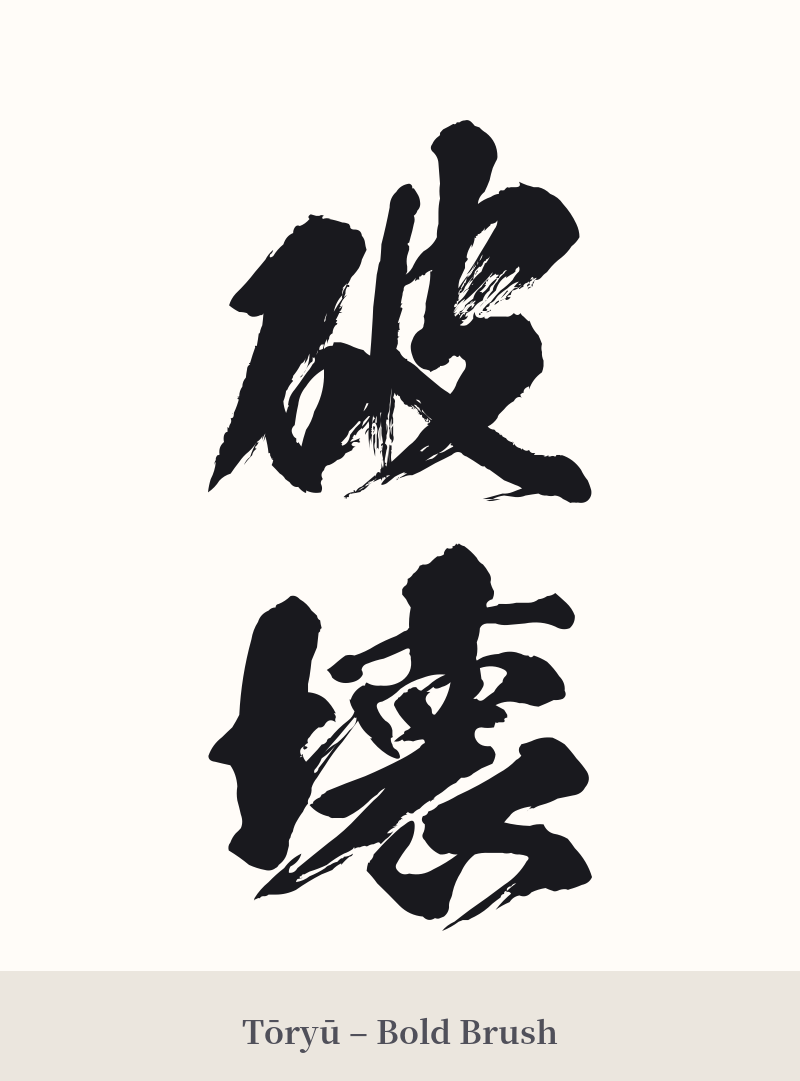
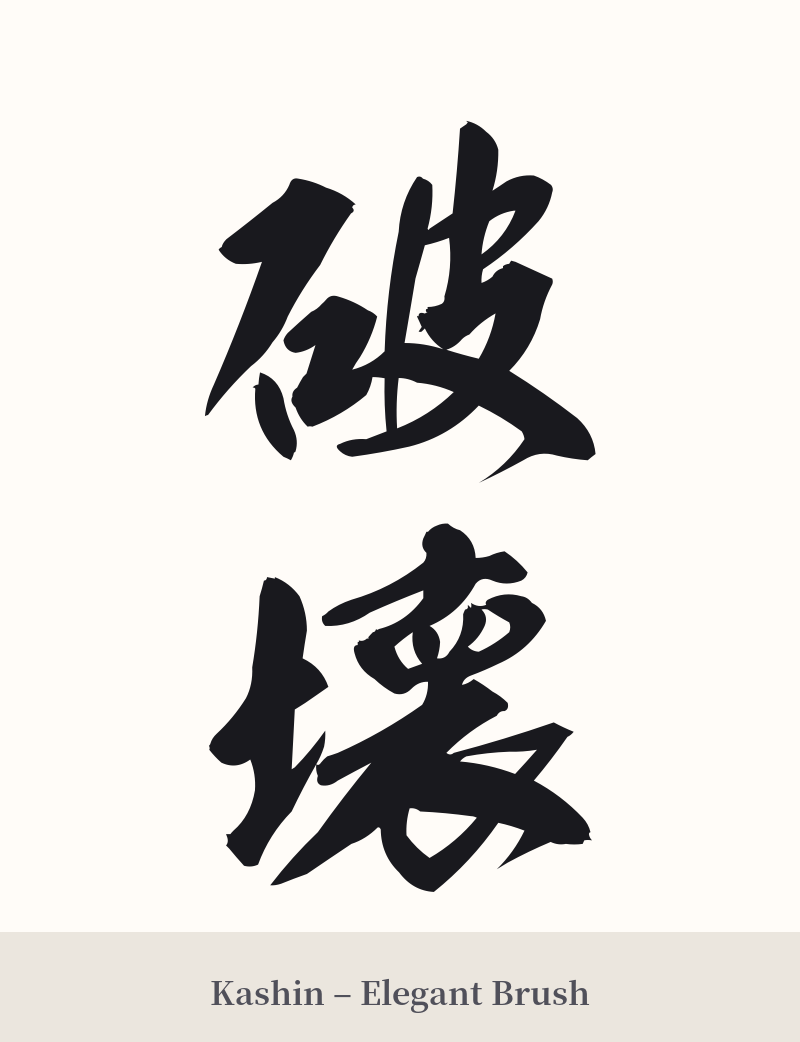
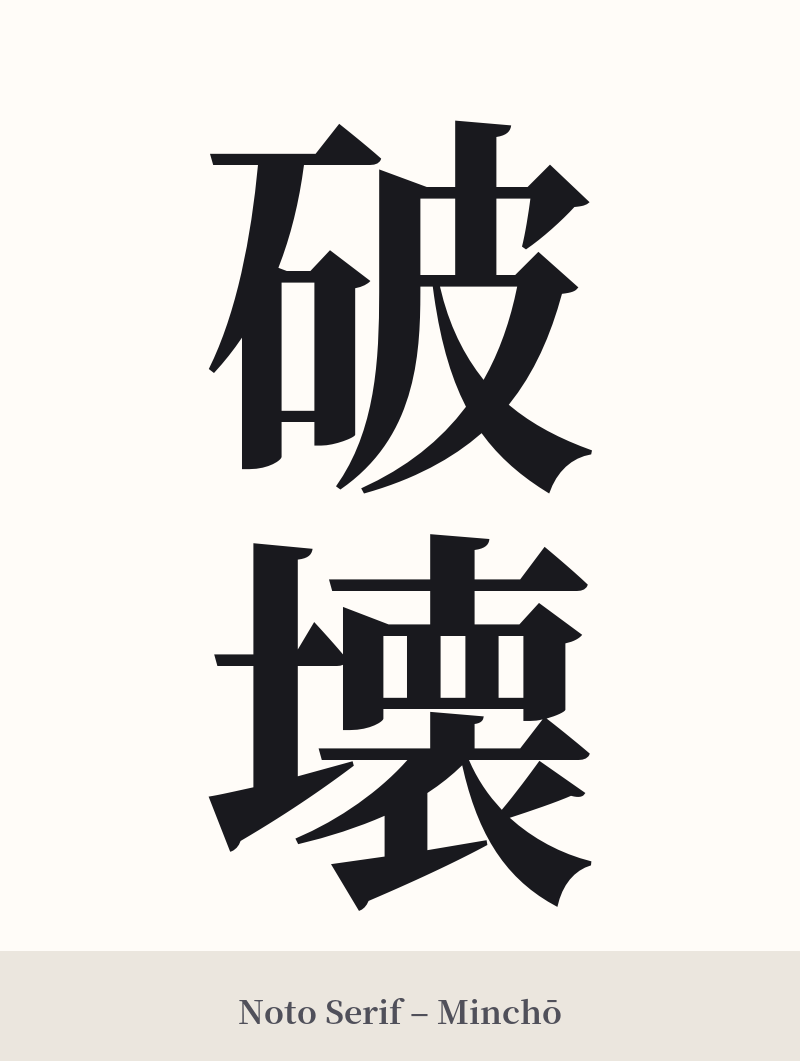
🖌️ Font Styles for 破壊
The same kanji can look dramatically different depending on the calligraphy style. Choose a font that matches the mood you want for your tattoo or design.
🎨 Tattoo Suitability
📐 Tattoo Design Guide
The forceful nature of 破壊 (Hakai) calls for a design that is bold and intentional. Its complexity and aggressive meaning make it well-suited for larger, more visible placements where its details can be appreciated.
– Placement: Consider prominent areas like the forearm, the calf, the back, or the chest. These locations provide a large enough canvas for the artist to render the 26 total strokes clearly, preventing the characters from becoming a blurry mess over time.
– Font Style: An aggressive, dynamic font is highly recommended. A chaotic, cursive script like Sōsho (草書) can capture the energy of shattering. Alternatively, a thick and angular block script like Kaisho (楷書) can emphasize the brute, unstoppable force of demolition.
– Visual Elements: Enhance the theme by incorporating related imagery. Consider having the kanji appear to be breaking apart, or set it against a backdrop of flames, lightning, or shattered stone. For a more philosophical take, you could place the kanji over an Ensō (Zen circle) to symbolize the destruction of illusion, or have a phoenix rising from the characters to represent rebirth after destruction.
Comments