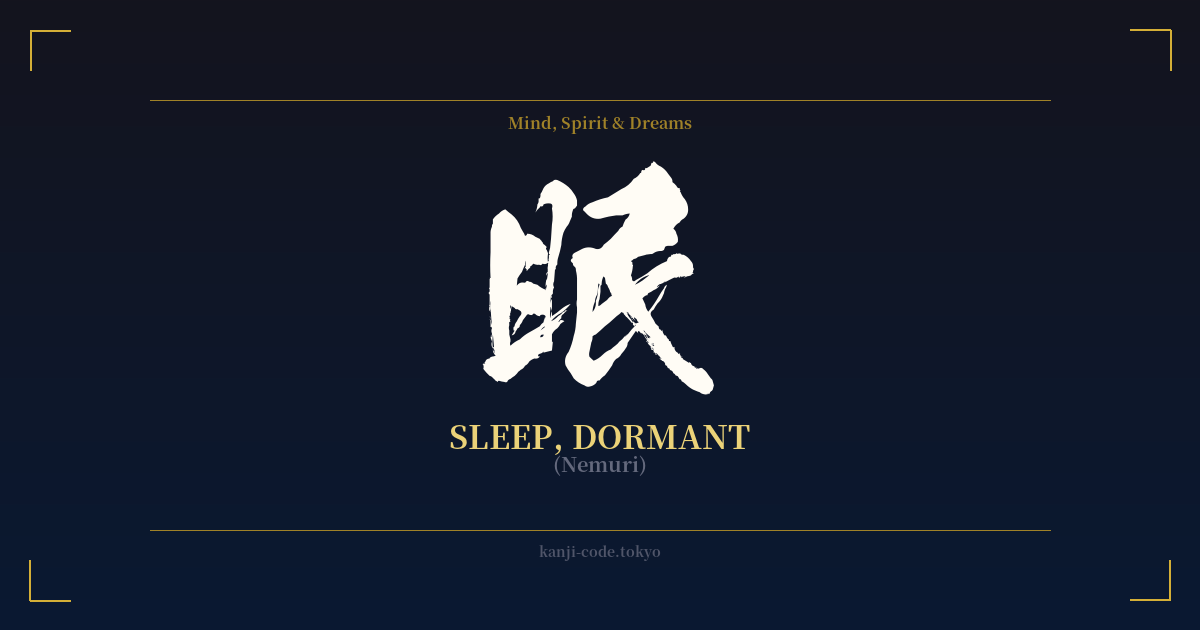
✍️ 眠 (Nemuri) — Cultural Context
The kanji 眠 (Nemuri) offers a quiet but profound look into the Japanese perspective on rest, potential, and the cycles of life. At its core, it represents the state of sleep, a universal human experience. The character itself is a visual poem, combining the radical 目 (me), meaning 'eye,' with the phonetic component 民 (min), originally meaning 'people.' Together, they paint a picture of the people's eyes being closed in slumber.
In Japan, the act of sleeping carries different connotations than in many Western cultures. A fascinating example is the concept of 'inemuri' (居眠り), which translates to 'sleeping while present.' It's common to see people dozing on trains, in meetings, or at their desks. Far from being a sign of laziness, inemuri is often viewed with tolerance, as evidence that a person is so dedicated and hard-working that they are exhausted. It’s a testament to their diligence, not a dereliction of duty.
Beyond literal sleep, 眠 holds the powerful metaphorical meaning of 'dormant.' This is where the character gains its deeper appeal. It speaks to a state of inactivity where potential lies hidden, waiting for the right moment to awaken. A classic Japanese expression, 'nemureru ryū' (眠れる龍), or 'sleeping dragon,' perfectly captures this idea. It refers to a person or entity of immense, unrecognized power and talent, currently inactive but capable of greatness when roused. This concept resonates with themes of patience, inner strength, and the quiet confidence that one's time will come.
This duality is also present in spiritual contexts. In Zen Buddhism, the unenlightened state is sometimes compared to being asleep. The goal of practice is 'kakusei' (覚醒), or 'awakening,' to the true nature of reality. Sleep, in this sense, is a temporary state of ignorance that one must transcend.
The character is also used in words that describe cycles of nature and life. 'Tōmin' (冬眠) means 'hibernation,' the deep sleep animals enter to survive the winter, conserving energy for the spring. On the other end of the spectrum, 'eimin' (永眠), or 'eternal sleep,' is a gentle, poetic euphemism for death. From a daily nap to a sleeping dragon to the final rest, 眠 encapsulates a wide range of states, all centered on a quiet, temporary cessation of outward activity.
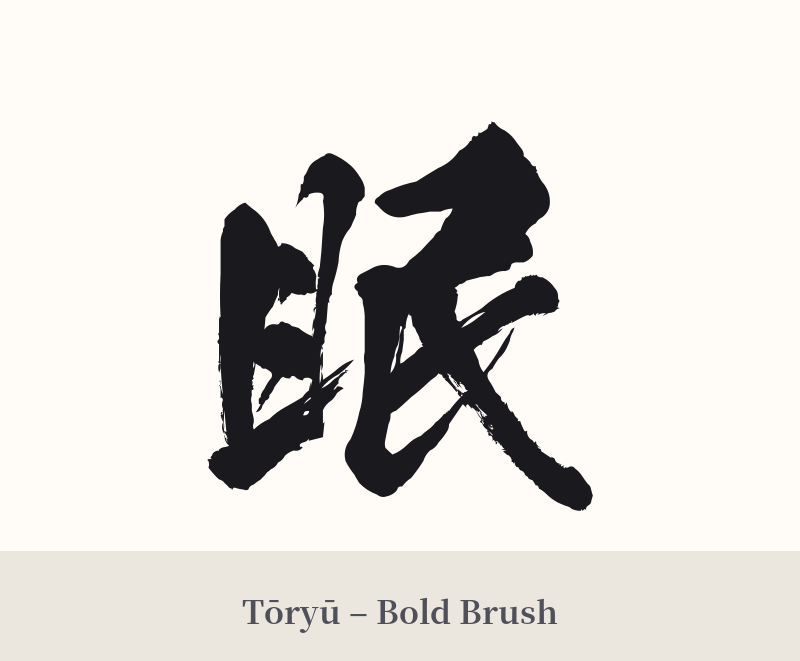
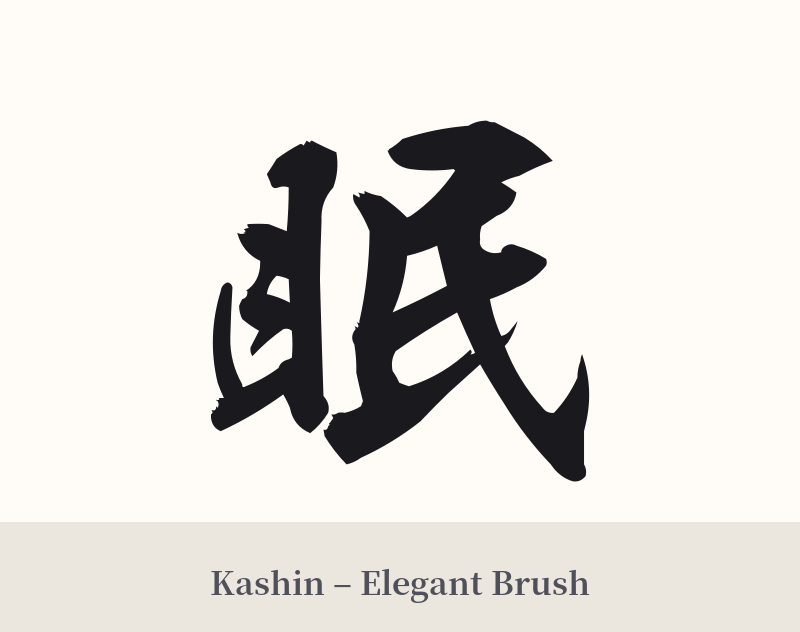
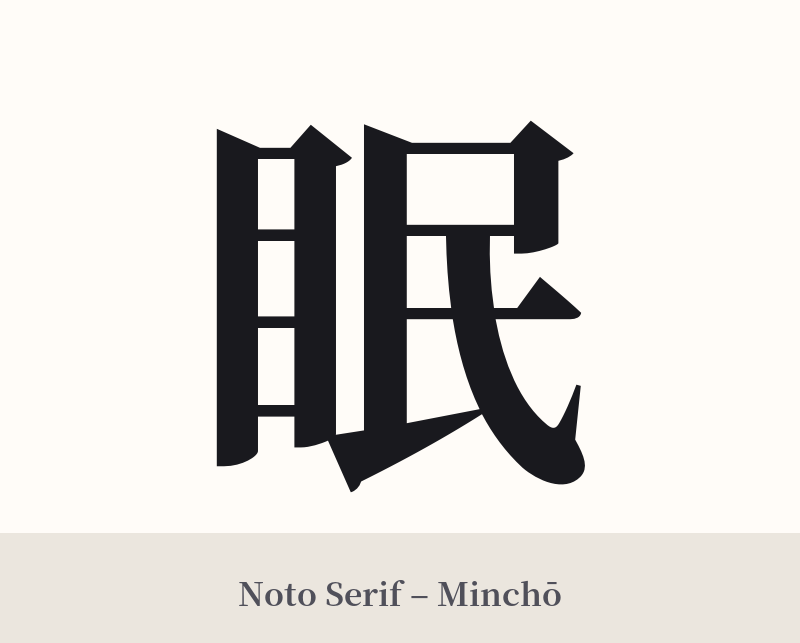
🖌️ Font Styles for 眠
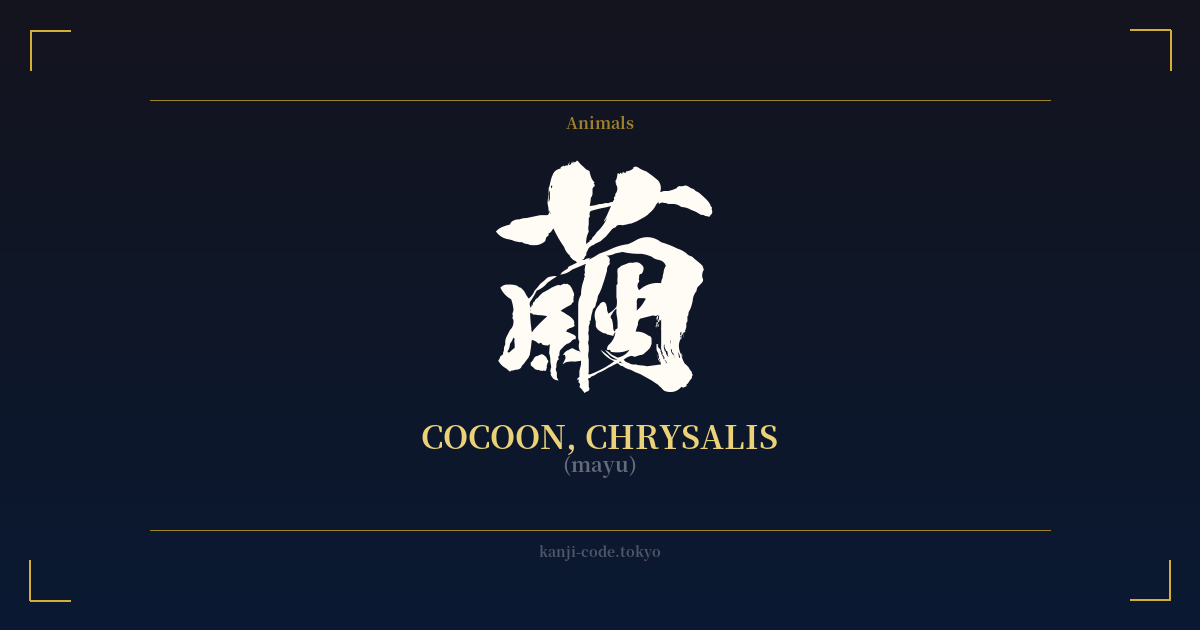
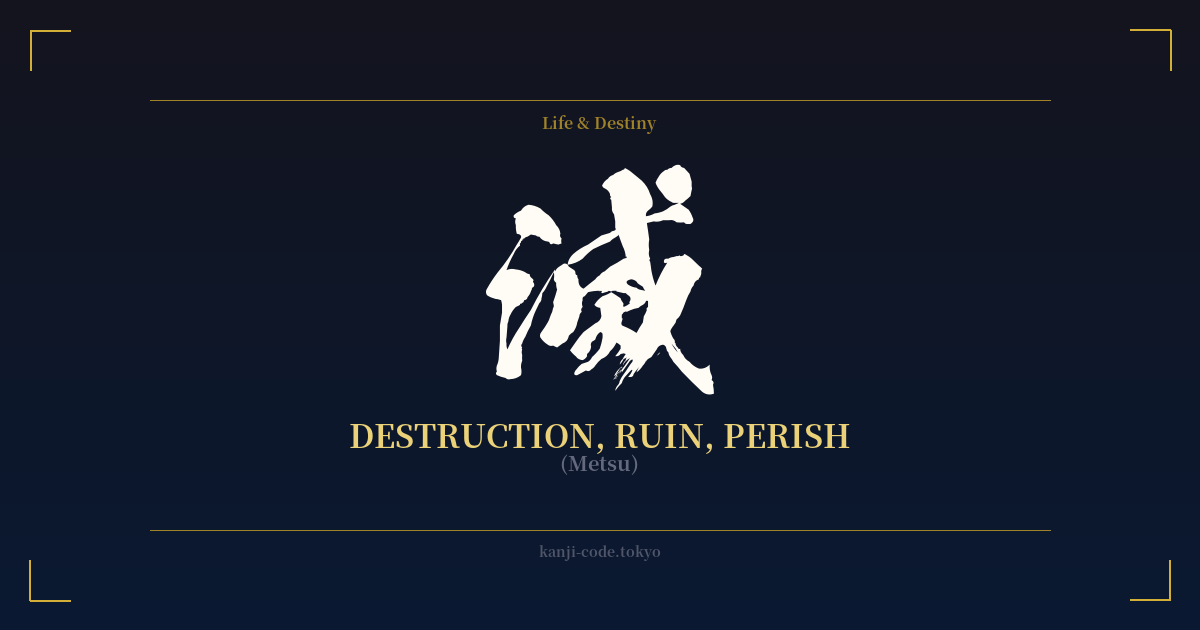
The same kanji can look dramatically different depending on the calligraphy style. Choose a font that matches the mood you want for your tattoo or design.
🎨 Tattoo Suitability
📐 Tattoo Design Guide
The kanji 眠 embodies calmness and latent energy, making it suitable for designs that are personal and introspective.
For placement, consider areas that reflect a quiet or personal nature. The inner wrist, the back of the neck just below the hairline, behind the ear, or along the collarbone are all excellent choices. For a larger piece emphasizing 'dormant potential,' the forearm or calf could work well.
When it comes to font styles, you have several options: – A flowing, semi-cursive script (gyōsho) can capture the dreamlike, fluid quality of sleep. – A traditional, blocky kaisho script offers clarity and a sense of stability and rest. – A modern, clean Mincho or Gothic font can lend a contemporary feel, highlighting the 'dormant potential' aspect as something cool and waiting to be activated.
Consider incorporating subtle visual elements to enhance the meaning. A few falling cherry blossom petals could symbolize the transient nature of life and rest. Placing the character within a circle (ensō) can connect it to Zen ideas of enlightenment and the cyclical nature of being. For the 'sleeping dragon' theme, the kanji could be subtly integrated into the scales or body of a coiled dragon.
Comments