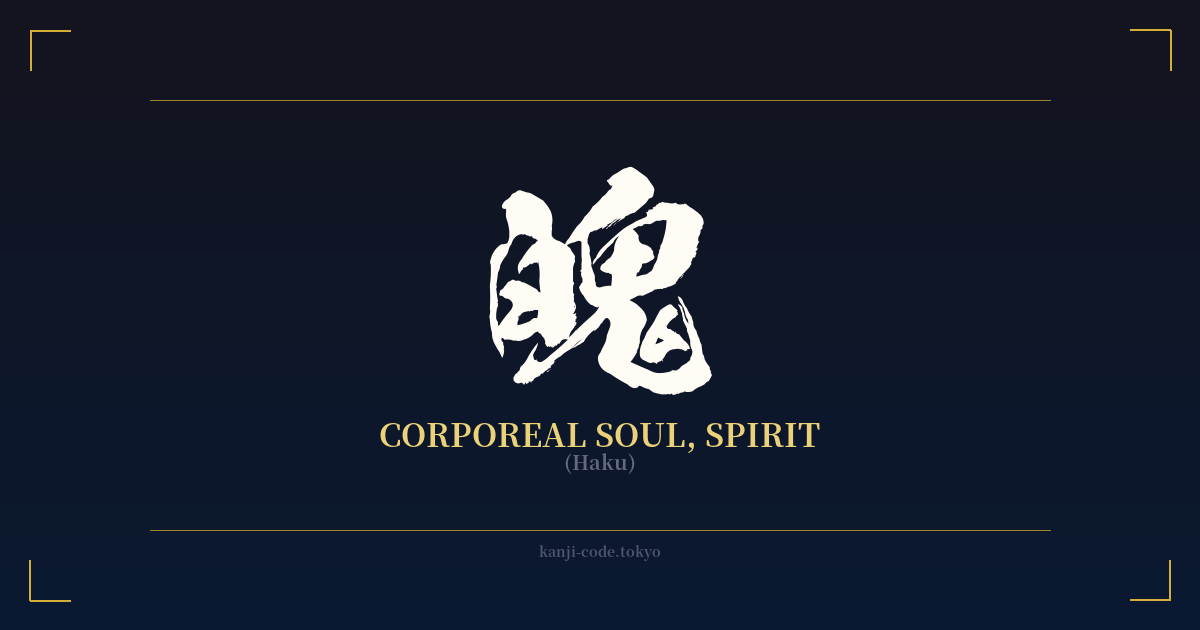
✍️ 魄 (Haku) — Cultural Context
The kanji 魄 (haku) delves into a fascinating and ancient understanding of the human soul, rooted deeply in Chinese Taoist philosophy and later adopted into Japanese spiritual thought. It does not represent the soul as a single, unified entity, which is a common concept in the West. Instead, it embodies one half of a dualistic system.
This system is known as 魂魄 (konpaku). In this duality, 魄 (haku) is the 'yin' soul—the corporeal, earthly, and physical aspect of our spirit. It is intrinsically tied to the body, governing our instincts, physical vitality, and sensory experiences. When a person is alive, the haku is what animates the flesh and blood, giving us our primal energy and connection to the physical world.
Its counterpart is 魂 (kon), the 'yang' soul. The kon is the celestial, intellectual, and ethereal spirit that relates to consciousness, personality, and reason. At death, the kon is believed to separate from the body and ascend to the heavens or move on to the next life.
The 魄 (haku), however, remains with the physical body. It is the spirit of the flesh that lingers with the corpse, slowly dissipates, and eventually returns to the earth from whence it came. This concept underscores a deep respect for the physical form and the cycle of life and death.
The character's construction offers further insight. It is a combination of 白 (shiro), meaning 'white,' and 鬼 (oni/ki), meaning 'ghost' or 'demon.' Here, 'white' is thought to be a pictograph of a skull or bones, while 'ghost' represents the spiritual essence. Together, they create the meaning of a 'spirit dwelling in the bones'—the soul of the physical self.
Because of its connection to the body, death, and the earth, 魄 carries a somewhat somber, mysterious, and primal nuance. It isn't an evil or negative concept, but one that acknowledges the raw, instinctual, and ultimately mortal nature of our existence. It speaks to a power that is grounded, physical, and an inseparable part of the natural world's cycle.
🖌️ Font Styles for 魄
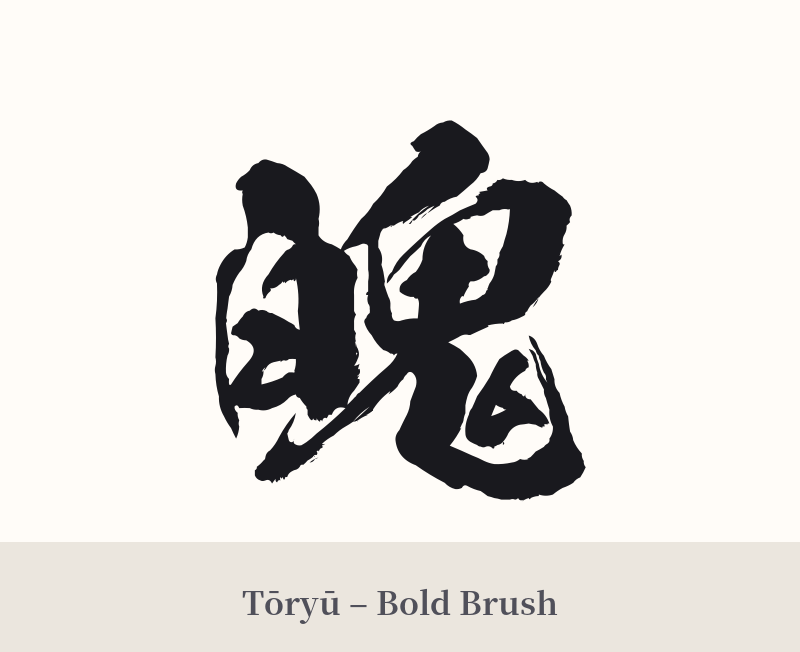
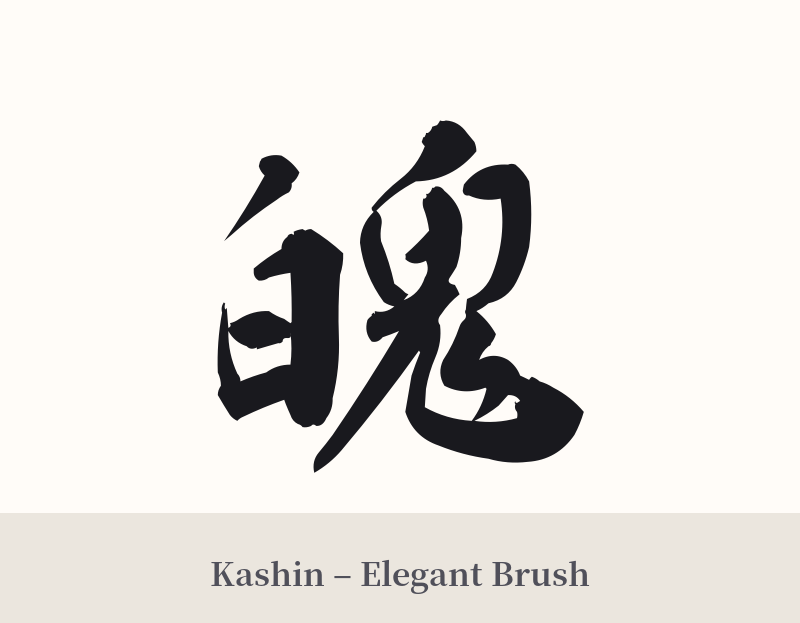
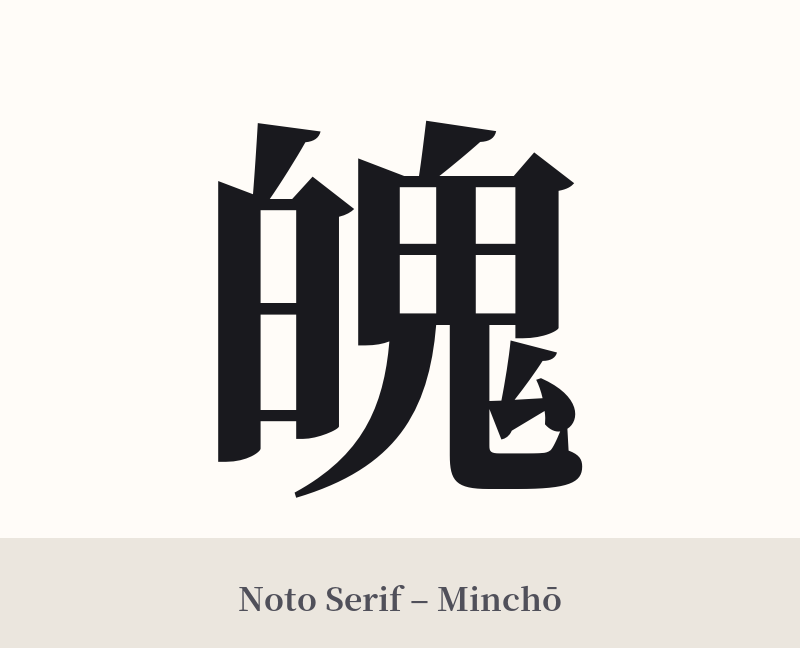
The same kanji can look dramatically different depending on the calligraphy style. Choose a font that matches the mood you want for your tattoo or design.
🎨 Tattoo Suitability
📐 Tattoo Design Guide
The complexity and profound meaning of 魄 (haku) make it a compelling choice for a tattoo, but it requires thoughtful design and placement.
– Placement: This character's 14 strokes demand space to be appreciated. Consider larger, flatter areas like the back, the chest, the forearm, or the calf. Avoid placing it in small areas like the wrist or ankle, as the details could blur over time.
– Style: A bold, semi-cursive calligraphic style (gyōsho) can capture the raw, spiritual energy of the character. For a more ancient and mystical feel, a stylized seal script (tensho) would connect it to its deep philosophical roots. A standard, clean Mincho or Kaisho font can also work well if clarity is the main goal.
– Visual Pairings: To enhance its meaning, consider pairing 魄 with elements that represent the earth, body, or mortality. This could include roots growing from the character, a subtle anatomical heart integrated into the background, or a dissolving or smoky effect to represent its return to the earth after death. For a complete concept, it could be designed as part of a pair with its counterpart, 魂 (kon).
Comments