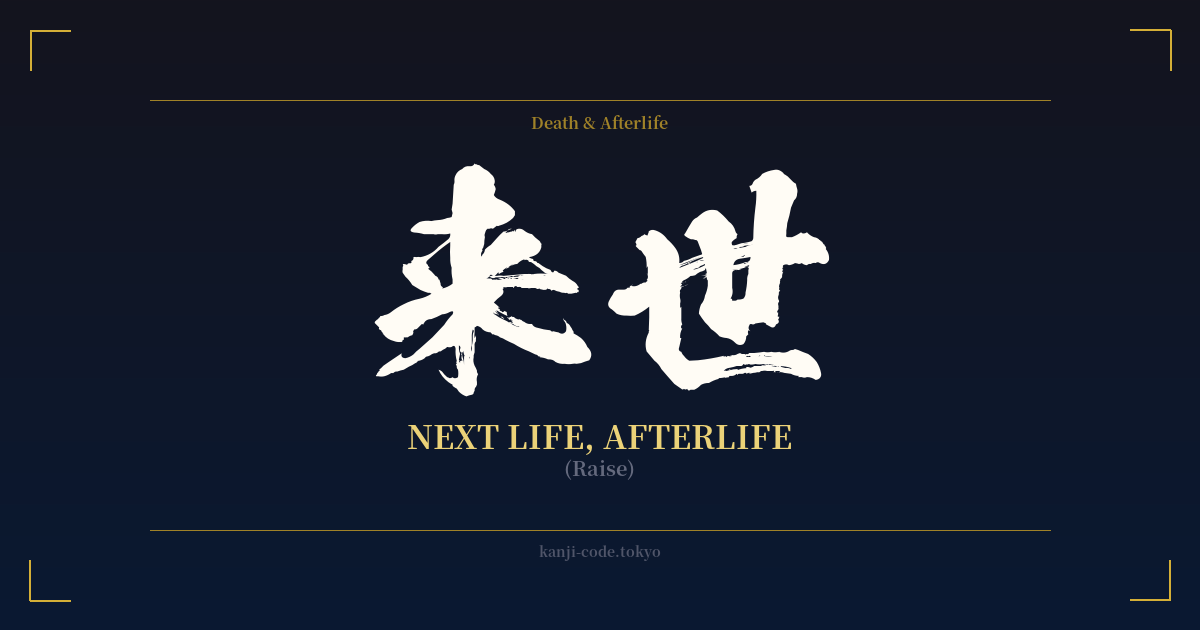
✍️ 来世 (Raise) — Cultural Context
The word 来世 (Raise) translates literally as 'the coming world' or 'the next generation,' but its true meaning is deeply woven into the fabric of Japanese spirituality, particularly Buddhism. It represents the 'next life' or the 'afterlife,' not as a final destination, but as the next chapter in the endless cycle of death and rebirth known as 輪廻 (Rinne), or Saṃsāra.
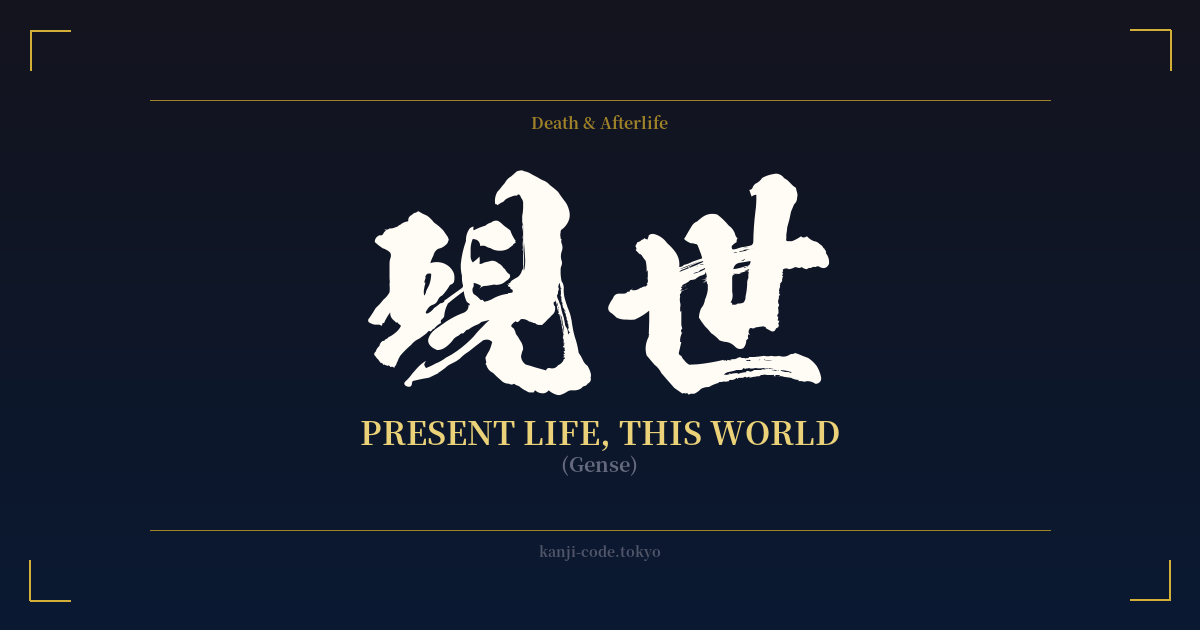
This concept is fundamentally different from the Judeo-Christian idea of heaven. In Buddhist thought, one's actions, words, and thoughts in the current life (現世, gense) accumulate karma (因果, inga). This karma directly influences the circumstances of your next life. A life filled with good deeds might lead to a favorable rebirth, while a life of negativity could result in a more challenging existence. Therefore, 来世 is not a guaranteed paradise but a continuation shaped by one's own past.
The idea of 来世 offers a unique form of hope and accountability. It encourages mindfulness and ethical behavior in the present, as every action ripples into the future. This belief contrasts with the native Shinto view of the afterlife, 黄泉 (Yomi), a more ambiguous and shadowy underworld, showing the distinct layers of belief systems in Japan.
Within Buddhism itself, there are different interpretations. For followers of Pure Land Buddhism (浄土宗, Jōdo shū), the goal is to be reborn in the Pure Land of Amida Buddha (浄土, Jōdo), a specific and highly desirable 来世 that serves as a place to practice and achieve enlightenment, free from the suffering of the ordinary world.
In modern, everyday Japanese culture, 来世 can also be used with a touch of humor or resignation. Someone failing at a difficult task might sigh and say, 「来世で頑張る」 (Raise de ganbaru), meaning 'I'll try harder in my next life.' This lighthearted use demonstrates how a profound spiritual concept has become a versatile part of the cultural lexicon, expressing everything from deep philosophical belief to simple, everyday frustrations.
🖌️ Font Styles for 来世
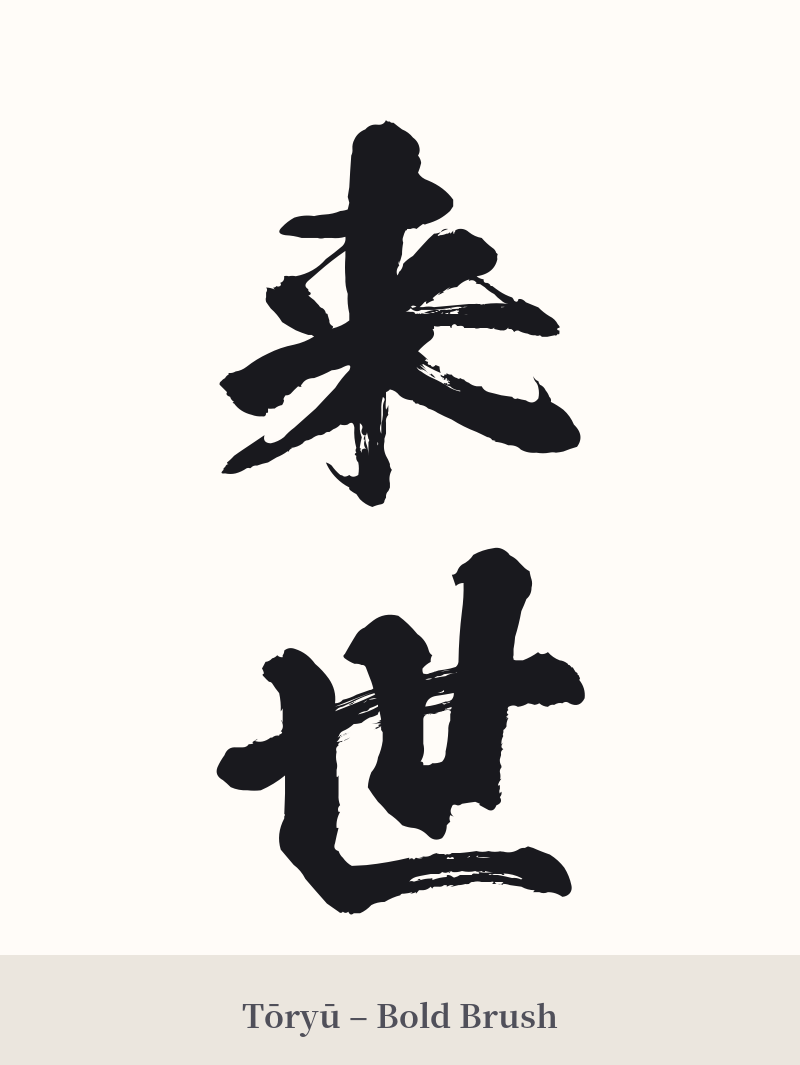
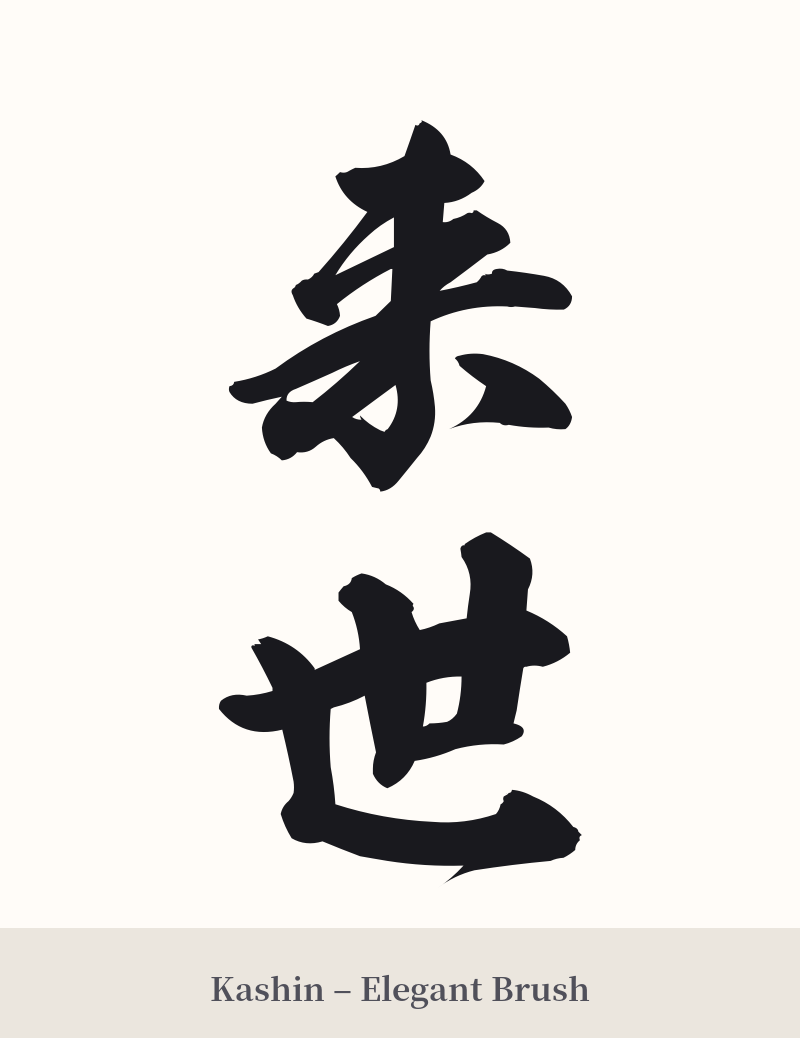
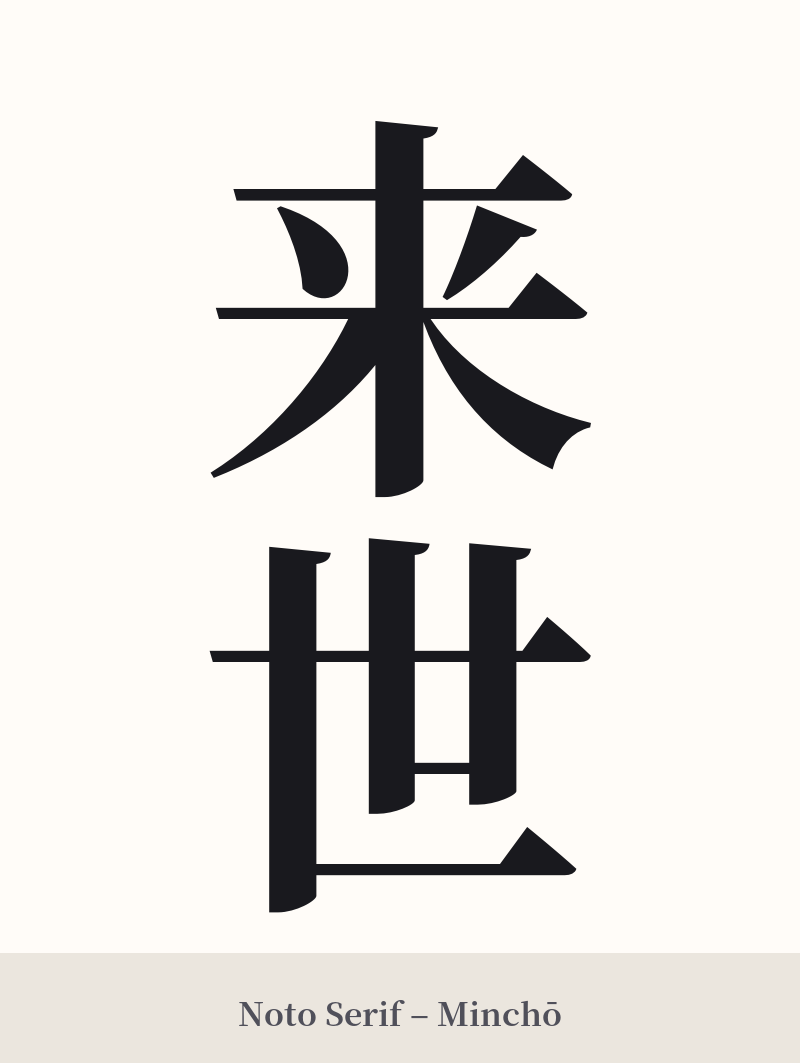
The same kanji can look dramatically different depending on the calligraphy style. Choose a font that matches the mood you want for your tattoo or design.
🎨 Tattoo Suitability
📐 Tattoo Design Guide
The profound and spiritual nature of 来世 (Raise) lends itself to thoughtful and elegant tattoo designs.
For placement, a vertical orientation is classic and visually striking. Consider placing it along the spine, the forearm, or the calf, allowing the characters to flow downwards. For a more discreet design, a horizontal placement works beautifully on the clavicle, inner wrist, or across the upper back.
– Font Style: The choice of font can dramatically alter the mood. A traditional Kaisho (block) or Mincho style offers clarity and a sense of timelessness and serenity. For a more personal and fluid feel, a cursive Gyosho or Sosho script can capture the emotional and cyclical nature of the concept.
– Visual Elements: Consider pairing 来世 with complementary imagery. A lotus flower is a powerful choice, as it grows from mud to blossom in beauty, symbolizing purity, enlightenment, and rebirth. An Enso circle (the Zen circle of enlightenment) can encircle the kanji, representing the endless cycle of life. Cherry blossoms (sakura) could also be used to evoke mono no aware, the beautiful and transient nature of our current existence.
Comments