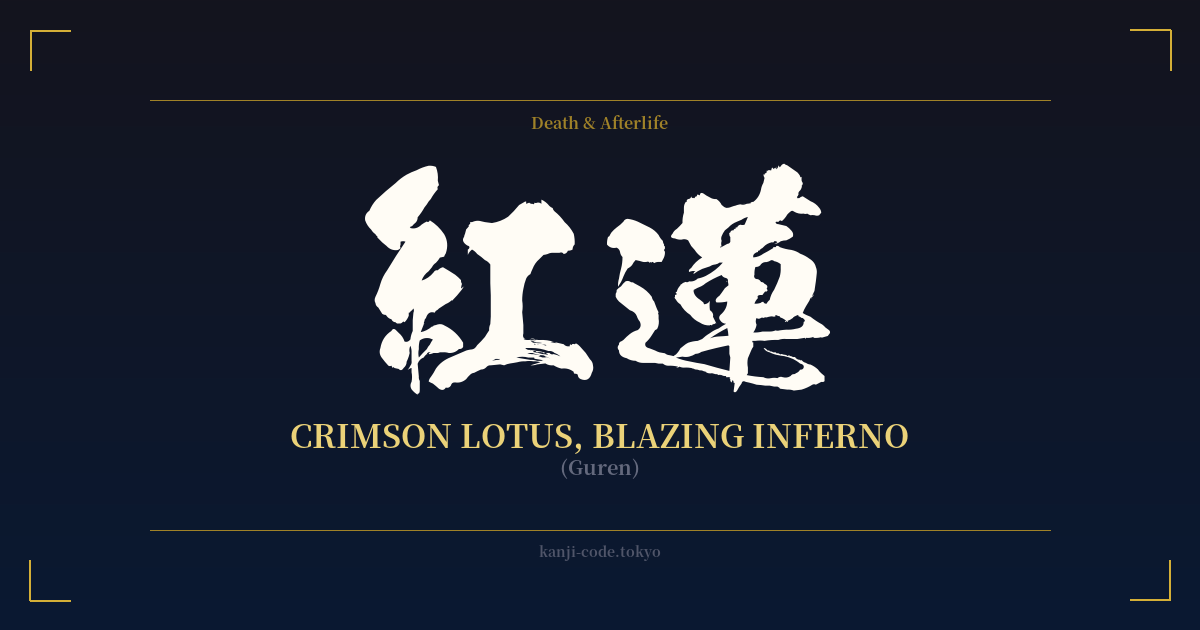
✍️ 紅蓮 (Guren) — Cultural Context
The word 紅蓮 (Guren) is a masterpiece of Japanese vocabulary, holding a dramatic duality that fascinates many. On the surface, it translates literally to 'crimson lotus,' a beautiful and evocative image. However, its true origin is far darker and more profound, rooted deep within Buddhist cosmology.
Originally, Guren refers to Guren Jigoku (紅蓮地獄), one of the Eight Cold Hells in Mahayana Buddhism. Unlike the fiery pits of Western imagination, these hells are realms of unbearable cold. In Guren Jigoku, the temperature is so extreme that the flesh of its inhabitants cracks and splits open, peeling back like the petals of a crimson lotus flower due to the frozen, exposed blood and tissue. It is an image of ultimate suffering, where beauty and agony are terrifyingly intertwined.
Over centuries, this visceral image has evolved. While the Buddhist context remains, the visual power of a 'crimson lotus' of flesh and blood has led 'Guren' to become a metaphor for any intensely burning fire or blazing inferno. It's not just a simple flame; it’s a catastrophic, all-consuming conflagration. This shift captures the essence of the original hell—an intensity so great it transforms its subject—and applies it to the element of fire.
This powerful duality has made Guren a popular and recurring motif in modern Japanese culture, especially in anime, manga, and music. The opening theme of 'Attack on Titan,' titled 'Guren no Yumiya' (Crimson Bow and Arrow), uses the word to evoke a sense of desperate, fiery struggle. Similarly, LiSA's hit song 'Gurenge' (Crimson Lotus Flower), the opening for 'Demon Slayer,' taps into this imagery to portray a beautiful yet painful fight for survival. These references have introduced the term to a global audience, cementing its status as a word of immense power and tragic beauty.
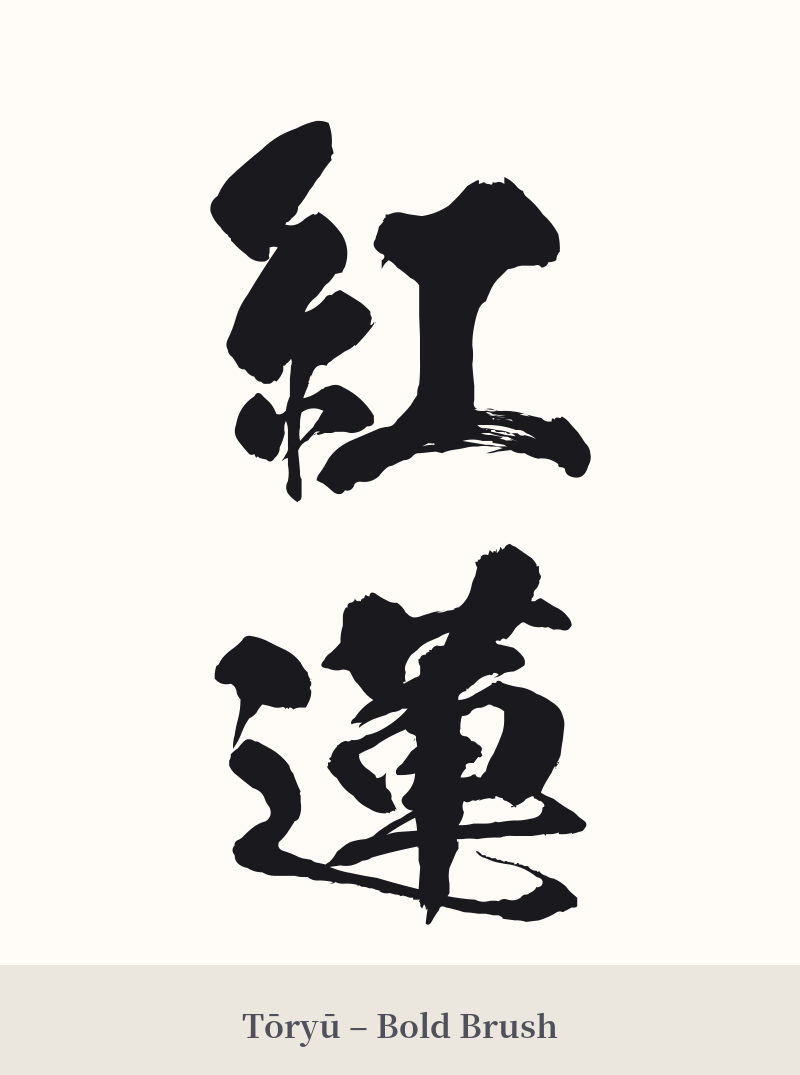
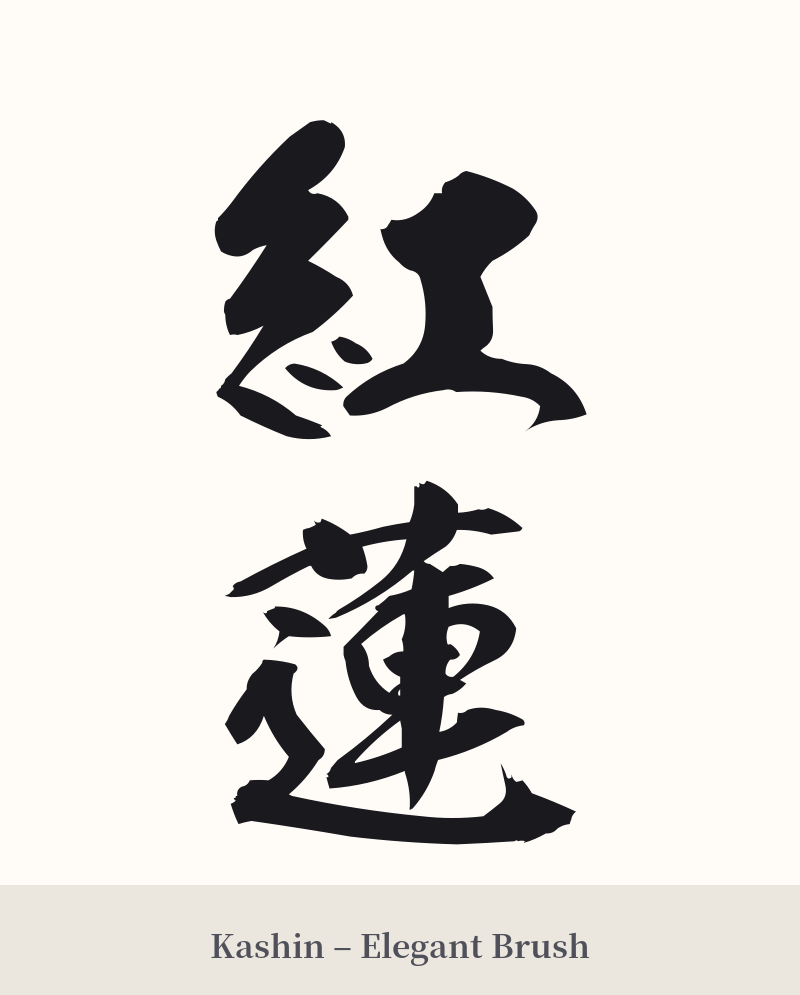
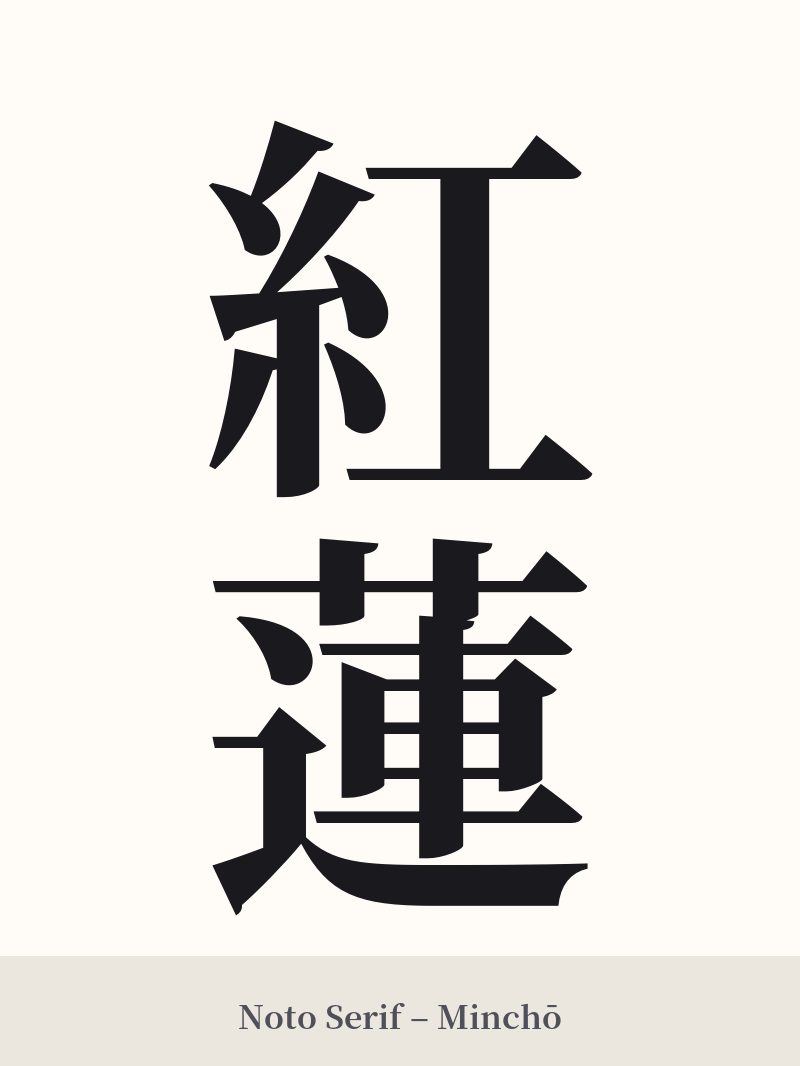
🖌️ Font Styles for 紅蓮
The same kanji can look dramatically different depending on the calligraphy style. Choose a font that matches the mood you want for your tattoo or design.
🎨 Tattoo Suitability
📐 Tattoo Design Guide
A 紅蓮 (Guren) tattoo offers a wealth of design possibilities thanks to its dual meaning. Its vertical orientation is classic and works well on limbs or along the spine.
– Placement: Forearm, calf, or back are ideal placements, providing enough space for the characters' detail to be appreciated. A vertical arrangement on the inner bicep is also a strong choice.
– Font Style: For emphasizing the 'blazing inferno' aspect, a dynamic and aggressive calligraphy style like Gyōsho (semi-cursive) or Sōsho (cursive) is perfect. These styles have fluid, flame-like strokes. For a more solemn, classic look that honors its Buddhist roots, a clean Kaisho (block) or Mincho style is excellent.
– Visual Elements: Consider weaving visual metaphors into the design. You could have the kanji written in a deep crimson ink, or have it emerge from stylized flames or ice shards (a nod to the cold hell). A popular and powerful combination is to pair the kanji with a realistic or stylized lotus flower, creating a direct visual link between its two core meanings.
Comments