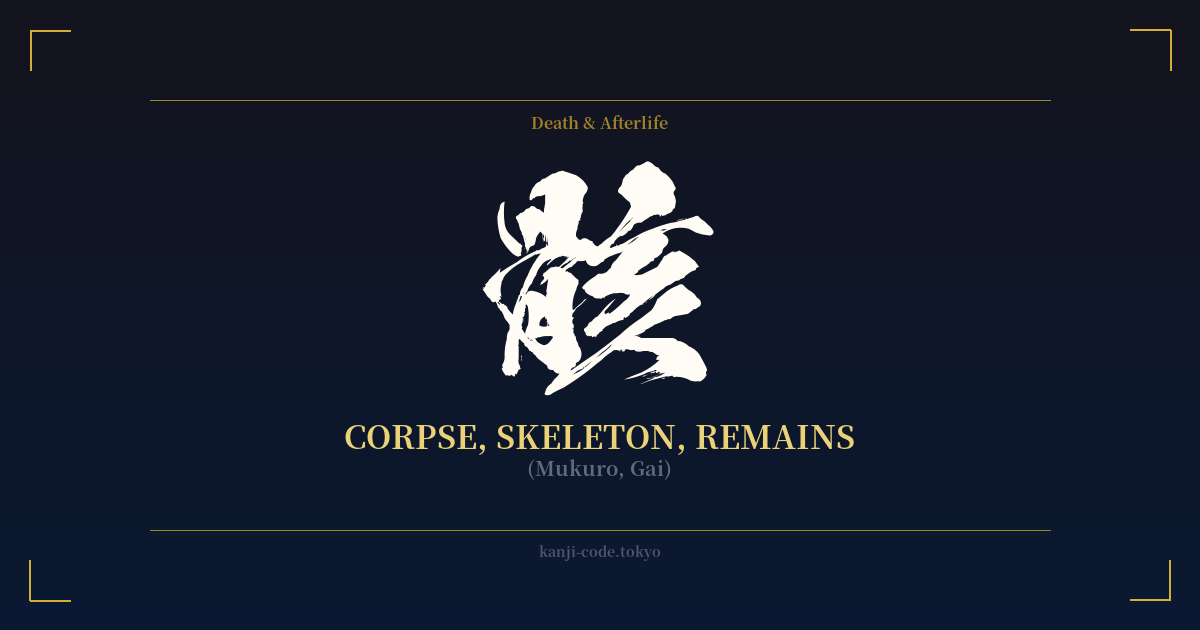
✍️ 骸 (Mukuro, Gai) — Cultural Context
The kanji 骸 (mukuro) is a stark and powerful character that directly translates to 'corpse,' 'skeleton,' or 'remains.' Its meaning is visceral and unambiguous, rooted in the physical reality of death rather than its spiritual or abstract dimensions. The character itself offers a clue to its meaning, as it is composed of the radical 骨 (hone), meaning 'bone,' on the left side.
The term 'mukuro' evokes a specific and often grim imagery within Japanese culture. It is not the word one would use for a deceased loved one in a respectful context. Instead, it appears in historical chronicles and literature to describe the aftermath of battle, painting a bleak picture of fields littered with the nameless bodies of fallen warriors. In samurai narratives, the sight of 'mukuro' served as a potent reminder of life's fragility and the brutal consequences of conflict, tying into the broader aesthetic of 'mono no aware,' or the pathos of things.
This connection to the macabre makes 骸 a prominent feature in Japanese folklore and horror, known as 'kaidan.' It is the raw material of ghosts and monsters. Perhaps the most terrifying example is the Gashadokuro, a giant, starving skeleton that roams the night, formed from the collected bones of people who died of starvation. This creature, born from a mass of 'mukuro,' embodies collective suffering and rage, a powerful motif in Japanese horror.
In art, particularly ukiyo-e woodblock prints from the Edo period, artists like Utagawa Kuniyoshi famously depicted skeletal figures and supernatural tales. These images brought the literary concept of 'mukuro' to life, creating a visual language for the gothic and the grotesque that continues to influence modern Japanese horror films, manga, and anime.
While not a common word in everyday conversation, 骸 persists in fiction and artistic expression. It's used to name dark characters, demonic entities, or special abilities related to death and necromancy. Philosophically, it can also be linked to Buddhist meditations on the decay of the body, a practice intended to help monks achieve detachment from physical desire by confronting the reality of their own mortality. For this reason, 骸 is more than just a word for a corpse; it is a symbol of finality, the physical shell left behind, and a powerful memento mori.
🖌️ Font Styles for 骸
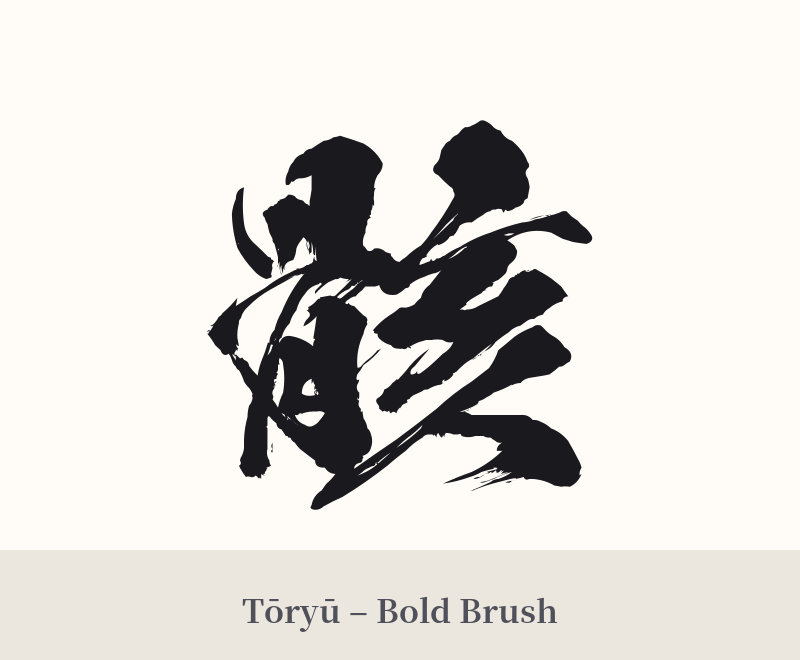
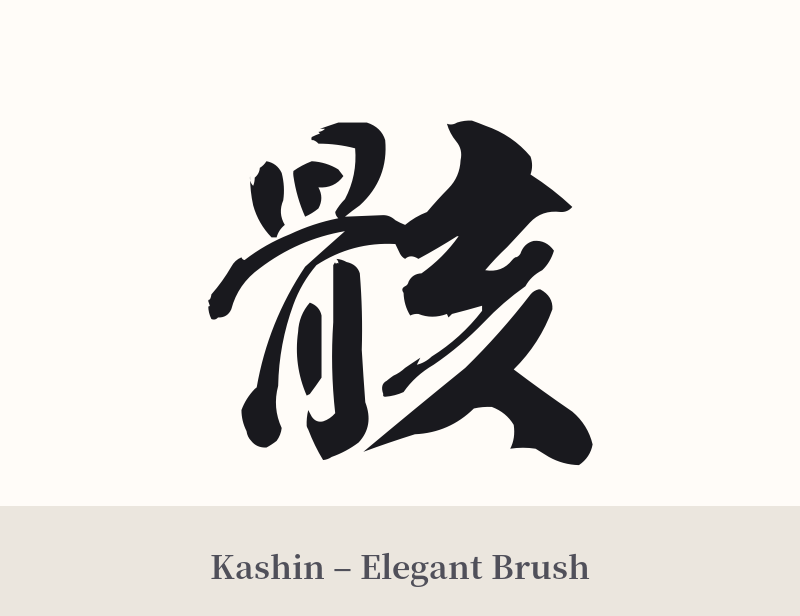
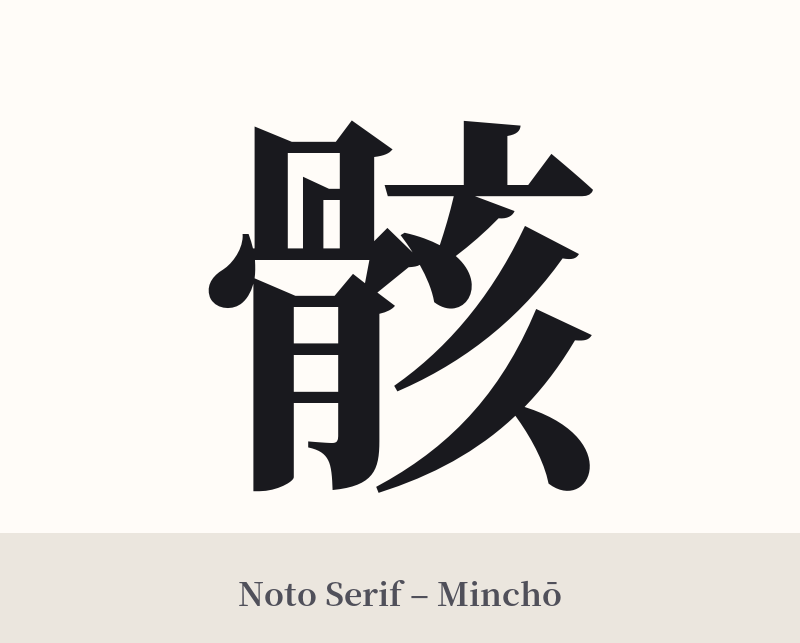
The same kanji can look dramatically different depending on the calligraphy style. Choose a font that matches the mood you want for your tattoo or design.
🎨 Tattoo Suitability
📐 Tattoo Design Guide
A tattoo of 骸 demands a design that embraces its dark and stark nature. Its complexity and meaning lend themselves to specific stylistic choices.
– Placement: This character works best as a vertical design. Consider the forearm, calf, or along the spine, where its form can be clearly rendered. It's not suited for small, discreet placements as its 16 strokes can blur together if not given enough space.
– Font Style: The font should enhance the kanji's grim feeling. A rough, aggressive calligraphy style (shodo) with scratchy, fast brushstrokes can evoke a sense of violence or decay. Alternatively, a stark, blocky Mincho font can give it a cold, impersonal feel, like a label on a specimen.
– Visual Tips: To add context, consider pairing 骸 with other imagery. A common pairing is with wilting or scattered cherry blossoms, creating a powerful contrast between ephemeral beauty and stark death. Other elements like a crow, a skull, wisps of fog, or a crescent moon can amplify its gothic and eerie atmosphere. Using a splash of red ink can symbolize shed blood, but should be done with care to avoid looking overly theatrical.
Comments