
✍️ 黄泉 (Yomi) — Cultural Context
黄泉 (Yomi), or more fully, 黄泉の国 (Yomi-no-Kuni), is the name for the underworld in ancient Japanese Shinto mythology. The term itself is a fascinating blend of cultural influences, literally translating to "Yellow Spring." This name is not originally Japanese but is borrowed from ancient Chinese cosmology, where the "Yellow Springs" referred to the subterranean realm of the dead, the dark and damp earth deep below the surface.
In Japan, Yomi is not a place of fire and brimstone like the Western concept of Hell, nor is it a realm of elaborate punishment like the Buddhist 地獄 (Jigoku). Instead, Yomi is a gloomy, shadowy, and perpetually dark place. It is the destination for all souls after death, regardless of their actions in life. Here, the dead exist in a state of slow, inexorable decay, their bodies and spirits gradually returning to the earth.
The most famous story associated with Yomi is the tragic myth of the creator deities, Izanagi and Izanami. After Izanami dies giving birth to the fire god Kagutsuchi, she descends to Yomi. Grief-stricken, Izanagi follows her, determined to bring his beloved wife back to the land of the living.
When he finds her in the darkness, she agrees to ask the gods of Yomi for her release but makes him promise not to look at her until they have left. Consumed by impatience and longing, Izanagi breaks his promise and lights a comb from his hair as a torch. In the sudden light, he sees not his beautiful wife but a rotting, maggot-infested corpse. Horrified, he flees.
Enraged by his betrayal and shame, the monstrous Izanami pursues him. Izanagi barely escapes, sealing the entrance to Yomi with a massive boulder. From behind the stone, Izanami screams a curse: that she will kill one thousand people in the living world every day. Izanagi retorts that he will ensure one thousand five hundred are born each day. This myth establishes the inescapable cycle of life and death, with Yomi as its final, dark destination.
This story solidifies Yomi's place in the Japanese psyche not as a place of judgment, but as a place of pollution (kegare), decay, and the terrifying finality of death. It represents the uncrossable boundary between the living and the dead, a concept deeply woven into Shinto beliefs about purity and impurity.
🖌️ Font Styles for 黄泉
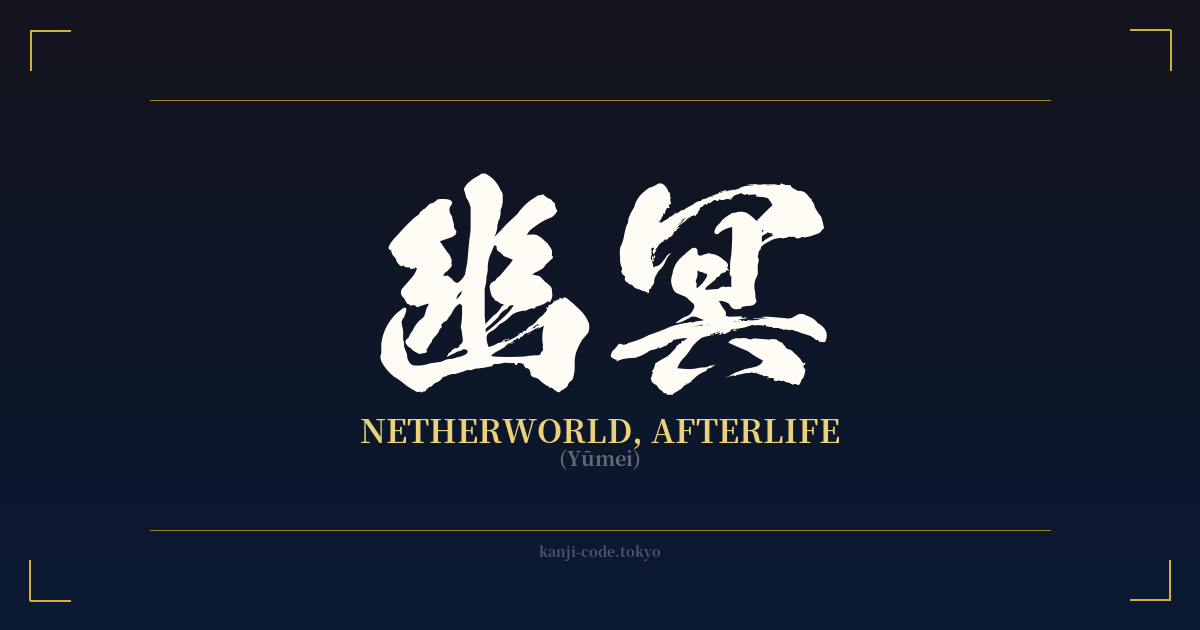
The same kanji can look dramatically different depending on the calligraphy style. Choose a font that matches the mood you want for your tattoo or design.


🎨 Tattoo Suitability
📐 Tattoo Design Guide
A 黄泉 (Yomi) tattoo is a bold statement with a dark and powerful aesthetic. The two characters work exceptionally well in a traditional vertical alignment, making it perfect for the spine, forearm, or along the calf.
– Font Style: A cursive or semi-cursive brush script (like sōsho or gyōsho) can evoke the ghostly, ancient, and sorrowful nature of the word. For a more imposing and final feel, a crisp, blocky kaisho font can emphasize the dread and weight of the underworld.
– Visual Elements: Consider incorporating imagery from the myth of Izanagi and Izanami. This could include a broken comb, peaches (which Izanagi used to repel his pursuers), or the great boulder that seals Yomi's entrance. Higanbana (red spider lilies), flowers closely associated with death and the afterlife in Japan, are another powerful visual pairing. Subtle wisps of smoke or mist around the kanji can enhance the gloomy, ethereal atmosphere.

Comments