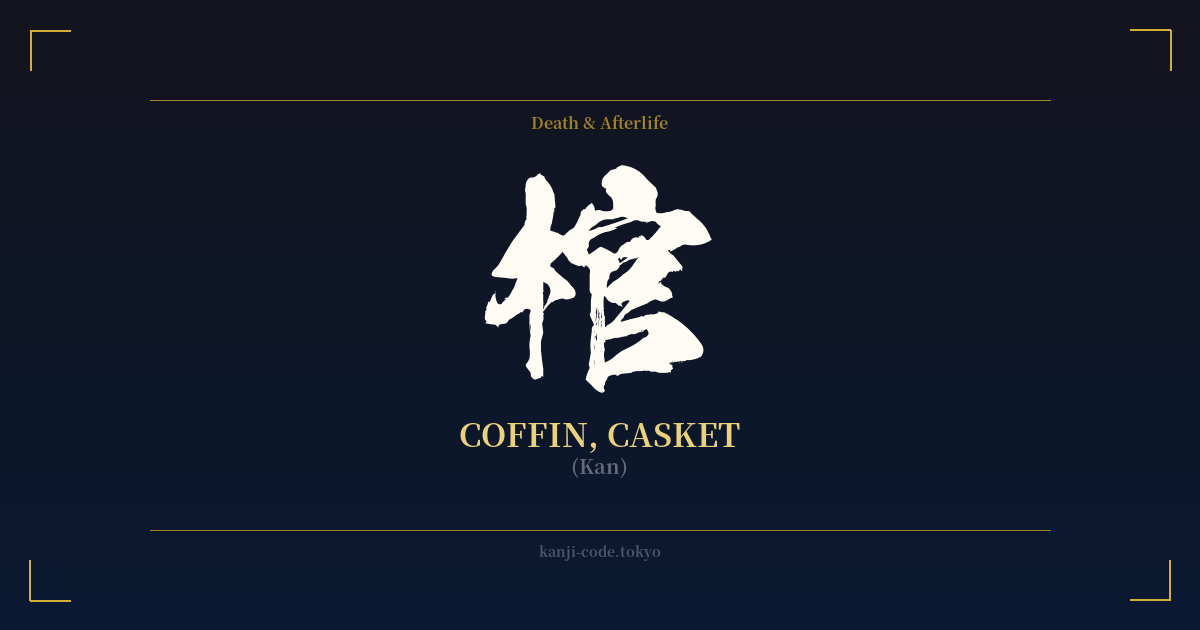
✍️ 棺 (Kan) — Cultural Context
The kanji 棺 (kan) is the Japanese character for a coffin or casket. Its structure provides a clear window into its meaning: the left-side radical, 木, means 'tree' or 'wood,' indicating the material from which coffins have traditionally been made. The right-side component, 官, which means 'government' or 'official,' serves as the phonetic element, giving the character its 'kan' sound. This combination paints a picture of a formal, wooden container, which is precisely its function.
In Japan, the concept of the coffin is deeply intertwined with specific funeral rites. While 棺 (kan) refers to the coffin itself, another character, 柩 (kyū), is used to refer to a coffin with the deceased inside. This distinction is important in formal contexts, such as the word for a hearse, 霊柩車 (reikyūsha), which literally means 'spirit casket vehicle.'
Japanese funeral practices predominantly involve cremation (火葬, kasō), with over 99% of deaths resulting in this method. Therefore, the coffin's role is primarily for the wake (お通夜, otsuya) and the funeral service (葬式, sōshiki). During the wake, family and friends gather to pay their respects to the deceased, who lies within the 棺. The coffin is often simple, made of plain wood like paulownia, and may contain items cherished by the deceased, along with a white kimono.
After the funeral service, the coffin is transported to the crematorium. It is the final vessel that holds the physical body before it is returned to ash, which is then interred in a family grave (墓, haka). Symbolically, the 棺 represents the ultimate boundary between the world of the living and the journey to the afterlife (来世, raise). It is an object of profound finality and a focal point for grief and remembrance.
Unlike more poetic symbols of mortality in Japanese culture, such as the cherry blossom (桜, sakura) representing life's beautiful transience, 棺 is stark, direct, and somber. It is not used in art or literature in a romanticized way; its presence signifies the concrete reality of death. It is spoken of with respect and solemnity, a necessary part of the final farewell, but not a concept that is dwelt upon in daily life.
🖌️ Font Styles for 棺
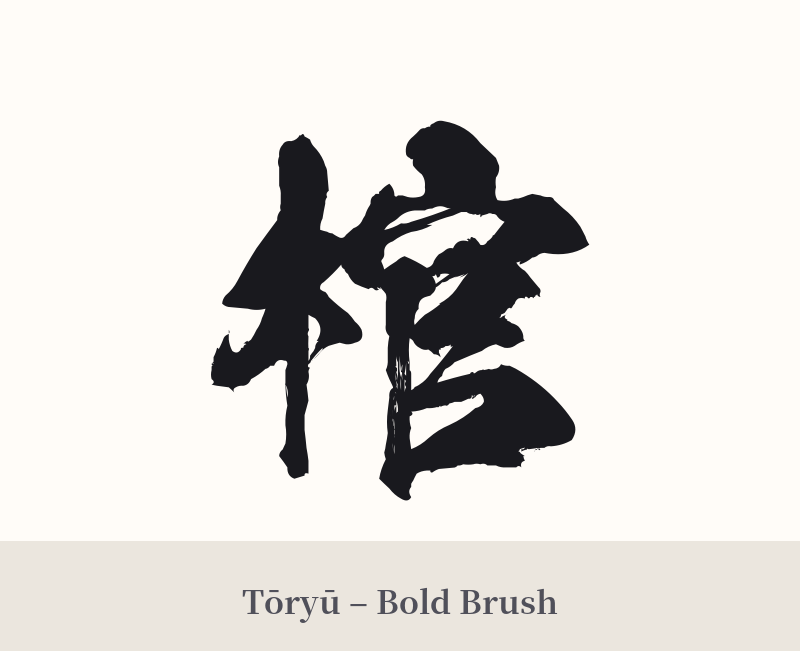
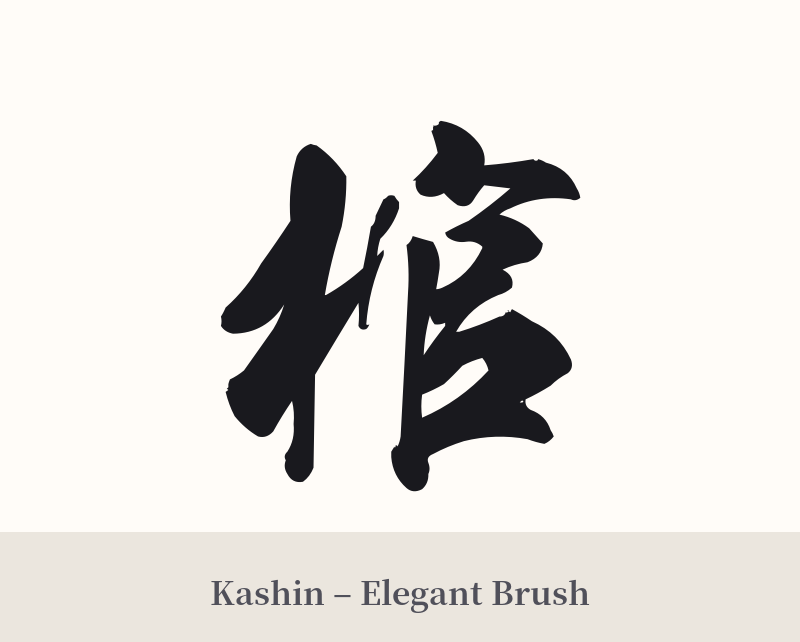
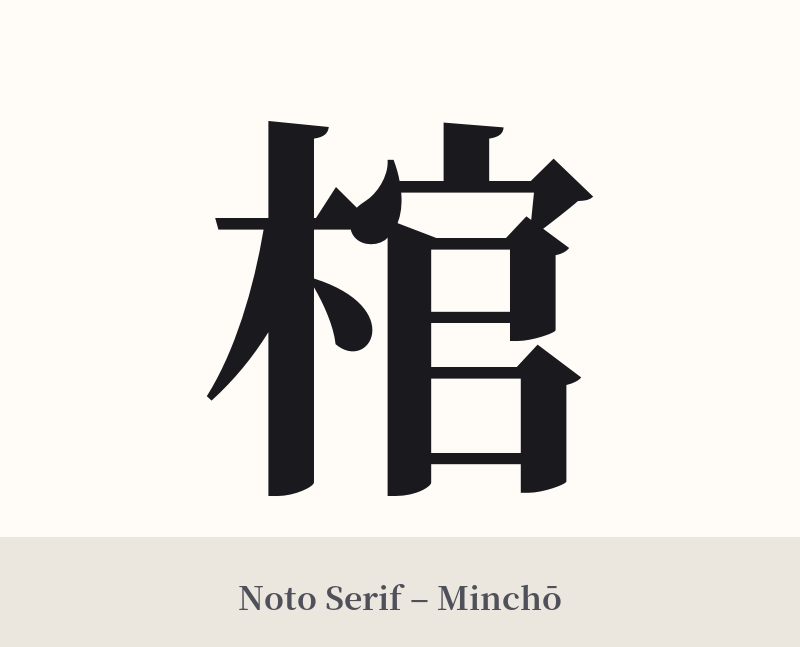
The same kanji can look dramatically different depending on the calligraphy style. Choose a font that matches the mood you want for your tattoo or design.
🎨 Tattoo Suitability
📐 Tattoo Design Guide
Given its somber and intensely personal nature, a tattoo of 棺 (kan) requires careful consideration for its design and placement.
– Placement: This is not a kanji for public display. Consider intimate, private placements like the ribs, the sternum, the back, or the inner bicep. These locations allow the tattoo to be a personal statement rather than one that invites constant public scrutiny or misunderstanding.
– Font Style: The style can drastically alter the mood. A crisp, formal Kaisho (block) or Mincho (serif) font emphasizes the finality and solemnity of the character. For a more emotional or chaotic expression, a rough, semi-cursive Gyosho or a highly stylized Sosho script could represent grief or a personal struggle with mortality.
– Visual Tips: 棺 is a visually strong and balanced character that works best on its own. Its starkness is its power. Adding other elements risks diluting its meaning. If you must add something, consider a single, minimalist element like a wisp of incense smoke or a lone, fallen leaf to avoid creating a cluttered or confusing design.
Comments