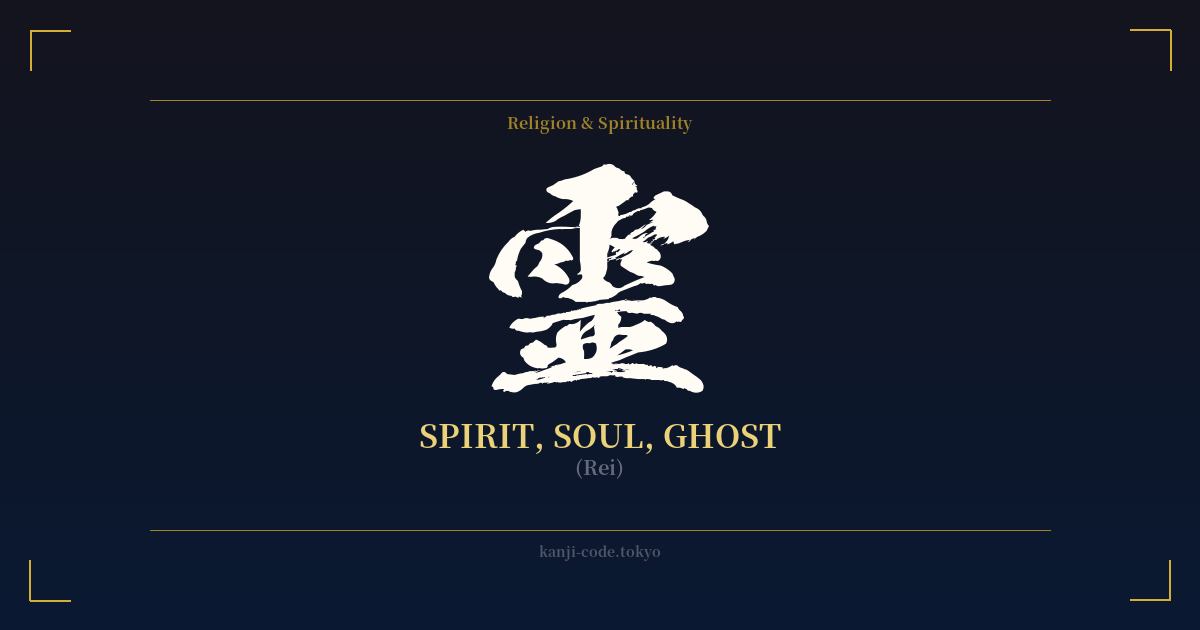
✍️ 霊 (Rei) — Cultural Context
The kanji 霊 (Rei) is one of the most evocative and nuanced characters in the Japanese language, bridging the gap between the sacred and the supernatural. Its meaning is a spectrum, ranging from the divine essence of a deity to the lingering apparition of the deceased.
To understand its depth, we can look at its ancient form. The character is a combination of 雨 (ame – rain) at the top, and 巫 (fu or miko – shaman/medium) at the bottom, with three mouths (口) representing incantations. This pictograph paints a vivid image: a shaman performing a ritual, chanting to call down spirits from the heavens, which descend like rain. This origin story grounds 霊 in ancient shamanistic practices and a deep connection to the natural and spiritual worlds.
In a religious context, particularly within Shintoism, 霊 is a fundamental concept. It can refer to the 'mitama,' the spirit of a kami (god) or an ancestor. Words like 神霊 (shinrei – divine spirit) and 英霊 (eirei – spirits of the war dead, enshrined as heroes) carry a sense of reverence and honor. It represents a sacred, disembodied energy that is worthy of respect and worship.
However, in modern, everyday Japanese, the character has a much spookier connotation. It is the core component of the word 幽霊 (yūrei), which is the standard term for a ghost, often the frightening kind seen in horror films like 'The Ring' (リング). This association is incredibly strong. Terms like 悪霊 (akuryō – evil spirit), 心霊写真 (shinrei shashin – spirit photography), and 霊感 (reikan – sixth sense/ability to see ghosts) all lean into this supernatural, often unsettling, side of the character.
This duality is what makes 霊 so fascinating and complex. It is not inherently positive or negative. Instead, it embodies the entire spectrum of the non-physical realm. It is the soul (霊魂 – reikon) that animates a living being, the divine presence in a shrine, and the restless spirit haunting an old house. Its meaning is entirely dependent on the context in which it is used, a powerful symbol of Japan's intricate relationship with the spirit world.
🖌️ Font Styles for 霊
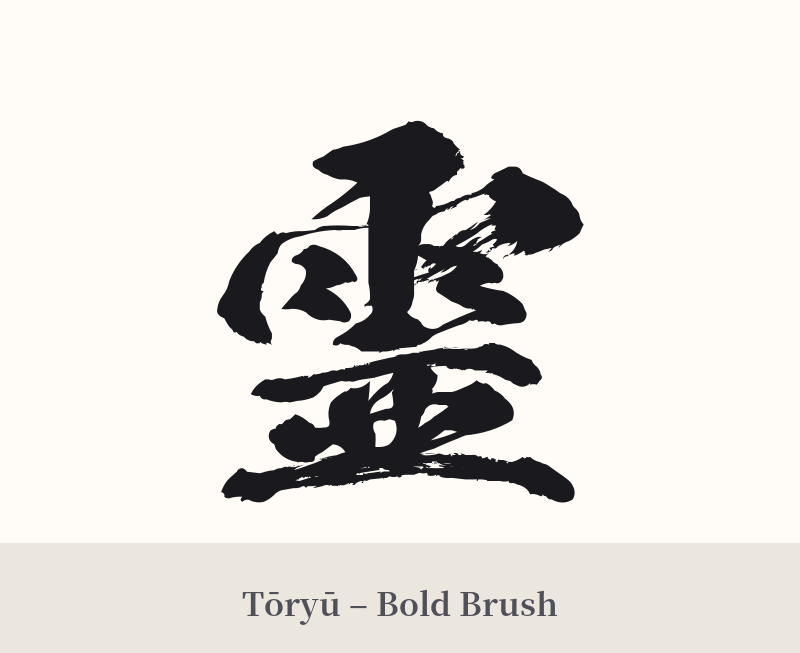
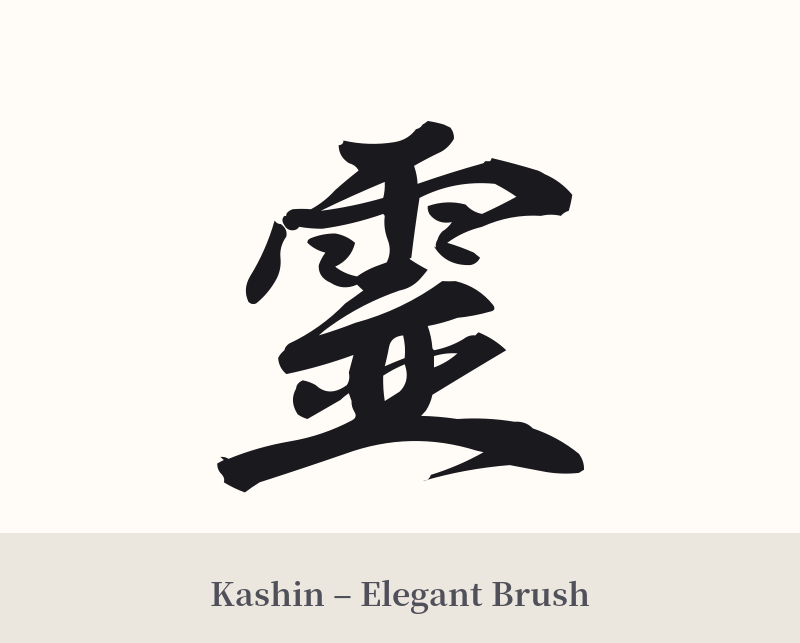
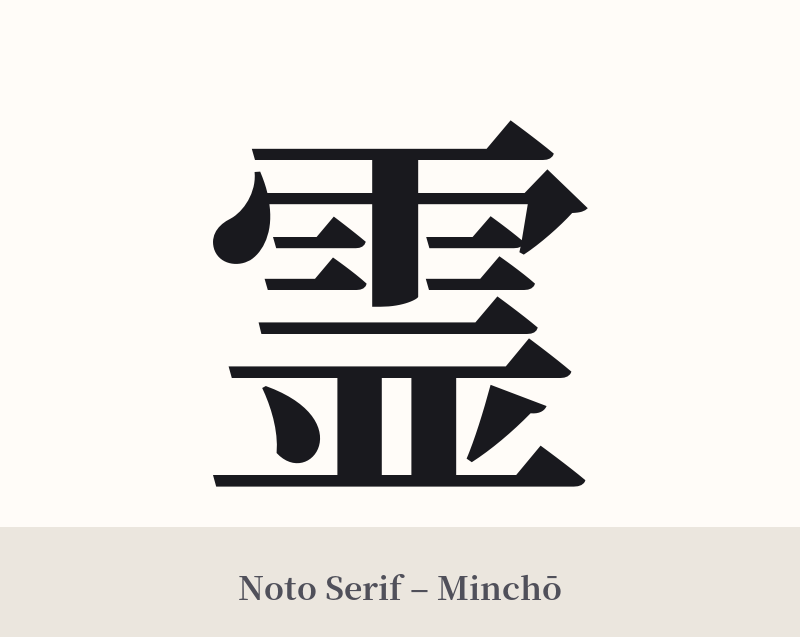
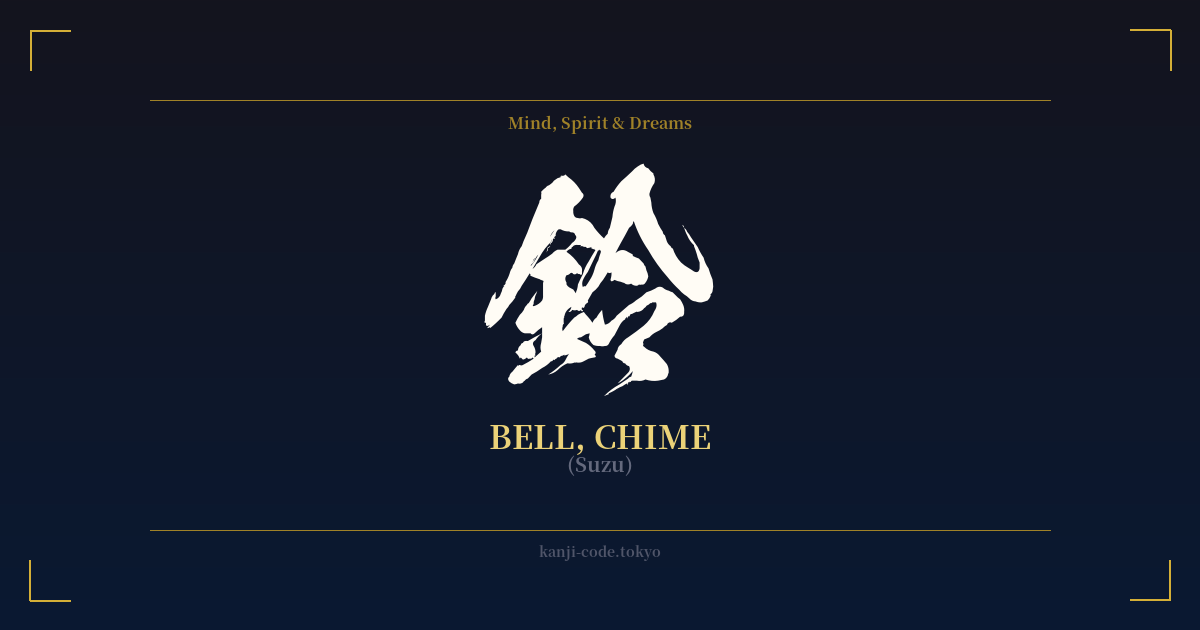
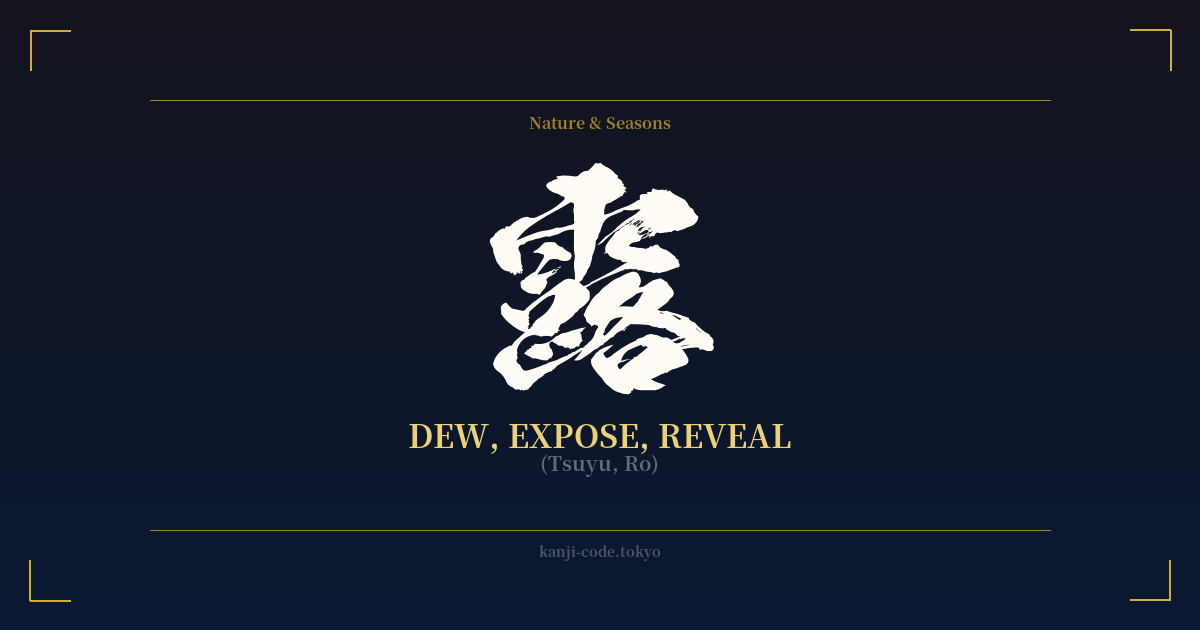
The same kanji can look dramatically different depending on the calligraphy style. Choose a font that matches the mood you want for your tattoo or design.
🎨 Tattoo Suitability
📐 Tattoo Design Guide
The kanji 霊 (Rei) offers a visually compelling design that is both intricate and balanced, making it a good candidate for a tattoo if you're aware of its dual meaning.
– Placement: As a single, vertically-oriented character, it works well on the forearm, the calf, along the spine, or on the back of the neck. These placements allow the character's structure to be appreciated.
– Font Style: A traditional calligraphy or brushstroke (書道 – shodō) style is highly recommended. The flowing, dynamic strokes can emphasize the ethereal and ancient quality of the character. For a more modern or refined look, a crisp Mincho (serif) font can highlight its elegant structure. Avoid overly blocky or decorative fonts that could obscure the details and make it illegible.
– Visual Tips: Because of its ambiguous meaning, you might consider pairing 霊 with other symbols to guide its interpretation. For example, incorporating a lotus flower can steer the meaning towards spiritual purity and enlightenment. Adding wisps of smoke or mist can enhance its ghostly, ethereal nature. If you choose to use it as a standalone piece, embrace its mystery but be prepared for it to be interpreted as 'ghost'.
Comments